
News


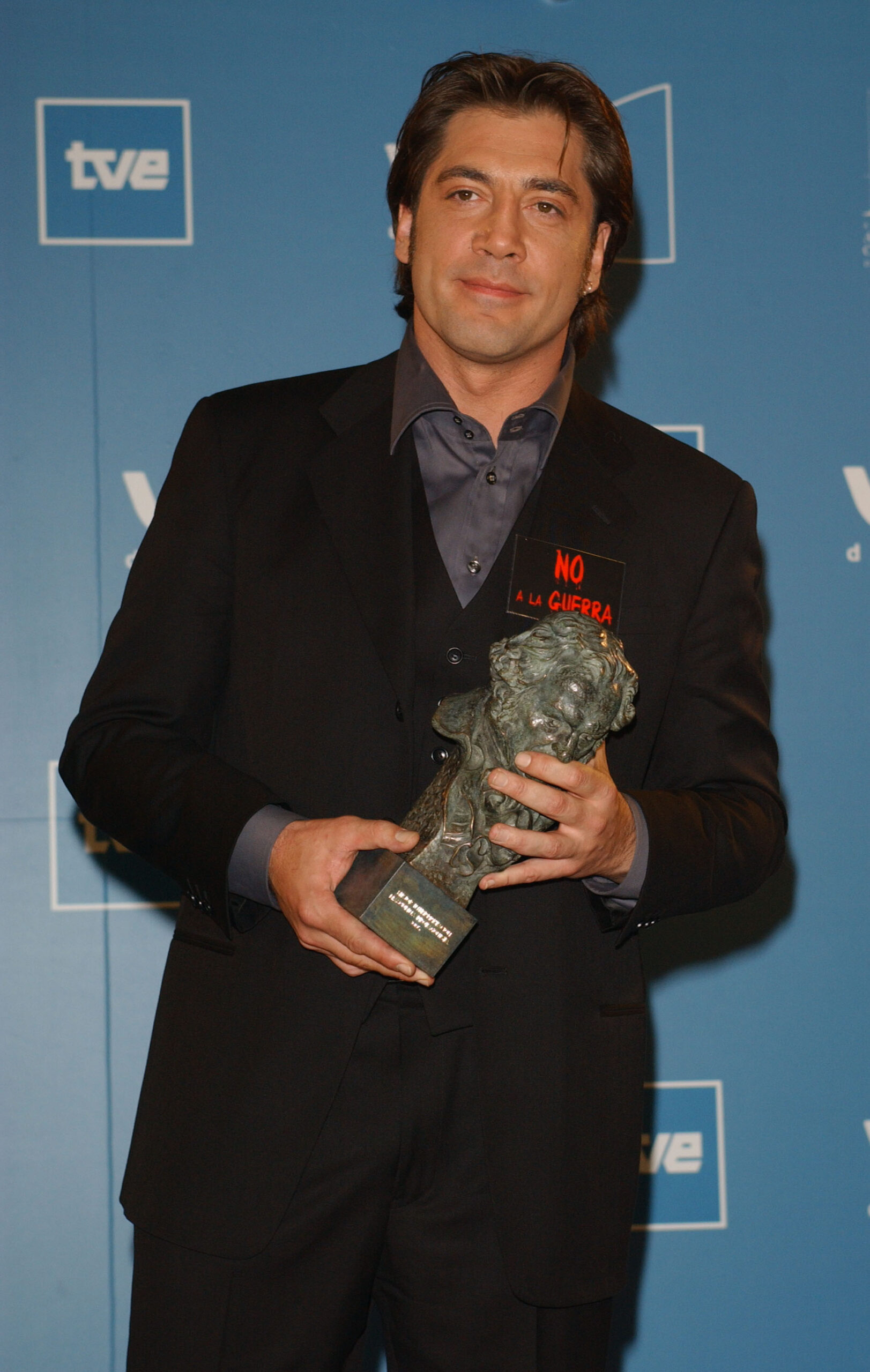
On Hollywood’s biggest night, Academy Award winner Javier Bardem used his platform on stage to offer his continued support for a free Palestine while presenting the Oscar for Best International Film. Bardem, with his strong convictions, declared, “No to war and free Palestine.”
The actor was also wearing a “No a la Guerra” badge and a pin featuring the beloved Palestinian cartoon symbol, Handala. During interviews on the Oscar red carpet and at the Vanity Fair after-party, Javier shared that he was wearing the same badge he had used in 2003, the year he became an Academy Award winner for the cult classic No Country for Old Men, at the Goya Awards in Spain to protest the Iraq War, calling it an illegal war and expressing disappointment that the world is once again witnessing another illegal war taking place in Iran.
Javier Bardem referred to his Handala pin as the “Palestinian symbol of resistance.” Taking a closer look, Handala (حنظلة), often transliterated as Hanzala or Handzala, takes its name from the handal plant, also known as the bitter apple, a desert perennial native to the land of Palestine.
The plant’s persistence and bitterness inspired Palestinian cartoonist Naji Al-Ali to create this image in 1969: a barefoot cartoon boy, hands clasped behind his back, face turned away, symbolising a refusal to look away from the Palestinian cause.
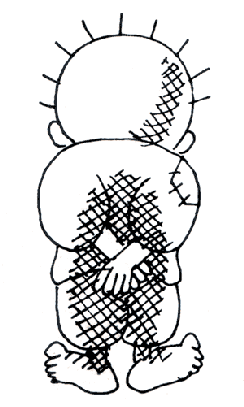
The boy, Handala, is 10 years old. The same age that Naji Al-Ali was when he became a refugee during the 1948 Nakba, when his family was expelled from their village of Al-Shajara in the district of Tiberias and forced to flee to the Ayn al-Hilwa refugee camp near Saida in southern Lebanon.
It was in Lebanon that Al-Ali developed a passion for drawing as a way to express his thoughts and feelings. His work was discovered on prison walls in Lebanon by beloved Palestinian writer and militant Ghassan Kanafani, who further encouraged Al-Ali and helped publish his first drawings in 1961. Ali soon became known for his sharp, critical, and often satirical work, criticising Israeli policies and Arab regimes while creating over 40,000 cartoons.
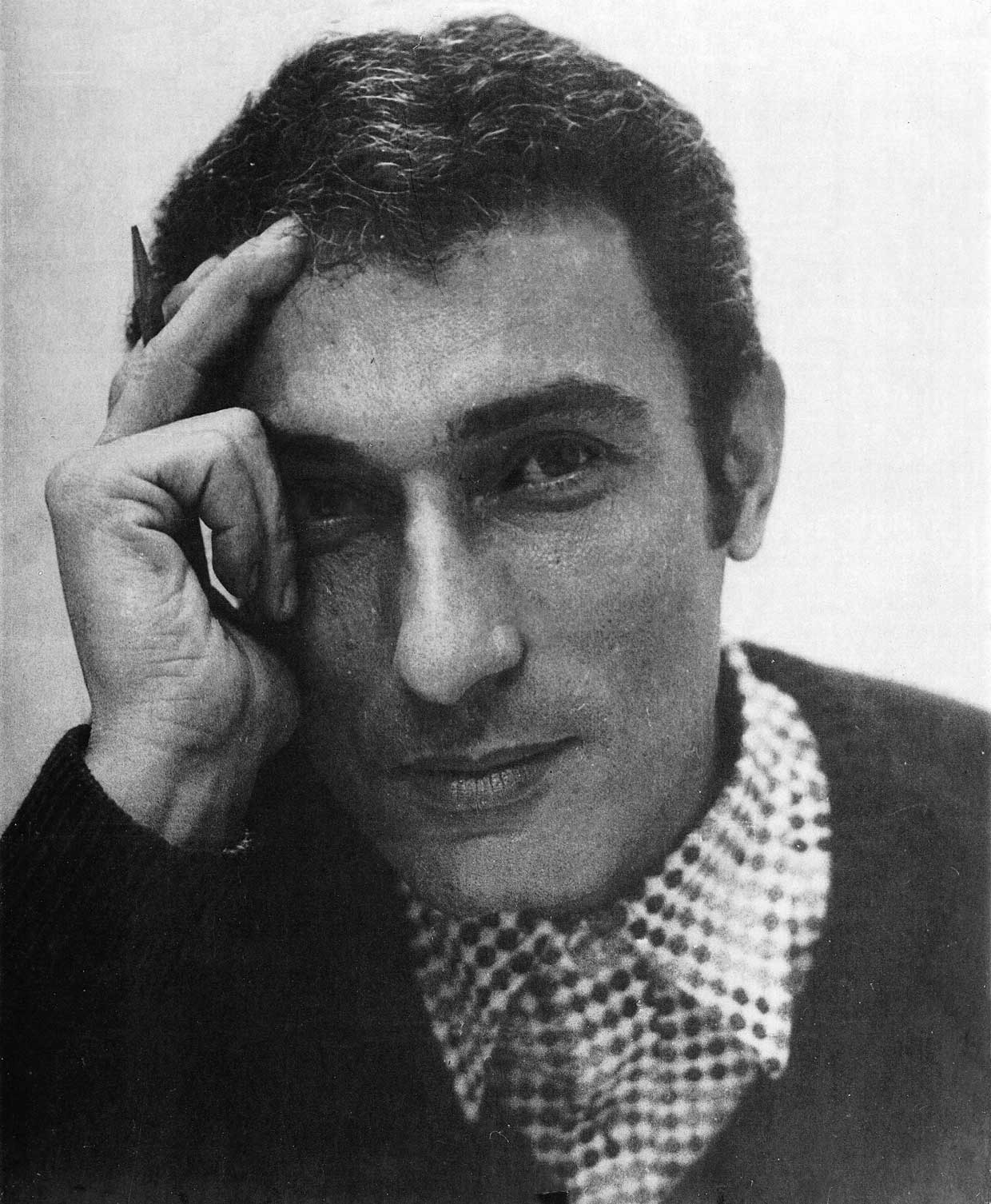
In 1969, while working in Kuwait, he created Handala, who represents a Palestinian refugee, with an unknown face, ragged clothes, bare feet, hair sticking up, and hands perpetually clasped behind his back.
Al-Ali described Handala: “I drew him as a child who is not beautiful; his hair is like the hair of a hedgehog who uses his thorns as a weapon. Handala is not a fat, happy, relaxed, or pampered child. He is barefooted like the refugee camp children, and he is an icon that protects me from making mistakes. Even though he is rough, he smells of amber. His hands are clasped behind his back as a sign of rejection at a time when solutions are presented to us the American way. Handala was born ten years old, and he will always be ten years old. At that age, I left my homeland, and when he returns, Handala will still be ten, and then he will start growing up. The laws of nature do not apply to him. He is unique. Things will become normal again when the homeland returns. I presented him to the poor and named him Handala as a symbol of bitterness. At first, he was a Palestinian child, but his consciousness developed to have a national and then a global and human horizon. He is a simple yet tough child, and this is why people adopted him and felt that he represents their consciousness.”
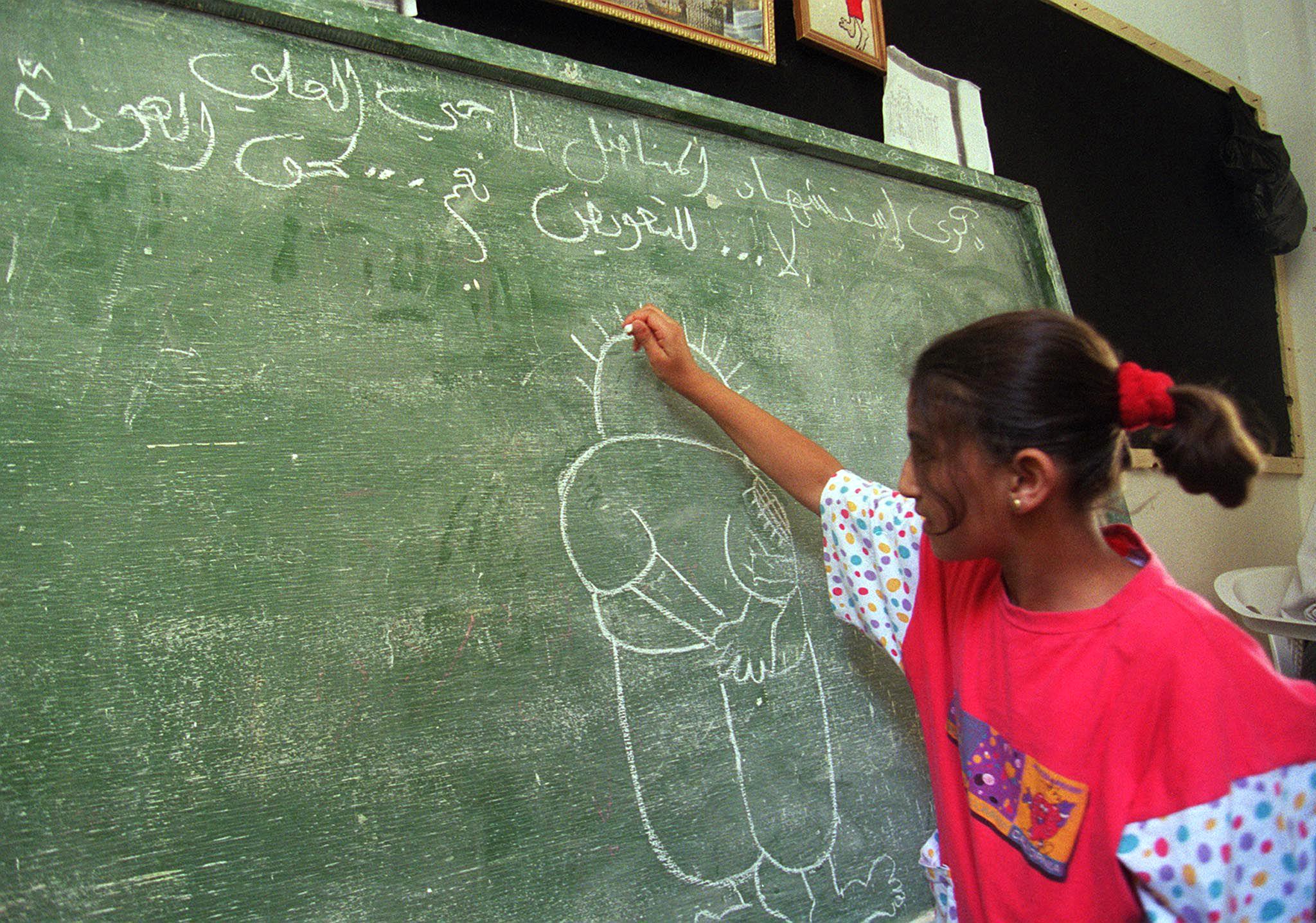
Across decades, nations, and borders, Handala has been replicated on murals and graffiti in Gaza, as well as in Palestinian and Lebanese refugee camps. He has been reproduced as tattoos and as a jewellery motif in the form of pins and badges. Handala, Al-Ali’s ten-year-old Palestinian boy, has made his mark on history, serving as a reminder of Palestinians displaced from their own land under the despotic Israeli regime.
Handala represents every Palestinian child that history has failed and continues to fail. Let Javier Bardem’s speech be a reminder to not turn our backs.


