
News

There’s a particular kind of silence that exists just before a DJ starts a set. Not a total hush but more of a dense, anticipatory noise: people finding their place, a snare rattling through the monitors, a voice on the mic asking for “one more minute.” In Riyadh, at XP Music Futures, that silence feels charged in a different way. The crowd’s waiting to see what this new version of their scene might sound like.
Somewhere in that space stands PHO. On paper, he’s a DJ, producer and sound artist; a two-time Red Bull Thre3style world finalist; and AlphaTheta / Pioneer DJ’s A&R Manager for LATAM and MENA–SWANA. In practice, he’s one of the people trying to navigate a simple but complicated question: what happens to DJ culture when the tools, the platforms and the people start evolving at the same time?
From that vantage point, he’s watching how technology is reshaping the everyday lives of DJs around him – how they discover music, build their sets and, crucially, how they get paid. “Tools like Rekordbox and DJ with Apple Music are opening up music discovery for everyone. DJs who once depended on record pools or pricey downloads now have instant access to global catalogs, giving them more freedom when building their sets.”
Looking ahead, he thinks the real shift will come from the way hardware connects to the cloud. Instead of lugging crates, DJs will move with their creative identity: their style, edits, history and even audience insights travelling with them from booth to booth, levelling the playing field and giving entire regions a chance to shine globally.
“Technology is also creating new ways for DJs to earn,” PHO adds. “Through content, livestreams, custom edits and online teaching, artists from smaller scenes can get booked worldwide without traditional gatekeepers.”
It’s a practical answer, but quietly radical. The old story of the DJ was built around physical crates and local mythology; the new one is about portable identities and scenes that talk to each other in real time.
If PHO is speaking from the booth and the A&R desk, Prophet Guillory is looking at the same picture from inside the machine. A 15-year music industry veteran and platinum-selling songwriter, artist and producer, he now works as Spatial Audio Lead at Apple Music Artist Services. His focus is on how these tools feel in the hands of creators, not just how they’re marketed. “What excites me most is how seamless everything is becoming,” explains Guillory. “When tools like Logic Pro, DJ with Apple Music, and Spatial Audio lock in together, they create a workflow where ideas can move from creation to performance without ever losing their identity.”
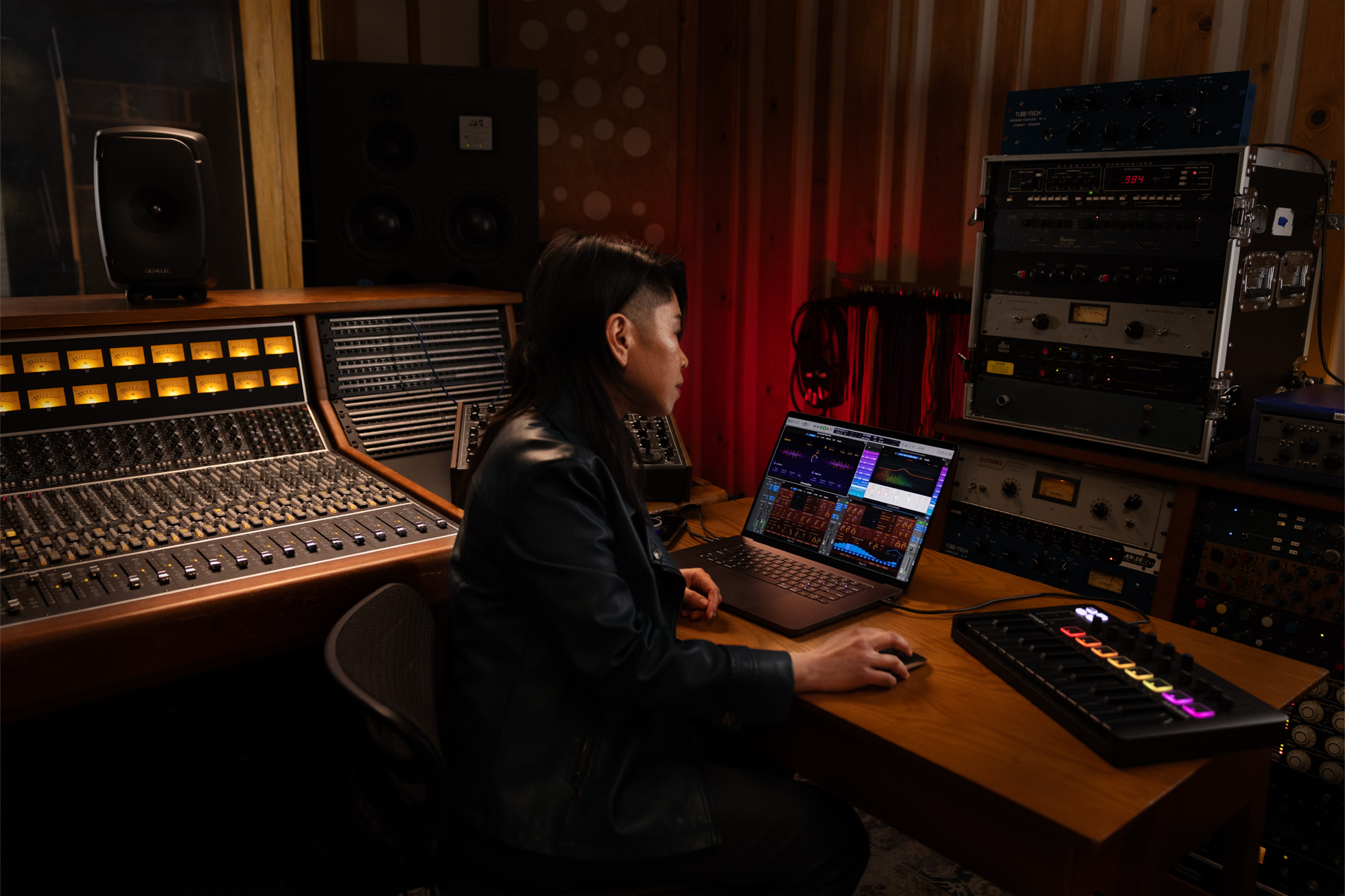
For a generation of DJs and producers used to juggling different versions of the same track for clubs, radio and streaming, that idea of a single spark moving intact through every stage – from DAW to dancefloor to mix – is no small shift. It suggests a future where “format” is less of a barrier and more of a canvas. Then there’s the audience. From Apple Music’s side, Stephen Campbell – Global Head of Dance, Electronic & DJ Mixes – has been paying close attention to how listeners in Saudi Arabia and the wider region are behaving on the platform. What he’s seeing doesn’t match the stereotype of passive streaming.
“What feels distinct here is the depth of engagement. Audiences in Saudi and the wider region aren’t just streaming passively; they’re exploring sub-genres, following DJs, building playlists, and showing up to events where music is part of cultural identity. That kind of intentional listening shapes how we think about programming and partnerships on Apple Music. It tells us this isn’t a niche interest but a fast-growing movement,” he shares. “And because so many people here are creators as well as listeners, it also pushes us to ensure DJ tools, mixes, and integrations are available, localized where possible, and part of a connected ecosystem. The appetite here signals real momentum, and our role is to support it with the right music, features, and pathways for talent to grow.”

That line about “intentional listening” is doing a lot of work. If you consider dance and DJ culture in MENA a passing trend, you treat it like a side-project. If you recognise it as a movement, you start thinking about systems: who gets supported, who gets surfaced, who gets paid.
That brings the conversation to the format that sits at the heart of DJ culture but has long lived on the margins of the industry: the mix. Historically, mixes have been essential to building scenes and reputations, yet rarely structured to sustain careers. Campbell argues that this is exactly where Apple Music has tried to intervene.
“For a long time, mixes sat outside the formal music ecosystem. They built community, but not careers,” he says. “Apple Music’s approach to mixes changes that by making them streamable, measurable, and part of a system where DJs, producers, and the artists behind every track can be credited and compensated.”
The implications for this region, he points out, are especially significant. “For emerging talent in the Middle East, that shift is meaningful,” Campbell adds. “It allows DJs to build a creative identity through the craft they’re most connected to, not just through singles or albums. A mix can now travel globally, find an audience, become part of someone’s daily routine, and generate value over time.”
“As DJ culture accelerates in this region, giving mixes a legitimate home on Apple Music doesn’t just unlock a format,” he says. “It helps establish a long-term career pathway rooted in artistic expression, community, and sustainability.”
Read against PHO’s on-the-ground experience, it starts to sound like both sides of the same story: one from the platform, one from the floor. The mix is no longer just a calling card but an asset with a traceable life.
Back at XP Music Futures, that shift is happening in public. For PHO, who has worked with institutions from EXPO 2020 to Art Jameel and ITHRA, the event has quickly become a focal point for the next chapter of the region’s music culture.
“XP Music Futures is doing something genuinely meaningful for the region: it’s giving emerging voices a real platform, not just a token slot. What I appreciate most is how it brings artists, tech innovators, institutions, and the community together. That mix makes new ideas feel possible and helps young creators finally see themselves in the industry’s future. Moving forward, I’d love to see even more cross-regional collaboration feeding into one another’s scenes. More room for experimentation, and more support for underrepresented communities so the ‘future’ truly includes everyone.”
It’s a reminder that infrastructure alone isn’t enough. You can build seamless workflows, legitimise formats and track engagement down to the decimal, but if the rooms themselves aren’t diverse, connected and open to risk, you still end up telling the same stories about the same people.
Put all of these voices together – PHO’s emphasis on portable creative identity and new revenue streams, Prophet’s belief in workflows “where ideas can move from creation to performance without ever losing their identity,” Campbell’s mission to give DJ mixes long-term value and visibility – and you start to see the contours of a different kind of future for DJ culture in and around the Middle East. It’s becoming a scene that is defined by a web of mixes travelling globally and young artists seeing a realistic path from bedroom to booth to sustainable careers.

