News


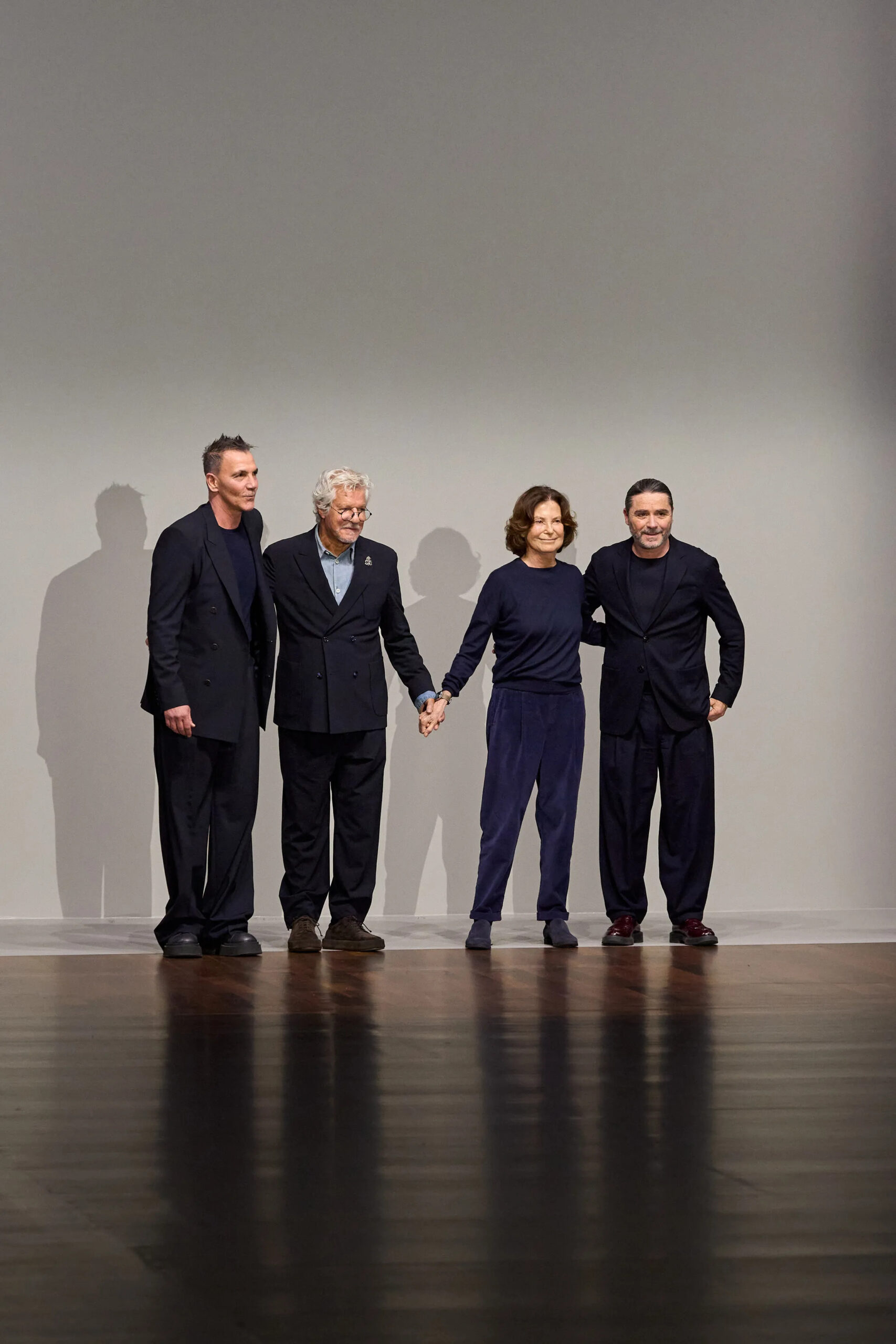
As the first presentation following Giorgio Armani’s passing last year, the men’s and women’s collection inevitably holds symbolic gravity, and responsibility, one that Silvana Armani and Leo Dell’Orco shoulder with discernment and deep institutional knowledge, with Dell’Orco taking full authorship of the menswear.
Leo Dell’Orco presented a runway of contemporary menswear looks where a fresh perspective is embraced by tradition. The collection was introduced by a three-piece suit in shades of beige and green that felt formal yet relaxed, without padding, continuing the soft silhouettes popularised by Armani in the late ’70s. As the collection continued to reveal itself, colour became narrators, and trios of rich chocolate and pairs of tranquil blues were seen alongside decadent wines and pops of magnolia, while bold monochromatic outfits walked beside refreshing patterns.
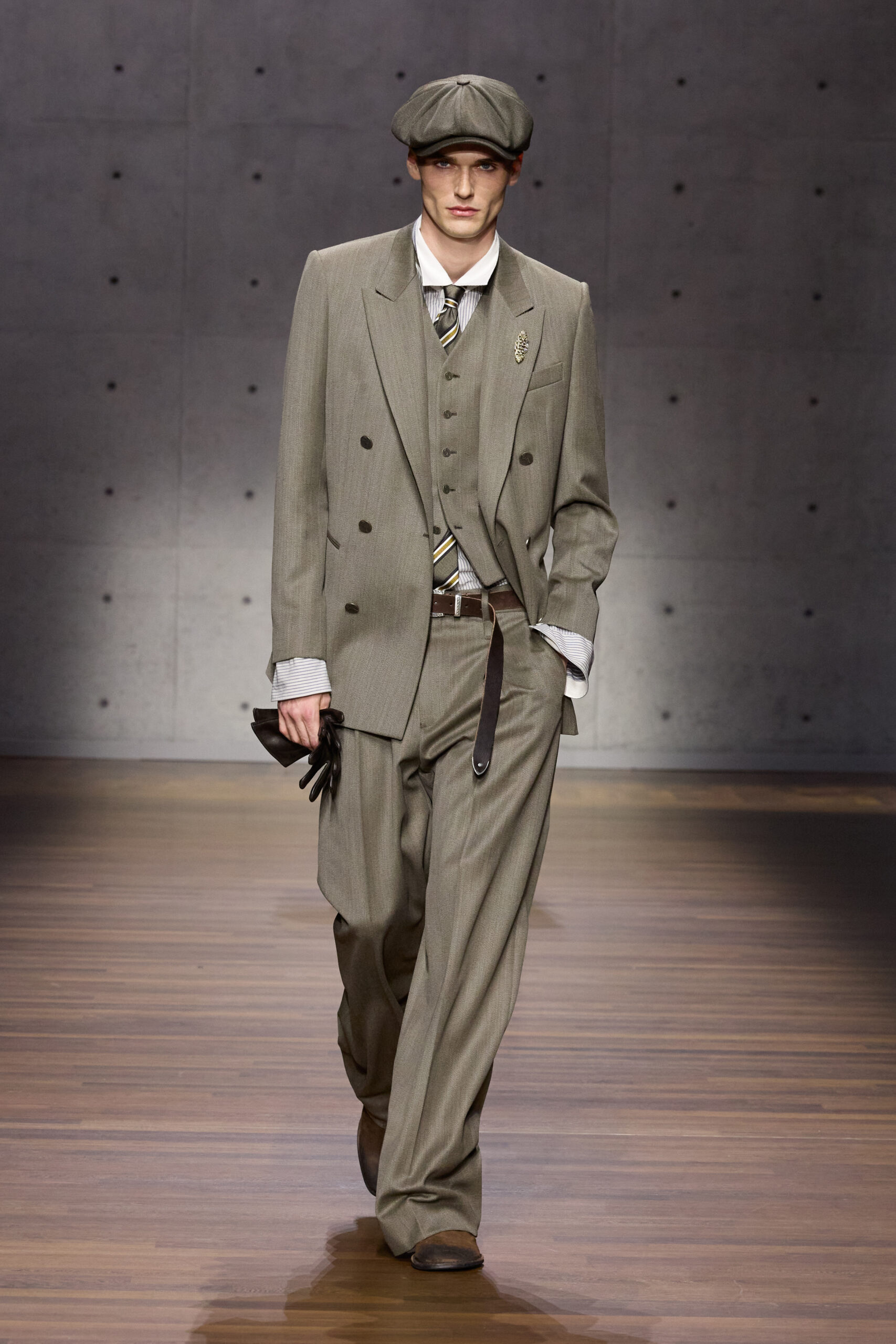
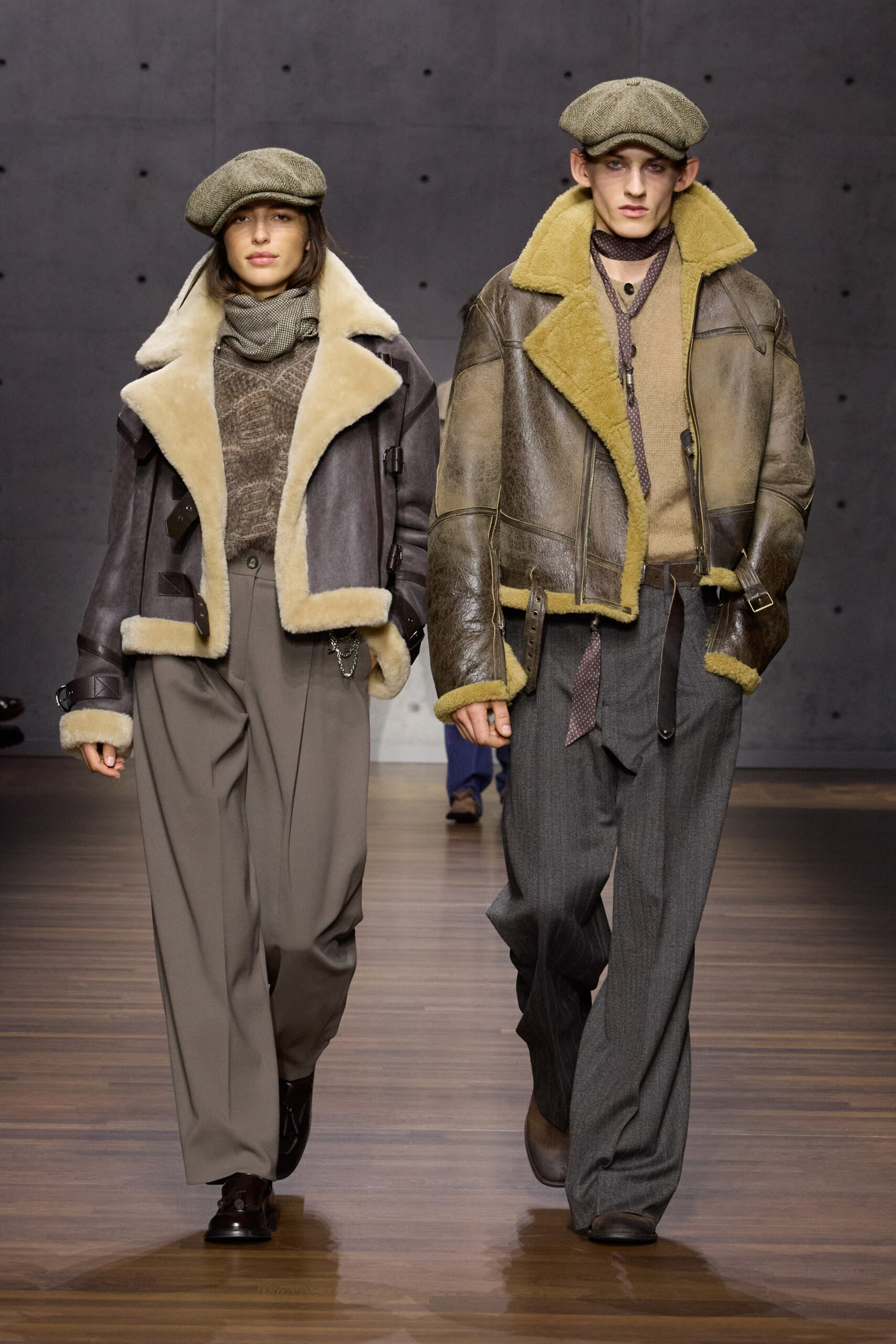
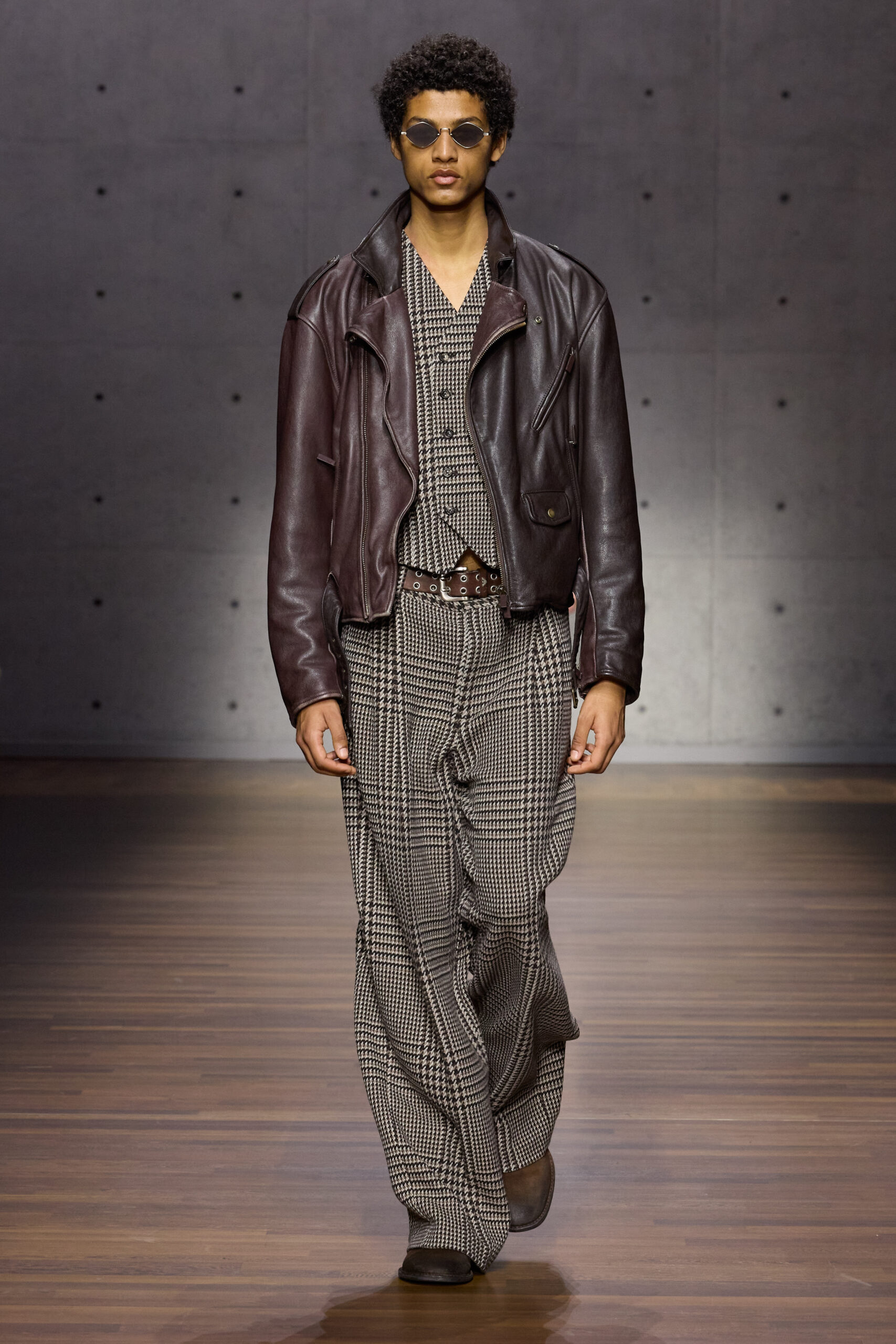
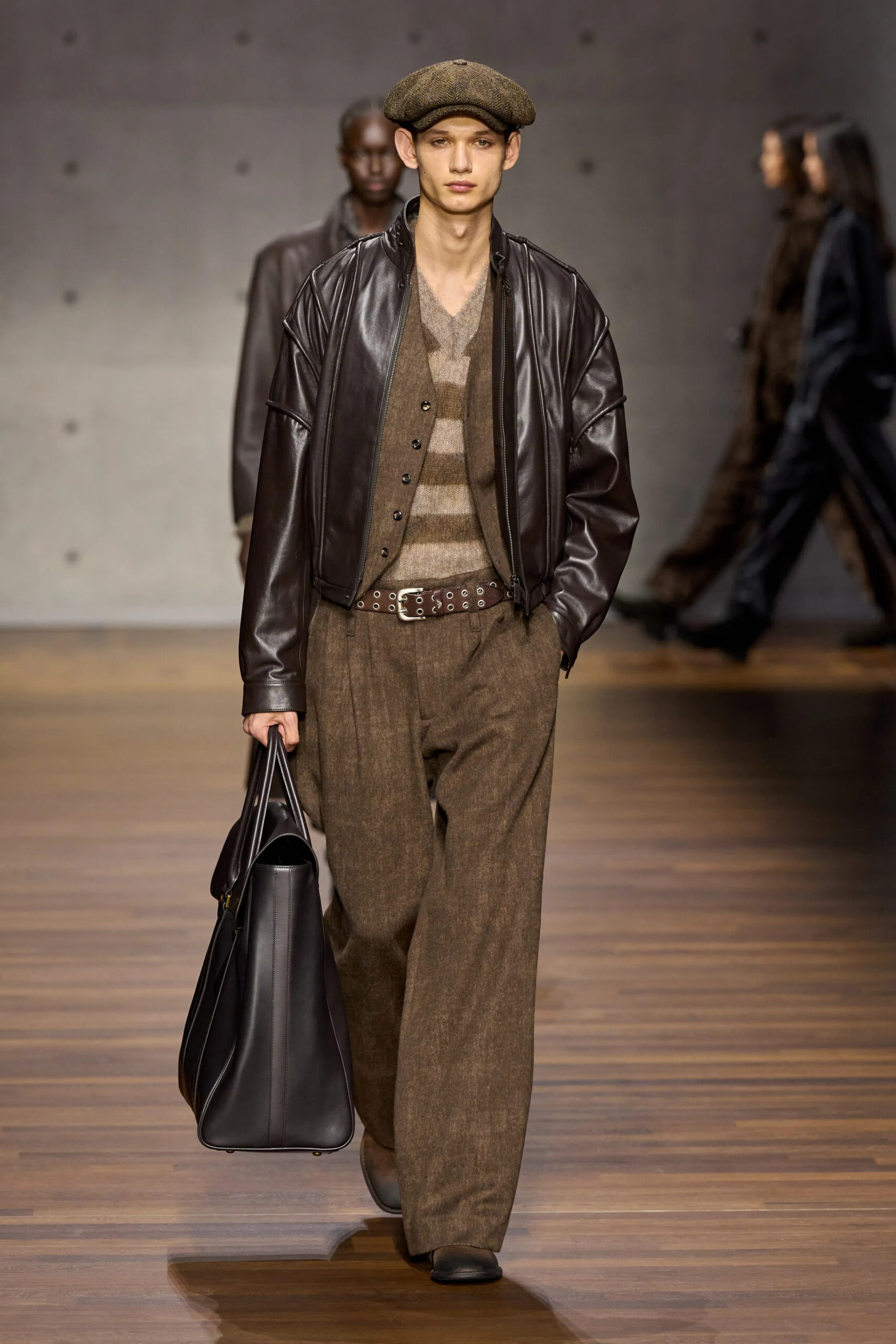
In true Armani fashion, tailoring was the star of the show that balanced British reverence for heritage with long coats, waistcoats, and trousers, and Italian instinct for sensibility in metropolitan living that emerged through denim, leather, and bomber-style jackets.
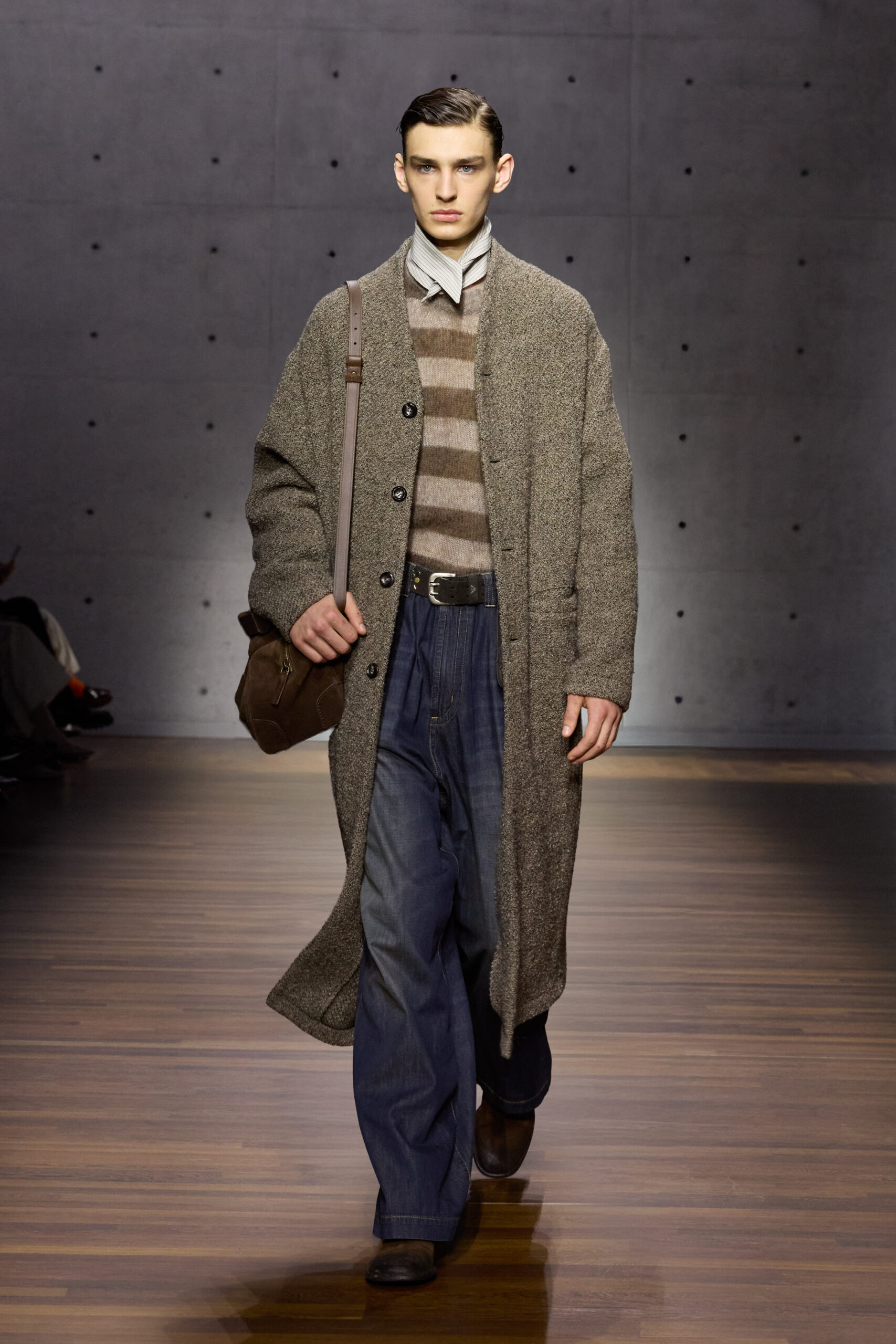
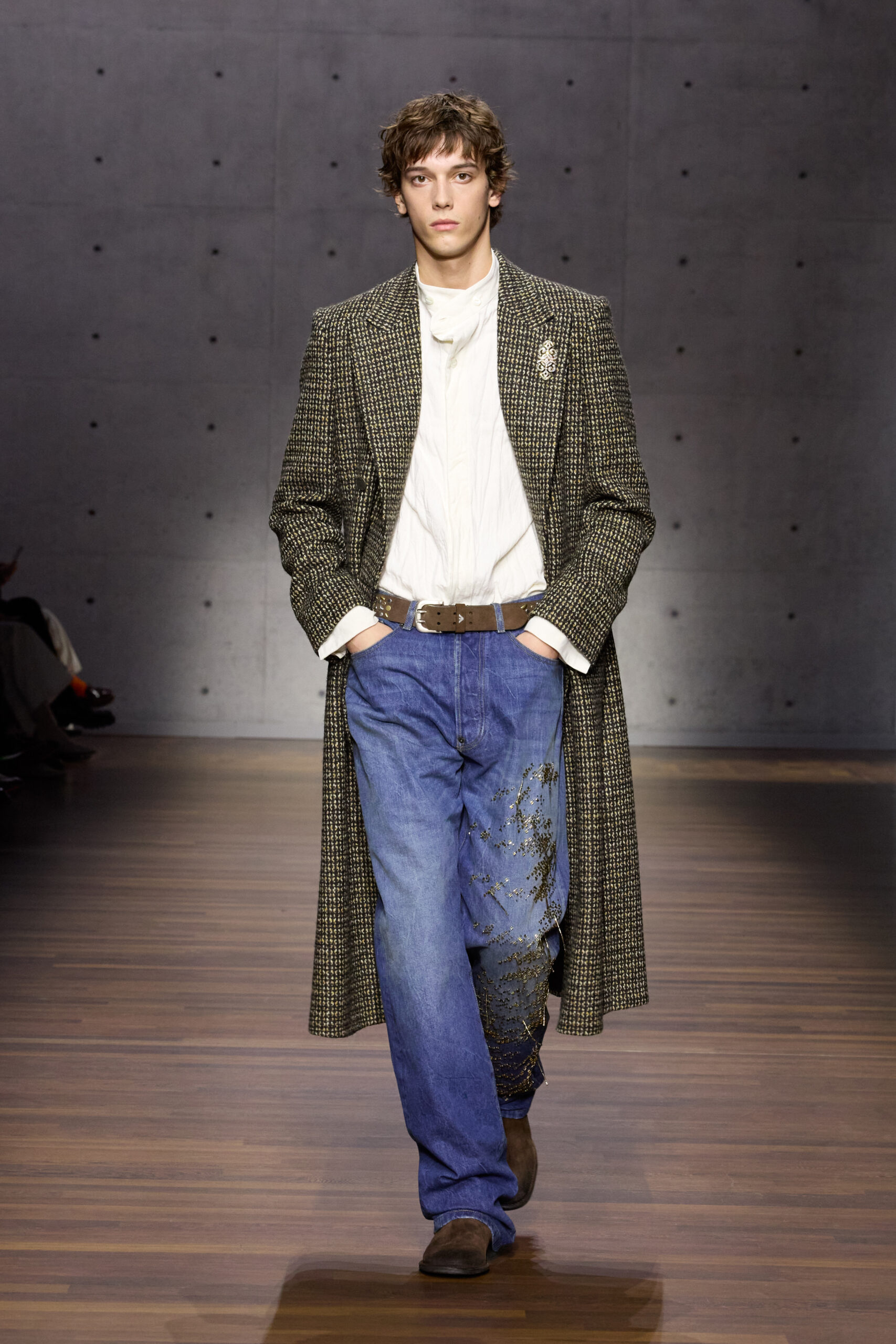
The silhouettes of the runway included trench coats that were adorned by beading that disrupted the garments’ traditional symbol of practicality; overcoats revealed flashes of denim that is utilitarian in origin, yet refined in luxury. British tradition is once again met with Italian spontaneity as soft knitwear is paired against leathers of the highest quality, while longer trousers walk alongside Bermuda shorts.
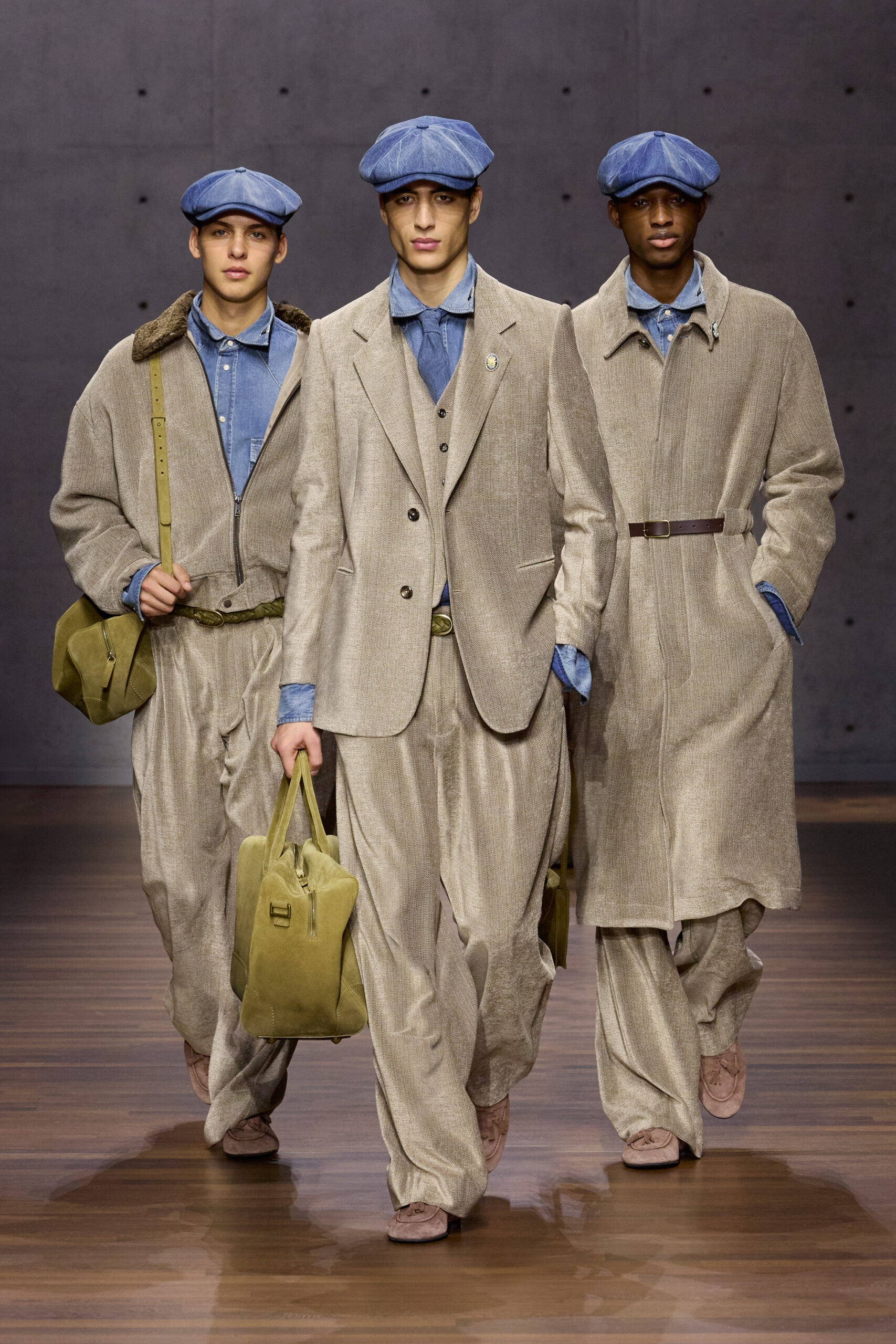
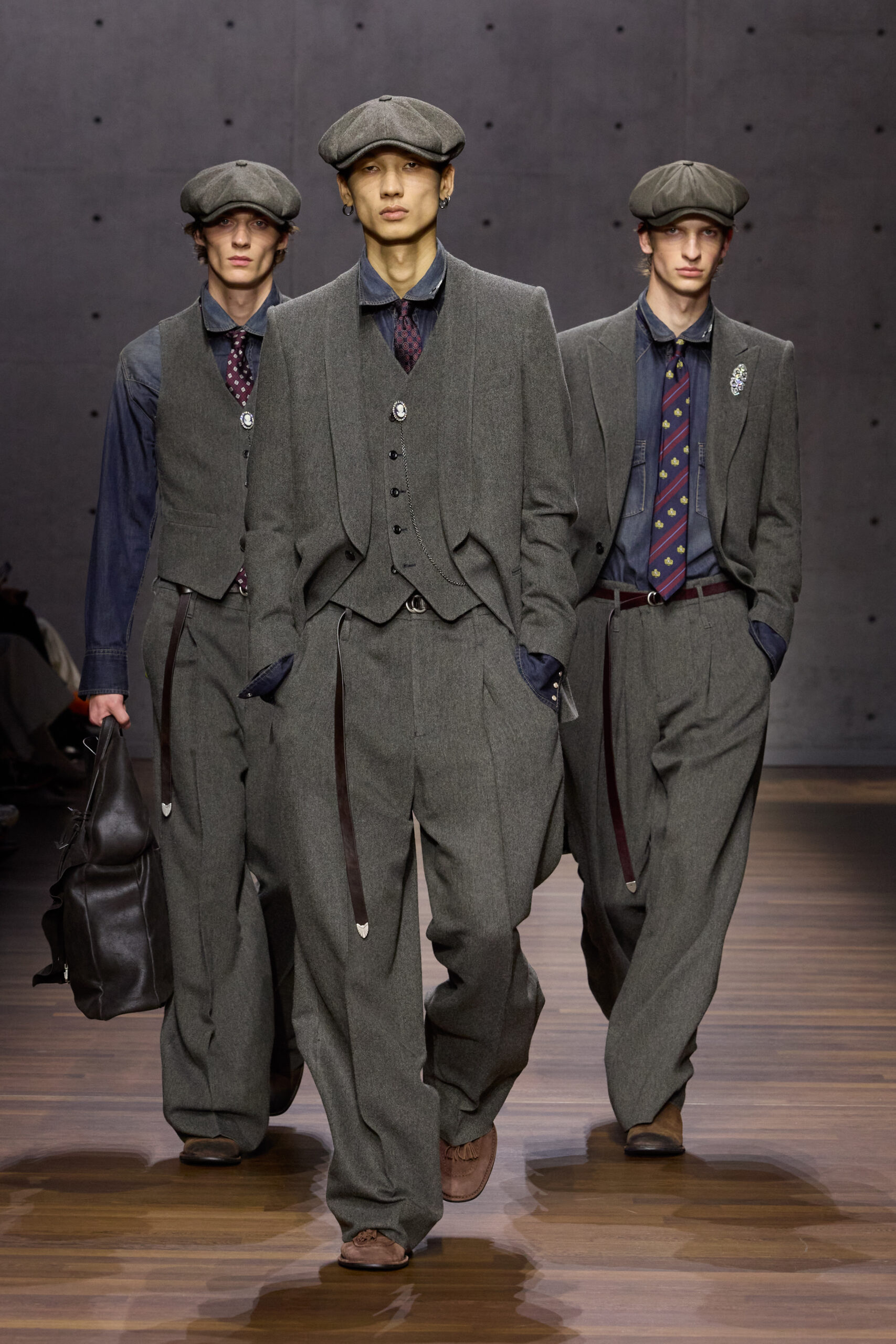
Dell’Orco curated a collection from an impressive spectrum of fabrics – from heritage chenille and tweeds to velvets and wool, alongside denims and leather previously mentioned. Traditional men’s work suits were reimagined continuously, as the fabrics’ placements were deliberately repurposed to shift the mood and energy of each silhouette.
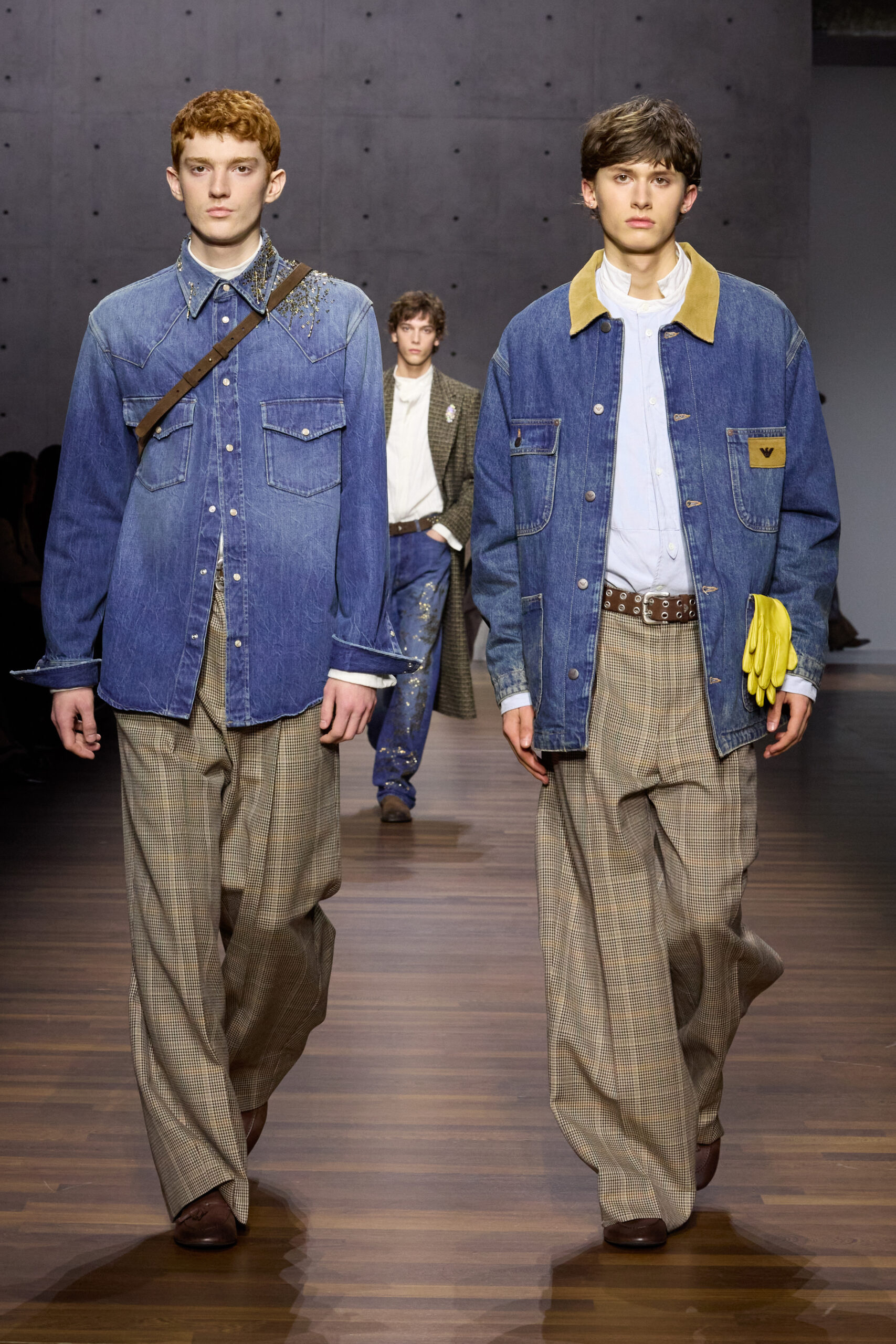
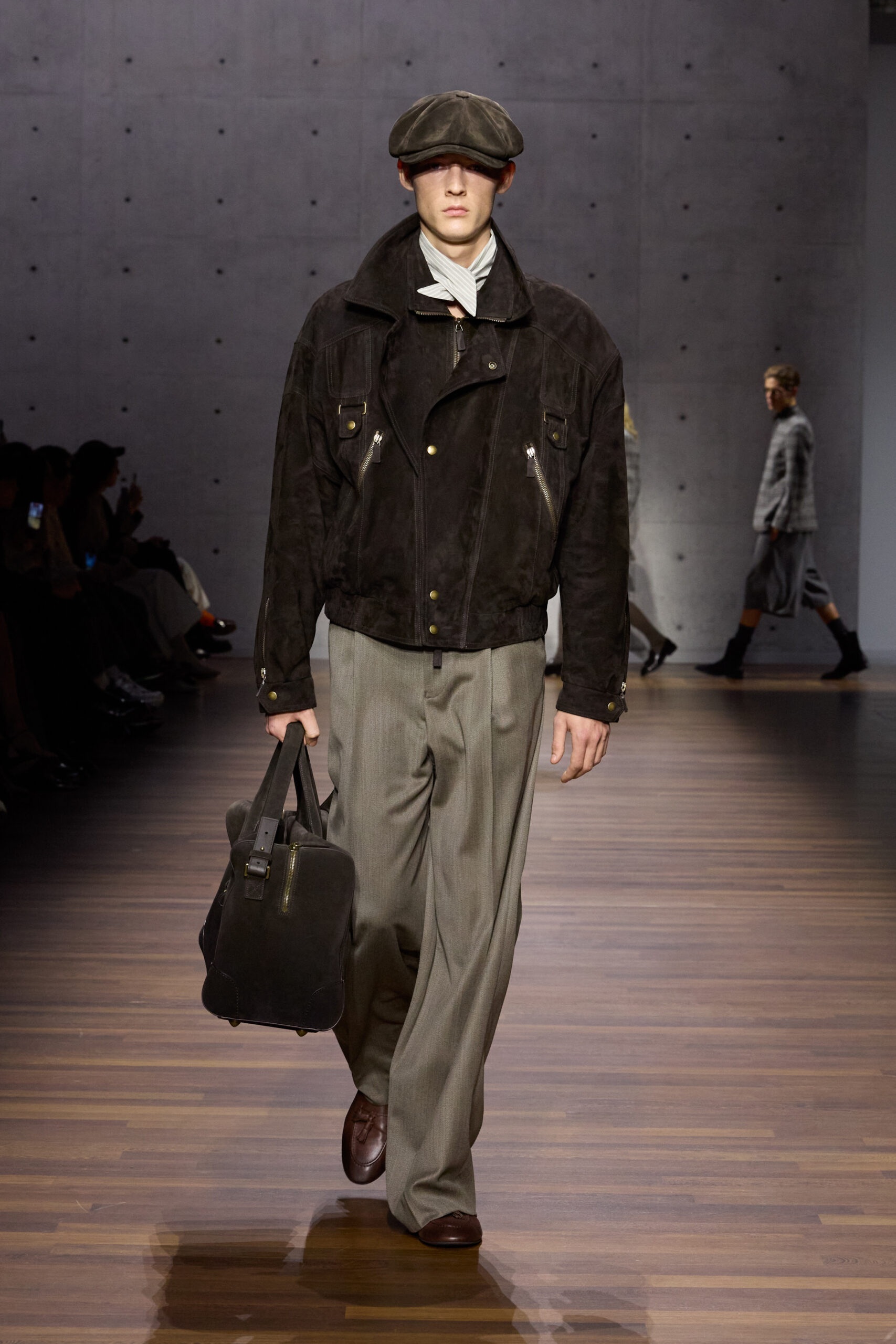
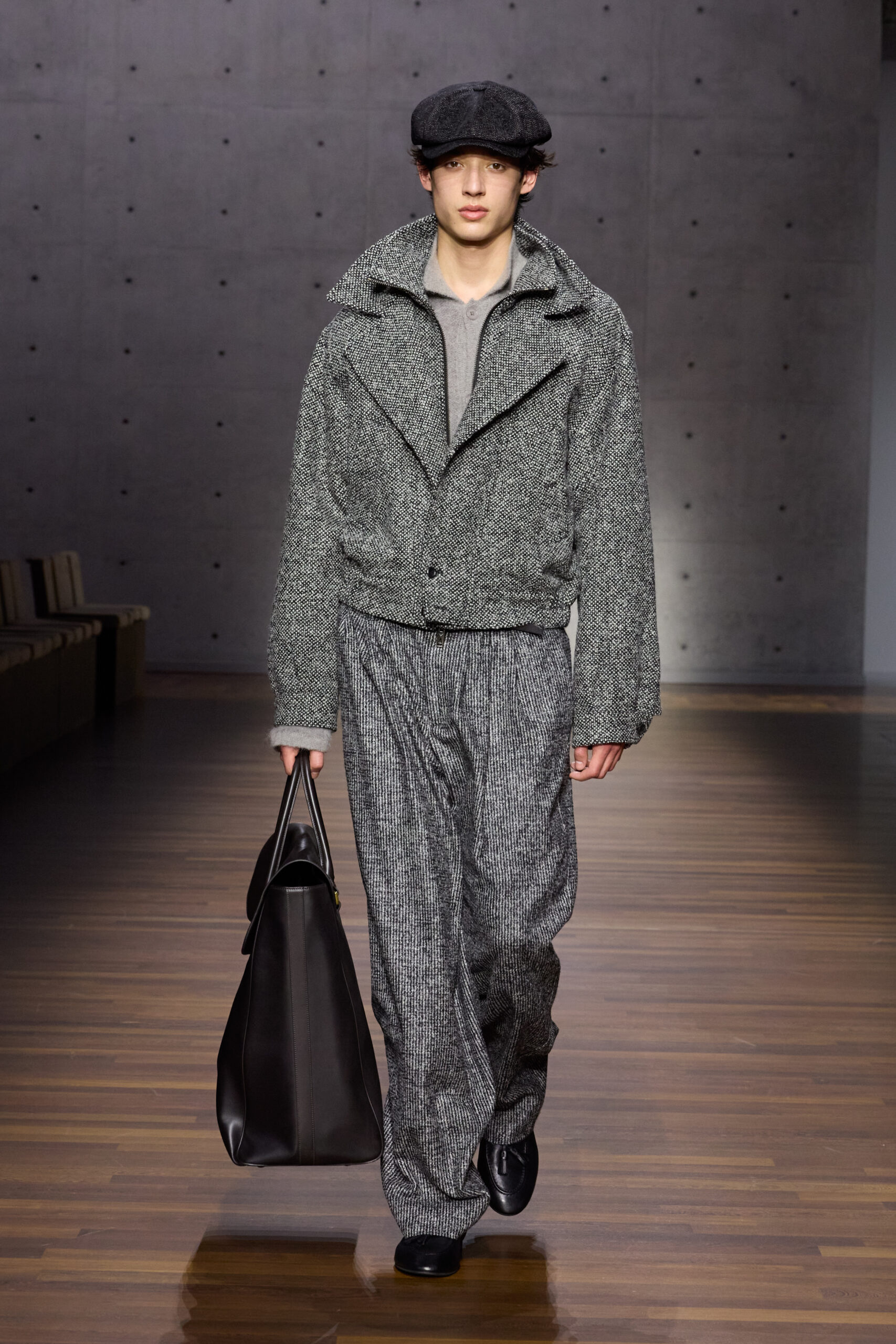
The show’s accessories unified the collection with a clear nod to younger audiences. The house’s founder, Giorgio Armani’s repertoire of hat and cap designs, were present members of the collection that acted as confident signatures rather than nostalgic gestures. Belts are no longer discreet instruments of comfort, but are decisive focal points that structured outfits and commanded attention. Meanwhile, brooches and pocket watches carried through from earlier collections this year, and bags of different shapes and sizes completed outfits.
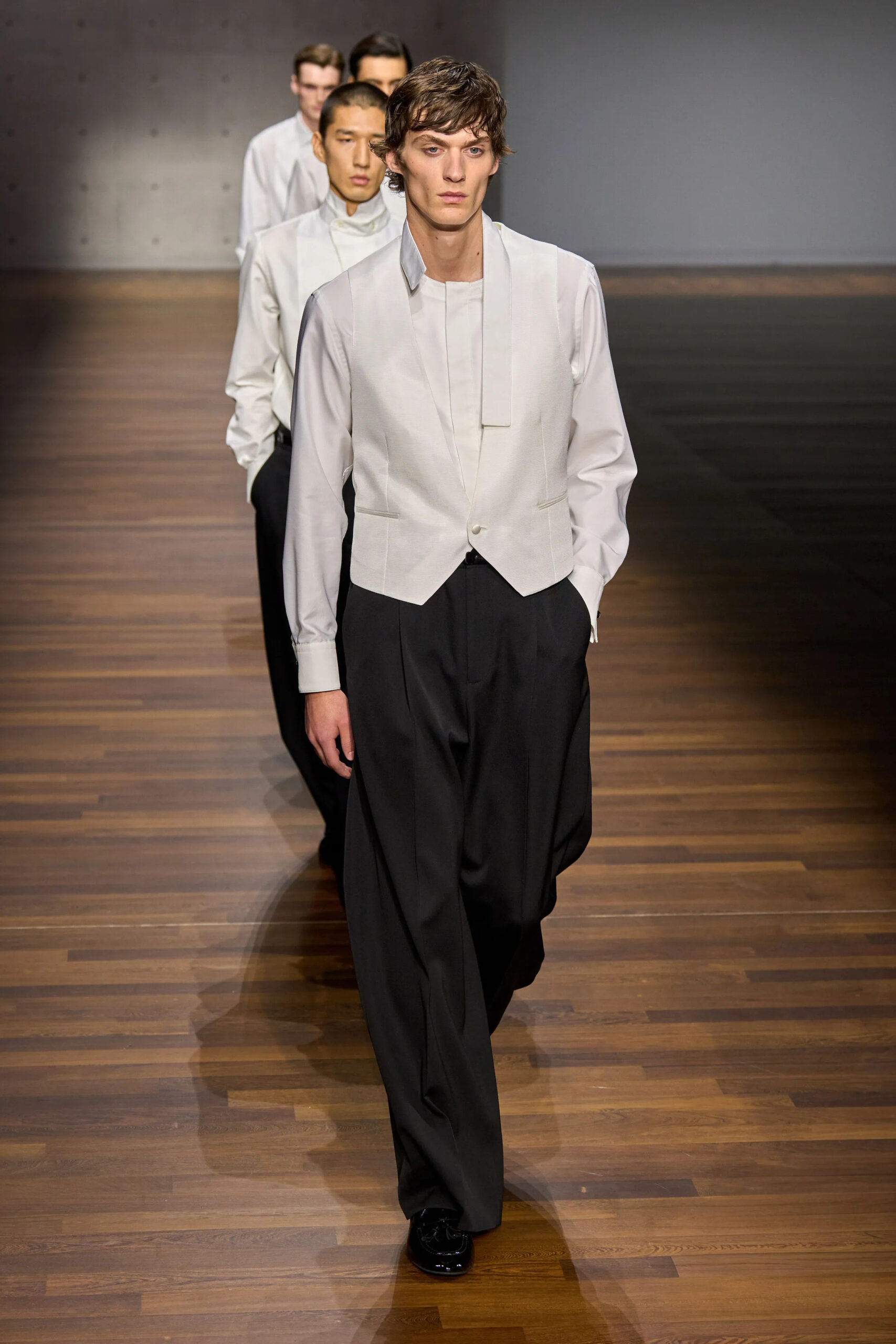
The show closed with a series of models dressed in black dress pants and white shirts that were redesigned for every occasion. Through this, the brand anchors itself in appreciation for heritage while excitedly exploring modern rebellion.