
News


To be an artist in such volatile times is to exist in suspension, hovering between what can be said and what must remain felt. It requires a commitment to the relentless pursuit of putting our crafts, our selfhoods, into question, even when language falters. In this age, Cheb Moha arrives with such peaceful clarity, holding a torch to the play of his childhood and the influence of his father’s role as an archivist. Dubai, Calgary, and Libya emerge as shifting settings, football becomes an embodied practise and photography, a living language.
“Cheb” operates as both prefix and proposition; a nod to youth, heritage, and becoming. Childhood, too, functions as a prefix to Shabab International. Not something to be left behind, but a continual unfolding. Moha’s nomadic nature feeds his photography, the sounds he curates, the scenes he builds, and the sense of welcome he extends to people, to communities, to moments of gathering. Through football, he engages in intimacy with the land and with others, sharing a field, a rhythm, a goal. Beyond the pitch, his designs move closer still, touching bodies, wrapping form, blanketing outlines; all while inviting us deeper into his world.
As palm trees sustain the desert, Shabab offers community as its providence. Roots entangle, nourish, and reshape the ground they grow from. Shabab International bends in the same way by making space, encouraging cross-pollination, allowing relationships to fruition, and practises to blossom.
In this conversation, we explore football as an art form, street photography as a muscle exercising a body of language and expression, the unparallelled warmth of the Middle East, impermanence as both risk and teacher, and the communal exchanges that occur when practises are allowed to collide.
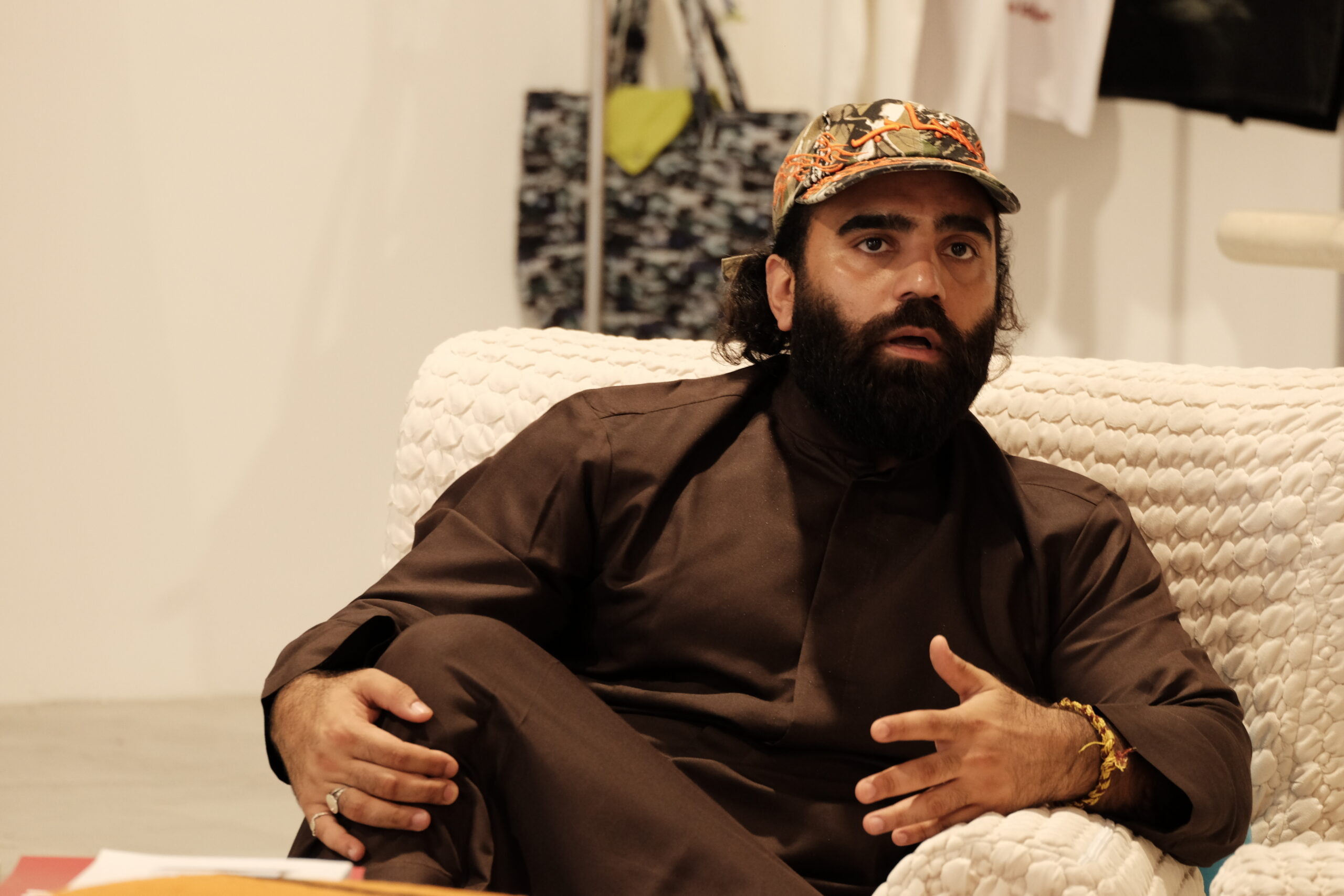
Shabab feels less like a brand and more like an entry point into your world. I’d love to start at the beginning with growing up in Libya. How did that environment shape your sense of self, and how does it continue to inform Shabab today?
Cheb Moha: People always talk about childhood as the source of inspiration, the foundation of your life. For me, I always go back to Libya. How can I say it? My childhood felt like a fantasy. I lived a fantasy. I didn’t think it was real. When I was young, I was exposed to so many different things — music, food, people from all around the world, and football. I grew up in Libya, in North Africa. The music I was into was a lot of Raï and Reggae. People ask me, how do you know this? I grew up there. That was the soundtrack to my childhood.
Football was my first love. I learnt so much from it: discipline, practise, teamwork, and that bond of everyone working toward a shared goal. I vesselled everything I’ve been part of, from music to football, and carried it with me into who I am today.
In creative circles, sport is rarely spoken about as a practise alongside art or design. I realised I had been separating football from your other work, when it may in fact be your most intimate one. DJing and designing inhabited the same sphere for me, overlapping in their creativity, and my mind instinctively grouped them together. In doing so, I fell into this Western inclination to classify, to soothe yourself with compartmentalisation. I failed to consider that sport might be your most intimate practise of all.
Football is a dance between bodies. You move across the land together, driven by a shared goal. You are in physical contact with others, and with the ground itself. It is intimacy in its most embodied form. How do you understand football not just as a sport, but as a form of expression?
CM: At a young age, I was already thinking about the boots I wanted to wear. I matched my boots and socks with my kit. I’ve had every hairstyle possible from mohawks, rat tail, braids, and cornrows. Those were my introductions to self-expression. For my university tryouts, I dyed my hair blonde so I could stand out. Expressing myself on the pitch got me my scholarship. It worked because the field was, figuratively speaking, my field of expression. I was anti-brands. I had a pair of green Nike boots and painted them completely black. At sixteen, I was into this idea of blacking out. Why should I give Nike attention? We played football on the streets in my neighbourhood. We hosted tournaments, people came together, bought jerseys, and formed teams. Football, to this day, is my biggest backbone and my main source of inspiration and storytelling.

When it came to creating a fashion brand, it felt seamless because I was already in that world. It became about creating products or artefacts that reflect my personal experiences while still acknowledging their universality. What’s important for me is to be genuine to myself while telling the story of us just growing up.
You turned more seriously to photography after losing your football scholarship during university. What did that moment of rupture open up for you creatively?
CM: I stopped going to university because my GPA wasn’t high enough. Sitting with my brother in Calgary, Alberta, I told him I wanted to pursue Shabab, and that’s how it started. Football was my love. Some things are meant to mend, and some things are meant to stay dreams. That dream is more than enough for me now. Knowing that, as a kid, I had the courage to dream gives me gratitude. After that, doors opened for music, design, photography, and visual storytelling. I’m grateful that I’ve gotten to have this journey.
Do you remember when photography first entered your life not just as a tool, but as something you felt strongly drawn to?
CM: It wasn’t picked up subconsciously. My dad is an archivist. He’s archived our whole life through video and photo. He would always make us hold the camera and record and take pictures. When I was into that first, he wasn’t so fond of the idea cause he wanted me to be an engineer or an accountant. Acquire a more orthodox way of life, have traditional security. However, when he saw me really being passionate, when he saw me excelling in it, he supported me. He told me, “I was doing the same thing you are doing at your age.” That gave me enough assurance to continue what I’m doing as it’s in my bloodline. I’m lucky enough to do it as a career now. I learnt a lot from him; he’s always giving me comments and feedback. He takes my work in an interesting way as a father.
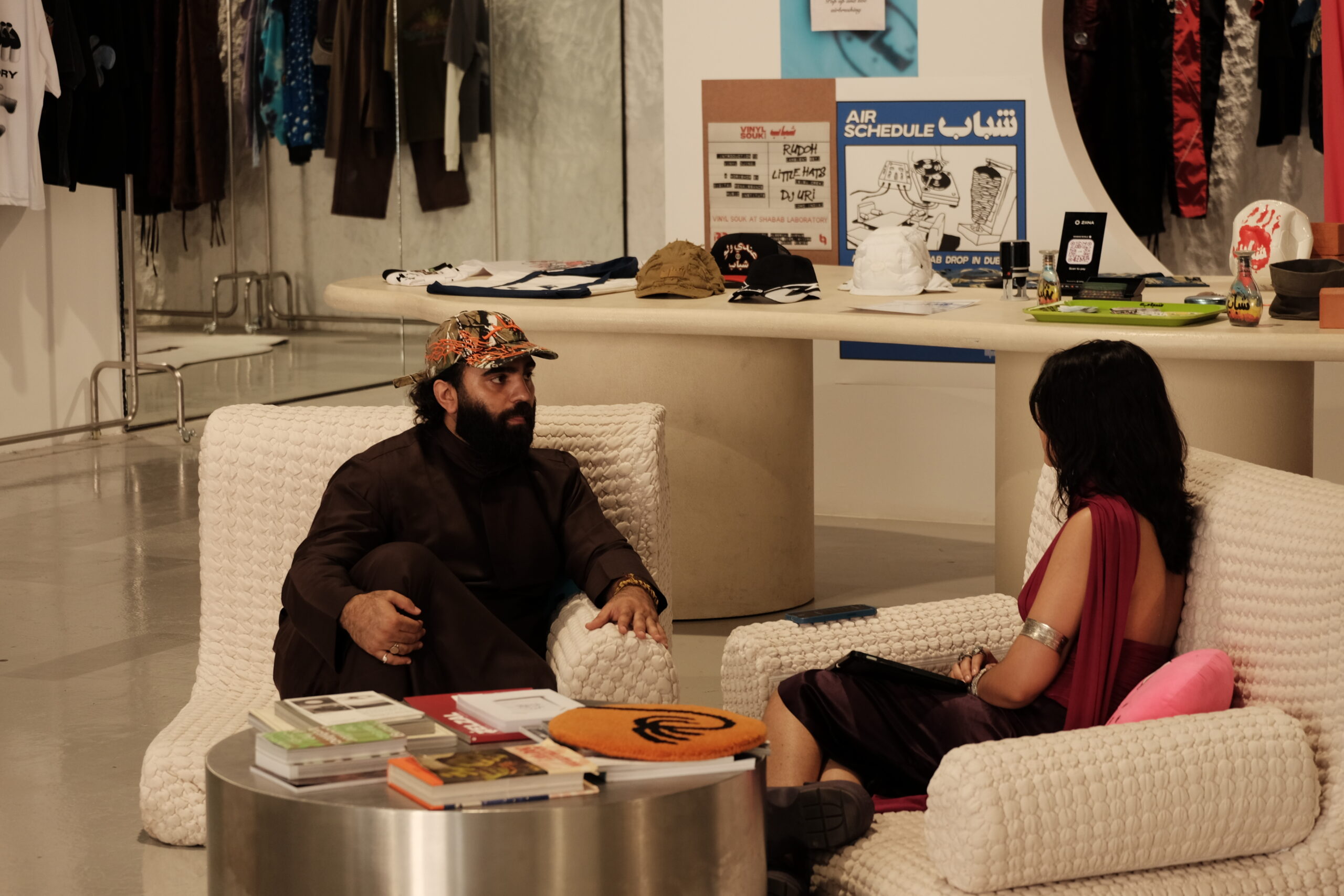
Have you ever gone back through your father’s archive of your childhood? What does it feel like to revisit those images now with distance?
CM: I’ve come to ease with the idea of home. I don’t ask “Where is home?”. It’s a continuing answer. Revisiting these memories helps me understand who I am and why I am the way I am now. Your upbringing is a big indicator of who you can become. I’ve been lucky to use those tools to build a universe of my thoughts and ideas.
Each of my siblings also live in their own world’s of expression; art, philosophy, food. My brother is doing his master’s in philosophy, my other brother is a chef, my twin sister works in art curation and is part of Shabab. We’re all different, but there’s a strong synergy between us. I grew up in a household where my siblings were also my friends. That never changed. We had Shrek on repeat for a year, all of us had it memorised!
My dad made sure we were up to date with technology, cinema, and music. He brought us CDs, taught us how to use the internet. We were one of the first families to have Wi-Fi. He opened up our imaginations. I didn’t realise it as a kid because it was normal to us. My parents gave us the environment to dream. Now, I’m using all of that to pay homage to my life. I don’t represent one specific country or culture. I’ve created my own.
It’s really sweet what your parents were able to create for you and your siblings. You’ve extended your dream like childhood fantasy into your life. And now you’ve invited all of us into it.
CM: Thank you. I’m happy to be able to do this. There’s more fun stuff happening, and hopefully we can go as far as we can and see where things end up. It’s been a special moment, especially with us being in this space from the start and sort of leaving, then coming back and having a full circle moment akin to growing up.
Most of my work in the last couple of years has been very commercial, and I’m taking a step back down from that and focusing more on the opposite. Being present in this space and these moments, and thinking about the people around me, that are friends of mine, people that have similar interests, similar passions, and how we can cross pollinate them, creating together.
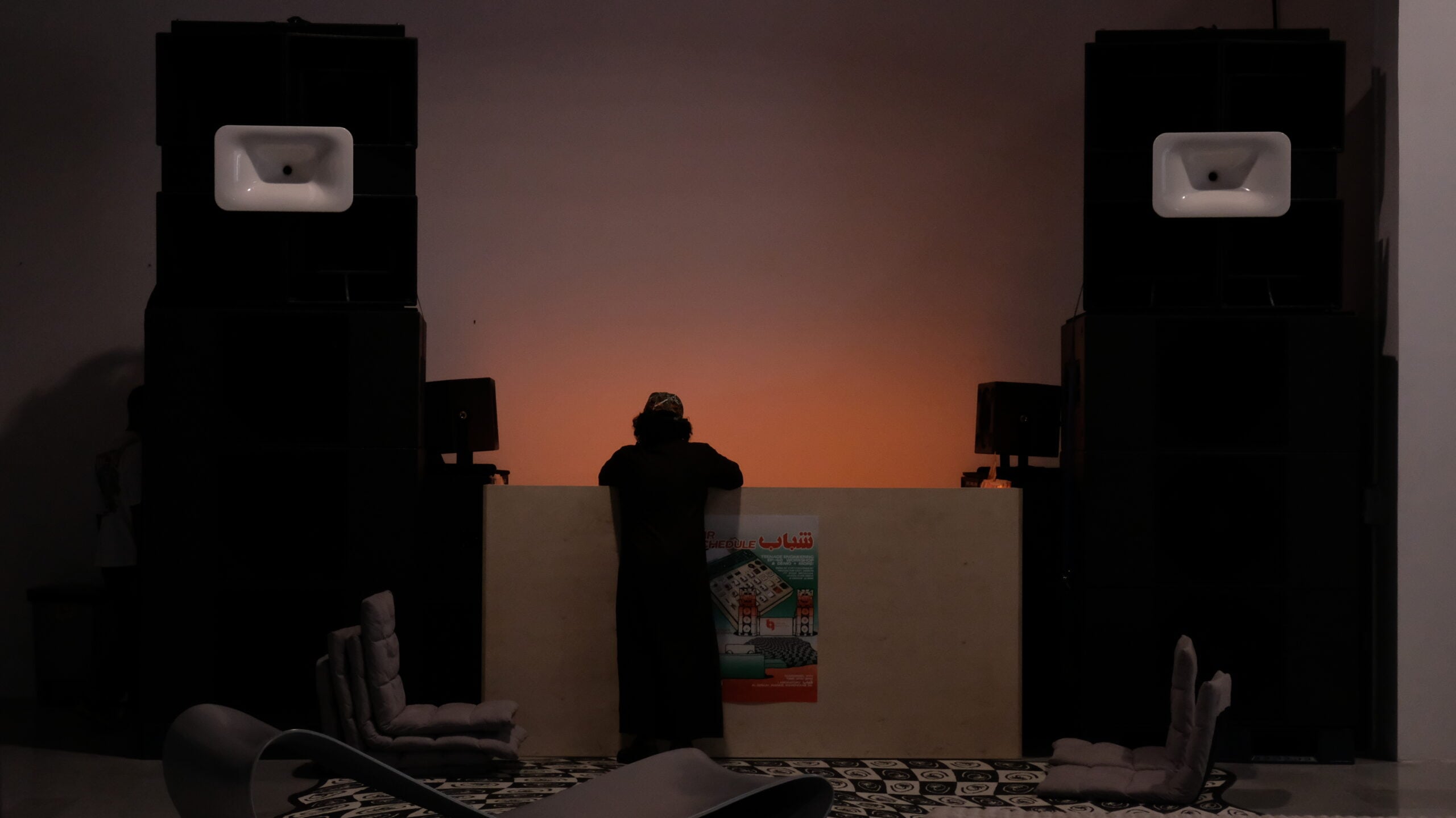
It’s been challenging for me to also push my creativity towards something that I didn’t think was possible, because after a while, you can get comfortable with what you do. Now I’m in a space where I’m being challenged, and It’s been an inspiring moment the last couple of years, because I feel there’s this sort of rejuvenated energy that exists right now in the GULF and is being channelled between people. And you see that in Shabab’s space, for example, we have the tone farm speakers designed by Declan O’Regan. Everything is a collaboration.
What did growing up in the West give you and what did it challenge?
Canada was a beautiful time in my life. It was confusing because I would wonder why everything is so different. Why are people cold? I come from a warmer place, where people don’t treat each other this way. So I was misunderstanding it, rather than accusing it of being harsh on me. This was naive of me, but in a way, it was a defence mechanism to not take it harmfully.
I was so engaged in the specific community of football as most of my life was dedicated to that. I had practise every day, twice a day. I had training, and games every weekend. So I don’t think I ever felt out of place. until I was out of place. I built this character where I could be fearless. I can’t let whatever’s on me affect me. I want to start a game, and I’m not starting; I’m on the bench, I can’t be quiet. I have to tell my coach, “Yo, why am I not playing?” And then my coach’s like, “Well, why do you think you should play?” And I said, “Well, give me a chance to, I’ll show you why.” And those were the conversation’s I was having at 16. I was very daring. That environment was a bit hostile, but it allowed me to build the confidence to proudly say, “No, I know I put in work, I know what I can do.” After that, I started every game.
Also, when I was living there, it wasn’t what it is now. For us as immigrants, it wasn’t like, oh, I’m Arab, I’m Iraqi, I’m Nigerian. We were Vietnamese, Indian, African, South American, and we were all immigrants together. There was this pact of sticking together, as we’re all not from here, which was so beautiful to me. It wasn’t based on language or culture or religion. It was simply based on the simple fact that we come from a place that’s warmer.
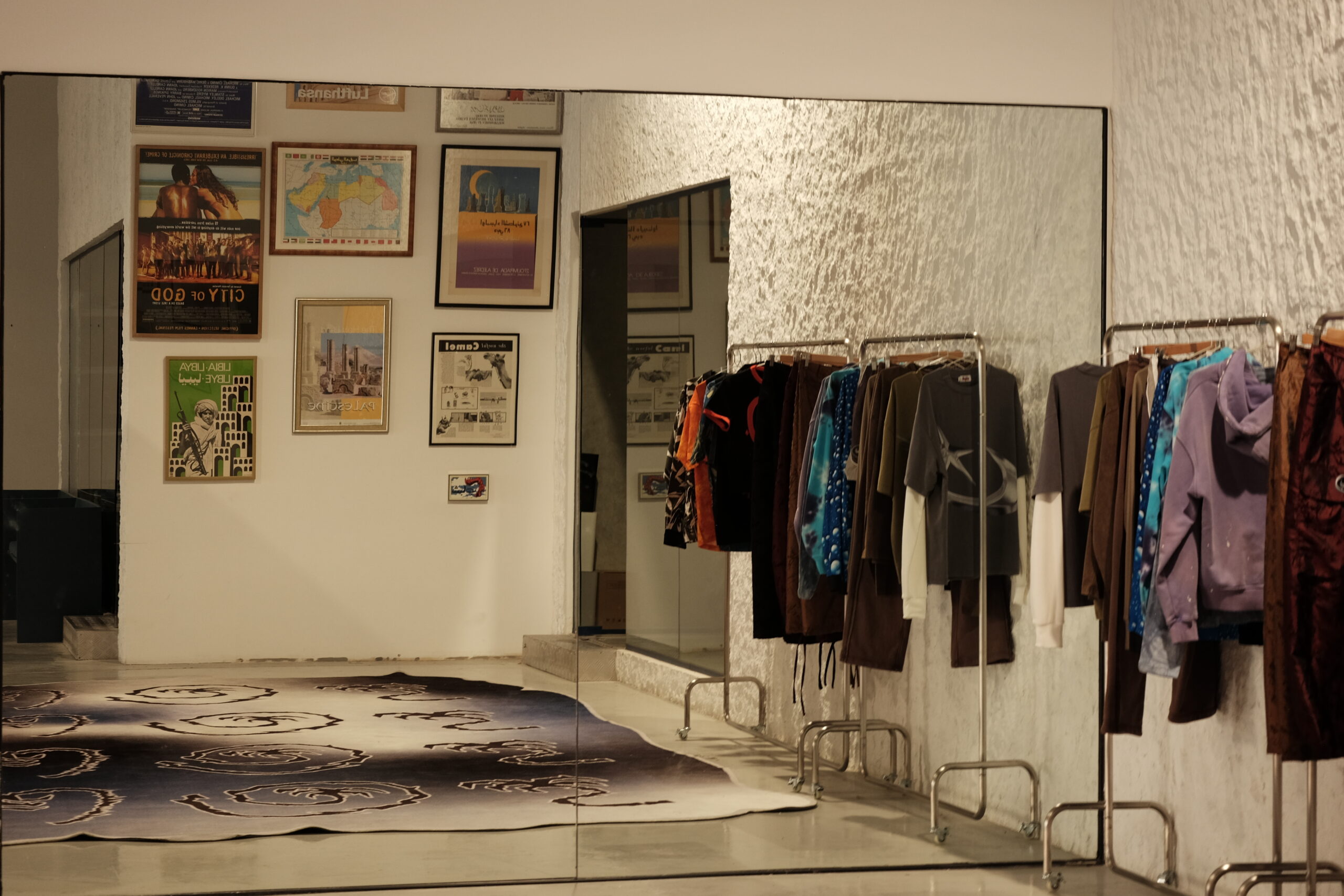
Growing up, my reference points for streetwear were almost entirely Western. When you started Shabab, were you consciously pushing against that hierarchy?
CM: With Shabab, I wanted to push this idea that we could compete with global brands. Instead of consuming and importing, why don’t we export? I champion this idea of lets export from the Middle East. My whole thing was, I wanted to work hard enough to grow Shabab locally and make it of quality so that it can compete globally as well. Instead of importing and consuming, let’s get back to producing our own stuff, whether it’s just for us or the greater beyond. Also, the idea of producing beyond just clothing, creating this homegrown Shabab universe, also intrigues me.
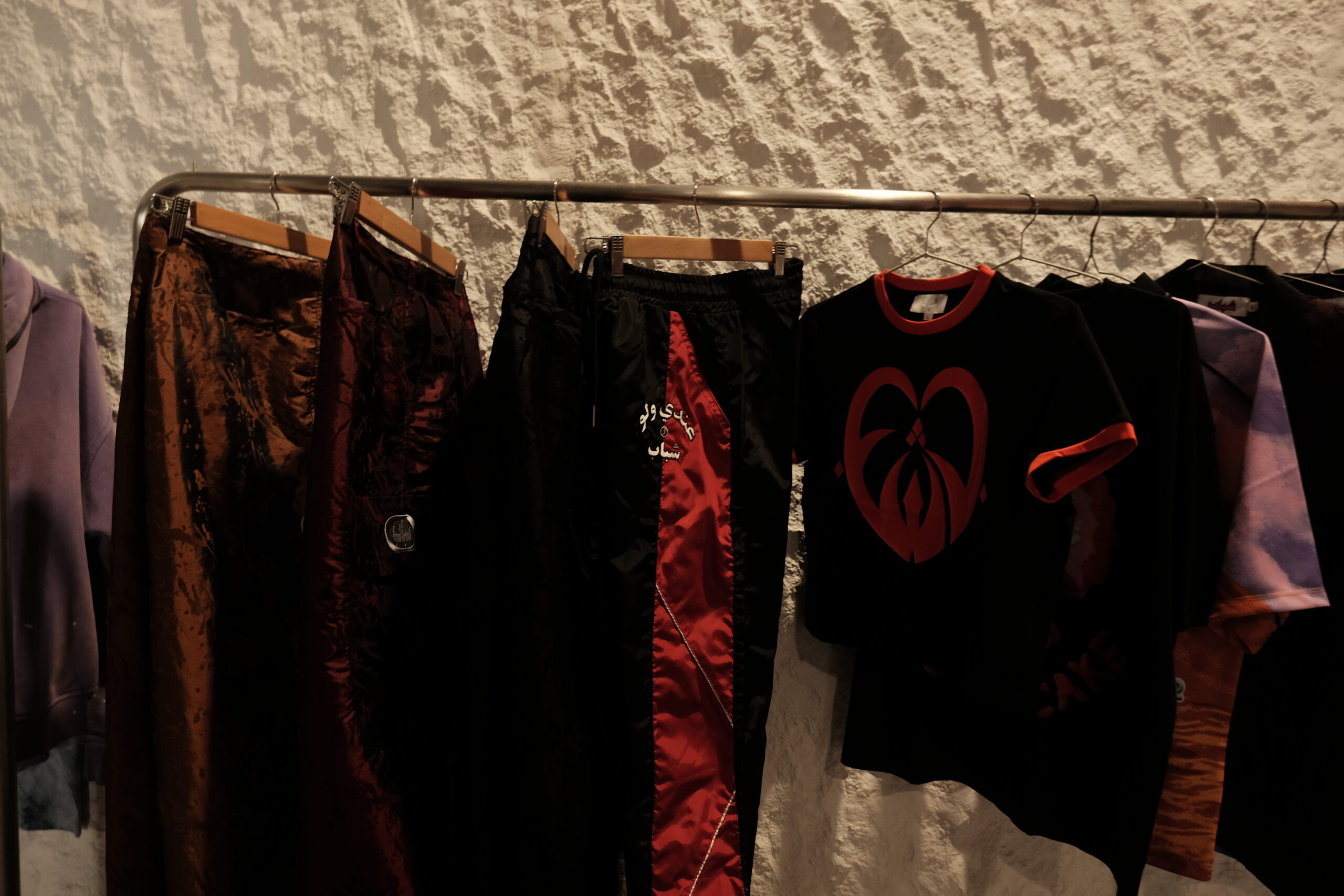
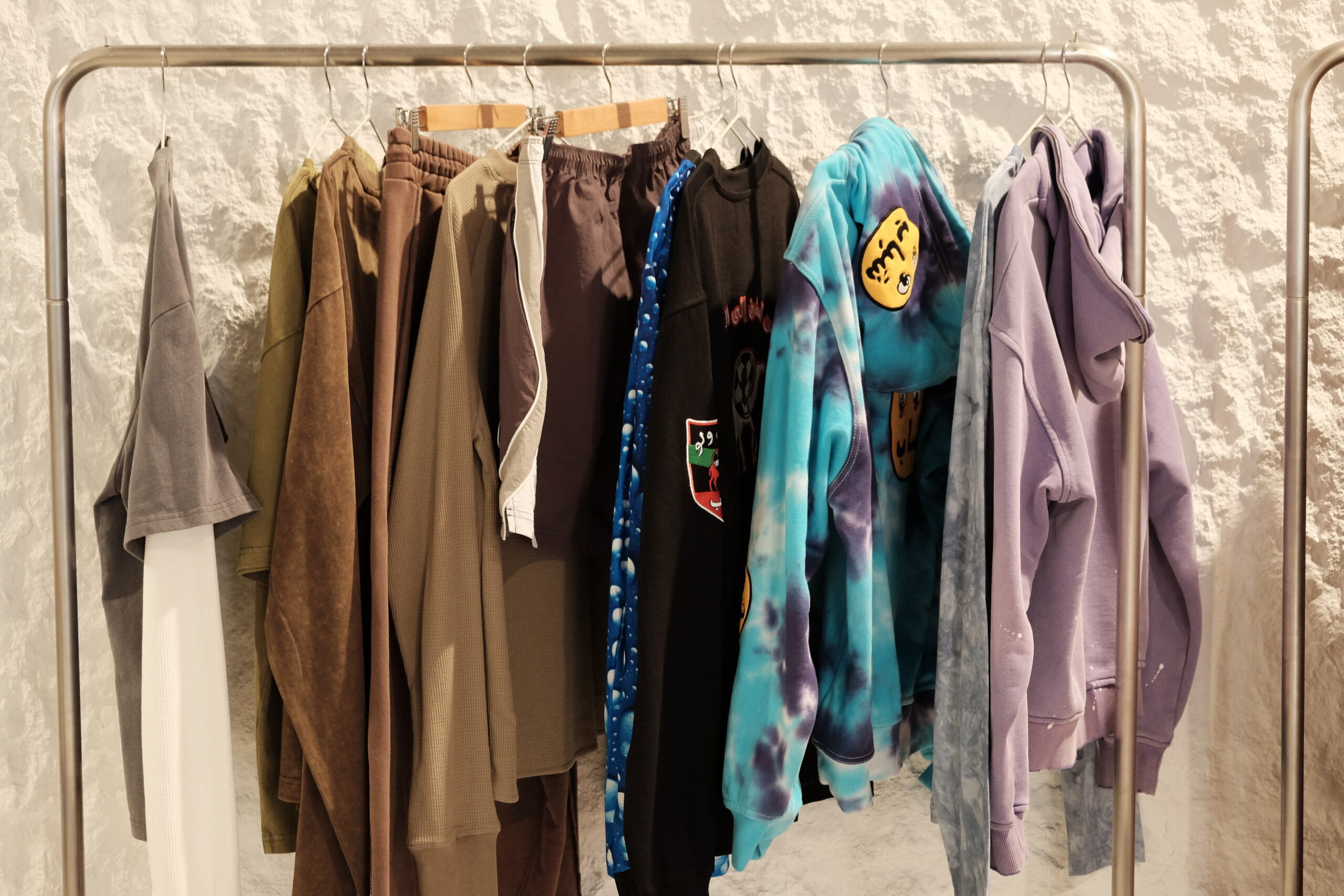
You lived out of a suitcase for 7 years. How did that kind of impermanence reshape your relationship with clothing both personally and through Shabab?
In my 20s, I bought a lot of expensive clothes while also living out of my suitcase. Once, I was in Copenhagen with my sister. I had all my stuff, and I put it on the train, the train left, and all my stuff was gone. I realised how can I be wearing $1,000 pants when I’m living out of my suitcase? That’s how I realised that I can’t let this stuff define who I am, as it’s unrealistic. I started going to tailor shops in Satwa and Karama to make pants and button-ups after that.

You’ve described yourself as both a nomad and a merchant. What does that duality mean to you?
I was just living out of my suitcase, walking around, and selling stuff out of my backpack. People would be like, “Oh, I saw this on Tumblr, and I want to buy it.” So I’d invite them to Shabab’s pop-ups. I met incredible people just off travelling. That’s how people used to do it back in the day. Communities travelled, mingled, and exchanged ideas. We’re supposed to live that way. I really felt this romance in the air, it was a free world. I just happened to sort of exist in a dimension where I got lucky enough to experience this. I don’t know if that’s possible for me now.
However, even then, I never let go of the reality of life. I don’t know if that makes sense. I was still in tune with the internet, and it was my connection to the real world. When people do these sorts of excursions, they do it to get away from the digital world, but I wasn’t getting away from the Internet. The Internet was my connection to the real world, and I used that as my channel to exist.
When was the last time you felt that sense of romance and freedom again?
Every time I get a chance to play music and share it with people! Seeing people engaging with my personal music is really something that makes me want to do more of these gigs. Every now and then, it’s nice to have these little ideas of romance. It’s nice to live freely in this world. Things grow, and things die. Just finding moments that are enough to inspire you to explore is enough for me to be here, talking about it with pride.
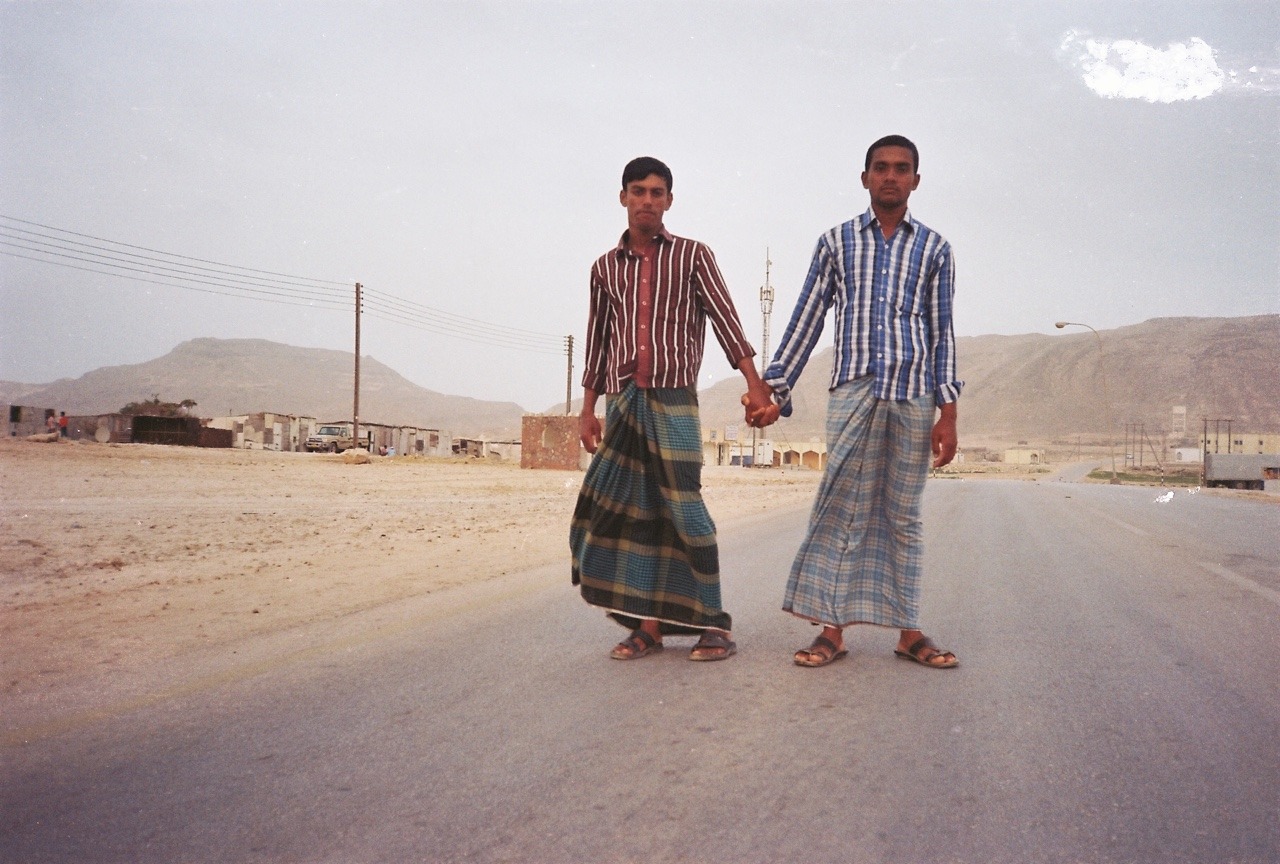
This is one of my favourite photographs of yours. Can you tell me what happened in that moment and how it’s stayed with you?
I really love that picture a lot. It was way out of the city, maybe eight hours out of Muscat. At that time, I was a street photographer; that was my job. I would go out and just take pictures, there was not much being said. It was more of working my body of language. For that shot, they were walking down the street while holding hands. I was walking the other way and I took a picture, and we all smiled at each other, and that was it. In South Asian culture, it’s normal for men to hold hands and walk. It was an empty road, and there were just two guys holding hands and walking. I found it so beautiful and made sure to capture that moment.
The idea was to document these moments that shaped my direction when it comes to fashion, because I had visual evidence of what I wanted to say. Besides my imagination, I had an archive of pictures that I liked. That made me want to keep pushing forward. I want to create, I want to say something with how I dress, with the pictures I take. So many channels, practises exist just parallel to each other. Once you can identify that, you realise they’re just mirrors of each other.


