
News


Day-to-day life offers little reason to venture into the car-showroom-lined stretch of Sheikh Zayed Road, let alone into a space Google Maps describes as an “audio visual equipment supplier.” Advanced Media Trading hosted CINECommunity, their biannual digital cinema gathering, within their own headquarters, convened in partnership with The Courtyard and photography lab Analog The Room.
Running from the 15 to 17 January 2026 with a renewed emphasis on collaboration, knowledge sharing, and creative interdependence, this edition unfolds in the spirit of the UAE’s 2025 Year of Community, foregrounding the many roles, disciplines, and perspectives that come together to make moving-image work possible.
Walking into the lift, I felt a quiet intimidation of being outside the filmmaking sphere. “You look great. Let’s take some pictures upstairs!” two women tell me, juggling their popcorn and ice cream. It took one warm, well-meaning compliment for my intimidation to dissolve into curiosity, and for the distance to disappear almost instantly.
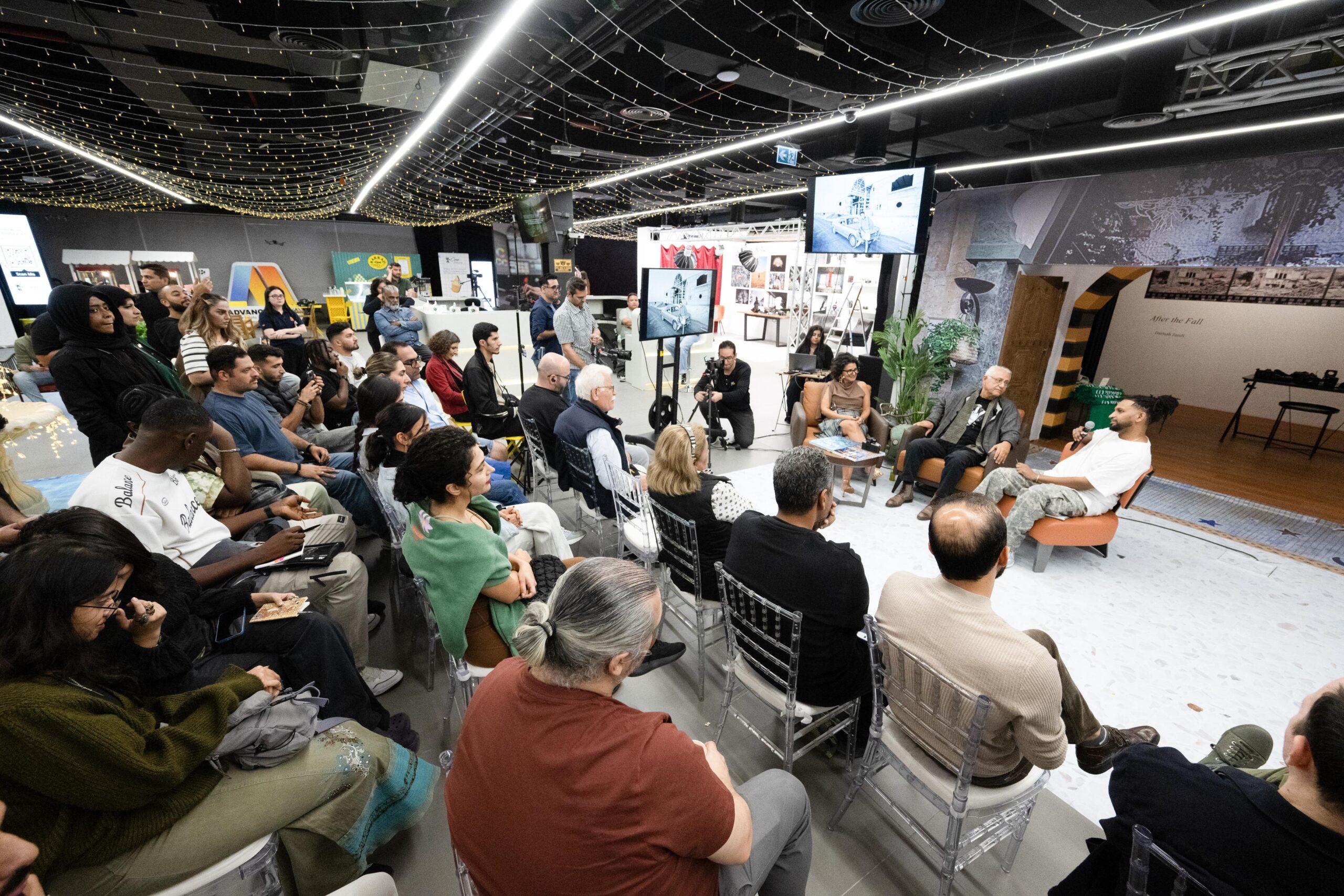
Upstairs, the showroom is barely recognisable. Warm light spills across the space, softening the exposed scaffolding overhead as strings of fairy lights trace the ceiling like constellations. At the centre, a fountain anchors the room beneath a shallow pool of water, while a familiar Courtyard sign rises nearby, unmistakable nods to one of Al Quoz’s most beloved cultural institutions. The walls are wrapped in large-scale architectural prints that echo Courtyard’s textures and geometry, transforming the industrial shell into something atmospheric and inviting. Equipment doesn’t clutter the room so much as it coexists within it, threaded between clusters of people in conversation. Everywhere I look, people move in loose orbits, brushing past one another, colliding, gathering, recalibrating. It feels almost molecular, a space animated by contact and exchange.
That sensation of inclusivity sits at the heart of CINECommunity. Over three days, filmmakers, technicians, artists, and creative practitioners from across the MENA region gathered for an open-house programme of workshops and conversations from cinematic lighting and digital post-production to sustainability and greener production practises, each underscoring cinema not as a solitary pursuit, but as a collective act.
Founded in the early 2000s by Kaveh Farnam and Alaa Al Rantisi, Advanced Media Trading has grown alongside the region’s evolving media landscape, becoming a key distributor of professional broadcast, photography, video, and cinema equipment across the Middle East and North Africa. What began as a response to a rapidly changing market — one increasingly shaped by accessibility, affordability, and new modes of content creation has matured into a company that positions itself as a lead facilitator in the MENA region. CINECommunity extends that philosophy beyond commerce, reframing a showroom usually populated with high grade technical equipment, transformed into a shared courtyard where curiosity, learning, and community can safely plant their seeds.
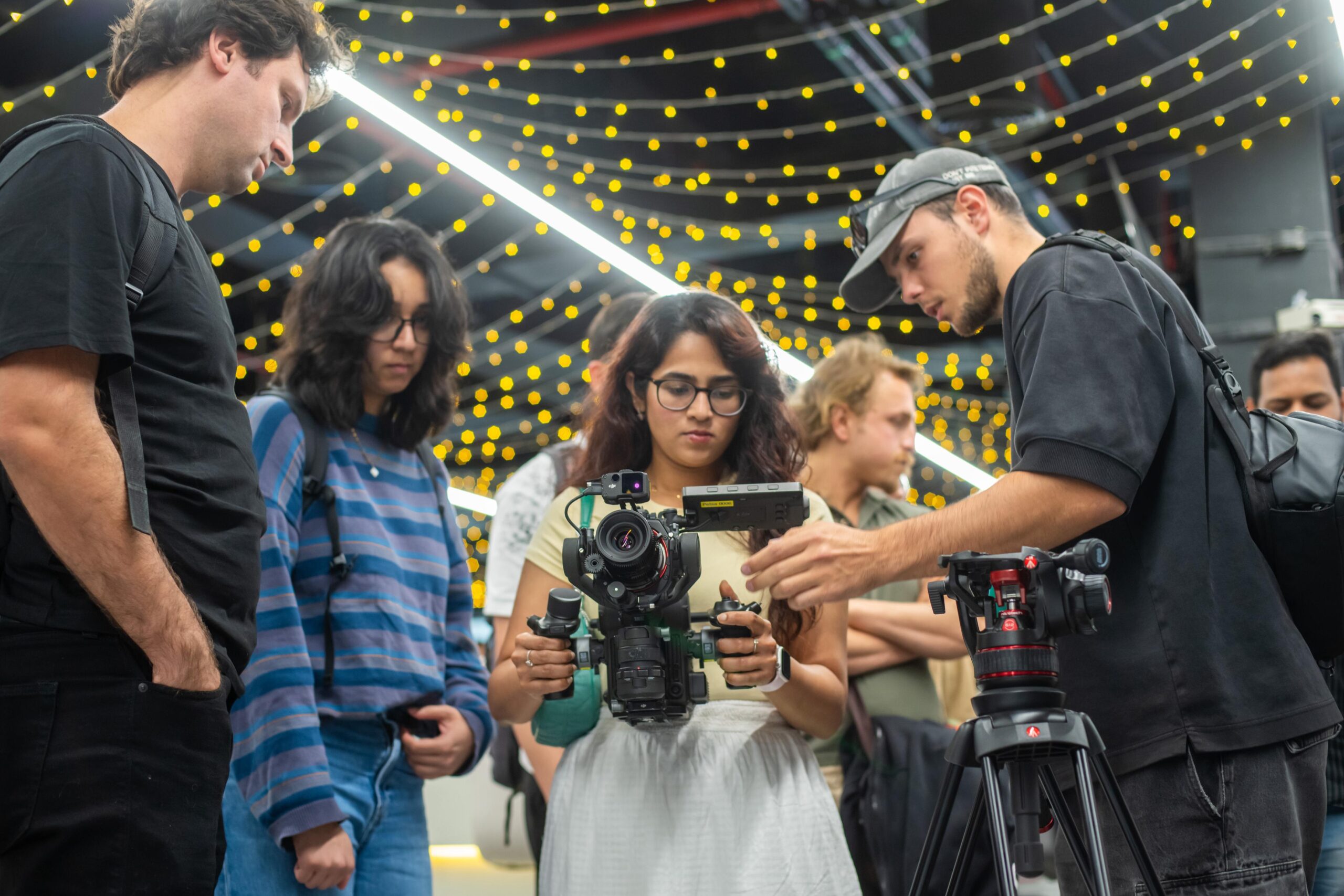
The first iteration of CINECommunity took place in 2020, when Advanced Media’s showroom was still located in Khaleej Center in Mankhool. “We didn’t have the kind of space that could be transformed into an exhibition,” Parnian Farnam tells ICON MENA. “When we revisited the event in 2022, I was new to the project, and everyone kept saying, It’s impossible to build a set, or it would be too difficult to bring in these instructors.” That year marked the first time CINECommunity introduced an interactive set, alongside a roster of speakers that reflected AMT’s ambitions for the programme. “CINECommunity 2026 is, in a way, my way of showing that whatever you want to do is achievable, as long as you communicate consistently, work collectively, and commit to a clear vision.”
In 2025, when His Highness Mohammed bin Rashid Al Maktoum announced the Year of Community, the direction crystallised. “That was music to my ears,” Farnam laughs. From there, CINECommunity 2026 grew from a simple but expansive question: what does community actually look like? “AMT has a community, of course, but it’s a niche one. What we do can be difficult to explain outside of it. So we started thinking about spaces and connections that could expand that circle.” For Farnam, the answer was deeply personal.
“I’m Iranian, when I think of a community in a physical sense, I think of old houses and their courtyards. Where grandparents, in-laws, students passing through the city, all share the same space. At night, everyone gathers there. All of them coming together at a courtyard at night during celebrations and mingling with each other.”
That image, both literal and symbolic, became the seed for AMT’s decision to collaborate with The Courtyard.
The Courtyard is not simply just an architectural feature, it is one of the most enduring spatial ideas across the region. Stretching back thousands of years, across Syria, Iraq, Iran, Pakistan, and beyond. Long before it became formalised in domestic architecture, it existed as a way of organising life itself: tents arranged around a central clearing in the desert, offering protection, visibility, and shared ground. Over time, that logic solidified into stone, brick, and plaster, becoming the heart of the home. An inward-facing world shaped by climate, culture, and collective living. In Islamic architecture, the courtyard’s power lies precisely in what it withholds. In places like Aleppo or Isfahan, courtyards were animated by citrus trees and climbing jasmine, their facades patterned with intricate geometry, their fountains offering both cooling and calm. That philosophy is unmistakably present at CINECommunity. Printed architectural surfaces echo the textures of Dariush Zandi’s Courtyard, and a fountain that delights attendees sits at the centre of the room.
In Iranian architectural thought, the void carries meaning of its own. The courtyard is a negative space; not empty, but charged. A place where air, water, earth, and sunlight are invited inside. It is where seasons become visible, time is felt, and balance is restored. Historically, these spaces were designed to regulate climate naturally, but also to support social life: extended families living together, resources shared, labour collective. Sustainability, in this context, was not a strategy but a condition of survival, environmental, social, and economic, intertwined. High-end camera equipment, post-production tools, instructors, and visitors circulate around the same centre, each dependant on the other.
Knowledge circulates freely, not just in what is shared, but in how the space allows it to circulate. There are no rigid rows of chairs, no fixed point from which information is delivered outward. During the early evening workshop led by Los Angeles–based cinematographer Sarah Winters, people drift in and out of the space, lingering at one station, circling back to another, learning as much from watching models in motion as from listening to instruction. It feels closer to a shared studio than a classroom, a place where curiosity leads.
That openness matters. Technical workshops often come with an unspoken hierarchy: the expert speaks, the audience listens, and questions are rationed. Here, the structure resists that formality. I find myself moving freely, stopping to observe how models angle themselves under the lights, picking up fragments of knowledge from side conversations, and watching others ask questions openly without hesitation. The learning happens laterally, peer to peer, with an ease that makes participation feel instinctive and encouraged.
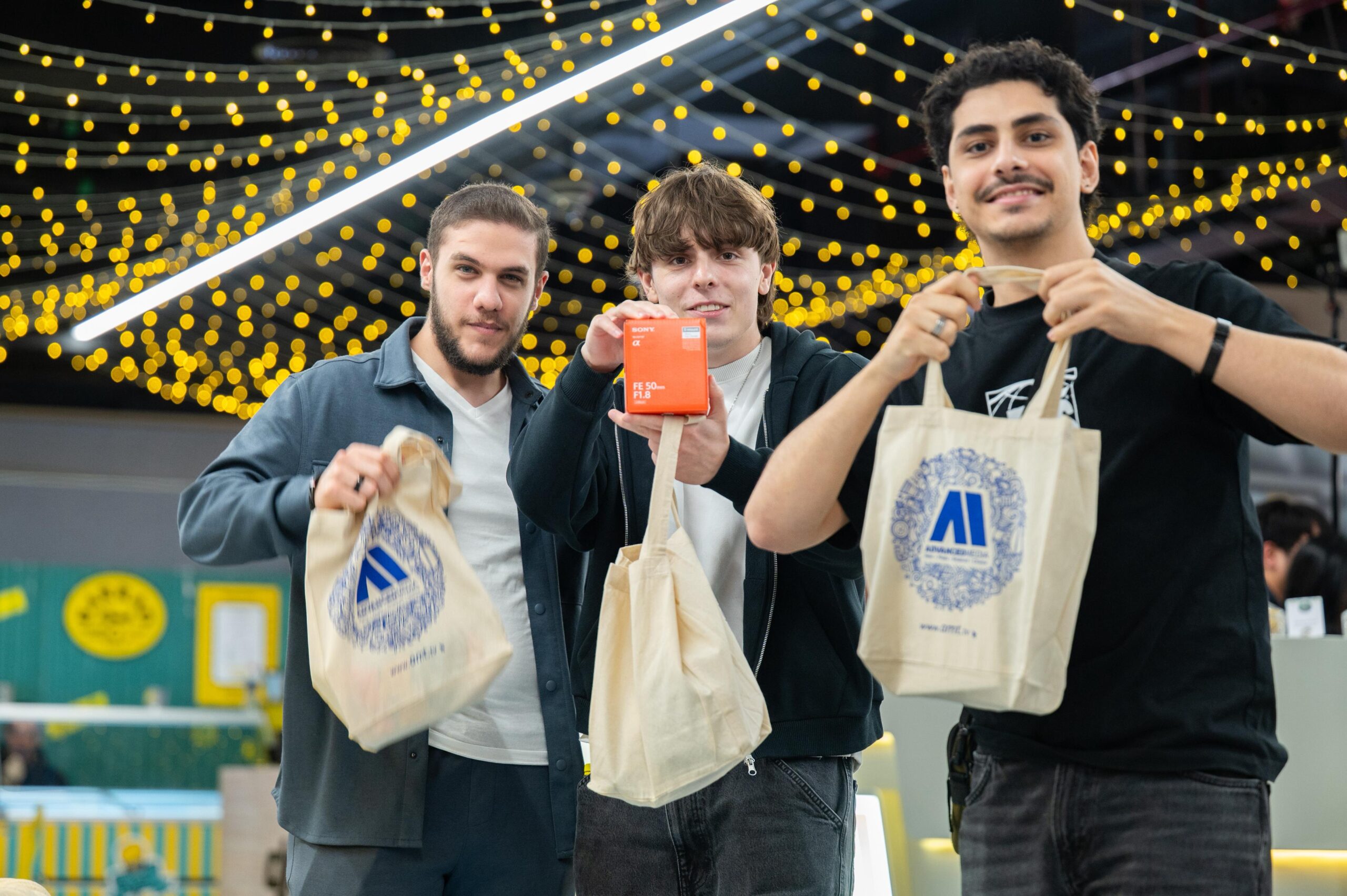
That refusal of rigidity extends beyond the events’ pedagogical practises. Farnam is frank about what she wanted to avoid.
“I don’t like that territorial experience you get when you walk into an event. It’s all almost as if, oh, this is my brand, this is our corner. Yes, we’re collaborating. But we’re not going to really share resources. It’s almost as if there’s clear demarcations between people’s businesses and their habits and their hobbies, and everyone is doing it for PR. It’s not a genuine commitment to camaraderie, solidarity, and collaborative work. So I wanted to make sure that we get rid of all of those boundaries, all of those demarcations and territories. And I think because it was a genuine, sincere message that people needed to hear and receive in the UAE, it resonated.”
Too often, she notes, industry gatherings in the UAE replicate territorial logic. Corners marked by brands, collaborations that stop short of true exchange, participation driven more by visibility than solidarity. Clear lines are drawn between businesses, practises, even personalities, turning community into performance rather than practise. With CINECommunity, AMT was determined to dissolve those boundaries altogether. Instead, the emphasis is on shared ground, on creating conditions where collaboration feels genuine, unforced, and rooted in mutual curiosity rather than optics.
This approach is intentional. From its earliest edition, CINECommunity was conceived as a brand-agnostic space; one that prioritises people over products. Rather than positioning equipment as the centre of attention, the focus remains on those who know how to work with it, shape it, and push it creatively. The instructors are not brand representatives, but practitioners deeply fluent in their chosen tools chosen as much for their generosity as for their expertise. As Parnian Farnam explains, “The goal has never been to just showcase what a camera or system can do, but to create an environment where people feel confident enough to ask questions, experiment, and begin articulating their own creative voice.” After all, the most advanced equipment means little without imagination to animate it.
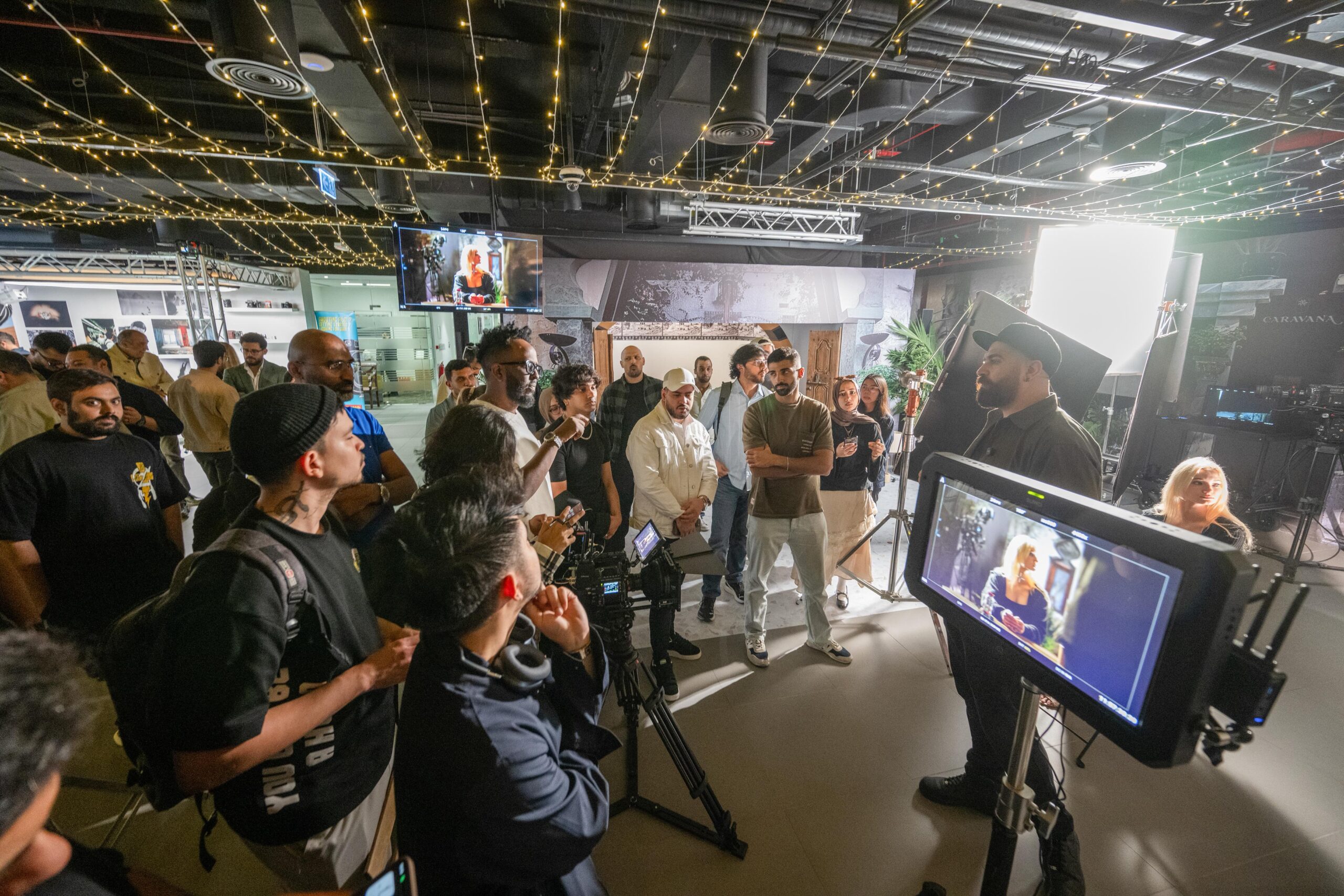
In that sense, the openness of the workshops mirrors the logic of the courtyard itself: a shared centre without hierarchy, where movement alongside knowledge sharing is encouraged and takes place naturally. The technical and the human are no longer separate domains, but complementary forces. It’s fitting, then, that Dariush Zandi’s panel on the role of community in the creative process concluded the second day. Courtyard itself has long functioned as a cultural anchor in Al Quoz, by bringing that ethos into AMT’S own headquarters, Advanced Media reframes its role within the industry: not just as a supplier of tools, but as a host, a facilitator, a community-maker.
Despite decades of conversation around inclusion, cinema, particularly on the technical side, remains strikingly male-dominated. Globally, women cinematographers continue to make up single-digit percentages of directors of photography on major productions; similar disparities persist across camera, lighting, and post-production departments.
For the first time, half of the workshops are led by women, including those centred on the most technically coveted tools in digital cinema. Women are placed at the centre of the event’s most anticipated sessions, not on the margins, not in soft-focus conversations about creativity, but at the core of technical authority. That distinction matters, particularly in a climate where gender disparity is often acknowledged without being meaningfully addressed. The industry is no stranger to roundtables, open letters, and pledges that rarely translate into equal opportunities. Farnam’s approach aligns more closely with acts of commitment than statements of intent. CINECommunity’s recalibration insists that progress is only legible when it reshapes who is given the floor.
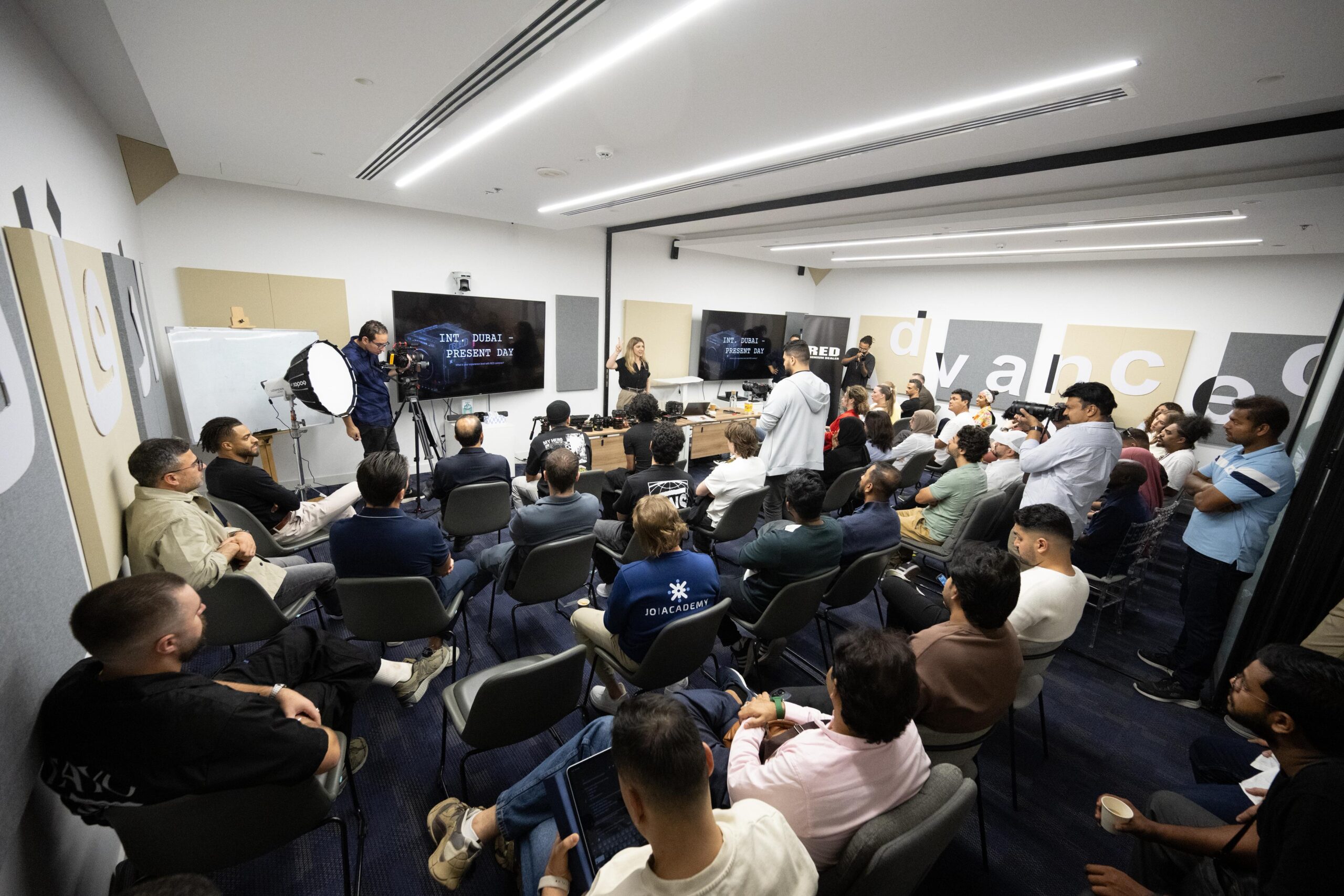
The women leading these sessions are vetted with the same rigour as any instructor at CINECommunity. They are selected not because they represent a demographic, but because they are fluent practitioners: cinematographers and technical specialists with deep, hands-on experience in the systems they teach. This year, the most technically anticipated workshops, including sessions centred on RED and Sony digital cinema systems, were led by women. “The vetting process honestly takes about two to three months to make sure that we find the right person. They should be able to help a student the same way that they would help a professional field-level director of photography.”
Another layer of that boundary-breaking lies in how the programme itself is curated. For every edition, AMT ensured that multiple workshops were led by practitioners already based in the region. Sustainability is not an abstract talking point. Flying in experts from Europe by default carries a carbon cost, but also reinforces a familiar hierarchy: the assumption that authority must arrive from elsewhere to be credible. “If someone’s coming from abroad, they must be better than whoever is in town. However, that’s not the case. We have exceptional talents in the region, and we should actually be relying on them. We try to find the right people in the UAE who can teach these courses from a sustainable aspect because we don’t want to contribute to carbon emissions,” Farnam insists. Exceptional talent already exists in the GULF, and relying on it not only reduces environmental impact but also changes the afterlife of the event; attendees leave having met instructors who are local, accessible, and part of their ongoing professional landscape.
That logic extends to familiarity and trust. Several instructors this year were returning figures practitioners who had taught previous CINECommunity editions or were already regular presences within Advanced Media’s orbit. Cinematographer Fouad Aoun, who had led sessions in Saudi Arabia, returned to teach in English; Nikita Petsa, a long-time client in the showroom, brought with him not just technical expertise but an energy people already recognised. Sustainability advisor Nena Ostrogovic, based in Abu Dhabi, led the green production workshop, grounding conversations about responsibility in regional realities rather than imported frameworks.
Equally deliberate is Farnam’s effort to dismantle the intimidation that often accompanies technical spaces. Showrooms, she admits, can be daunting, especially for newcomers, and especially for women. “I always tell our salespeople that I grew up in this business, and I love every single one of you, but if I want to buy a camera, I’m going to buy it online instead of coming to you. There’s something intimidating about walking into a showroom of predominantly men who know their craft really well and asking sweet questions like, okay, I’ve never had a camera, if I want to do this and do that, you know? Even though they’re friendly and great at their job, it’s intimidating. But if we tear away those walls, if you present to them that this space is the same space that can look like courtyards, that can bring in your favourite influencers and artists together, you take away that sense of fear, you turn it into a safer space where anyone can come and ask questions. And I’m hoping that starting, you know, today, anyone who attended the event and previously felt like they can’t have those conversations with us, they come back.” The message is clear: this is not a space you need to earn your way into.
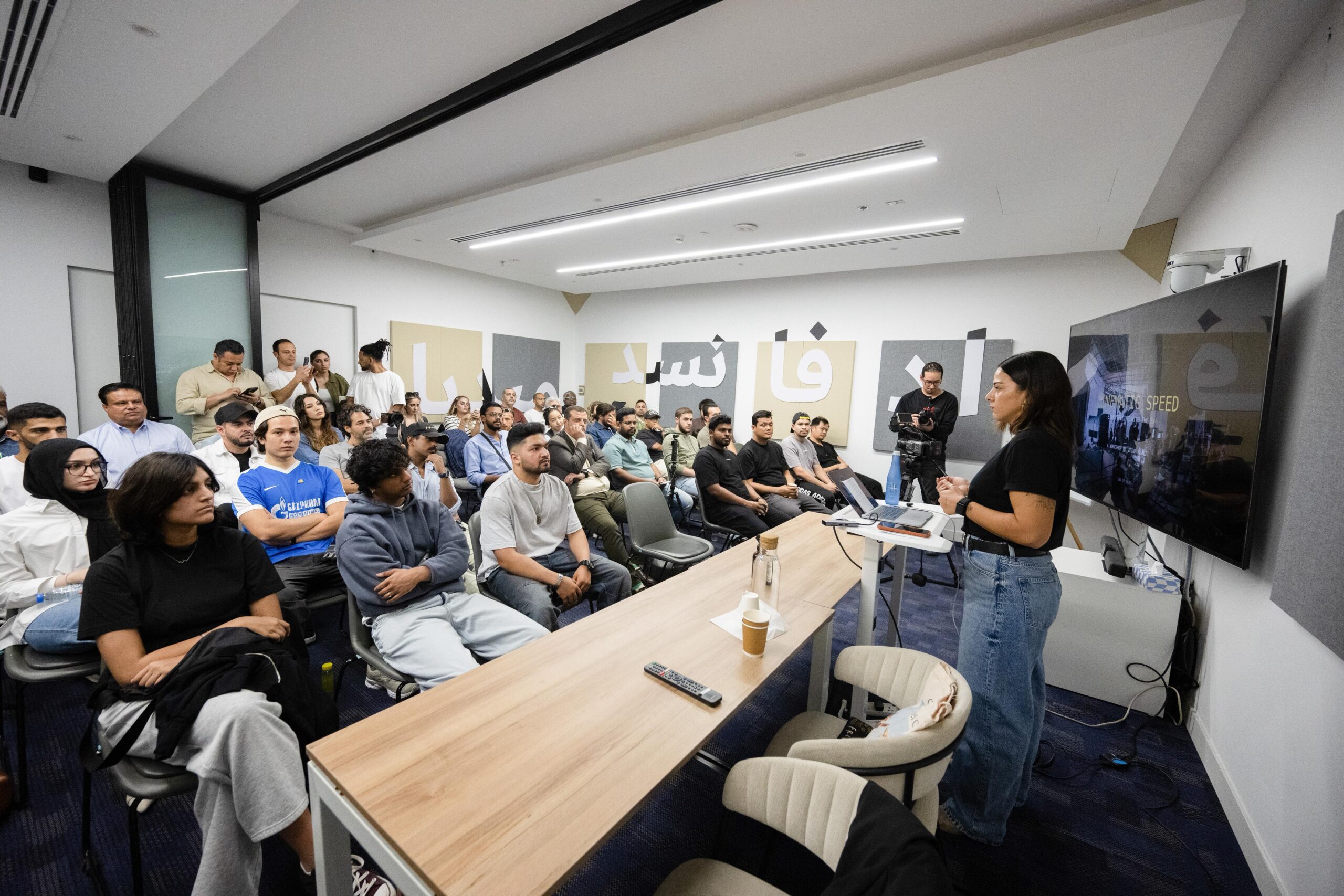
Not every workshop is designed for everyone, and Farnam is clear about that. Highly specialised sessions such as the VFX and digital imaging workshops led by Prague-based post-production studio Magic Lab were intentionally kept small, attended only by practitioners already working in those fields. While those sessions unfold, parallel community-oriented programming ensures that the wider audience remains engaged: hands-on explorations of analog photography with Mohammed Kamal of Analog The Room, or conversations on community and creative process led by Dariush Zandi. “The best reward was seeing the appreciation and interaction from the attendees, it was deeply satisfying to witness the interest in analog photography and how it has developed into different forms of art and creative curiosity,” Mohammed Kamal from Analog The Room tells ICON MENA. “The engagement, especially from students, reminded us why sharing these original techniques matters.”
When asked what she hopes participants ultimately take away, “Deep down in my heart, I want everyone to know that our communal success is far more rewarding than our individual success. Yes, there are exceptionally talented individuals out there, but not one person could reach those high levels without the village that’s behind them supporting them. It’s the sentiment and ethos that we kept promoting while we were doing an event. If someone said to me, ‘Thank you for an amazing job,’ I would say, ‘Yes, our team did an amazing job.’ It was a sentiment that we wanted to push forward with this event as well. All of these workshops that you attended or heard about are people who are normally behind the scenes; they are behind the camera. When a film wins an award, when a commercial goes on YouTube, and everyone likes it, people attribute it to the lead name associated with that visual. They don’t pay attention to all the people who are behind this, helping creatively. I wanted everyone to know that the sum of us is so much more superior than the singularity of us. And I’m hoping that has resonated with people.”
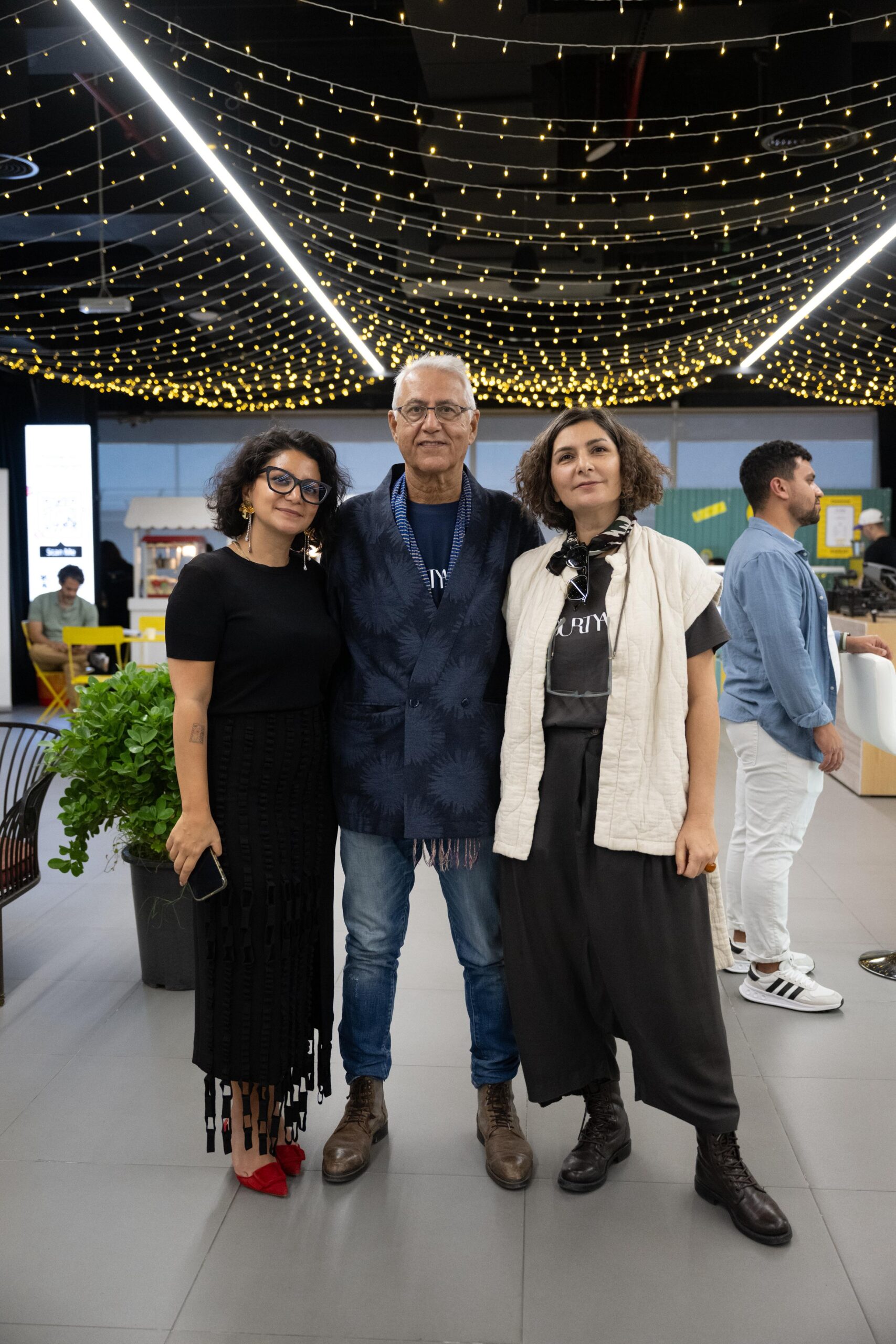
CINECommunity feels attuned to the same impulse that powered Dariush Zandi to build the courtyard ages ago: to organise beyond restriction, to insist that infrastructure, whether spatial, technical, or social, can be reinvented. In a city often associated with speed and spectacle, these moments of intentional gathering feel especially resonant. They suggest that community is produced through repeated acts of care. In doing so, it reminds us that film, at its best, has always been a collective practise. And that the sum of us, when we choose to build together, is far greater than any singular name on a screen.


