
News


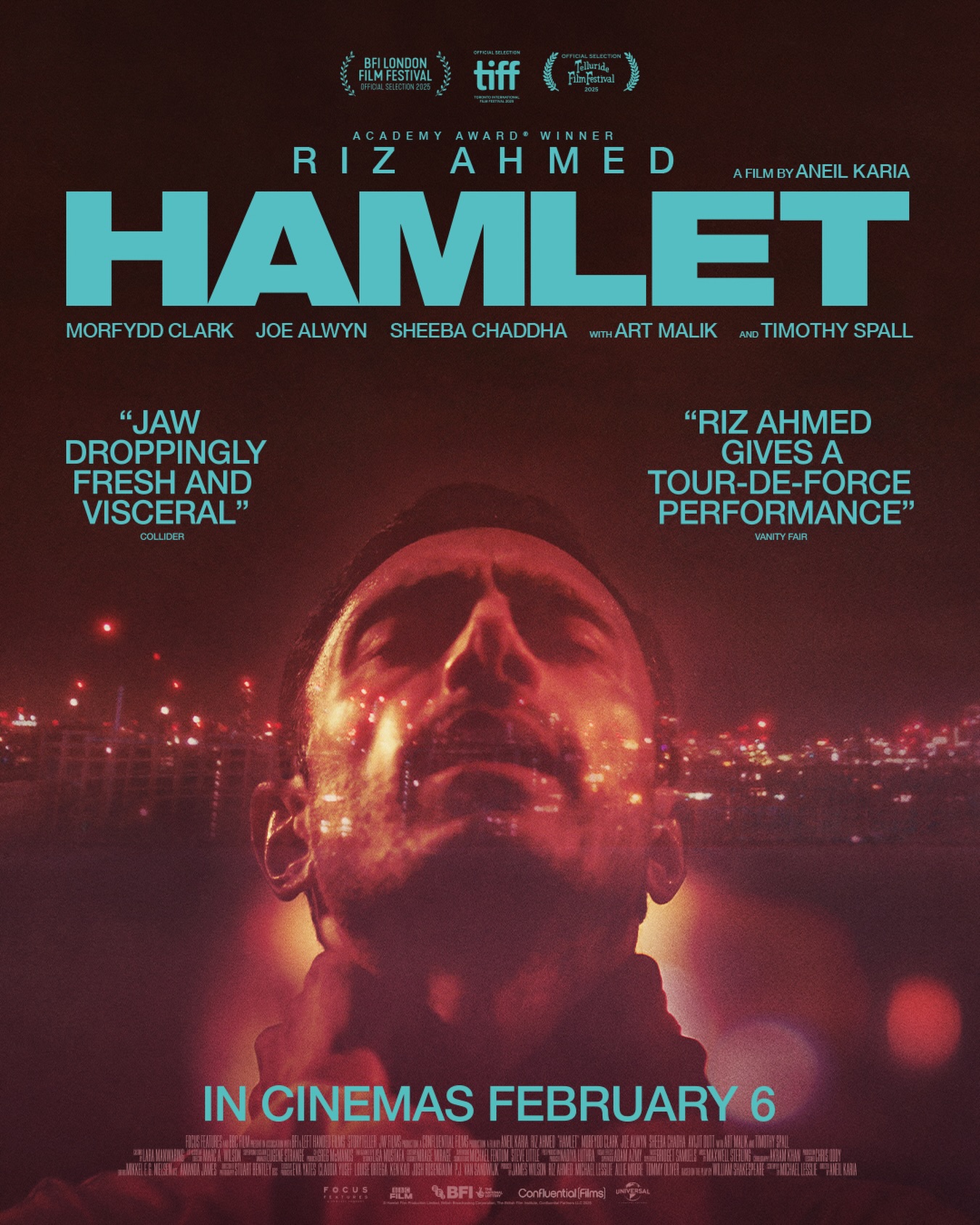
Hamlet has never been out of production since it was first written in 1600. Considered one of the greatest plays of all time, William Shakespeare’s tragedy, written at the turn of the seventeenth century, follows Prince Hamlet after the sudden death of his father and the remarriage of his mother to his uncle Claudius, now king. When Hamlet learns that his father was murdered by Claudius, he is pushed into the role of avenger, forced to navigate grief and injustice, all while reckoning with his own manhood.
Riz Ahmed’s Hamlet (2025) brings one of history’s most beloved plays into the present moment. A reimagined retelling grounded in a contemporary British South Asian family in London. Released in cinemas on 6 February 2026 and directed by Aneil Karia, whose debut feature, Surge (2021), and Oscar-winning short The Long Goodbye (2020) established him as a filmmaker of psychological intensity.
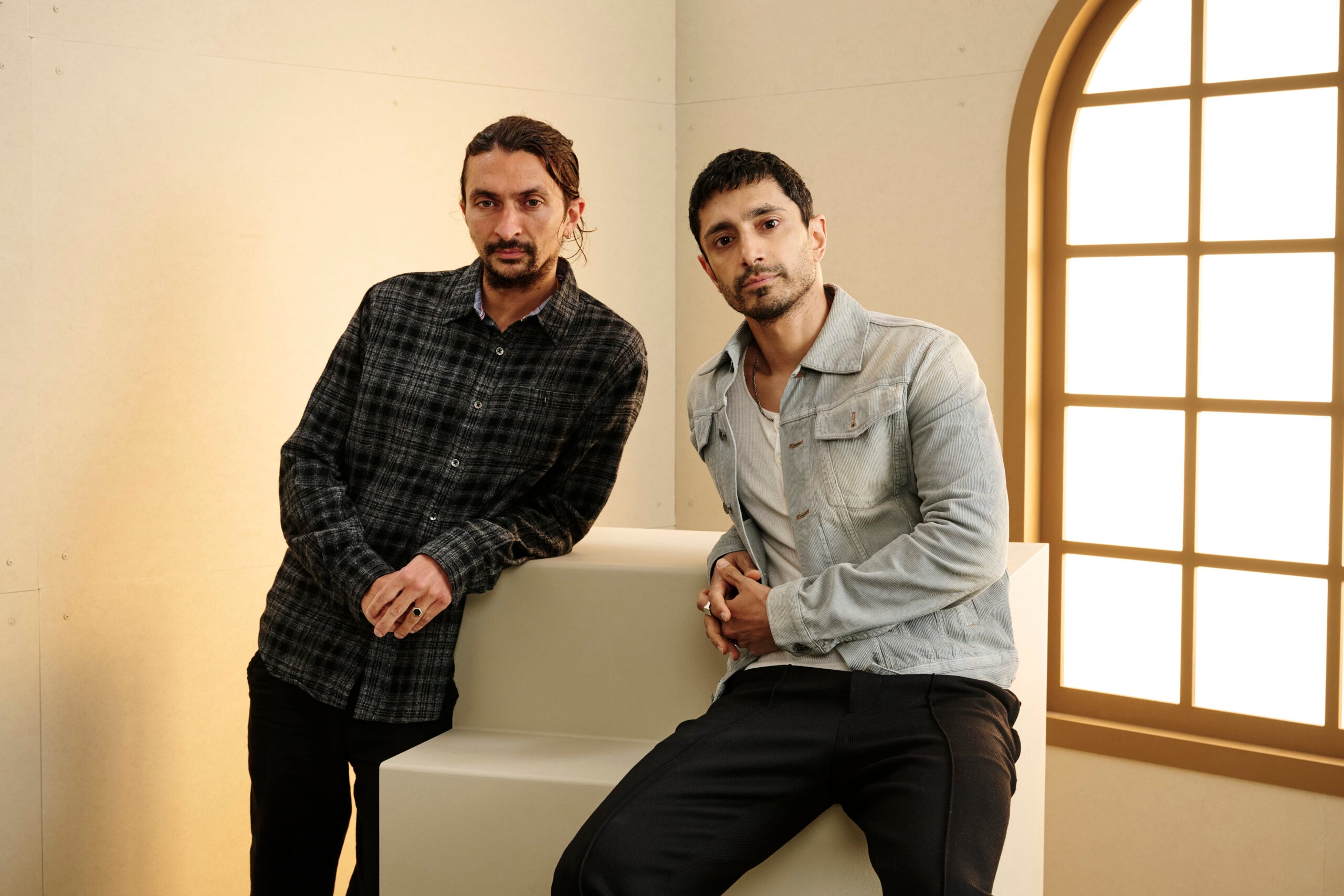
Hamlet (2025) is an “electrifying reimagining” that Ahmed states has been twenty-five years in the making, thirteen years in writing, and was first penned by Shakespeare more than 425 years ago. The story goes as such: when Hamlet’s father’s ghost reveals that Claudius murdered him, he becomes consumed by revenge, questioning the corruption at the heart of the family’s business, all while his own sanity unravels. Ahmed’s reimagining is, at its core, a psychological thriller grappling with a young man mourning the illusion that the world is a fair place after the unjust death of his father.
My first introduction to Shakespeare came through my father’s battered, yellowed Penguin Classics copy, picked up from a now permanently closed Obeikan Bookstore in Riyadh. A Midsummer Night’s Dream, The Tempest, stories of love, desire, and betrayal meant very little to a thirteen-year-old. I grew bored reading them, arriving at the understanding that this ancient white man’s stories had little meaning to offer me. Recently, I came across Riz Ahmed sharing his interpretation of “To be, or not to be,” Shakespeare’s speech that needs no introduction, and was transfixed.
The soliloquy has long been adapted as a pause, a moment of navel-gazing in most adaptations. In Hamlet (2025), Ahmed refuses that tradition entirely. “To be, or not to be,” is not staged as a philosophical detour but as kinetic propulsion. Delivered as a monologue that moves with the film rather than stopping it, the speech becomes a window into the turbulence of Hamlet’s mind. Karia and Ahmed were adamant that it could not feel like a break in momentum, but had to live within the narrative’s forward motion, transforming one of the most familiar passages in Western literature into something cinematic, immediate, and almost repulsive in how alive it feels.
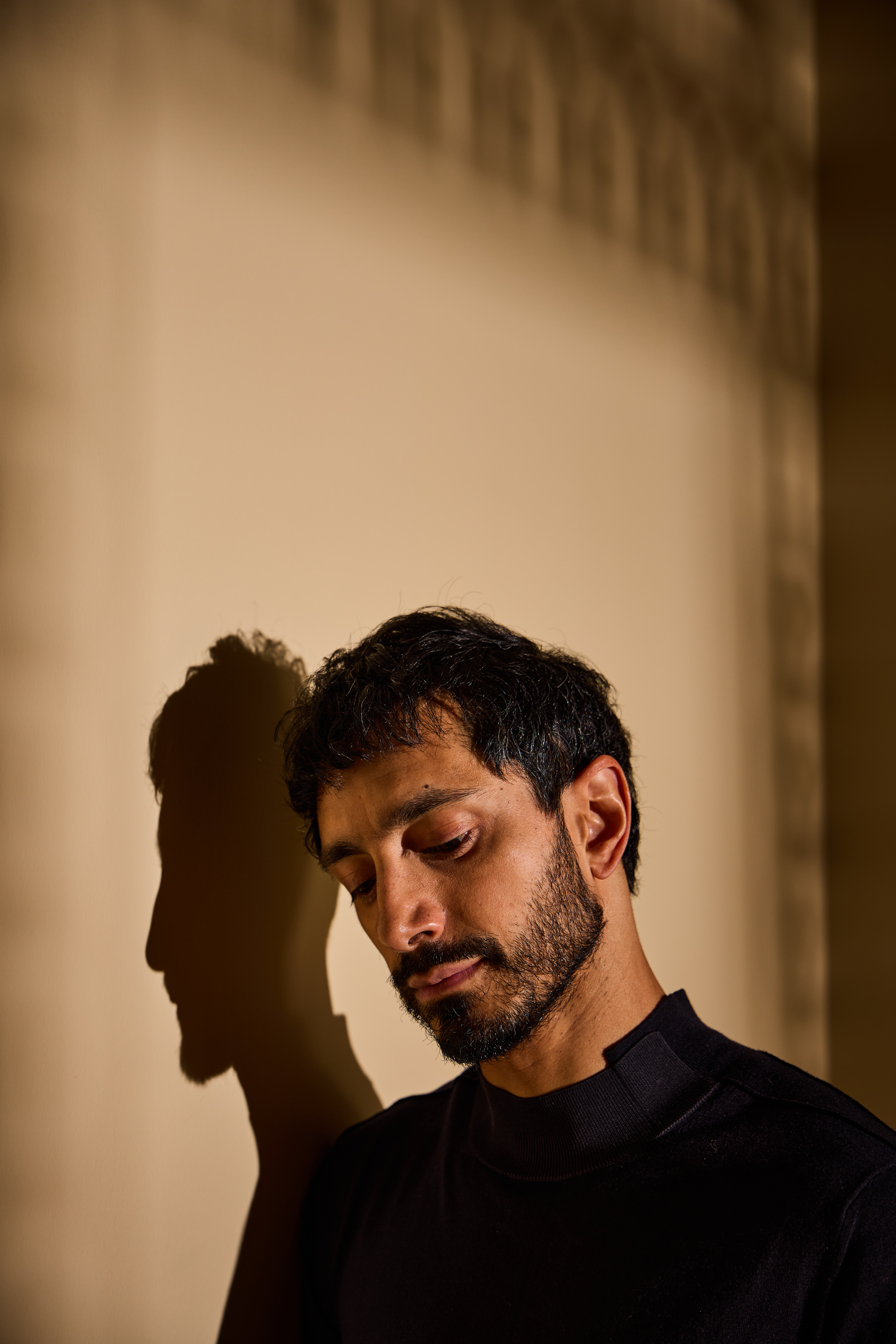
Ahmed has repeatedly argued that the infamous passage has been misunderstood. Often interpreted as a meditation on suicide, when, for him, it is something far more radical. He traces this understanding back to drama school, where a teacher taught him to strip away others’ performances and interpretations and return to language at its barest for meaning.
What the speech asks, he suggests, is not whether life is worth living, but how one should live in the face of grave injustice. Should you look away? Endure? Or resist? In Ahmed’s reading, “To be, or not to be,” becomes a question of moral courage, a reckoning with whether action, despite its costs, is preferable to silence. It is a speech about resistance, about what it means to fight back when the systems around you have failed us and the imagined just world you believed in is rendered an illusion.
That interpretation is inseparable from Ahmed’s own story. As a young man, he has spoken openly about feeling lost in his own body, uncertain of what mode of masculinity he was expected to inhabit. Was he meant to turn the other cheek, remain passive, absorb injustice quietly? Or was there room for anger, for defiance, for confrontation? Hamlet’s unravelling mirrors that uncertainty. Stripped back to its core, this adaptation becomes a psychological thriller about a man grieving not only his father, but the collapse of his belief that the world worked fairly and justly. By reanimating the soliloquy as an urgent moral dilemma rather than a navel-gazing meditation, Ahmed restores its urgency in the present moment and, in doing so, reminds us why Shakespeare endures: not because his words are preserved, but because they are continually reimagined, bargained with, and reclaimed.
In Karia’s Hamlet, the story is set firmly within the world of a wealthy British South Asian family in London, where Hamlet returns for his father’s funeral and discovers that his uncle Claudius is preparing to marry his mother, Gertrude. The family mansion becomes a space where public ceremonies and grief collide. Choreographed wedding celebrations transform traditional South Asian dances into tense, nightmarish sequences. Hamlet’s relationship with Ophelia, reimagined as his closest friend rather than a distant love interest, makes the stakes intensely personal: loyalty, loss, and emotional vulnerability are played across a landscape of intense unpredictability.
Hamlet is a story about inheritance before it is a story about revenge: about being handed expectations you did not ask for, about family businesses and blood debts, about the weight of honour and the disappointment of fathers that lingers even after death. Hamlet cannot marry Ophelia freely; he is bound by duty, lineage, and honour. Claudius’s marriage to Gertrude, framed in the play as transgressive, also echoes cultural traditions of protecting widows and maintaining family stability in Islam. Spirit possession, obligation, reputation, the fear of bringing dishonour to the family, these are not foreign ideas to us from the SWANA region. For Ahmed, Hamlet felt less like a distant, archaic English tragedy and closer to growing up as an immigrant in Wembley, negotiating grief, coming to terms with your masculinity, and bargaining with your expectations from a world that has deeply failed you.
At its core, Hamlet (2025) is about grief not just for a parent, but for the loss of a belief system. It is about grieving the idea that the world is fair. That emotional rupture, Ahmed has said, is what stayed with him from adolescence into adulthood and what ultimately shaped his approach to the role. His Hamlet is not paralysed by indecision so much as overwhelmed by moral contradiction, caught between endurance and resistance, silence and action. In that sense, the play’s endurance lies in its capacity to absorb new lives into its frame. Proof that these stories were never owned by one culture, one history, or one voice.
When we unflatten and deradicalise language, plays and stories that have been told for eons, we rediscover our radical purpose as storytellers, and the importance of insisting on our oneness at a time wherein we are so divided.


