
News


American media is undeniably the leading exporter of culture and ideology. The talking points it sows are instantly parroted, or contested, around the world, whether it’s relevant to our existence or not. As its pendulum currently swings away from progressive left ideology, commonly coined as “woke”, and towards more conservative nationalist beliefs, it’s hard not to question the veracity of its historically bipolar rhetoric and its fundamental purpose. Its inherent divisiveness is alarmingly contagious, rippling across oceans to nefarious effects. So much so that nation-states, including Arab countries, have vowed to push back against the promotion of “Western ideology”. What’s even more baffling is how quickly our opinions can waver depending on the prevalent narrative du jour. Surely certain doctrines pushed by American legacy media can positively contribute to humanist causes. What I question is whether the establishment can be bothered with such causes, or whether there’s a more clandestine drive at play.
Having directed Western reality shows for over a decade, followed by a decade-long career in advertising geared towards Western markets, I’ve been particularly riddled by the West’s dubious intermingling of ideology and consumerism. One would think that my insider access to the machine’s manoeuvrings would render me impervious to their seeping influence. It hasn’t. I myself have been an unintentional talking head for the establishment for years. The way I chose to see myself was directly related to the way a person of my likeness was portrayed in mass media.
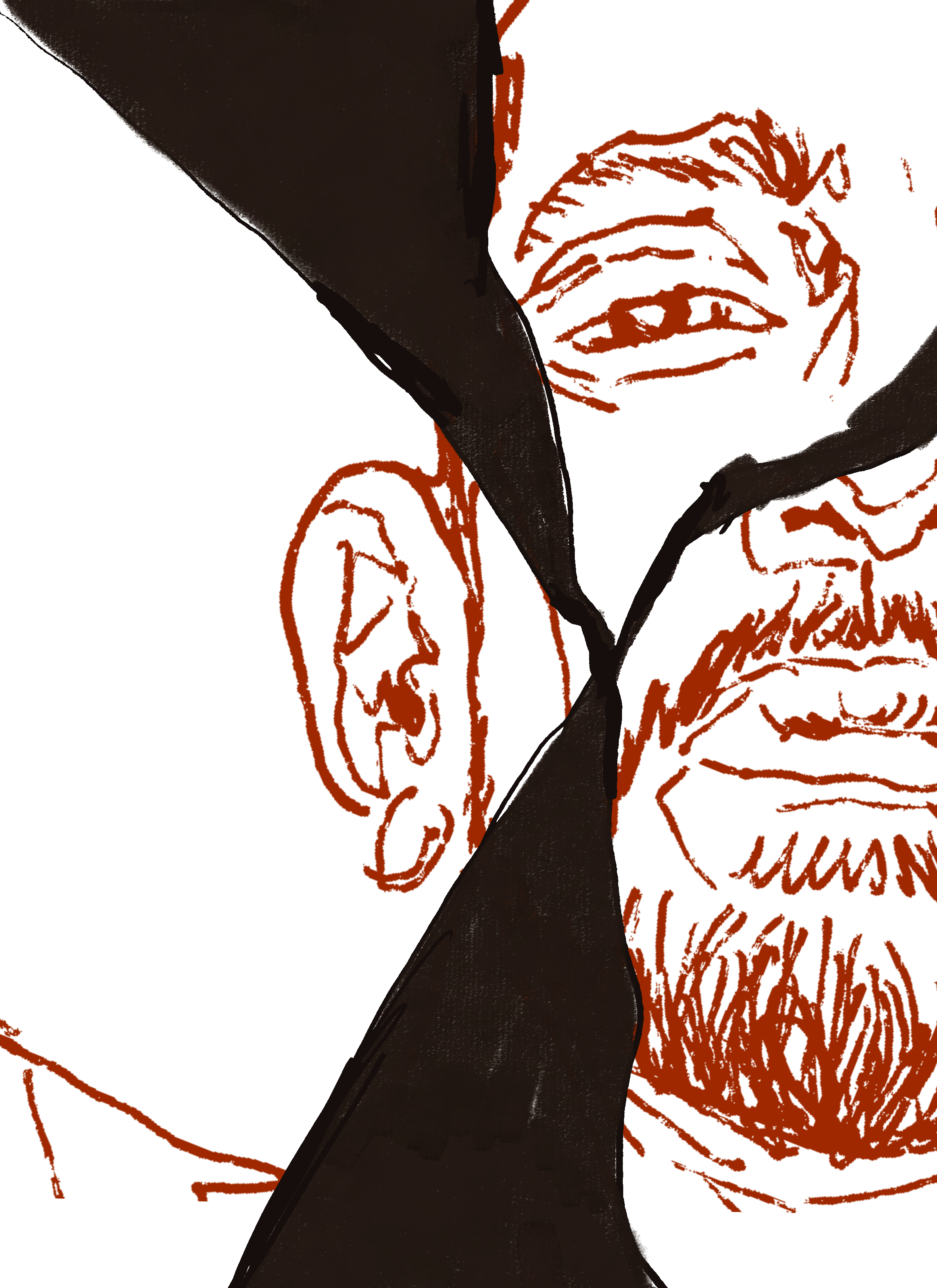
For instance, I’ve spent decades hating my reflection in the mirror and trying to change it. There were days when I would rather see a muscular Aryan man, some days a brown man with blue eyes. Not a single day have I infatuatedly looked at myself: my hair is too thick, my eyes are too dark, my hips are too narrow, now too wide, my butt is too big, my shoulders are too small, my body’s too hairy. Years of pondering what life would be like if I looked different, if I looked better.
Entering my fourth decade of life, I still wonder, were I raised in the age of “media representation” and tokenism, whether I’d grow up with better self-esteem. Yet, I couldn’t be more cynical of the approach. Suddenly, in what seems like a drastic reversal of fortune, the media speaks of visible minority representation and self-acceptance as though it is the cure to marginalisation and lingering insecurities. Weren’t the “beautiful” white people on our screens the minority to begin with? Brands like Dove, Gap and Fenty, among many others, hastily hopped on the bandwagon, showcasing alternative depictions of beauty within the prism of inclusion. How can it be that the same institutions that spent years making me feel physically inadequate now preach self-acceptance? Are we supposed to believe that they’ve suddenly grown a conscience?
Whenever corporate media, which arguably encompasses most media, pushes an ideology, the first thing we should ask ourselves is: “How do they profit from this?” Surely multinational corporations are not concerned with our mental health or making the world a better place. To believe so would be to acquiesce that the masses actually matter. Spoiler: we don’t. Our wallets do. Every ideology pushed is a masked incentive to consume. The more corporate media glorifies itself with performative morality, the more people subscribe to its venom. “I want people who look like me to know that dreams come true for us too,” is a tokenistic statement we’re barraged with every single day that reads like Stockholm syndrome to me. “After years of ethnocentric establishment propaganda, you can now help said establishment expand its market to a wider pool of victims,” is what I hear instead. Now we too can aspire to be pawns and buy whatever the tokens push, as though we should feel seen watching people like us sell out to a system that once thrived on our marginalisation. What if we don’t want to subscribe? What if we don’t want to be represented? What if we don’t consume?
The media frenzy surrounding the Barbie film is a perfect example of consumerism feigning ideology. Its potent marketing campaign correlated liking or disliking the film with identifying with one side of the social-political spectrum versus the other. If you liked it, you were woke; if you didn’t, you were a bigot. It positioned itself as a cultural phenomenon before we even got to watch it; and it worked, if only for a limited amount of time. The Barbie film, which proved with time to be rather unmemorable, made a preposterous amount of money from its divisive rhetoric while essentially being nothing more than a gargantuan advertisement for a toy.
This may sound rich coming from an ex-advertiser. I conceptualised a panoply of campaigns milking “female empowerment” to generate sales. I can tell you for a fact that the marketers who buy these campaigns only look at numbers.
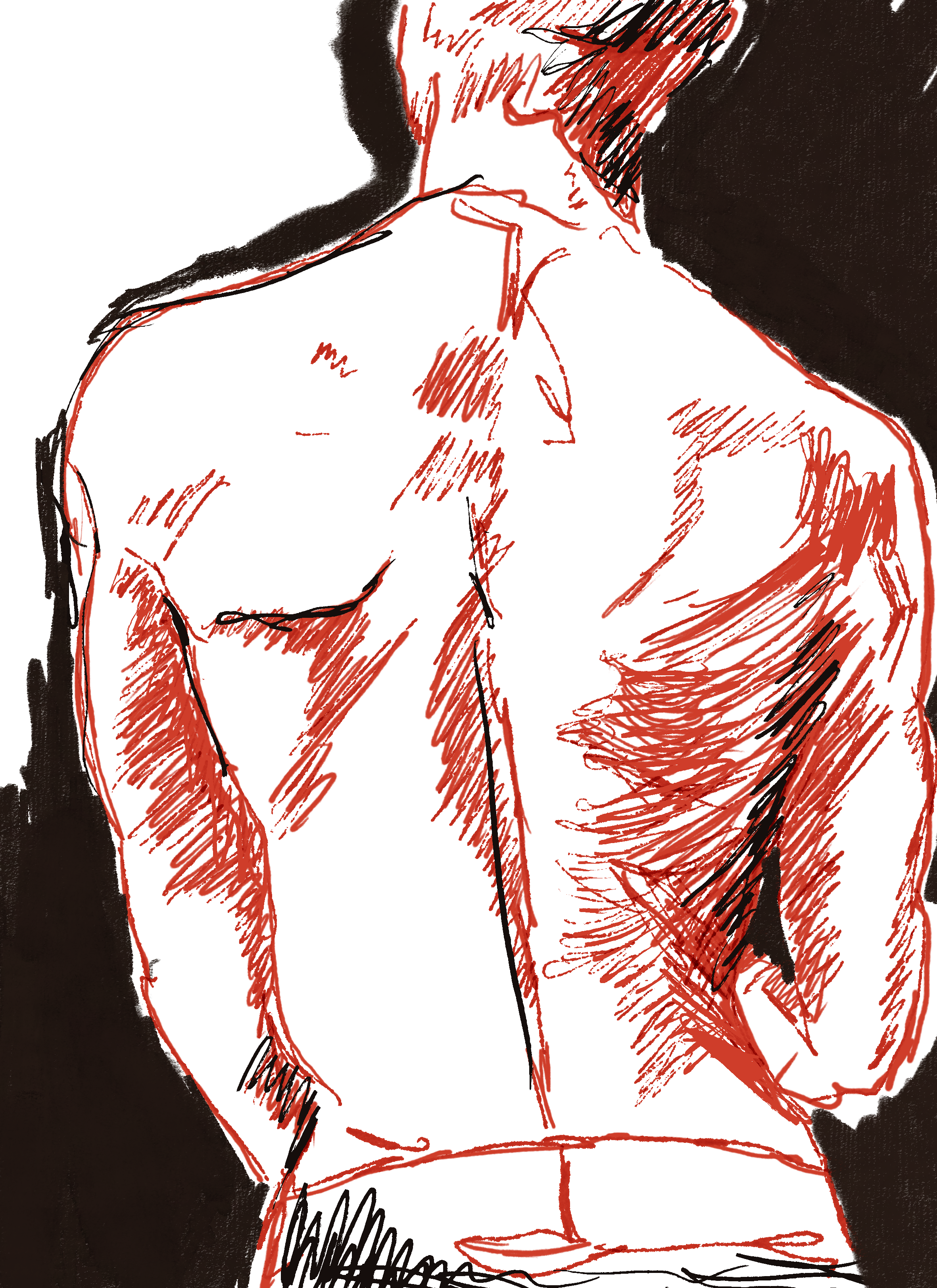
When body-positivity became a popular cause, my clients ventured into casting a plus-sized woman as the lead of their advert. “She has to be healthy, though”, was the main disclaimer. The ad was for Germany, and the storyline was as follows: “I’m a plus-sized professional athlete, and this product will help me achieve my dreams.” Pretty straightforward, were it not for the client’s incessant insecurities. “We need to see her doctor’s report to make sure that we do not promote an unhealthy lifestyle,” was the last straw. Nothing offends me more than toothless virtue signalling. “Can you do the splits?” was my reply. “I dare you to do half of the things she does and not be bedridden for a week”. The agency was livid at my abrasiveness, but I couldn’t help it, and sure enough, we proceeded with the cast without a doctor’s report. The ad ended up scoring big for the megacorporation. So much so that it was adapted to dozens of different markets around the world. Obviously, none of the people behind the ad were even remotely for the cause. In fact, the corporate body-positivity-movement couldn’t be less concerned with anyone’s well-being. “Eat more, buy larger clothes, ingest more medication and repeat”. While every lobby profits, we parrot their sweet-nothing slogans and pat our inclusive selves on the back as our bank balances dwindle. It’s not about doctrine, it’s about sales.
What’s particularly disheartening is that Arabs continue to invite such talking points into their households despite peak resentment towards American foreign policy. While it can be assumed that most welcome such rhetoric as a means to engage with “global” conversations, it is baffling that we have not become any wiser when it comes to American soft power’s disunifying ways. In 2023, as anti-immigration sentiments started gathering steam in the US, Lebanon followed suit by witch-hunting Syrian refugees, parroting the same slogans as its American counterparts. When American media provoked its population by debating “what is a woman”, some emboldened Lebanese thought it wise to discontinue rainbow cakes, convinced that nipping that conversation in the bud was necessary at a time when Lebanon was on the cusp of total collapse. But we needn’t go this far. Following President Joseph Aoun’s inauguration, a flurry of billboards suddenly sprouted touting the slogan “Make Lebanon Great Again”, days after Lebanon was pummelled by American-funded bombs during Lebanon’s latest war with its southern neighbour. And while Arab states choose to push back on an ideological level, they continue to unashamedly sell out to Zionist-friendly corporations such as Starlink, Starbucks and McDonald’s.
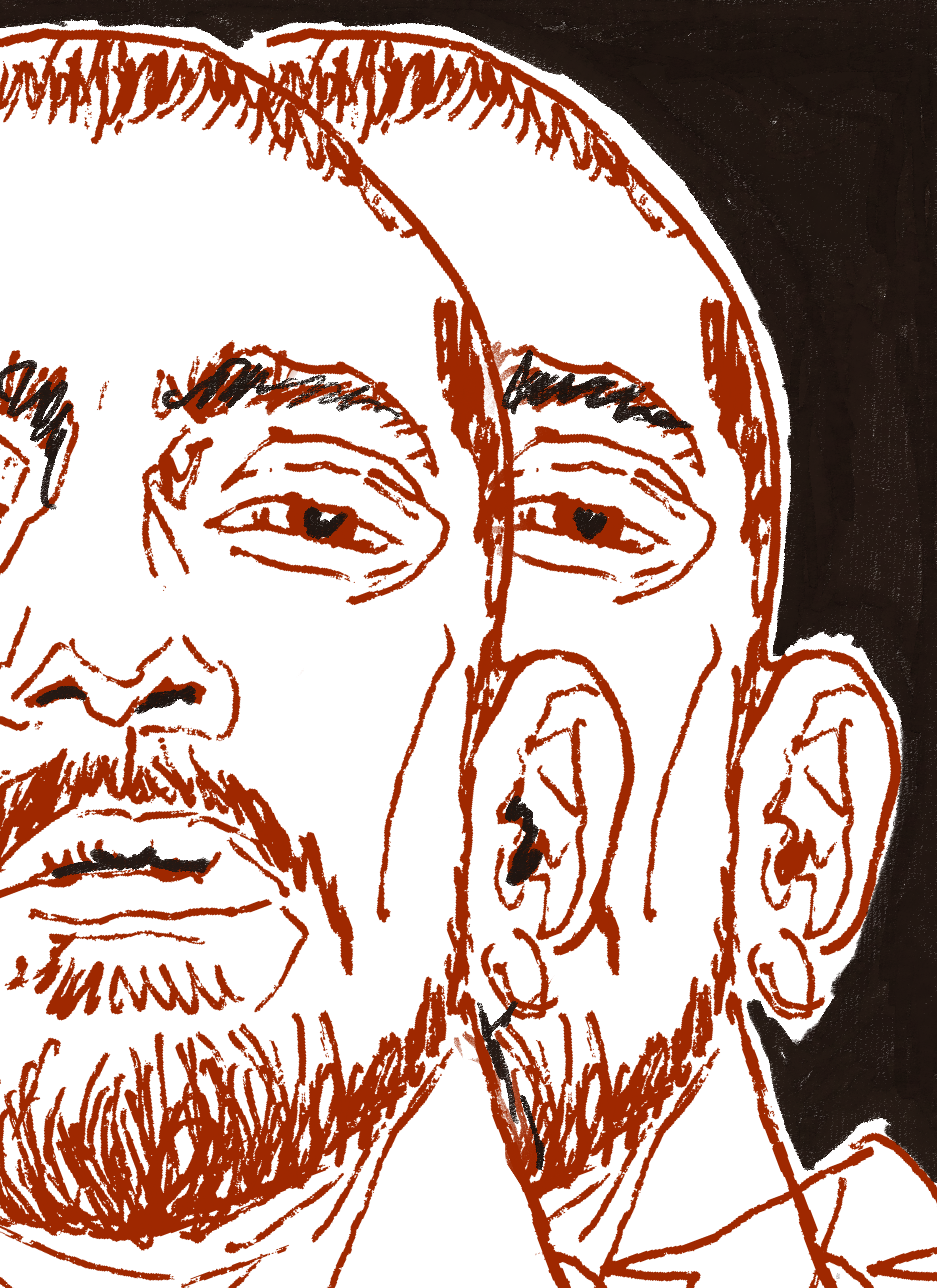
“How can we ever make progress if we were to see things the way you do?” is a rebuttal I often face. “Were it not for the media, discrimination would still be rampant.” The media is a powerful tool. Its persuasiveness is what got me interested in the first place. I will never deny that. My problem is not with the message itself, it’s with the machine that broadcasts it. How can we claim progress when social causes are sold to the highest bidder? It took one weight loss drug to kill the body positivity movement. I guess big pharma was the highest bidder this time, and just like that, we suddenly aspire to look as emaciated as our Ozempic-laden “influencers”, newly rehabilitated celebrants of “curves” and “roundness”. Am I wildly cynical? Yes, I am. As long as any cause serves the current autocratic idealism we’re barraged with, I will always be sceptical.
The media’s self-righteous charade has been going on for decades. As we grow more media savvy, we become more aware of its hypocrisy, but only within the confines of the discourse the media pushes. We often speak of identity politics and whether its divisive rhetoric is counterproductive or not. Most of us would agree that adding strict labels is not unifying. Most of us know that “divide to conquer” is the oldest trick in the book. But we’re also very susceptible to, and hungry for, validation in a world that increasingly treats us as mere numbers, a need international corporations literally bank on.
The mainstream media has been pushing individualism for a while now. “Be yourself”, “There’s nobody like you”, “You’re one in a million”. Thank you for spelling out biological blatancies, and sue me if I don’t ascribe. Not only do I not particularly like myself, but I also do not want to consider myself “special”. In fact, I spent most of my life trying to blend in and to connect. “Maybe that’s the point, to not feel the need to blend in, but to celebrate yourself instead.” Celebrate what, exactly, and with whom? I’ve never heard of a worthy one-person celebration. Don’t get me wrong, individualism is important, notably through the prism of societal contribution. After all, we are only as strong as the sum of our parts. The problem with corporate-prone individualism is that it consistently comes at the expense of community.
Movies, series, pop acts and ads relentlessly promote the self. We should “buy ourselves flowers” because we’re “good as hell” and “born this way”. We can’t get enough of the lone hero trope, or worse: the villain protagonist. How about a Hollywood blockbuster that ends with the good and bad joining forces, or gathering around a peace treaty? “If good doesn’t eliminate evil, there is no moral story to tell.” They’d rather you aspire to be “the one” at everyone else’s expense. I’d love to watch a reality show season where all the contestants go Bastille Day on the producers and decide not to eliminate anybody and share the grand prize. Instead, we’re privy to a gladiator-like glorification of betrayal, manipulation and sometimes flat-out aggression fuelled by financial incentive. “If there isn’t a clear winner, there’s no game,” they say. Instead, I’d rather remind myself that if there were no participants, there would be no game at all.
In this current self-aggrandising era, the only winner is the establishment. In media language, “I need to put myself first” actually means: “I need to buy things for myself, rather than share.” If neighbours still connected over dinner and communities shared their material wealth and resources, multinational corporations would crash and local markets would soar. Period. The irony of “self-love” and “self-empowerment” thriving in a world prone to herd mentality and ubiquitous with mass consumption is baffling.
The impact of such discourse is more destructive than we think. People seem to struggle more and more to connect and to relate. Each generation appears more arduously unattached than the next. We are less concerned with our impact on others than we are with ourselves. We speak of “our truth” as though the absolute is individual rather than collective. We are growing more complacent rather than seeking opportunities for betterment. “It doesn’t matter what other people think; it’s how you see yourself.” This statement is an assault on humanity, which begs the question: Does the “real” me exist, or is it contingent on how people perceive me? What if the “real” me is a combination of both? Would I even exist if others didn’t acknowledge me? Would my self-esteem even matter if nobody esteemed me? If others’ opinions do not matter, then explain the education system, the corporate ladder, juries, competitions, elections and God? Is judgment only valid if it comes from above?
Whereas we once aspired to be on billboards, now we have become self-employed industry plants. We speak of ourselves as brands and act like walking advertisements. “Want to know my morning routine?” I would, if it didn’t require vapid consumerism. In a catch-22 reversal of fortune, we’re now eagerly volunteering to do the establishment’s dirty work. Being in public is like witnessing a bunch of people living their protagonist fantasy, as though life were a movie, and they’re the star. “I decide my own fate.” Sadly, we do not. We’re being baited, and it’s working. Self-empowerment is a paradoxical concept. There is no such thing. I can boost my ego until it pierces the sky, and yet, as soon as I walk out the front door, I’ll be starkly reminded that I am one of many, and that my self does not matter – a humbling reality I welcome with open arms. It’s either that or live in a constant state of isolationist delusion.
As a recovering former expat, I still struggle, 10 years on, to thaw the cultural iciness I have assimilated after years of Westernisation. Upon my arrival in Lebanon circa 2013, the idea of family and loved ones wanting to be an active part of my daily life was overwhelming. Unable to show up in the same way, having been raised amongst the incessantly stoic and aloof, the culture clash soon became apparent, and the root of many misunderstandings. You mean to say that family is not just a biological unit, but a social one as well? Friends aren’t meant to be scheduled three weeks ahead? That neighbours are not elusive ghosts to be actively ignored? When my mother tragically passed away in Canada, following a 15-year cancer journey, I found myself alone, which, with hindsight, seems hauntingly normal. It was a harsh reality to grapple with. I had invested so much in my Canadian life, having fully assimilated into the culture, only to realise that, decades in, the one true community I had was the Lebanese community surrounding my parents. Watching them collectively emote their grief and show up for one another, as opposed to the absentee Western alternative, was a sombre realisation that despite all the material stability Western society provides, in the end, were I still there, I’d be more likely to live and die lonely. Instead, despite all of Lebanon’s hardships, I’m grateful every day for no longer having to abide by the West’s self-isolating ways.
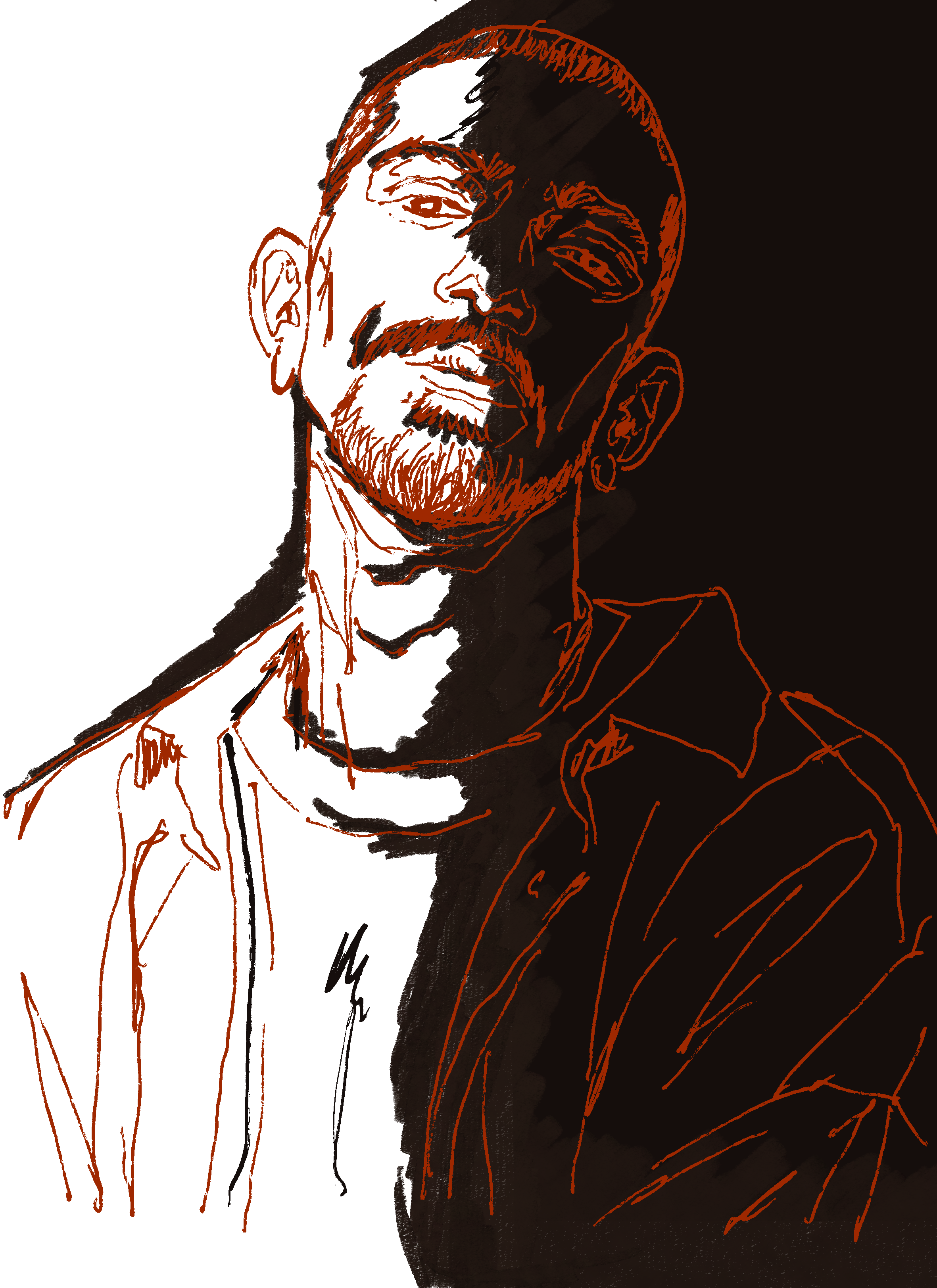
Self-acceptance, self-help, self-actualisation, self-care, self-esteem, self-love, self-made, self-motivation, self-preservation, self-reliance, self-respect, self-sufficient, self-stimulation, self-worth… The self is anti-human. The self obliterates community, nature, faith and happiness. The power of religion is communal. The impact of a concert relies on its crowd. One of my favourite films of all time is Baraka by Ron Fricke, where not a single word is spoken, and yet so much is said. Very early on in the film, past the stunning opening shot of a snow monkey, is a scene depicting an Aboriginal ritual performed by dozens of people. It’s a hypnotic sight, as they cackle and move in unison, ostensibly gathering psychic energies that look mightier than any sword. It serves as a humble reminder that empowerment is a collective effort. Throughout human history, the perpetual key to solace is shared mindfulness; whether through prayer, dance, or meditation, the commonality being human connection. The human race would not have evolved had we not banded together. One of the best sources of “feel good” chemicals, such as dopamine, serotonin and oxytocin, is social connectivity, and what some call the “helpers’ high”, helping the next of kin. Now there’s a biological blatancy I’ll subscribe to.
Whereas the Levant prides itself on its strong sense of community, we, too, are falling victim to neocolonialism, pledging monetary allegiance to pandering corporations whose loyalty is as fickle as the value of money.


