
News


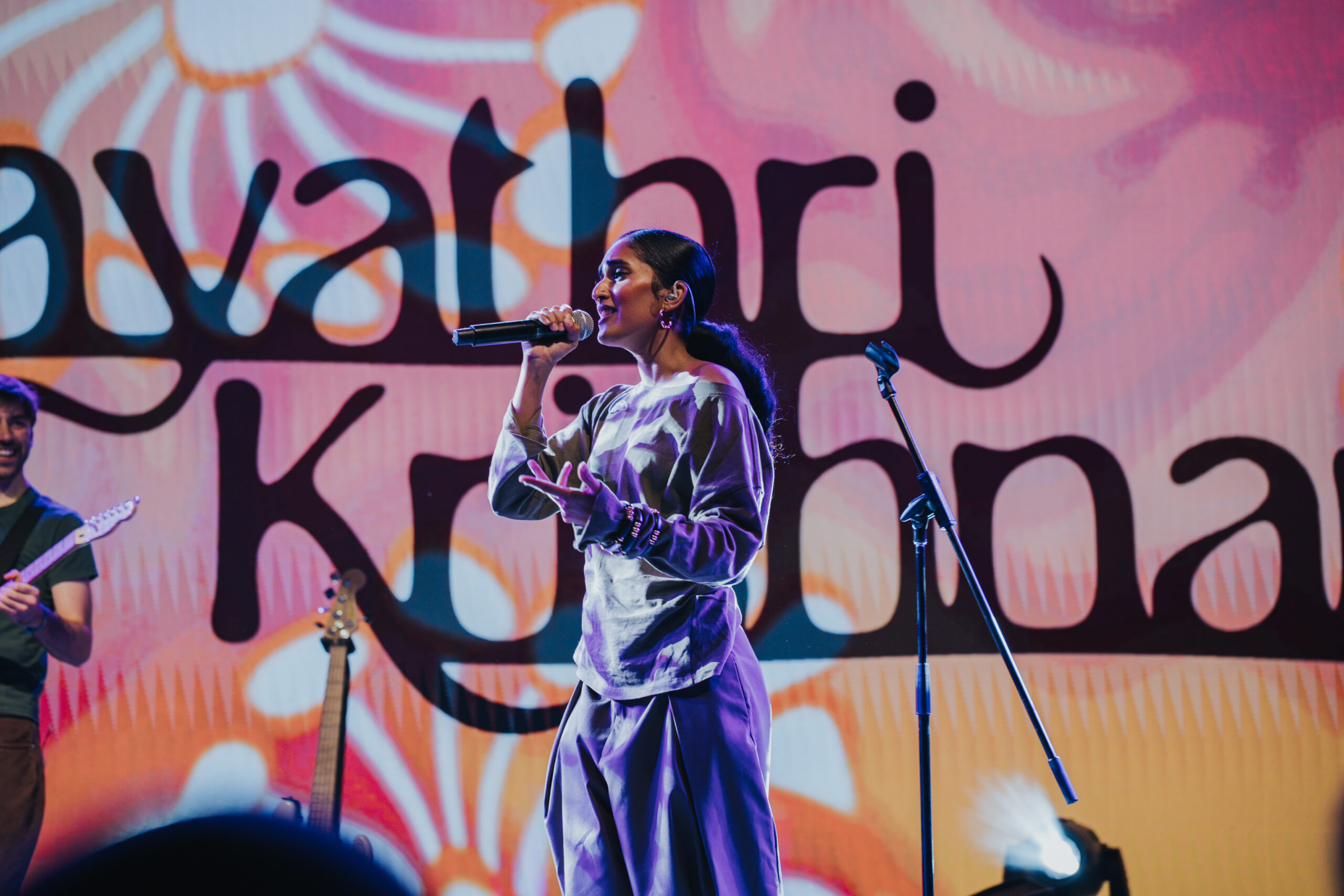
Music has never been a practise separate from life for Gayathri Krishnan. It is the language through which she first encountered the world. Long before she had the words to categorise genre or the vocabulary to express her ambition, music enveloped her childhood. Raised in a home where classical ragas, spiritual hymns, and Sufi melodies drifted from bedroom to bedroom, slowly becoming a family’s shared love language, Krishnan’s music has preserved that same sense of oneness. From recording songs in her closet to performing on stages around the world, this year marked her Middle East debut, where she headlined the Al Quoz Festival.
She was four years old when she began training in Carnatic music and Bharatanatyam, two classical South Indian traditions rooted in discipline, devotion, and emotional precision. Carnatic music, with its complex ragas and rhythmic cycles, demands both technical mastery and bhava — “feeling”, a balance that would later become central to her artistic philosophy. Even now, as her work spans neo-soul, jazz, R&B, and experimental production, those early lessons remain audible: in the way she weaves Carnatic flourishes into modern melodies, in her soft, breathy vocal delivery, in the fluidity of her improvisation, and in her refusal to separate technical rigor from emotional resonance.
As with most things in her life, Gayathri Krishnan returns first and foremost to her family’s lessons. “My dad always emphasised feeling over technique,” she tells ICON MENA. “We talk a lot about singers who are technically perfect pitch-wise, melody-wise, but when you listen to them, you don’t feel that pull. You don’t feel like you’re going to cry.” It is a lesson that has stayed with her. Even now, she says, a cracked note or forgotten lyric matters far less than whether someone recognises themselves in a song. “If someone tells me they felt something, that they could relate to, that they saw themselves in it. That’s more important than sounding good. It’s a balance, but feeling always comes first.”
Her father, a lover of classical music, consistently emphasised feeling over perfect technique. Her mother found grounding in devotional hymns, while her brother, a keyboardist, carries a deep affection for Sufi music. Together, they formed a musical ecosystem with curiosity at its forefront, held up by unconditional support. In a video shared online ahead of her Dubai performance, Krishnan speaks candidly about pre-show nerves, revealing a ritual that has become second nature: calling her mother just before she steps onstage. Her mother’s advice is always the same. “Don’t think of yourself as singing alone, think of it as God singing through you.”
As a child, she was drawn to storytelling in all its forms. “I really loved writing class. I would make up stories, and it wouldn’t make sense at all to anyone else, but to me, they made sense,” Krishnan reminisces. Alongside an inclination towards storytelling came a natural instinct for inclusion. “Ever since I was little, I’ve always made sure to include everybody. If I saw somebody sitting alone, I’d ask them to join us. Nothing should ever be exclusive.” That same impulse now courses through her music, inviting listeners into a world where classical and contemporary genres fuse together in effortless harmony. Her work consistently creates space for recognition and connection. “I always want people to feel like they belong and that they can be comfortable with me.”
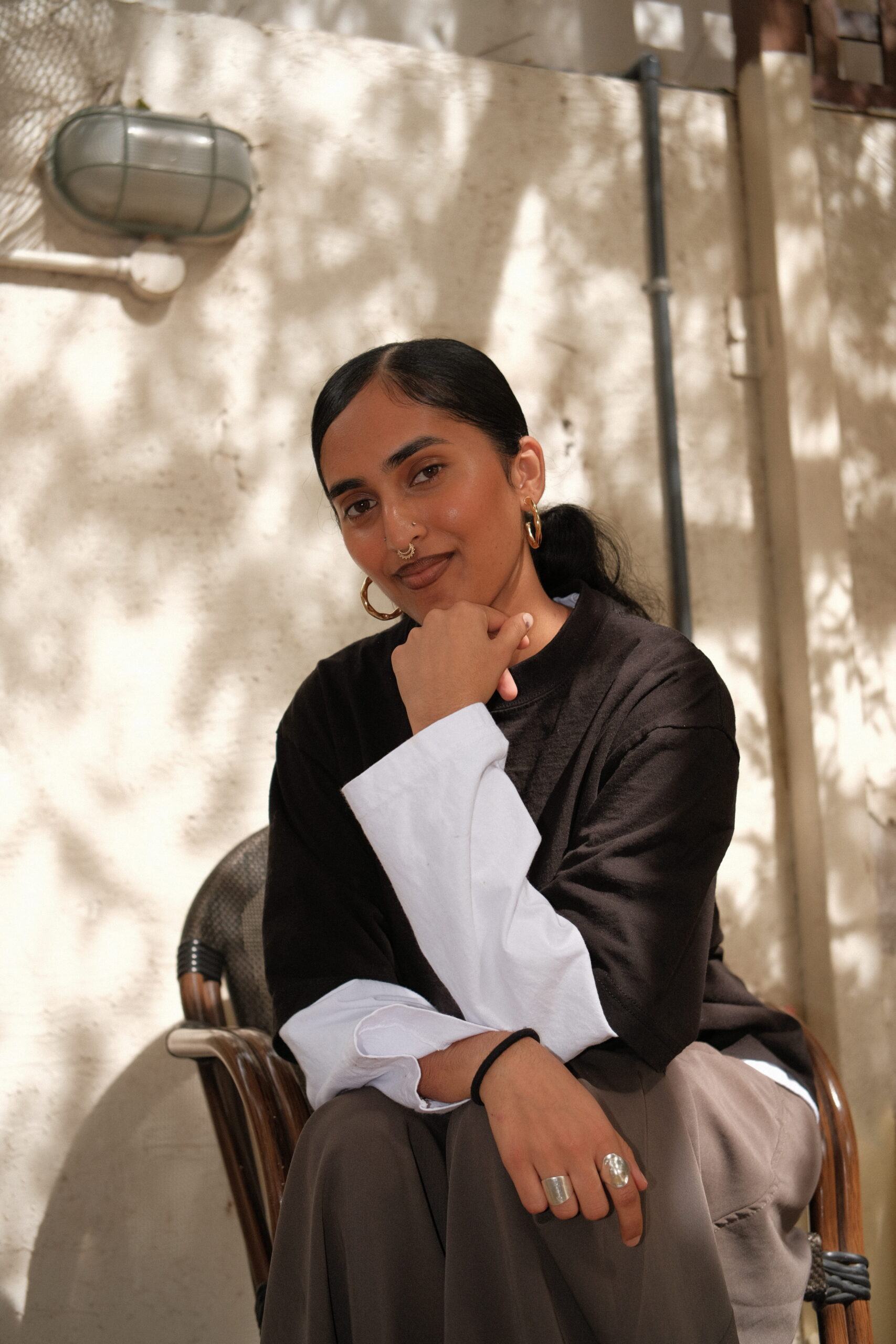
Two years ago, in a desire to reconnect with movement, Krishnan returned to dance, this time attempting to explore hip-hop. Bharatanatyam mudras began slipping effortlessly into freestyle, classical gestures softened by groove. The practice mirrored her musical approach: a refusal to separate the classical from the contemporary, the technical from the intuitive. Dance, like music, became a space for unlearning, a way to shed imposed limitations and rediscover oneness with the body and its music.
That same ethos shapes her songwriting and production. Krishnan is deeply involved in every layer of her sound. In an industry that rewards speed and output, she chooses patience. Some songs take a year to fully arrive. “For the Carnatic part, it took a year to do. Usually, I would be a little frustrated, but I think I’ve accepted that the art that I want to make sometimes takes a little longer. With that acceptance comes ease and calmness when you’re not rushing it.”
Her earliest experiences with songwriting were similarly instinctual. The first song she ever wrote came in childhood, as a way to process her grief. A response to watching a beloved family member battle cancer. “My very first song was written about seeing my dad’s cousin struggling with breast cancer. She used to come to our house. I would braid her hair, and I saw her lose her hair, I saw her become weaker. I couldn’t hold my emotions about it. I was in the fourth grade when this happened. So, I wrote a song about alchemising that intensity.” Music became a way to make sense of the intensity of her grief.
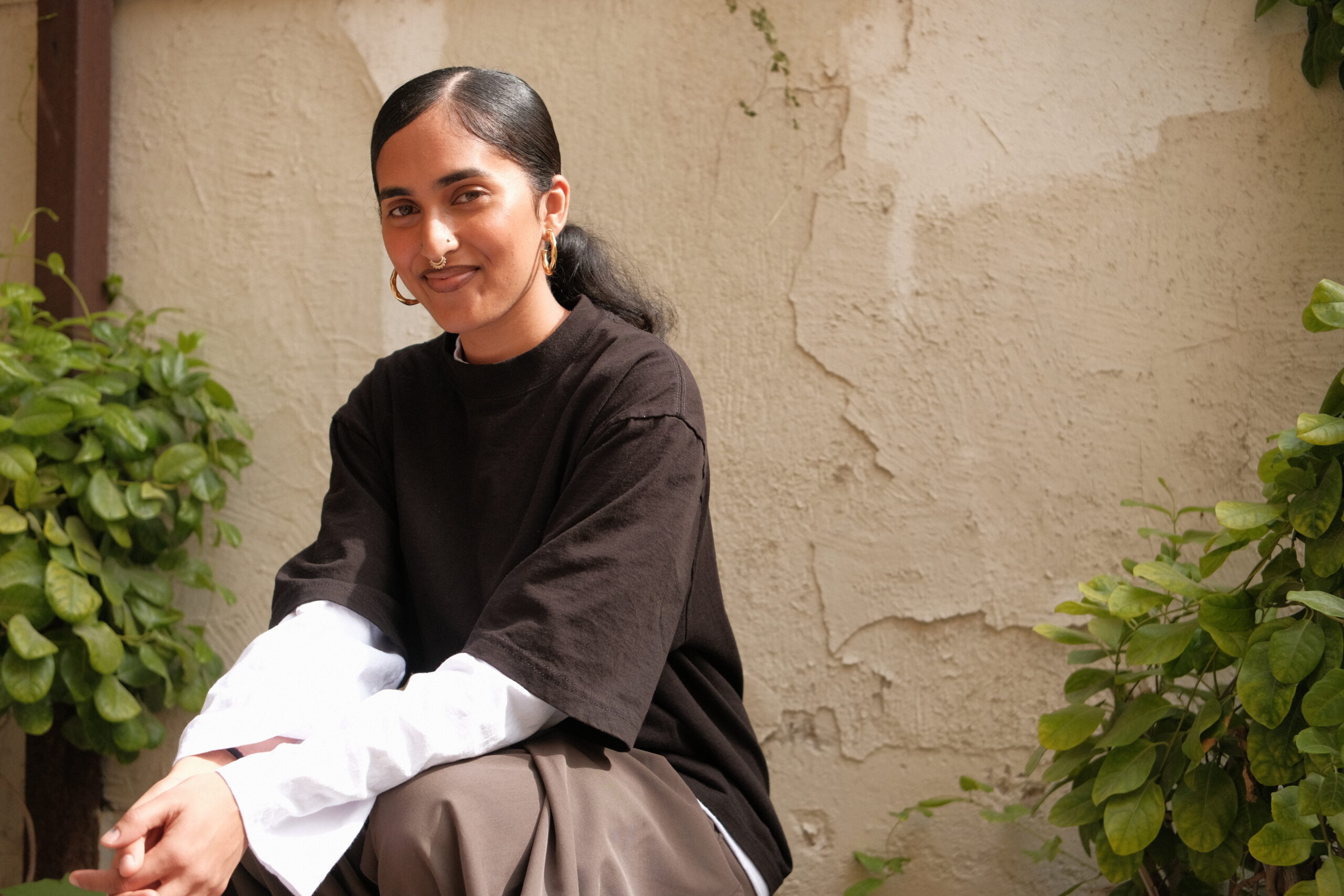
Krishnan’s upcoming project turns her focus inward, tracing the contours of her family history. From her father’s childhood city of Chennai to her own upbringing in Irvine, and now making music out of Los Angeles, she explores storytelling from her parents’ perspectives. “I have a track called Never Too Lost Too Found coming out. It’s inspired by Khwaja Mere Khwaja and speaks to my dad’s experience,” she shares with ICON MENA. “He’s an only child; his parents live in Chennai, and he lives in the States. He’s always felt a tension between both worlds. Growing up, he was a bit of a free spirit, not very traditional. He feels torn between the dutifulness of being a first or only child in Chennai and the life he’s built here with a family. So Never Too Lost Too Found is from his perspective. While we’re searching for something, we’re still lost. I think we’re all perpetually lost and a little found. You find yourself in little moments, but in the journey, you’re lost, and even if you’ve found yourself, you’re still kind of lost.”
Whether performing, teaching, or creating in solitude, Krishnan returns to the same core belief: that you can be many things at once, and still be whole. That identity does not need to be stripped down. That taking your time is in no way a failure, but a form of caring for your craft. Through her music, she is simply asking listeners to feel just a little more at home in their own complexities.


