
News


At this year’s Watches and Wonders Geneva (14-20 April), Vacheron Constantin will unveil, for the first time at its booth, a striking presentation of five exceptional creations. At the centre is La Quête du Temps (The Quest for Time), an astronomical automaton clock created to mark the Maison’s 270th anniversary. First revealed at the Louvre in 2025, the piece will make an appearance in Switzerland for the first time.
Founded in 1755, Vacheron Constantin remains the world’s oldest watch manufacture in continuous production, with over 270 years of history. Today, that legacy continues through its collections from Patrimony and Traditionnelle to Métiers d’Art and Overseas as well as through its Les Cabinotiers division, where one-of-a-kind timepieces are brought to life.
Bringing these works together, the presentation reflects Vacheron Constantin’s long-standing pursuit of precision, craft, and innovation. Each piece stands apart, not only for its technical complexity but also for the level of artistry and detail embedded within it.
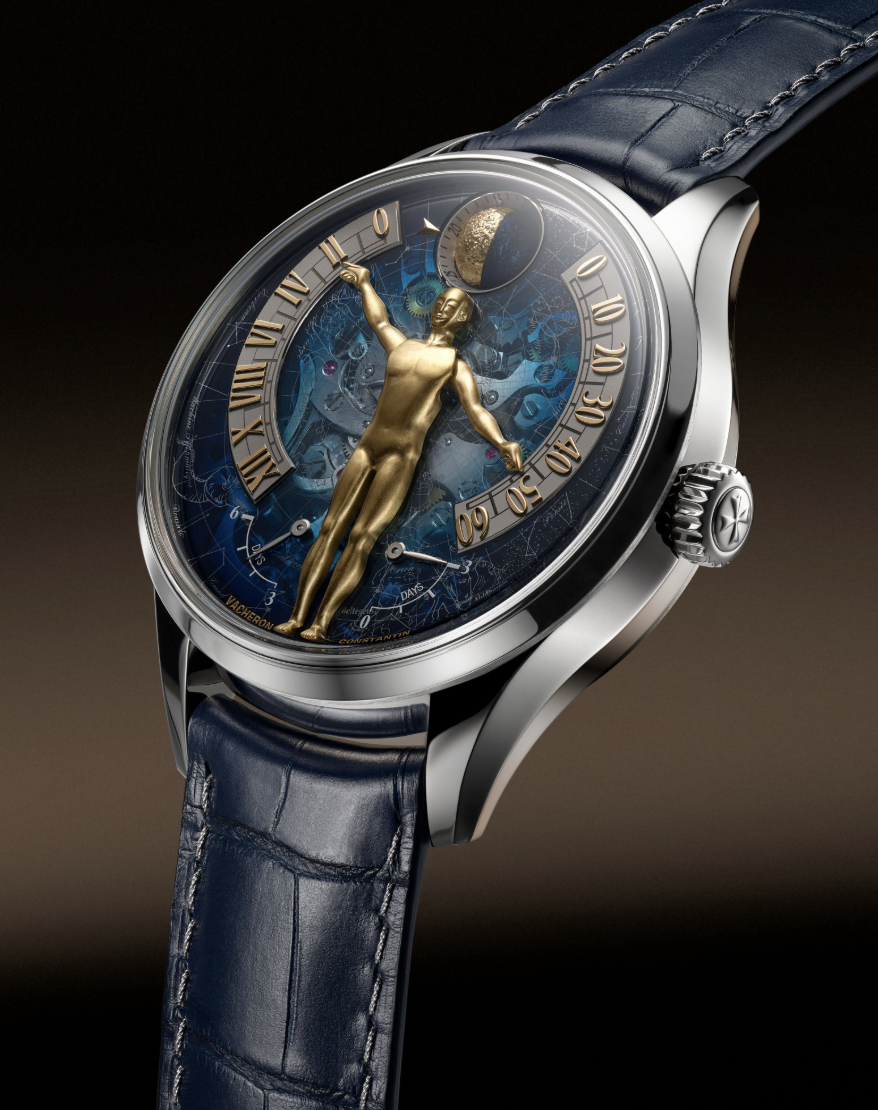
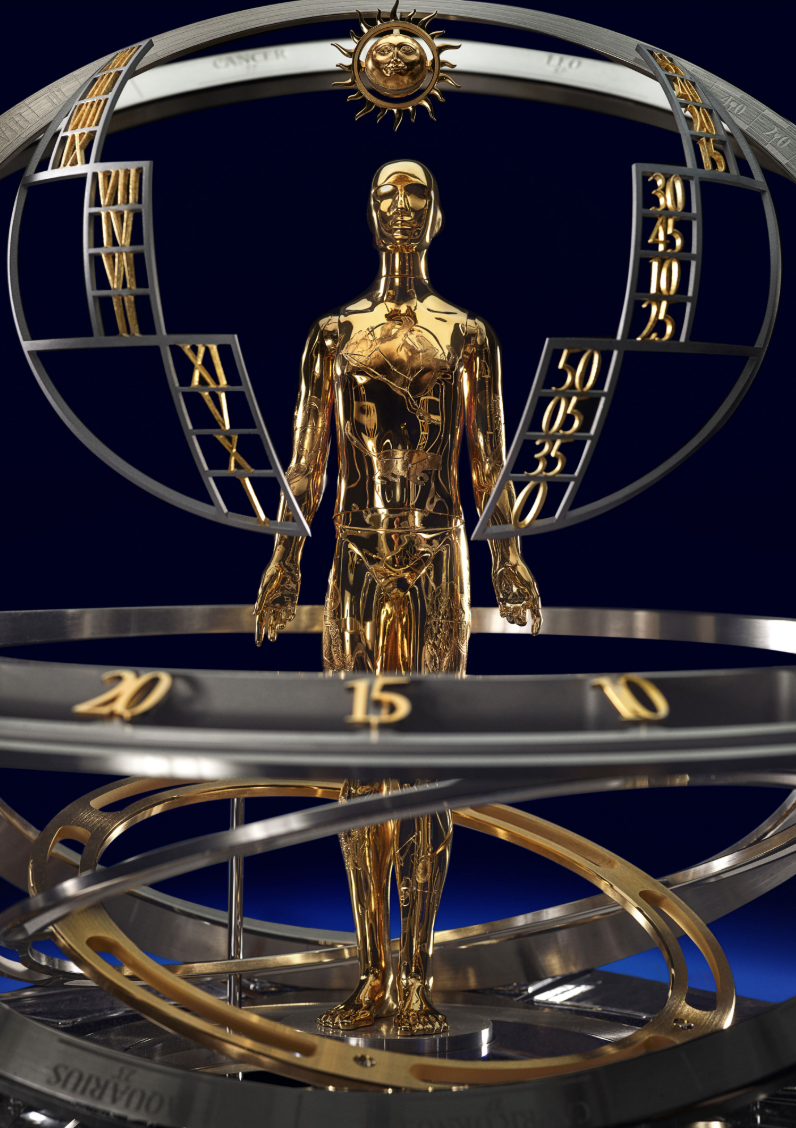
A true centrepiece, La Quête du Temps is the result of seven years of development. Bringing together artistic craftsmanship and horological engineering, the clock integrates 22 complications alongside a functional automaton that tells time through a carefully choreographed, almost musical movement. Composed of 6,293 individual components and protected by 15 patents, it moves beyond traditional timekeeping into something far more immersive. Its complexity also informed the Métiers d’Art tribute to the Quest of Time watch, which translates these ideas into a wrist-bound format, pairing a bi-retrograde display with a three-dimensional moon phase and a constellation indication aligned with sidereal time
Extending beyond these two pieces, three further creations anchor the presentation, each illustrating the Maison’s ability to continuously push the boundaries of watchmaking, not only through the sheer number of complications, but through the rarity and specificity of their astronomical functions. The Reference 57260, a highly complex pocket watch created for the Maison’s 260th anniversary, remains one of the most significant examples of this pursuit. When it was unveiled in 2015, it set a world record with 57 complications, among them the first perpetual Hebrew calendar ever integrated into a timepiece, positioning it as both a technical and cultural milestone.
That level of ambition was pushed even further with the Berkley Grand Complication in 2024. With 63 complications, it became the most complex watch in the world at the time of its release, defined in large part by the inclusion of a true perpetual Chinese calendar. A world-first achievement that required 11 years of development, followed by an additional year dedicated solely to its assembly. Rather than complexity for its own sake, the piece reflects a continued interest in how different systems of timekeeping can coexist within a single object.
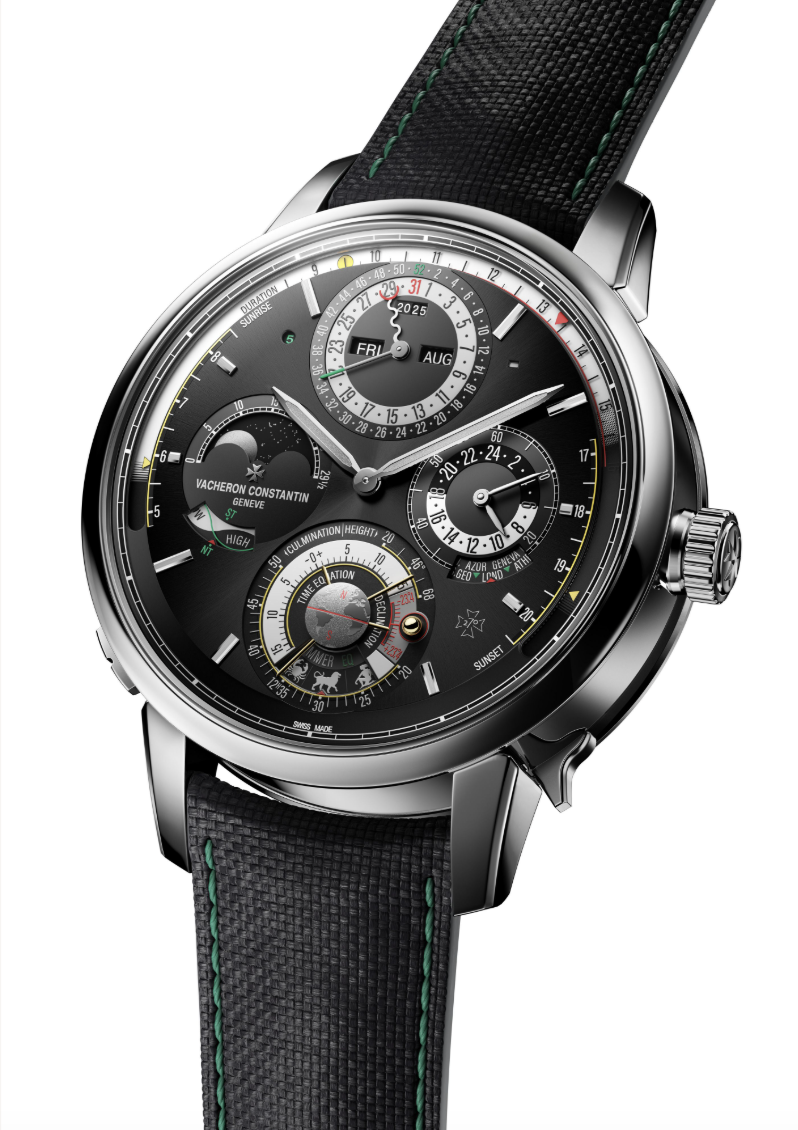
Then, in 2025, the Solaria Ultra Grande Complication – La Première continued that trajectory, establishing itself as the most complex wristwatch ever created. Developed over eight years and protected by 13 patents, it brings together 41 complications, including an unprecedented combination of five astronomical functions never before seen within a wristwatch. This piece speaks to a broader fascination with the relationship between time and the cosmos, a theme that the Maison’s work is constantly exploring.


