
News


Words_Yasmin Alrabiei
In the great famine of taste and distinct curiosity, an accumulated sensibility or, at the very least, a hard-earned sense of self has become rare. Everywhere, aesthetic languages converge into a commodity, references flatten, personalities are core’d and sold online, and the imperative to be understood easily seems to have eclipsed the more unruly pleasure of being singular. Yet there are designers who remain stubbornly, gloriously themselves.
To follow an idea far enough that it risks becoming alienating; to trust a peculiar reference, an unlikely material, an obsessive technique or an instinct irreducible to words. These are the conditions from which genuinely distinctive fashion emerges. That is why the young designers featured feel alive in a way that fixes your eyes on their next move. Across these five brands and studios, the designers behind them have not mistaken consensus for taste or polish for personality. They have built from the inside out, producing something sui generis—not just fashion that looks different, but that could only have come from them.
Zeina Issa
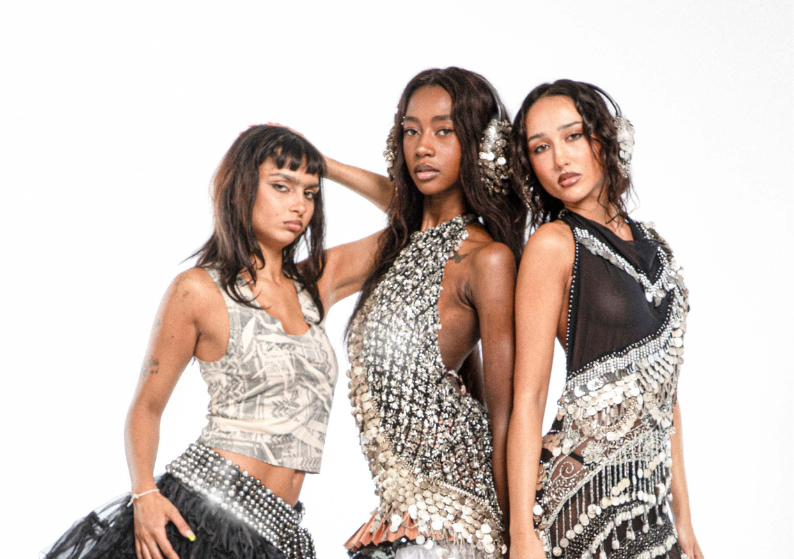
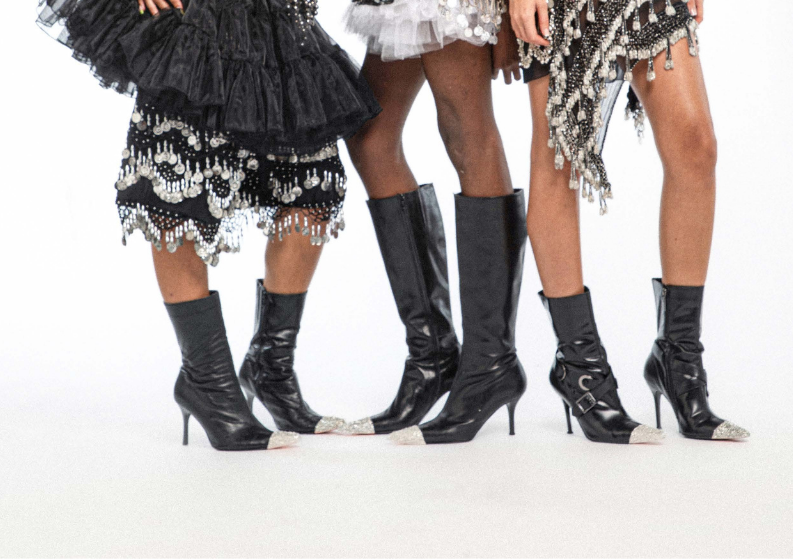
At just 26, Abu Dhabi-born and raised Syrian designer Zeina Issa’s incontestable success can obscure the much longer journey beneath it. Her relationship with fashion began at 17, when she started studying the discipline in the UAE, first through a BA in product design before eventually arriving at the almost mythical Central Saint Martins, where only six per cent of applicants successfully enrol. Even that transition was not immediate; her journey took time, with the Graduate Diploma becoming an important stage in forging the unflinchingly maximalist language that would come to define her practice.
Like the guts of a nebula, silver runs through everything in Issa’s graduate collection. Fittingly christened Inherently Loud, that metal is welded into silhouettes that read as a study in the fortitude of women’s bodies, their movements, their attitudes, their ease. Sculpted into halter-neck dresses and draped hooded tops, Issa shapes chainmail, belly-dancing coins and metallic embellishments into forms that charge each piece with a sonic shadow: a sound that follows its wearer and announces their entrance before your eyes get their feast.
There are so many entry points into why that name works so well. “Whenever I was in the studio during my MA, I would be listening to music full blast with my headphones on,” she shares. “Everyone in the studio would hear what I was listening to. I was just in my own world.”
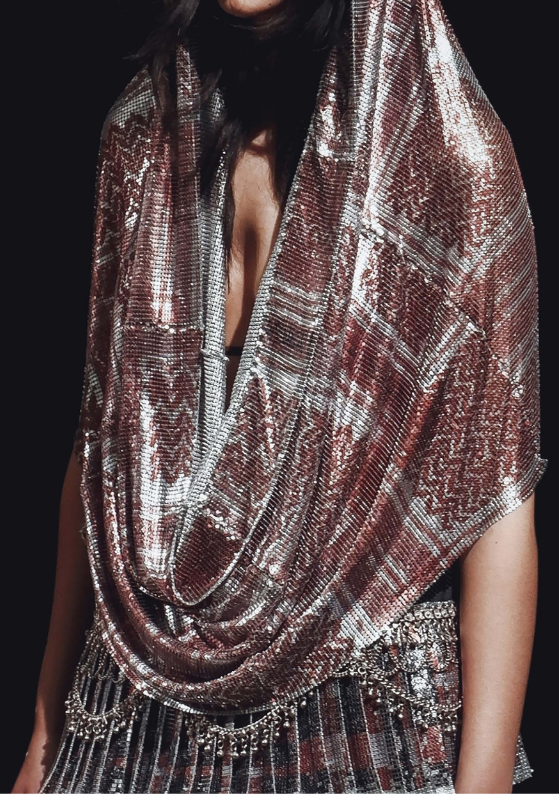
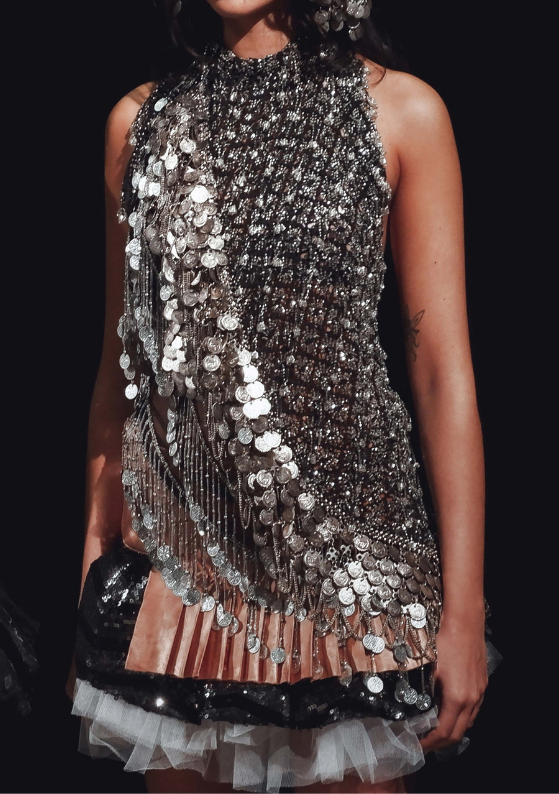
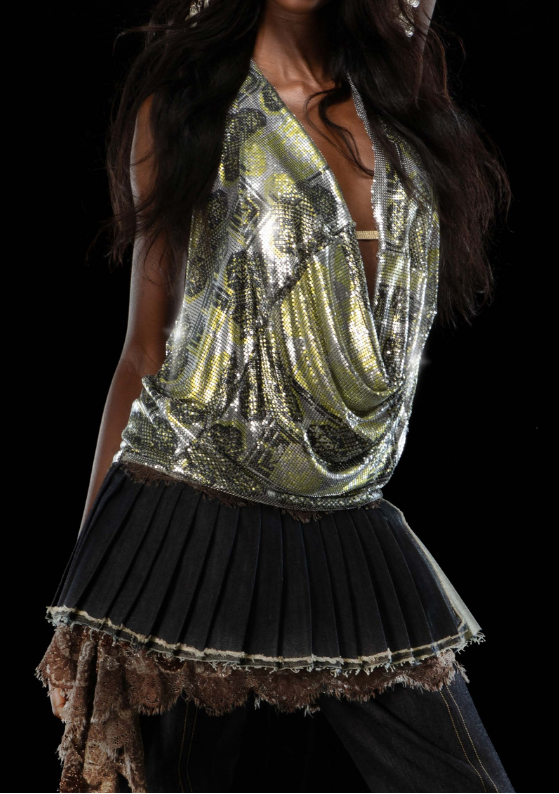
“It’s in my DNA that I’m loud. It’s from my parents, it’s from my culture. And the collection makes noise. Every room I step into, people always say, ‘We hear Zeina before we see her.’ Even when I speak, I have my bangles on, even if I don’t have my belts. So, yeah, I think the philosophy of inherently loud is reclaiming that — being too much, too loud, reclaiming that maximalism that exists within our DNA as Arab women.”
Issa’s process has a clear, analogue centre of gravity. She favoured beads in her earlier designs, but now it’s the same manual labour that is present in her work with the metals. “I think something that’s consistent for me is handwork. I really cherish that in my practice. Even though it takes me 100 more years to make something. There’s something so significant and sentimental about that,” she says. From stumbling upon the photo and essay book The Secret Life of Syrian Lingerie to the second-hand belly-dancing belts she discovered in Peckham Market when she first moved to London, her process is one of constant disassembly and recomposition. She thrifts belly-dancing belts, takes them apart and rebuilds them into a new afterlife.
For Issa, the tension between art and wearability is increasingly productive. Her heroes — Alexander McQueen, John Galliano and Jean Paul Gaultier — showed her the possibilities of fashion as spectacle, but she is now interested in grounding that artistry in everyday life. “What makes it even cooler is grounding that art,” she says, “[making pieces] that you can leave the house in. Fashion isn’t just the garment, it’s how it exists with the person.”
The Pussycat Dolls, Zeyne, Asha Banks, Ami and Say Now have all worn her designs. The most recent muse to make noise in a Zeina piece at the time of writing is none other than Zara Larsson. Issa claims her place in the Swedish popstar’s Midnight Sun universe, contributing more than 200 hours of handwork and multiple sleepless nights per garment — two skirts and one top — feel particularly at home in a space so associated with something kinetic, especially in the realm of Larsson’s buoyantly feminine performances.
It’s a Herculean effort, but Issa locates joy in the labour. When asked what part never feels like work, she describes research and styling with a smile, and adds “even the handwork. I’ll just get it done while watching my show, getting immersed in it, and when you see the final result, that part is really exciting.”
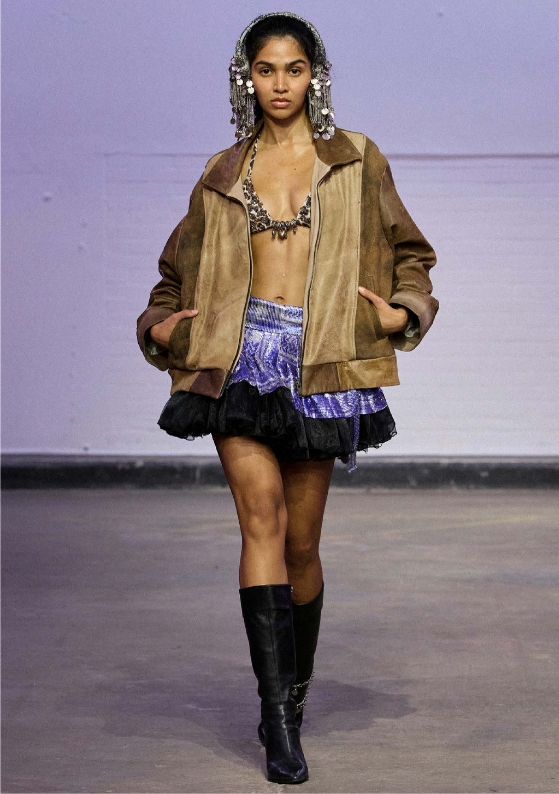
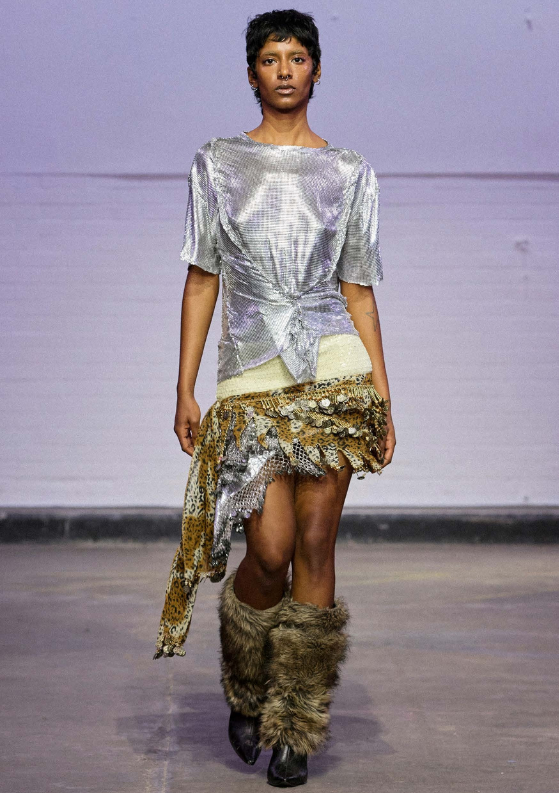
With something unguarded in her voice, Issa tells me she still catches herself asking out loud, “Is this… fashion?” Hearing her say it is like watching a cluster of stars wonder whether they constitute light. It comes more from the almost unbearable intimacy of being inside the very thing you’re trying to see, as opposed to uncertainty for the sake of it. That particular hunger to step outside the thing you’re building and ask whether it names you back is one I think we all know intimately.
“You know, the MA was a very complicated experience for me, if I’m being honest. There were a lot of ups and downs. I put all of myself in that collection,” she shares.
But we discuss the all-important reminder that history’s most narrated tales are the ones with a little spice to them, unexpected turns and pivots, things that went wrong only to go magnificently right.
“Something to remember, especially for every baddie in a similar situation out there; Arab, Muslim girls, I just think… don’t take rejection for an answer. People don’t understand how many times I’ve gotten rejected in my life. And I think it’s the Muslim in me, you know, but genuinely, if you believe something is meant for you, then leave it in God’s will. I believe this with my entire heart. I really do.” With such faith, even the sky seems just like somewhere she’ll pass through on her way to the top, making noise as she does.
Islam nashef

At the time of writing, Islam Nashef has just won the Only Natural Footwear Design Category Award 2026. For a designer based in Taybeh, occupied Palestine, where opportunities to send work out into the world are necessarily more limited, the recognition bears greater weight. “Seeing my work reach international competitions and be recognised in this way means a lot,” he tells me. “The piece actually spent a few years sitting in a closet collecting dust, so seeing it finally get this moment is pretty amazing!” It is a fitting trajectory for Nashef’s work; even when it waits in the wings, it eventually becomes impossible to overlook.
Nashef turns 24 this September, but his dialogue with fashion began much earlier. Around 2010, he recalls discovering “this world for the first time”: a world of foreign pop music, but also the seductive coalescence of “everything surrounding it, the imagery, the fashion, the performance, and the visual language.” By 18, when he entered an academy for the first time, that curiosity matured. Clothing, he began to understand, could be “part of a much larger world than simply something we wear.”
He describes himself as naturally experimental, moving between materials and techniques according to the serendipitous, sometimes random routes research can lead down. Leather, however, has become a familiar love. Through experimenting with leather sourced from Hebron, he encountered Palestine’s centuries-old traditions of tanning and trade. “The craft has been closely connected to traditional industries such as footwear, belts, saddles, and other leather goods. I sometimes source leather from Hebron, depending on my access to it. And this has made my relationship with the material feel more connected to its history and place. It changed the way I see leather,” he shares, adding that while he designs from “within the Palestinian experience,” he avoids any symbolism that insists on itself, knowing that “living in occupied Palestine is, in itself, a form of struggle.”
“I feel that even the smallest details of my everyday life can carry within them a much larger political reality… that experience, with all its complexity, emotions, and contradictions, is already present in the way I think, design, and make.”
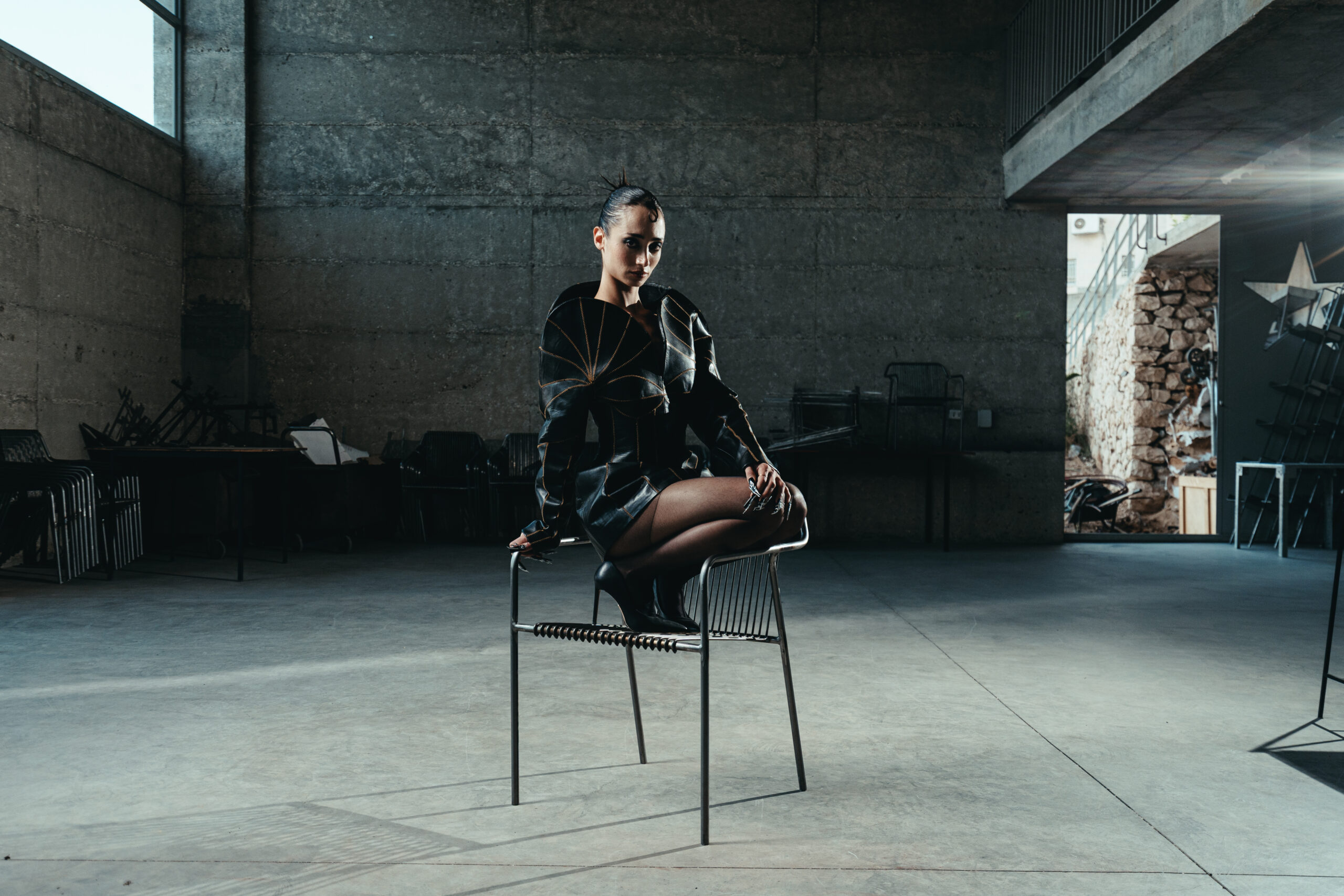
On his favourite part of the process, Nashef explains the very beginning, the idea in its nascent body. “It’s one of the most beautiful stages, while being the most difficult, too… thinking and developing an idea doesn’t come easily to me, and I feel that the hardest part of any design is reaching that initial core from which everything begins. During this process, I like to start translating the idea into different forms, through 2D and 3D sketches, textile experiments, silhouettes, and other ways of helping me understand and develop the idea. I keep experimenting, breaking things down, and rebuilding them until all the pieces begin to connect and the vision becomes clear to me.”
Perhaps nowhere is this more evident than in the genesis of SHED, the project dearest to his heart. Nashef watched his pet spider, Johnny, moult, witnessing a creature emerge from an exact replica of its former body. He found himself confronted with “two bodies, one an empty shell, an imprint of what it once was, and the other a living body in a state of transformation and growth.” He translated the spider’s metamorphosis into a design language of his own, casting organic latex over the body and garment to create a kind of second skin, replacing conventional sewing by merging pattern pieces into a unified form. SHED became, in his words, a study of “the cultural moulting of identity.”
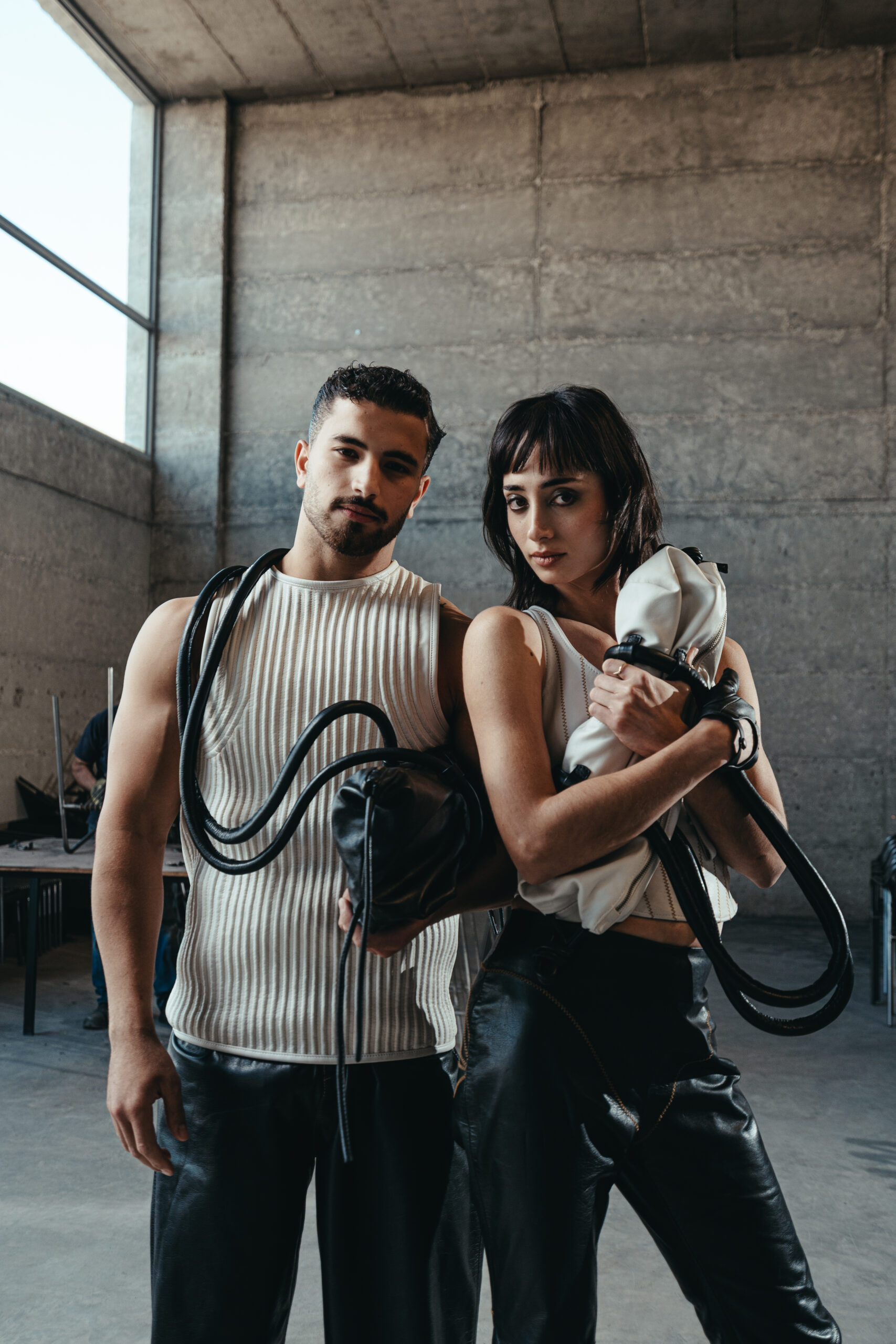
For his subsequent SHIELDS collection, Nashef became interested in the strange contradictions of the ego: its desire for control, impression and protection alongside vulnerability and tenderness. He began researching warriors and armour across centuries to the contemporary, analysing status signifiers as well. But the deeper question, of course, poked at something fleshier, more tender. “I was trying to understand why we wear our armour in the first place,” he explains. “What are we trying to protect? What are we trying to hide?”
Structured tailoring sits beside softer forms, black against white, strength against vulnerability. It’s an ode to polarity as it pertains to ourselves. Nashef’s vision understands fashion beyond material custom and excavates the reasons we even bother concealing or protecting an identity that itself is prone to flux.
“I’ve never put myself under the timeline that the fashion industry imposes,” he says, noting that it can “easily lead to repeating ideas that already exist.” In an industry gagging for incessant output, Nashef respects the maturation process required for growing something with substance that is genuine.
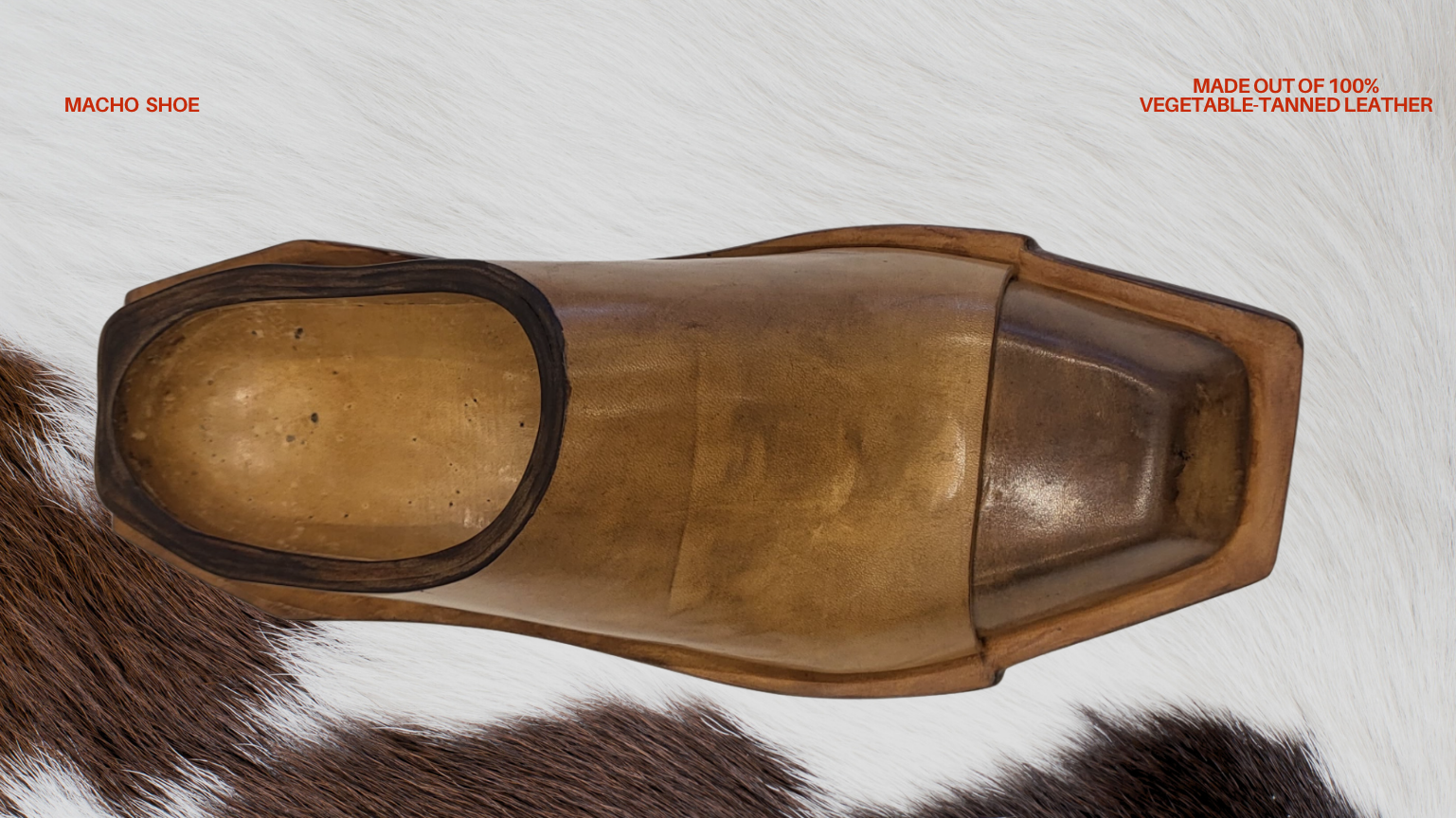
“It’s important for me to take my time and present my work when I feel it is truly ready, rather than simply because I need to produce something new. This is especially important to me because I’m still in a stage of discovering myself, my artistic identity, and building my own visual language and signature.”
Nashef fashions physical metaphors for the private negotiations that make us human, showing that beneath every firm exterior is something in the process of changing, shedding one skin in anticipation of the next.
Mise en place
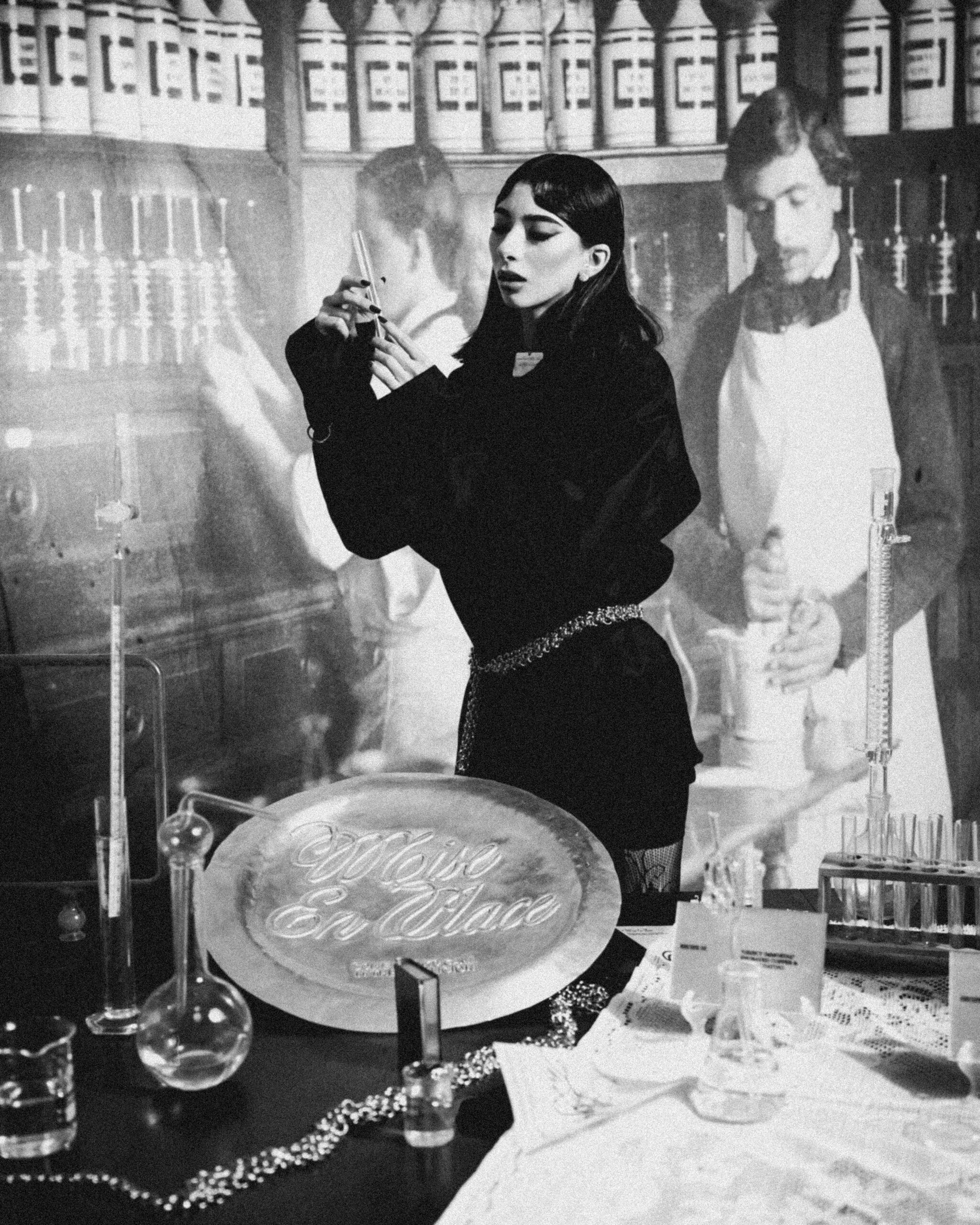
Mise En Place is my idée fixe, a brand I have impassionately followed for two years. Their world refuses easy categorisation because it operates from the understanding that all domains are, at their edges, porous; leaking into each other. Beauty into strangeness, romance into macabre, the sophisticated into the feral. Their work is suffused with the aftertaste of a fantasy. What they possess is the rare ability to see tenderness in what might otherwise confuse, and to find the dreaming underneath things we have been taught to be afraid of.
Even their name speaks to this instinct: mise en place, the French culinary practice of arranging and preparing every ingredient and tool before the act of cooking begins. Preparation is ritual, and the masterminds behind it, Egyptian designers Habiba Sawaf and Habiba Shatla, certainly revere the process for all its complexity.
Their original departure point wasn’t necessarily fashion; this was just the medium intersecting each room in the creative world they wanted to construct. “We didn’t have enough information about fashion and technicalities. We just were thinking about a creative concept. We had all this inspiration and feeling after coming back from Berlin to Cairo [where they had studied together]. We dived into things with a broader perspective. We had this curious mentality, wanting to know more and wanting to learn, so that helped us at the beginning. That curiosity meant we would randomly go to workshops just to listen, to observe. To know that these techniques exist. It was just us at the beginning… channelling this creative energy, asking questions.” Those questions would eventually find their answers within the wider mythology their products would come to inhabit.
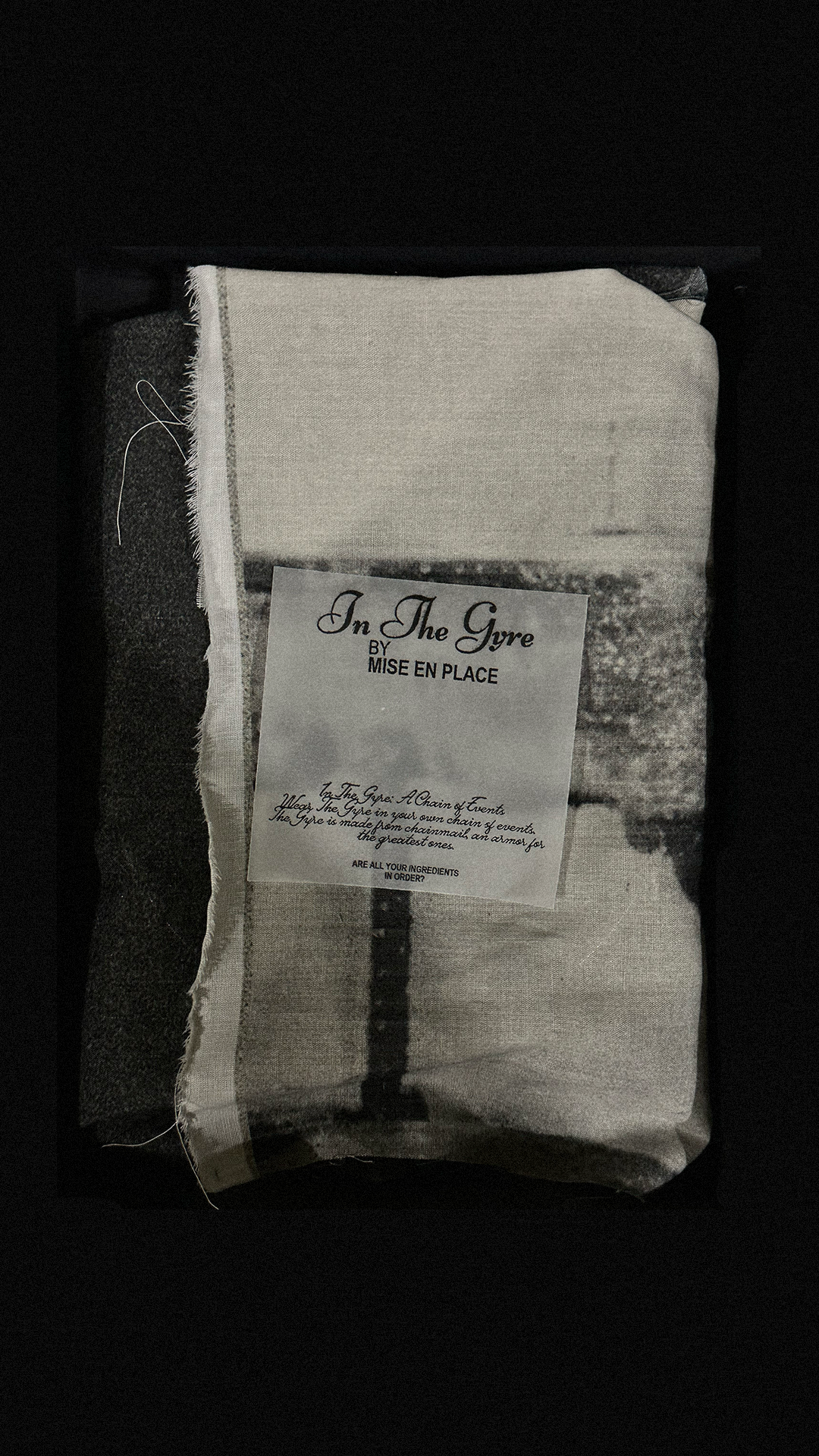
The names of their pieces engage the threshold before surreality – The Marble, Alterego, Wish Fish, Fever Dreams, The Experiment, Metamorphosis, The Gyre – as do the short fashion films and campaigns on which they collaborate with filmmakers; theatrical and eerie. Arranging its references into a coherent mood, the brand is something closer to mise-en-scène, as the research and tastes that they each separately accumulate come together in their conversations where they reflect on various feelings captured across sound, cinema, photography and archival work, which they describe as less traceable and concrete, more living in the work the way a dream lives in the hours after waking; diffuse and ambient.
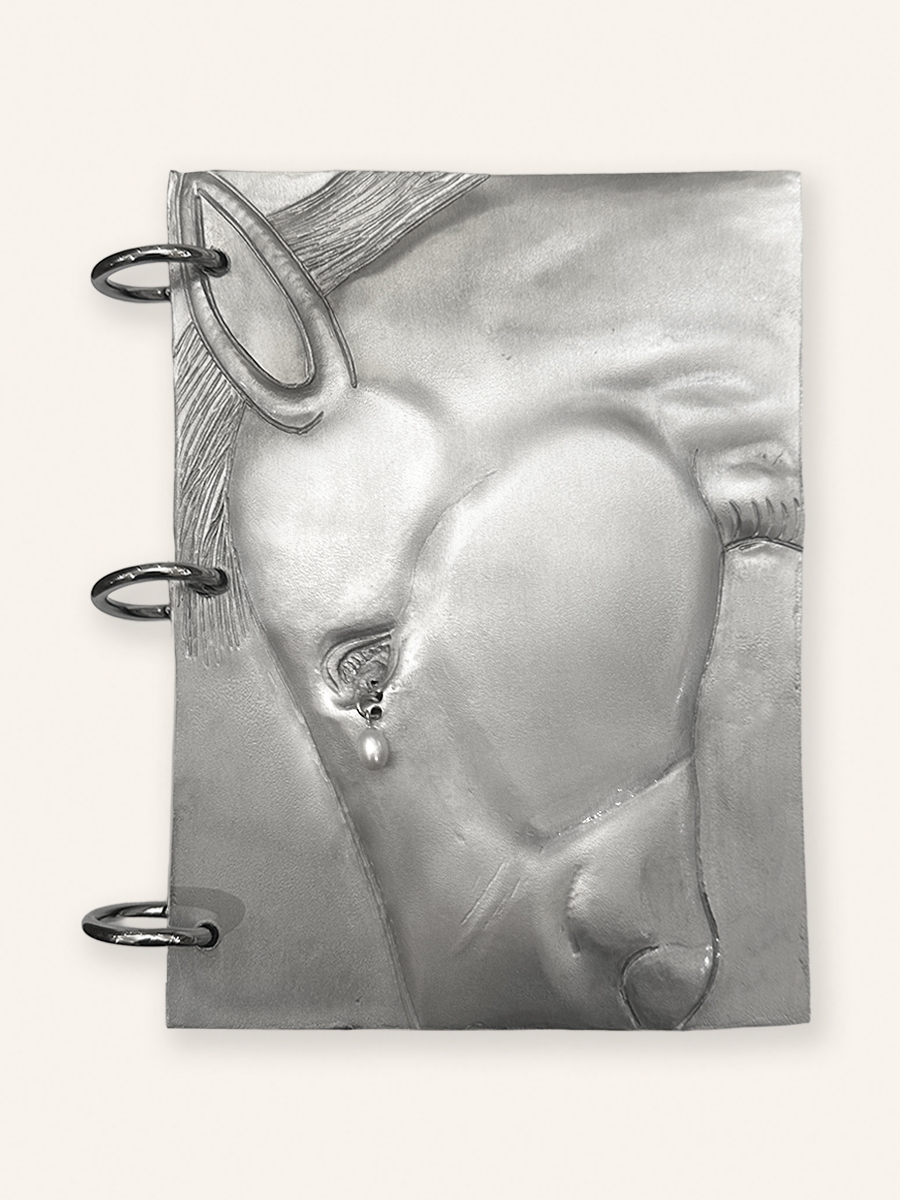
The Crying Horse notebook gives a hammered aluminium cover a pearl tear for a weeping stallion; a sculptural crescent tote carries a bullfighter and matador in satin; the Marble Plissé top, structured to adapt to the body it holds, mimics the raw crimson of marbled meat. Their Alterego bag pairs natural cowhide with a unique horn handle, while the Wish Fish chainmail bag mutates into Crooked Bone, Red Spine, Black Spine and Lollipop Tears variations.
“We’re very excited for the next phase whenever we work on something,” Shatla says. The shoot, the props, the lighting, the models, the song are all part of a single continuous act of narration. “Each process is a part of the narrative,” she explains. “The ideation, and then the process itself and the production, and then the packaging, even the packaging, how we want to package the product in fabric, what the fabric design is going to be.” Everything is accounted for, everything is deliberate, everything is charged with the same attention as the object it surrounds. “You have a vision or a story to tell,” she says, “and then you’re just taking different parts of things and putting it together.”
On their ethos of wilful experimentation, they note: “We didn’t have any clue about the technicalities, or how metal behaves or how to use it in products, but the more we delve deeper into the craft, the more possibilities you find. With the metal, we tried it first with someone, and then it led us to another workshop. We found that they can do more techniques, for example, hammering. So, it’s not us being tied to a specific material. It goes beyond that.” Producing across workshops from Fayoum to Cairo, they remain supple to the ideas of the artisans they work with.
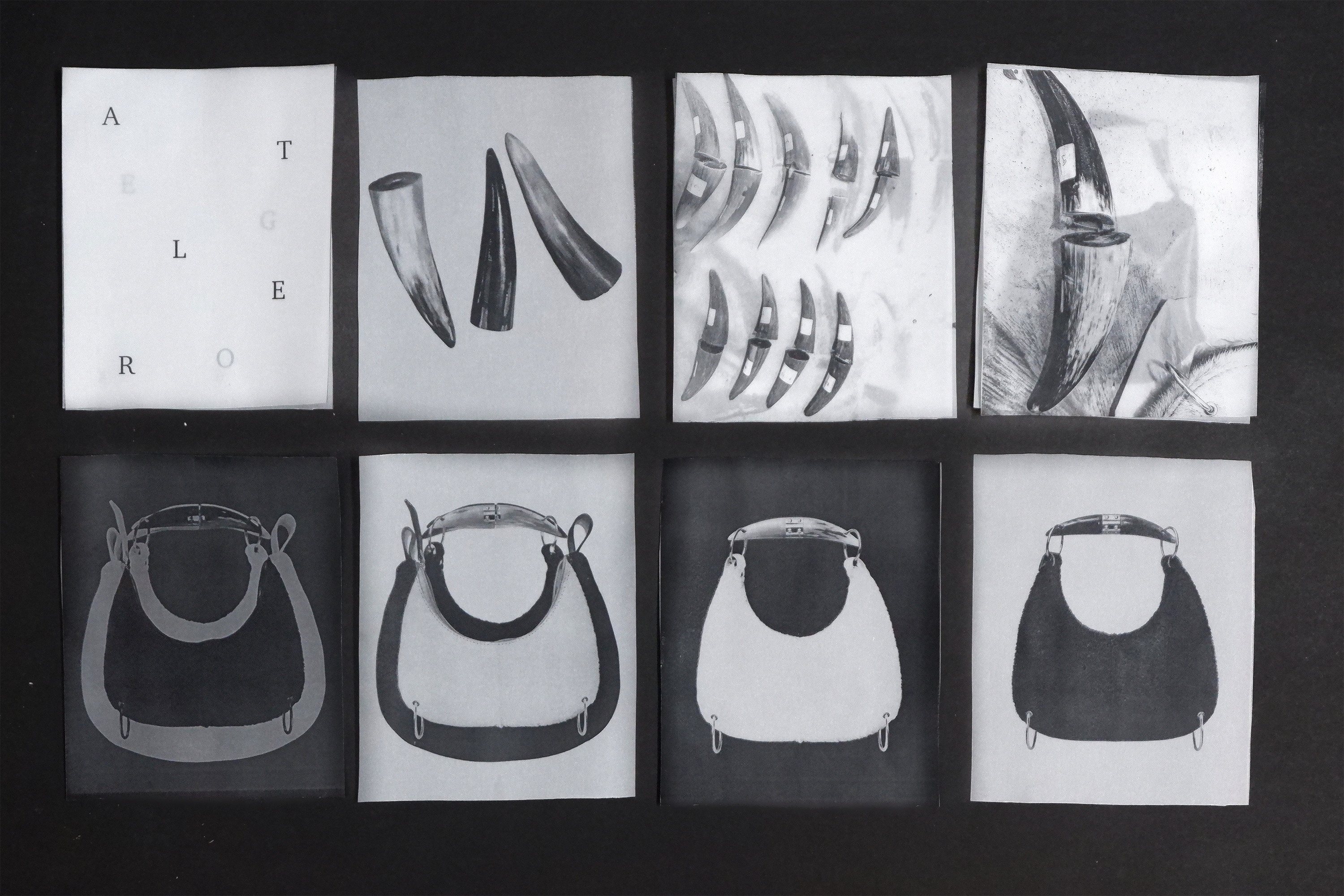
Sawaf tells me, “With all our products, we started off getting to know the technique or being curious about how something is made. And then, we listened to the artisans and their views. It’s really us navigating through the process of producing an outcome in a way that we imagine, but at the same time, one that also caters for the craft or the product or the technique itself.”
Egypt carries one of the longest, most unbroken commitments to making by hand the world has ever produced. “Seeing the possibilities that a workshop with hundreds of years of experience, something inter-generational, really gives you perspective,” Shatla tells me. From the metalworkers of the Old Kingdom, who prided themselves on “working metal as though it were thread,” to the leatherworkers of the New Kingdom, whose craft reached extraordinary levels of refinement through techniques passed down, the country holds within it an artisanal memory that is, in the truest sense, legendary. Mise En Place works inside this arc with reverence for its iconicity. The chainmail artisan they collaborate with learned the craft from his father, who learned it before him — when Mise En Place arrived with their vision, he found himself doing work he hadn’t done in a long time. That rekindling felt wholesome for the girls. “He gets excited, and we get excited,” Sawaf explains, “and it becomes energy between us that we both want to create.”
Special request
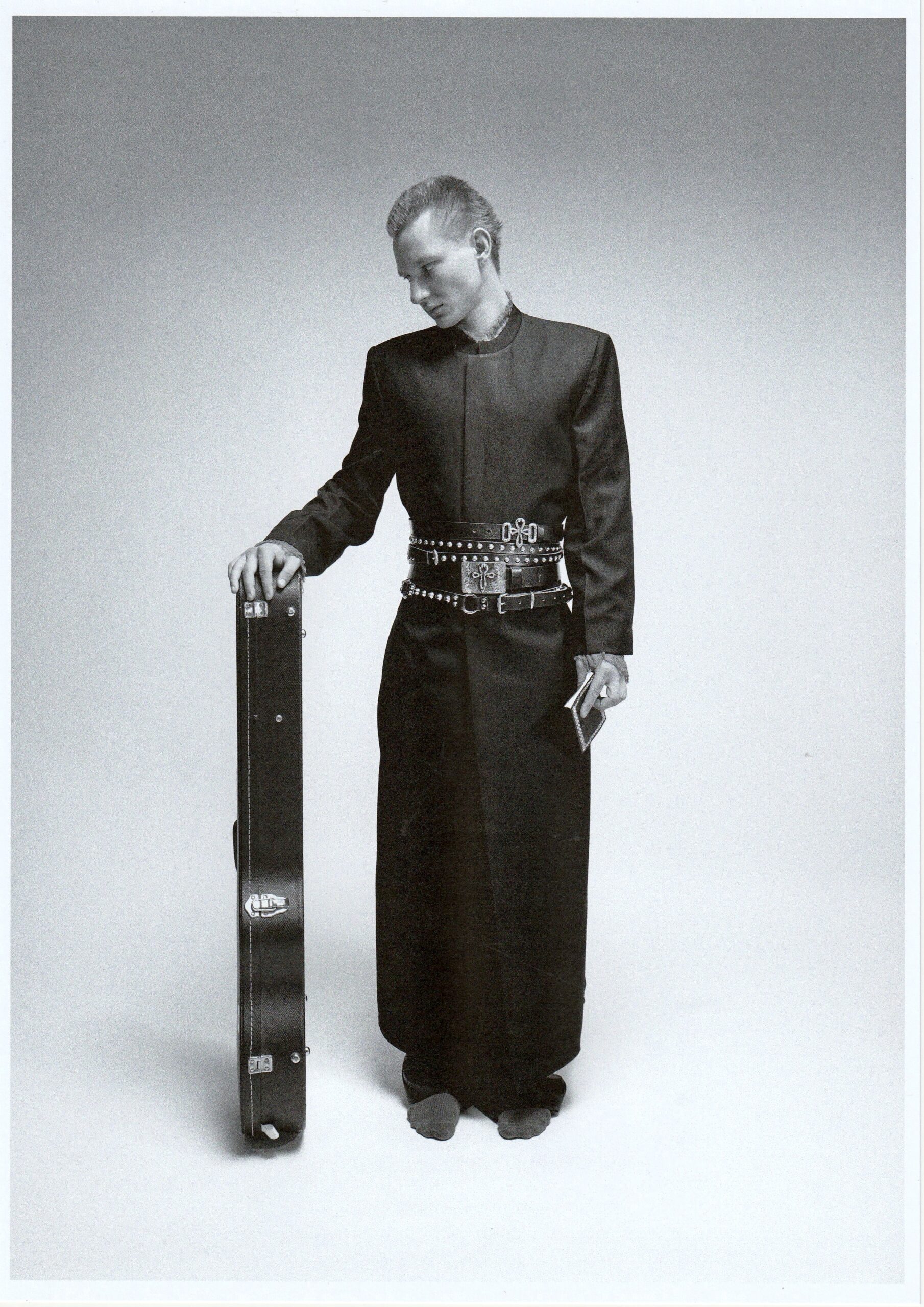
Freshly home from a successful Copenhagen Fashion Week, Special Request is a love letter to maturation, to all that which deepens rather than declines. In a world that resists its own entropy, constantly reversing signs of wear and reading ageing as failure and newness as virtue, Founder and Creative Director Ahmed Tohamy builds in the opposite direction; toward the patina of use and the intimacy of things worn with wear. It is, perhaps, the most elusive quality a made thing can possess: its own character, and the one most ruthlessly eliminated by the logic of the production line.
His manifesto, written in Latin, carries the phrase nemo sibi nascitur, meaning no one is born for himself alone. “We actually got it engraved on a 70 kg stone that we carry around everywhere we go,” he says. Just this past week in Copenhagen, two enthusiastic visitors attending the Special Request showroom got this tatted then and there. Tohamy shares, “there is a main concept of doing things that, you know, looks perfectly imperfect”, which even runs through his own life. He engages the notion that the image of beauty is made more enchanting through its asymmetry and blemishing.
After seven years in the fashion industry gaining insight through creative roles at High Snobiety and Alyx Studio, Special Request crystallised into its own practice. His experience taught him a lot, and also made clear that his own endeavour is not a response to a fashion moment organised around speed and churn. “I can’t tap into that same greediness that made me tap out of the traditional fashion industry before; if I did that, I would be lying to myself. We operate in intervals; it could take six or seven months to develop three pieces, and once it’s done, it’s done. When we feel that a new shift is coming in, we begin interval 2, or 3, or 4 and so on.”
Garments arrive in intervals as opposed to seasons, almost always in limited quantities, never more than five of the same piece, with many of the products being one of one, reflecting each of us all. Distressed linens are distressed again; heavy leathers are worked to their natural weight; materials are made to age rather than merely imitate age. His design philosophy is less interested in looking new than in acquiring a life itself decorated with the marks of experience.
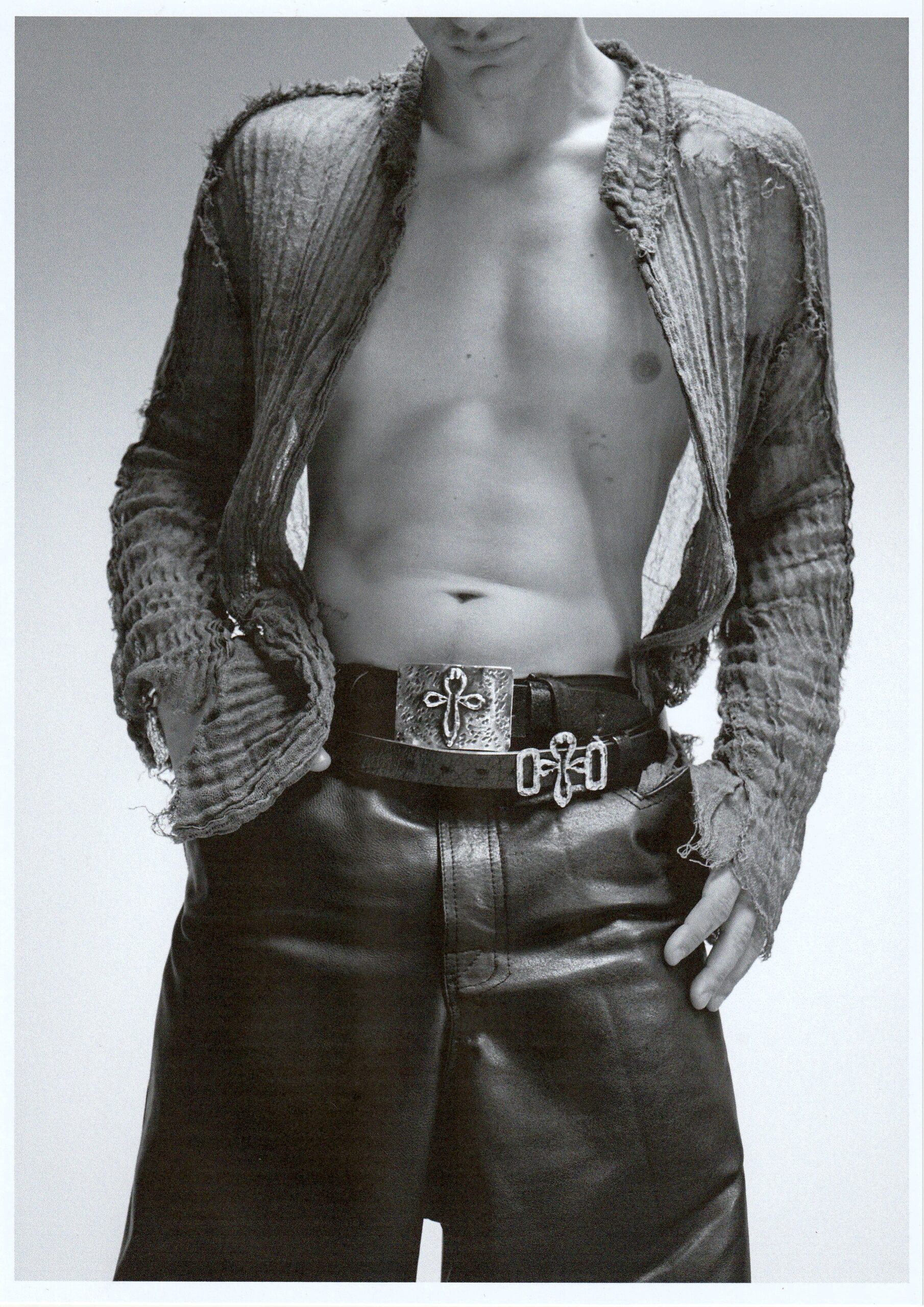
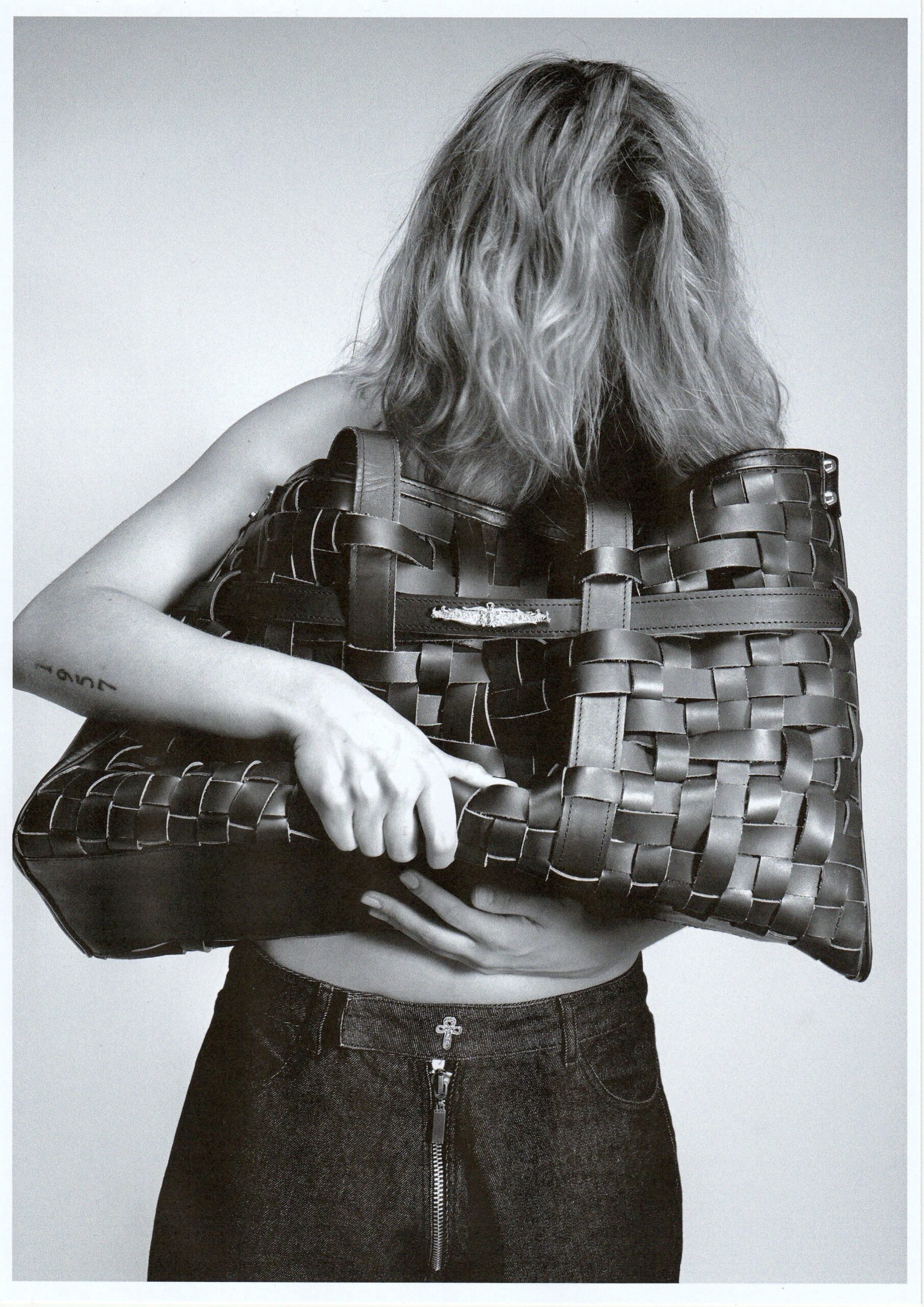
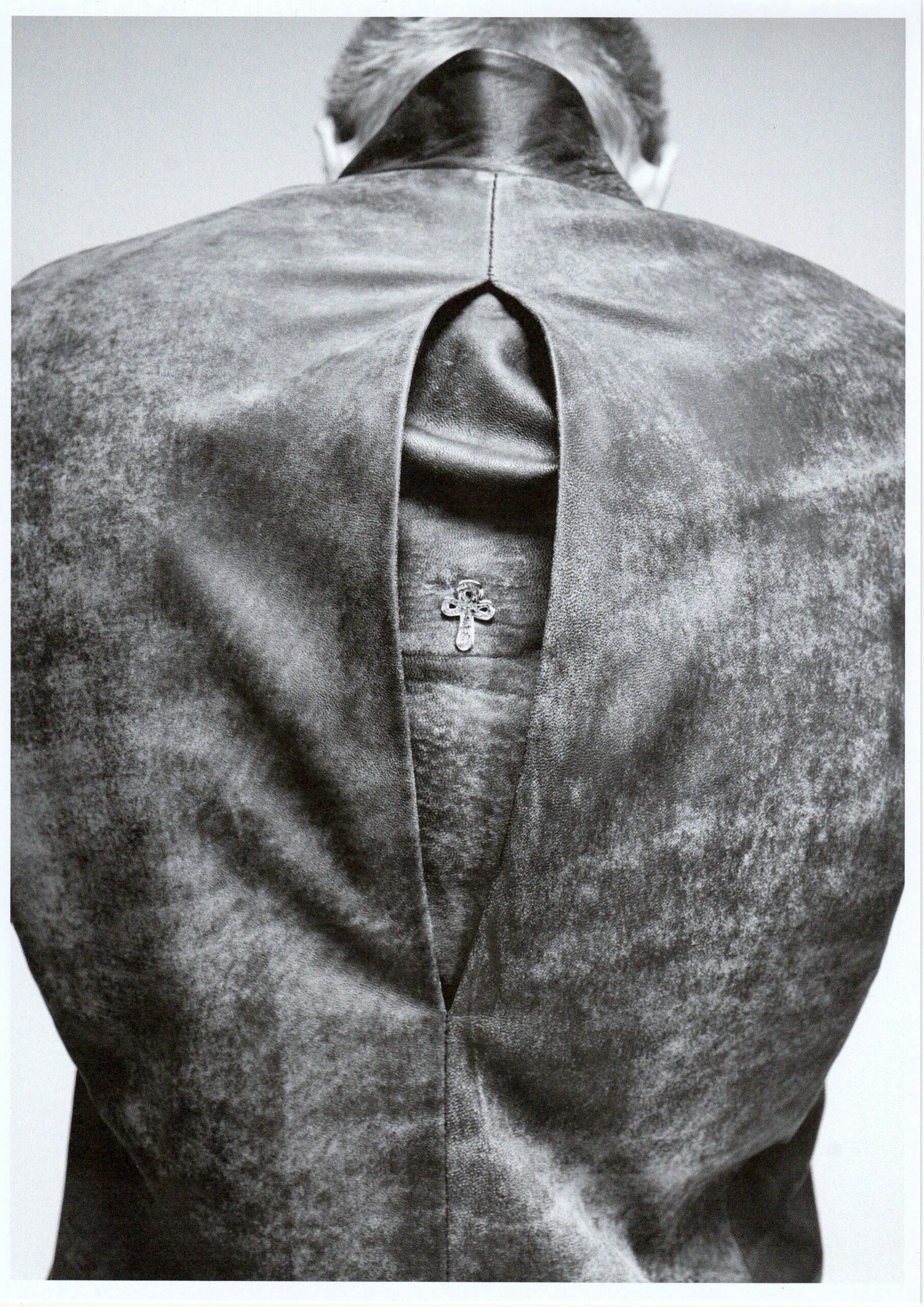
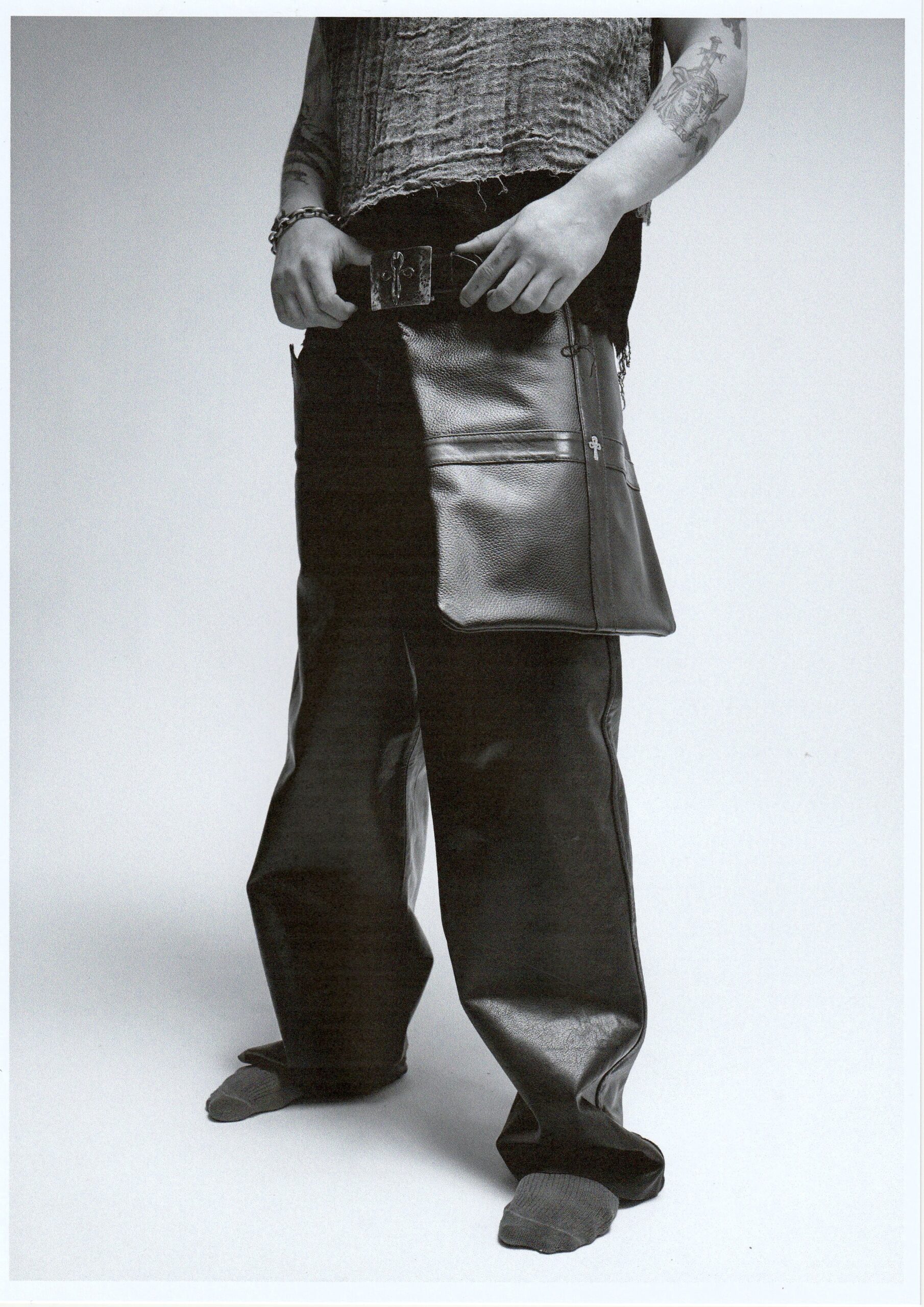
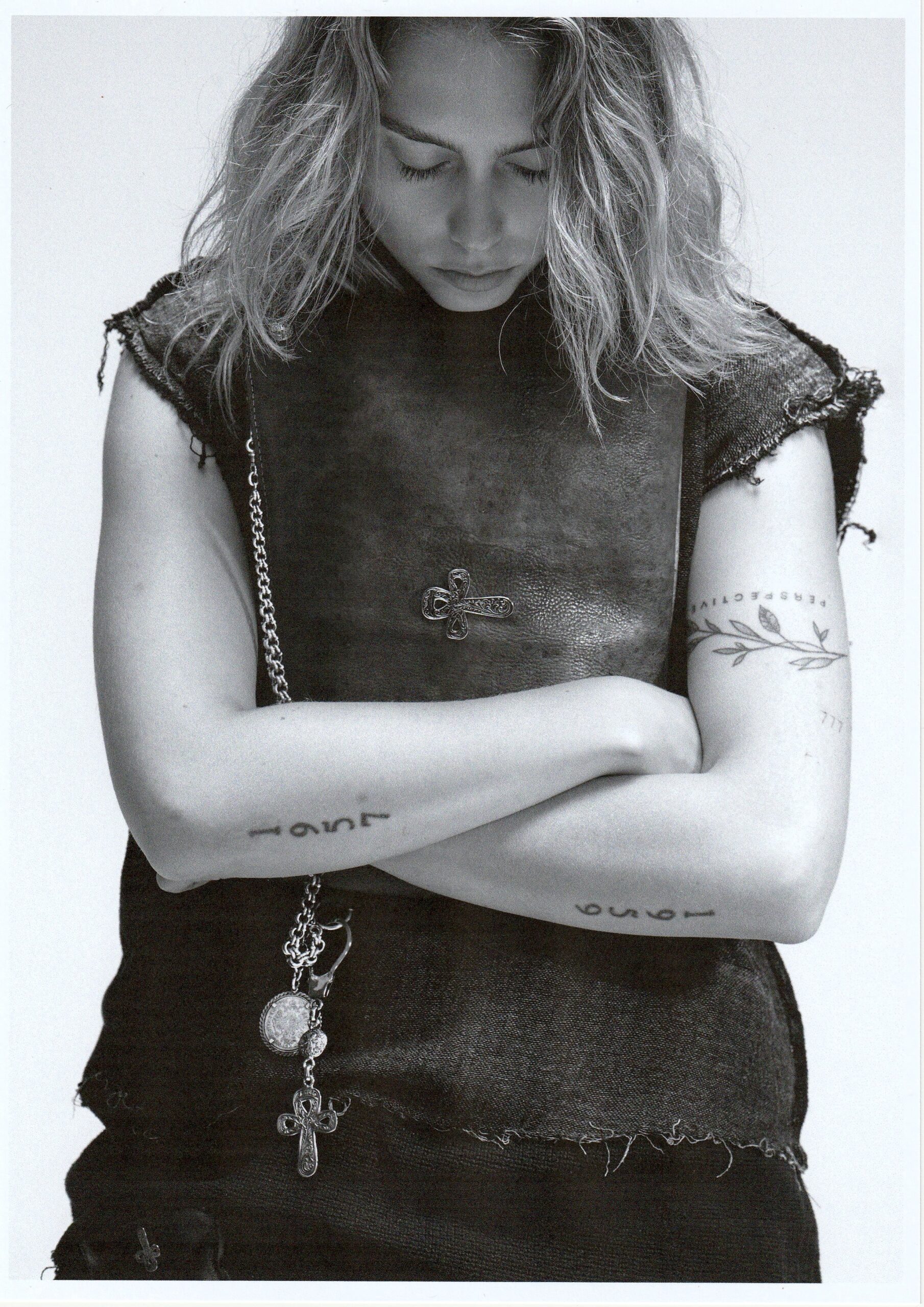
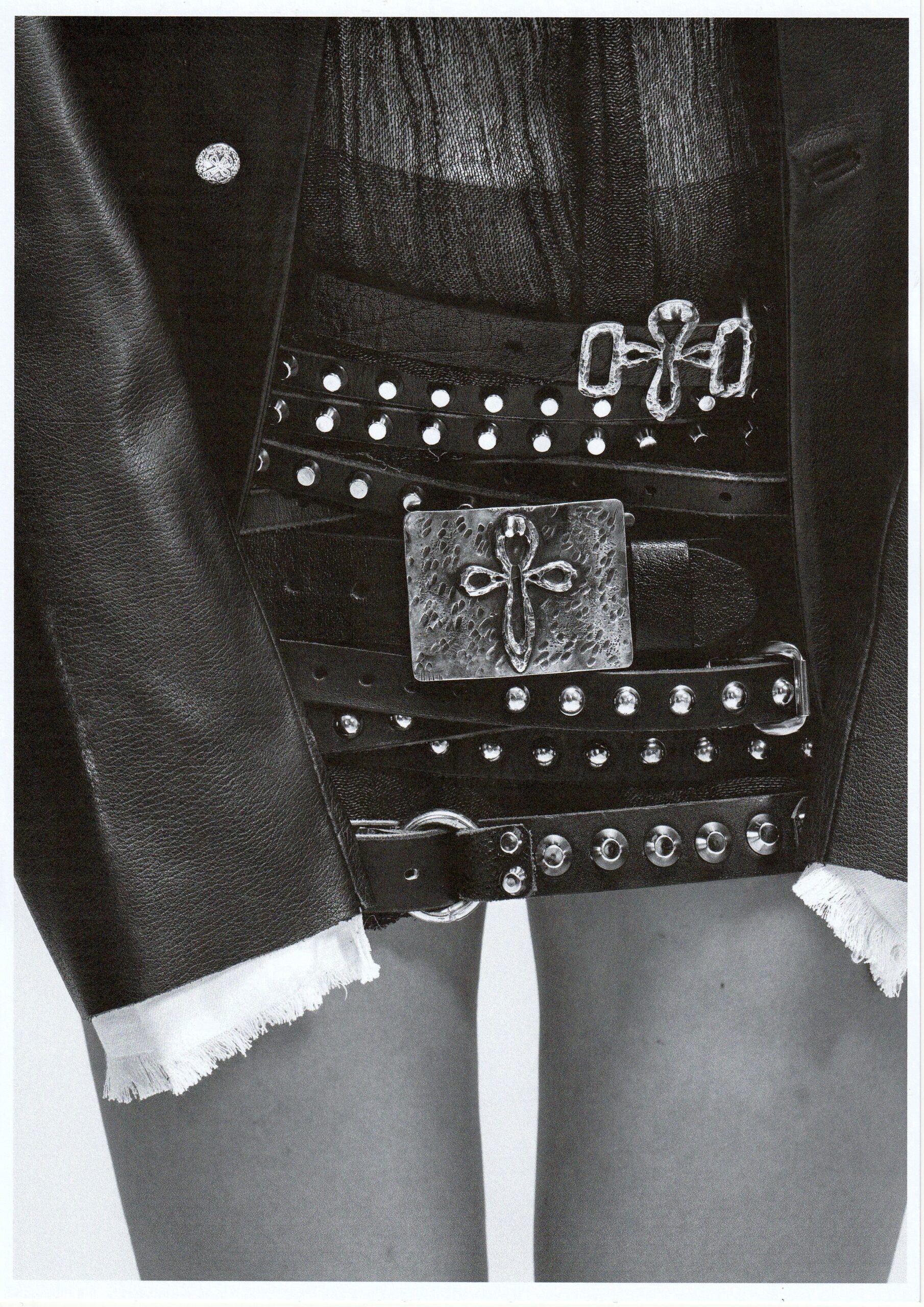
The brand carries something of the avant-garde’s commitment to experimentation, punk rebellion’s refusal to comply, the gothic’s reverence for age, weight, and the beauty that accumulates in dark places. Tohamy holds these influences without letting any one of them take over, cohering them into a harmonised world. The result is a practice that is singular in the way that only genuinely hybrid things can be.
That sensibility extends to the objects that inform it. On screen, Tohamy shows me an 1801 edition of L’Architecture Gothique, a red-bound volume with gold lettering that he found in Paris. Its pages meticulously document the churches and cathedrals of France, recording the painstaking construction of Gothic architecture across centuries. “It took them 400, 500 years to build some of these churches. The effort, the craftsmanship. I am heavily inspired by that,” he tells me. He points to a silver pin from Special Request: its origins can be traced directly back to the book. “If you put our pieces in one of these Gothic churches,” he says, “it would blend in. It would belong somewhere.”
Tohamy tells ICON MENA, “We develop our own leather, we have our own tannery,” he says, tracing that craft to his grandfather, who owned a tannery. “So when we do that in the workshop, it’s a lot of experimentation. And also at the same time we developed this linen fabric, a very fragile one, because we wanted something that is pre-aged. The more you wear it, the more it wears. We definitely went the hard route of making stuff from scratch and developing it ourselves. Because there is this philosophy I really believe in.” That philosophy comes partly from Shunryū Suzuki’s shoshin — approaching everything with a beginner’s mind. “If your mind is open, basically anything can just happen. So I try to always detach myself from anything that we have even thought before, or from any bias.”
“I personally love to do things with my hands,” he adds. Working collaboratively with the custodians of craft legacies at risk of disappearing is the work that Tohamy values, and aims to keep close to the brand.
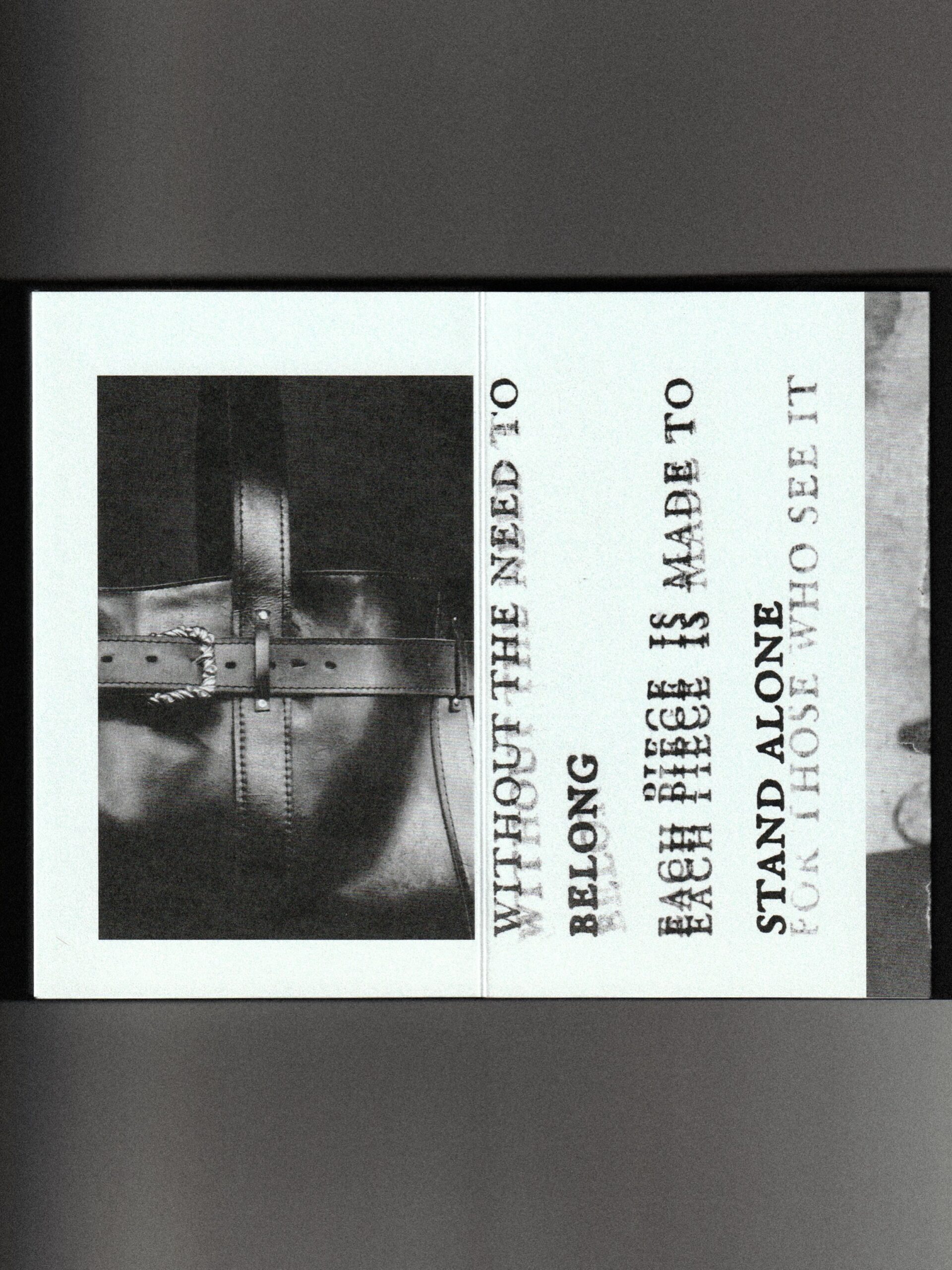
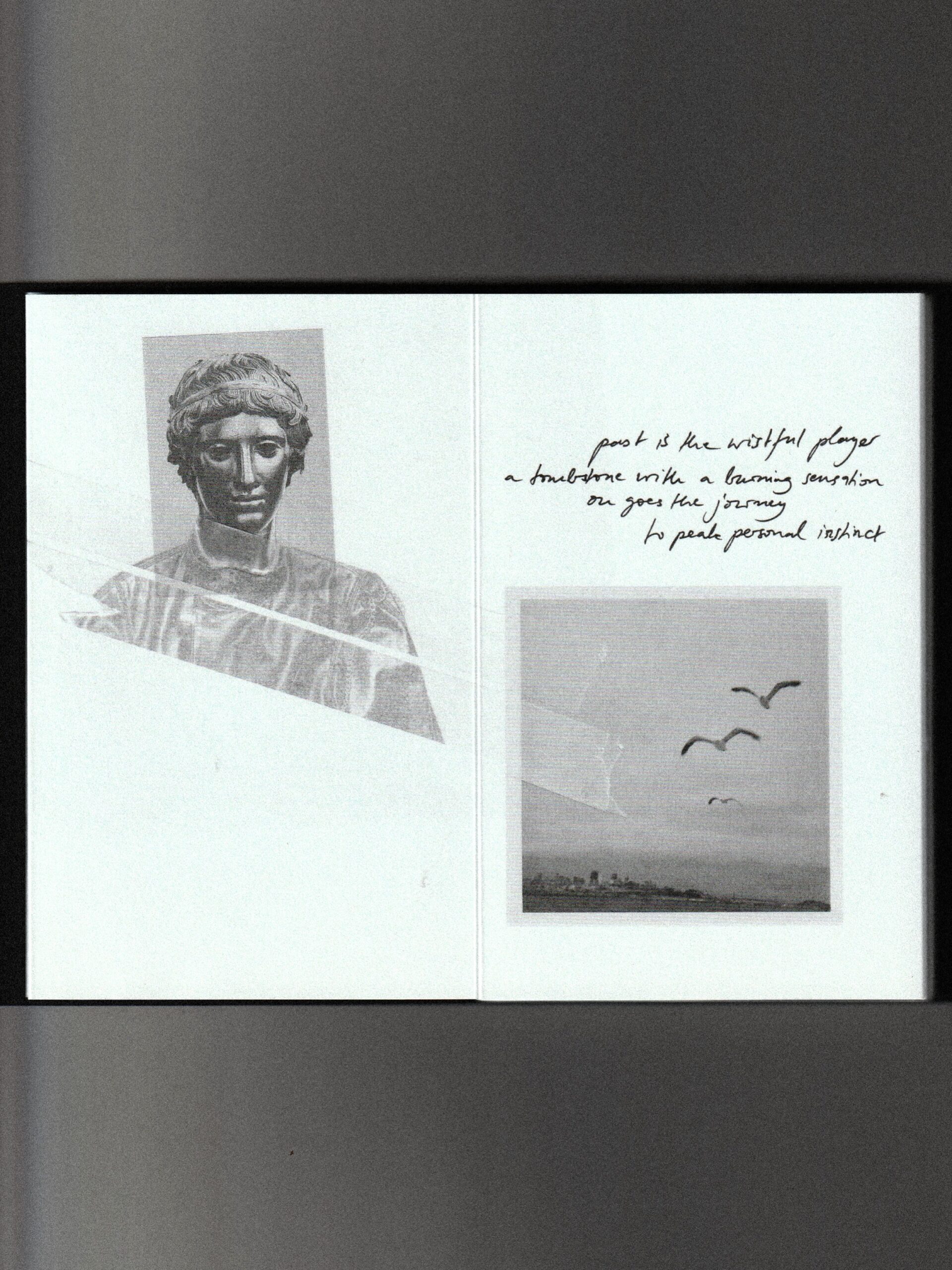
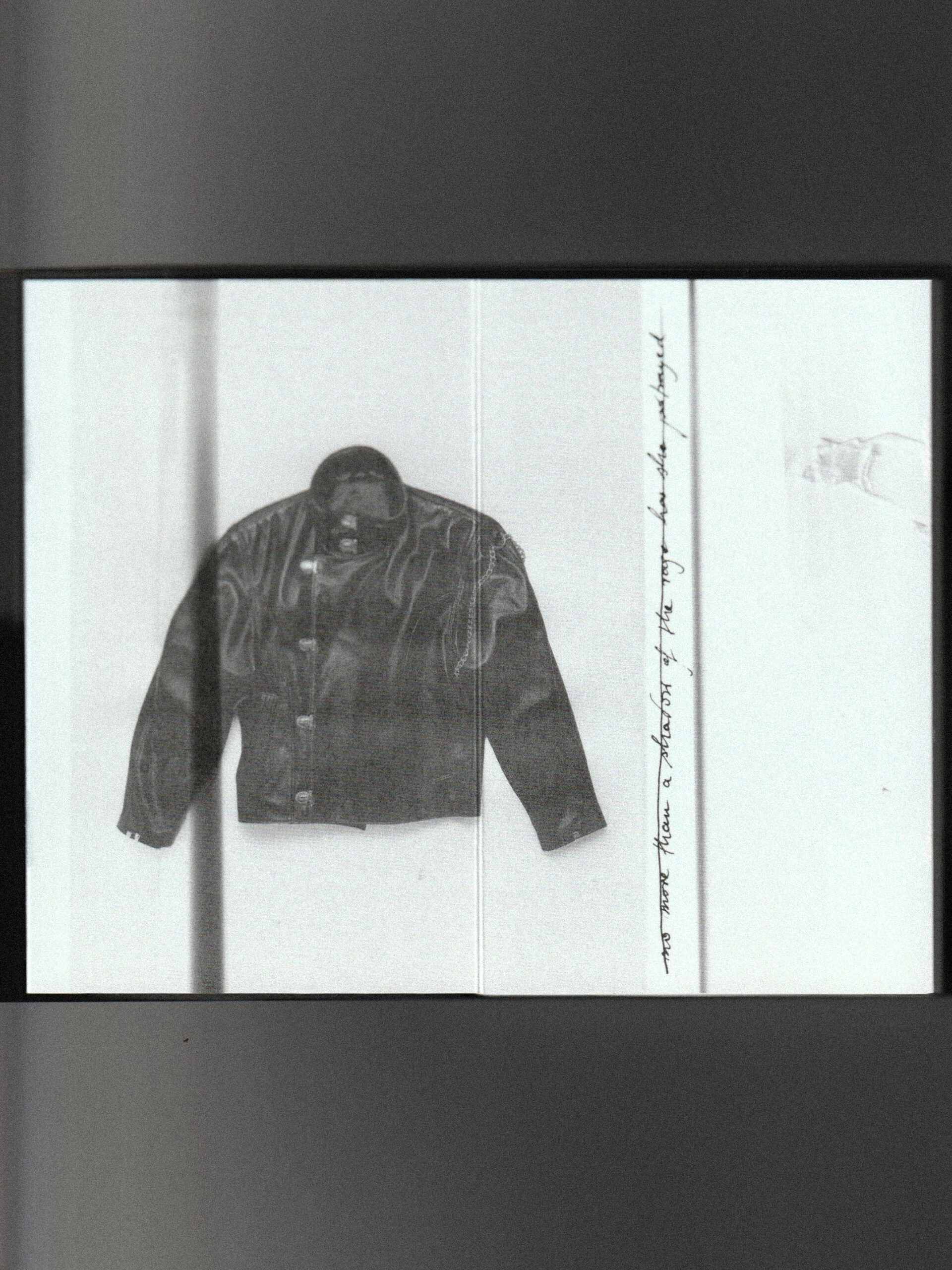
Special Request has built a world carefully enough that those who understand it are naturally pulled to its orbit. Even musicians are flocking to collaborate with the brand, with early ideas of limited-edition vinyls and digital playlists coming soon. Special Request has designed something that will only become more meaningful with age. That is the rarest thing in fashion, and he knows better than to rush it.
Studioabbas
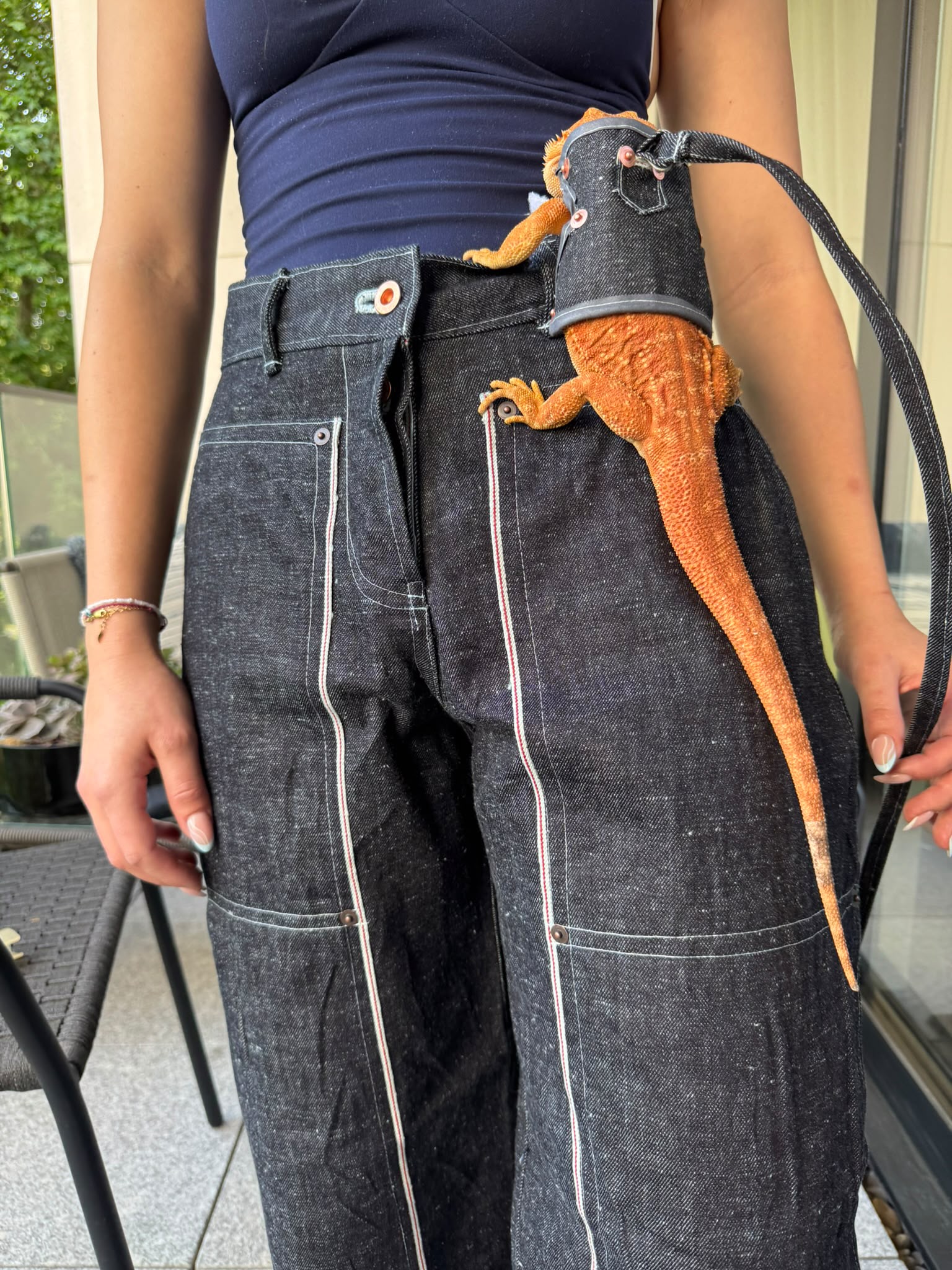
There is something absurdly charming about the fact that one of Abbas Alhamdani’s recent commissions was a pair of his Studiosabbas jeans accompanied by a matching denim harness for the client’s pet lizard. At 23, the Iraqi designer has already developed a practice capable of moving seamlessly between the human body and the palm-sized one of a small reptile, treating both with the same obsessive attention to fit, construction and detail. It is an anecdote that says rather a lot about Alhamdani: serious about his craft, but never so serious that curiosity cannot take him somewhere completely unexpected.
His relationship with making began at 17, watching his mother repair clothes on her Singer sewing machine. “I got hooked by the idea of making clothes that I never really see and making clothes that never really [existed] before,” he recalls. She became his first teacher, introducing him to a practice he would develop largely through his own experimentation. Today, that self-taught instinct has evolved into an almost forensic devotion to denim. Alhamdani will repeatedly return to pattern-making and toiles, sometimes double or triple-checking a garment before allowing the denim itself near the pattern. “Having patience in the process is what will make the difference for the final outcome and not how fast you do it,” he says. “The slow and steady will always win the race.”
For Studiosabbas, the fascination with denim is connected to what it archives. Alhamdani digs into the history of jeans from the 1930s and ’40s, tracing the reasons behind their smallest details. Every stitch, pocket and seam carries a functional sagacity that has survived decades of wear. His curiosity also extends into Japanese workwear traditions and beyond, absorbing technical knowledge just enough for it to be useful, without letting it calcify into imitation. The pleasure lies in discovering that there is always something he has not yet understood. “In each stitch or pocket in your jeans there is an element of surprise and a reason as to why it’s there.”
That appetite for mastery is shared by his unlikely constellation of influences. Marco Pierre White’s pursuit of perfection in even the simplest dish appeals to Alhamdani’s belief that there is always a way to make something “simpler and greater”; Vincent Gallo inspires him for his sheer hands-on involvement in filmmaking. “He goes by feelings and that’s how I want to be able to see my next project. By sensing an idea before thinking of it,” he tells ICON MENA.
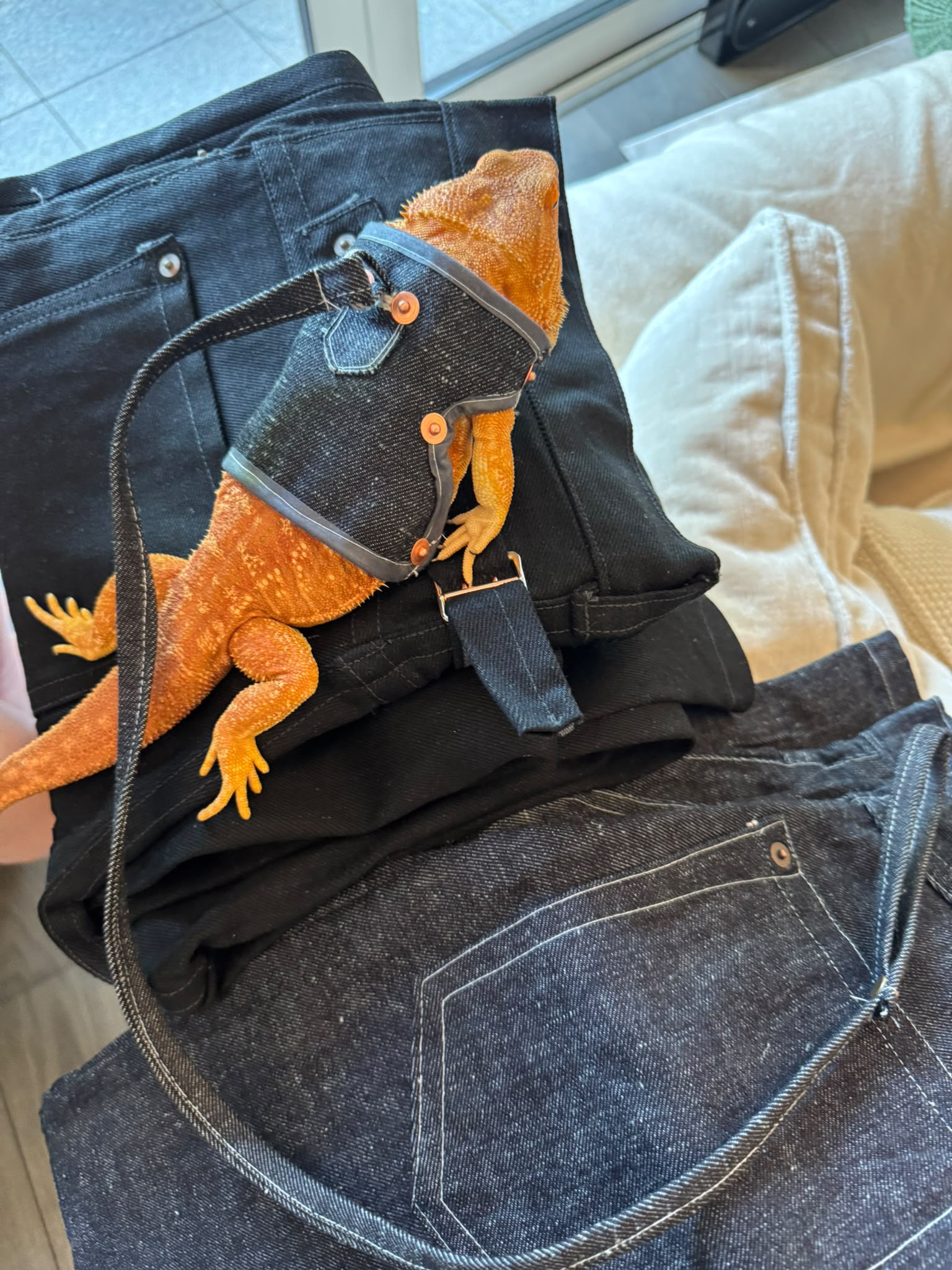
That combination of rigour and instinct makes Studiosabbas distinctive. There is an almost architectural approach to the work, unsurprising given Alhamdani’s interest in the ambitious, impossible geometries of fellow Iraqi Zaha Hadid. Yet it remains resolutely tactile. Denim is cut, folded, distressed, tested and rebuilt by hand. A pair of jeans can contain decades of industrial history, but in his vision they become a proposition for what the garment could still become. And then, of course, there is the lizard.
Alongside a custom denim jacket made for 6’9″ NBA athlete Jeremy Sochan, Alhamdani counts the palm-sized reptile harness among his favourite commissions. The scale could not be more different, yet both asked the same thing of the willing designer: a determination to understand a body before dressing it. It’s the clearest expression of Studiosabbas’ philosophy — the elegant marriage of construction with curiosity. Denim’s firmness is often intimidating for most designers, but in Alhamdani’s hand, it becomes something liquid, and something, as he is prepared to show, for everyone.


