
News


We have a specific way of talking about watches. We talk about complications and calibres, about case metals and dial finishes, about millimetres. We talk about founders and big anniversaries, about chief executives, ambassadors and the collectors who queue for allocations. Consume enough of this information and a watch starts to sound like something that arrived fully formed, a finished object with a reference number and a price.
It did not arrive. It was made, at least in part, by hand, and the making is the part that tends to remain elusive. A mechanical watch can have anywhere from several hundred to more than a thousand components, and behind each one lies a series of human decisions: how to cut it, how to finish it, whether it is right, whether it is right enough. Some of those decisions were made last month at a watchmaker’s bench. Others were made two centuries ago and have been handed down ever since.
I recently had the privilege of travelling to Geneva with Vacheron Constantin, which has been making watches in the city without interruption since 1755, to look past the watch, at the people and history behind it.
When discussing watchmaking, we have to start with the city itself. Walking the streets of Geneva on a guided tour by one of Vacheron Constantin’s own archivists, we traversed a living history. Geneva did not set out to be the capital of watchmaking. It was pushed there.
In the sixteenth century, John Calvin’s reforms forbade the wearing of jewellery, and the city’s goldsmiths and enamellers, suddenly short of customers, turned their skills to the one ornament still permitted: the watch. Protestant refugees arriving from France brought expertise with them. Within a few generations, the trade had developed its own identity and neighbourhood, La Fabrique, and employed a substantial share of the city.
As we walked through the neighbourhood, you could feel this history. From the temples to the street layouts, but especially when looking up and seeing the windows of the brightly lit rooms at the tops of the buildings, there was a sense of how deeply watchmaking had become part of Geneva itself.
These craftsmen were known as cabinotiers, named after the small workshops, or cabinets, in which they worked. Based largely in the Saint-Gervais quarter, they occupied the top floors of Geneva’s buildings, where rows of windows provided the natural light needed for their meticulous work. They formed a network of independent artisans, each bringing a particular skill to the production of watches. Watchmakers, engravers, enamellers, jewellers and gem-setters all contributed to a system in which a timepiece could pass through many hands before it was complete.
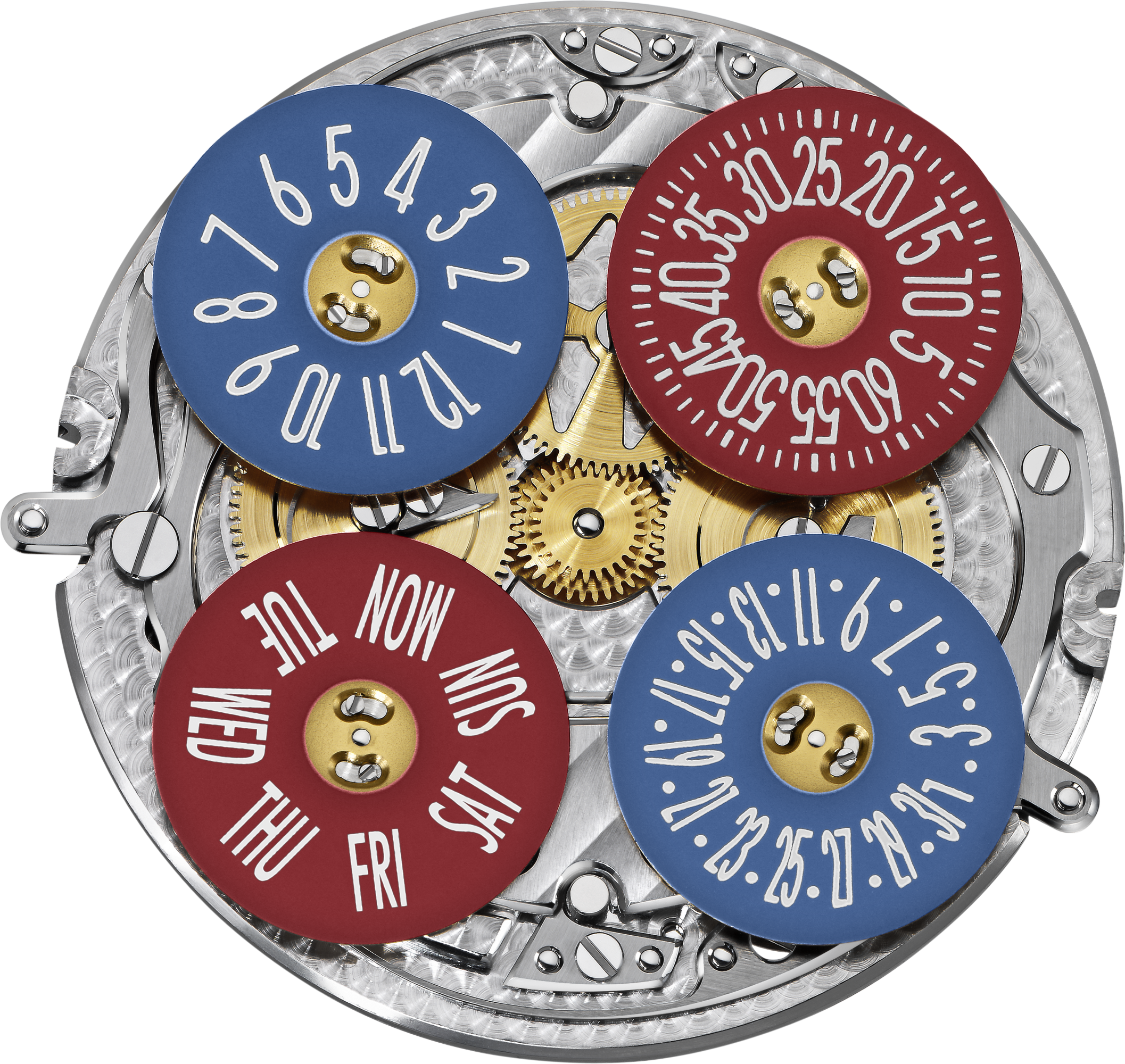
The name has survived. Vacheron Constantin’s Les Cabinotiers, one of the most special offerings in the watch world, takes its name from these craftsmen. What began as a network of specialists working from small rooms throughout Geneva has evolved into a department dedicated to some of the maison’s most exceptional and individual pieces.
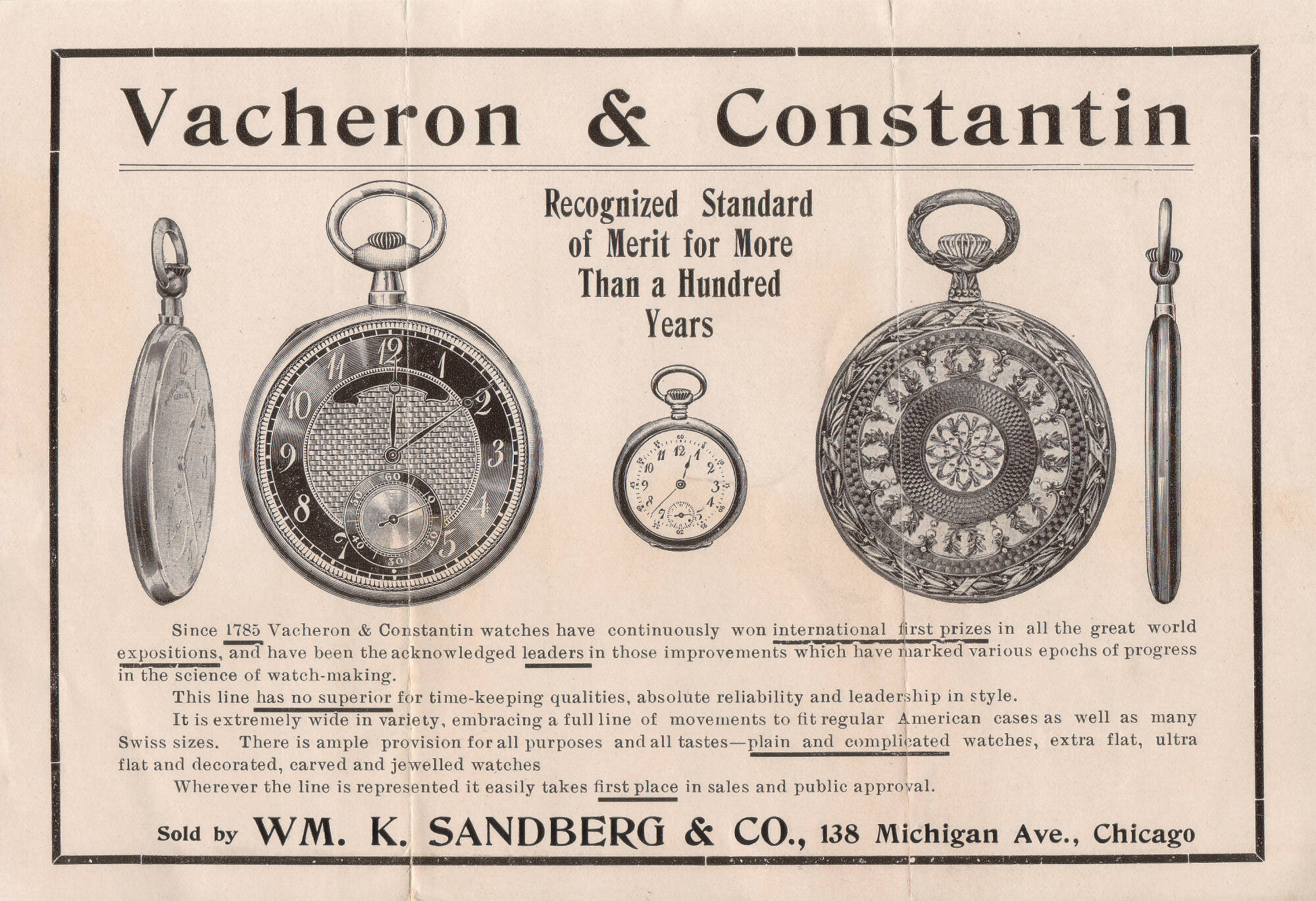
Jean-Marc Vacheron was one of those early watchmakers. He opened his workshop in 1755, aged twenty-four, and took on an apprentice the same year. The great maisons that now line the lake and fill the industrial quarter of Plan-les-Ouates grew out of those attic rooms. Watchmaking in Geneva is an industry, but it is an older thing too. It is how the city learned to describe itself.
The modern expression of that history sits in Plan-les-Ouates, on the southern edge of the city, in a building by the architect Bernard Tschumi that opened in 2004. From outside it is steel and glass. Inside, the benches face the windows, as they did in the attics, for the same reason.
I was guided through the manufacture by someone who has been with Vacheron Constantin for more than twenty years. Having spent so long inside the maison, he was able to move through the building with the familiarity of someone who had watched the craft, technology and people around him evolve. More than just explaining what I was looking at, he gave me a sense of how many different disciplines and hands are involved in creating a single watch.
What struck me most was the people. Generations were working throughout the manufacture, from those operating sophisticated machines to those sitting at benches and finishing individual components by hand. Everyone seemed focused, but also remarkably open and inviting. People were happy to stop and explain what they were working on, to demonstrate a process or point out something that might otherwise have gone unnoticed. There was a genuine pride in the work, and they should be proud of it.
Some of what they were doing was almost impossible to comprehend at first. Components were being worked on at a scale where the smallest movement of a tool could change the result, often under microscopes and with tolerances that are difficult to imagine. Much of this work will never be visible once the watch is assembled. A bevel on a bridge, a hand-finished surface or a minute adjustment may disappear beneath other components, known only to the person who made it and the watchmaker who services it. Yet the same care was being given to the parts that would be seen as to those that would never be seen at all.
The machines were equally fascinating. Plates, bridges and wheels are cut by computer-controlled equipment to tolerances of a few thousandths of a millimetre. Precision of that order allows complicated movements with hundreds of components to function reliably.
But the machine is simply another part of the human chain. Someone designs the component and programmes the cut. Someone runs the machine and checks what comes off it. Someone assembles the part, adjusts it, finishes it and decides whether it passes. Each stage requires judgement.
Seen together, the people working there were points on a much longer line. Some had spent decades at the bench and those only beginning to learn how to sit at it. The knowledge travels between them by demonstration and correction, passed from one generation to the next.
If the manufacture showed the scale of people, knowledge and processes required to make a modern watch, Les Cabinotiers showed what happens when those skills are brought together to create something truly individual.
Revived in 2006 as a dedicated department, Les Cabinotiers makes only single pieces: watches commissioned by one client, or conceived by the maison and made once. It is where the 63-complication Berkley pocket watch came from in 2024, and the Solaria wristwatch, with 41 complications, a year later. A commission can take years and bring together a dozen specialists from across the maison.
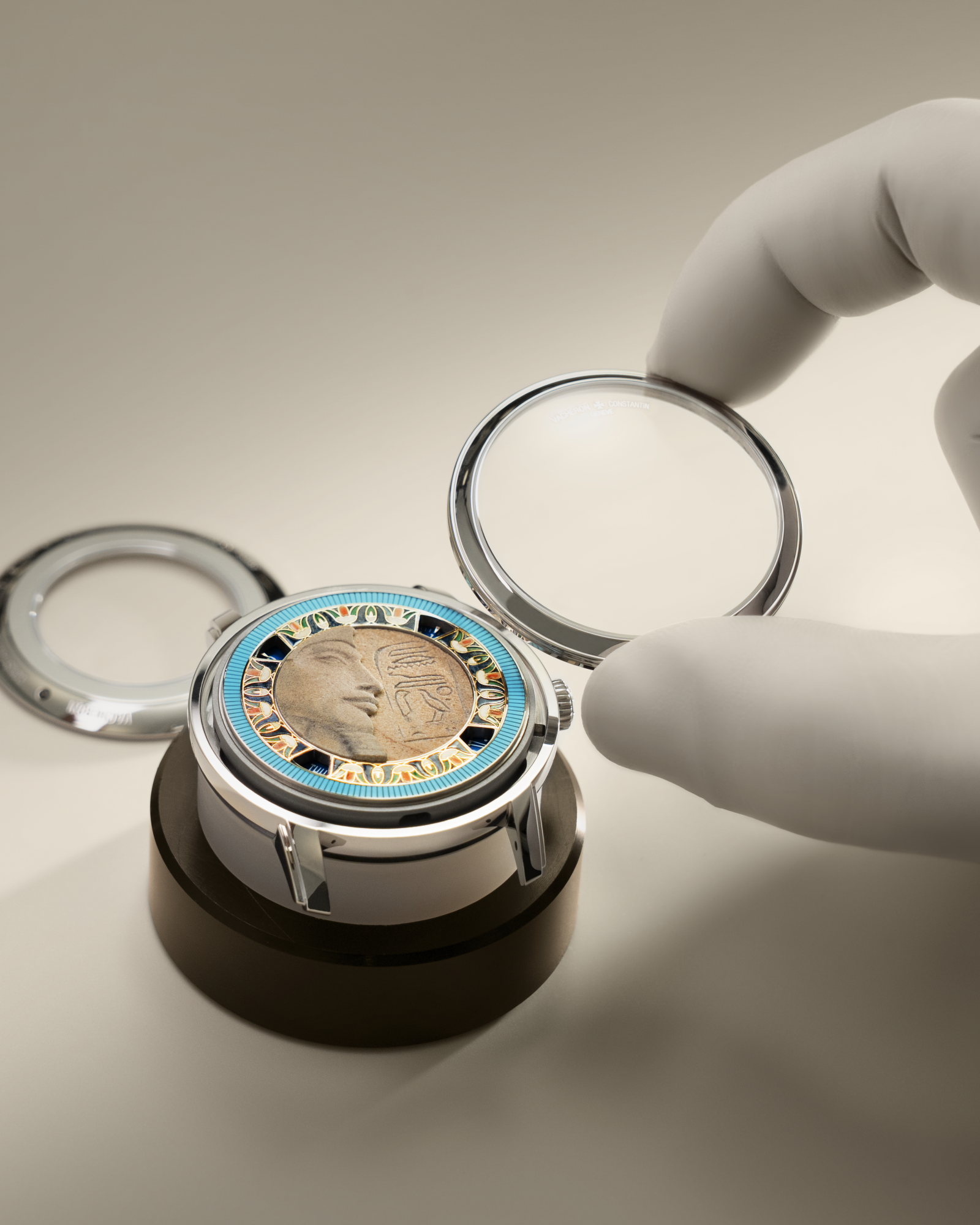
What is particularly impressive is how that expertise extends beyond the movement itself. Alongside the traditional disciplines of watchmaking are the métiers d’art, highly specialised artistic crafts that give many Les Cabinotiers pieces their character. Enamelling, engraving and guilloché each require years of training and extraordinary precision.
Enamel is powdered glass, mixed and laid on with a brush in layers thinner than paint, then fired at around 800 degrees. A dial may go into the kiln many times, with each firing capable of changing the colour or cracking the piece. Seeing recreations of classical paintings from the Louvre reduced by more than 100 times while retaining their sense of grandeur made the level of skill particularly difficult to comprehend.
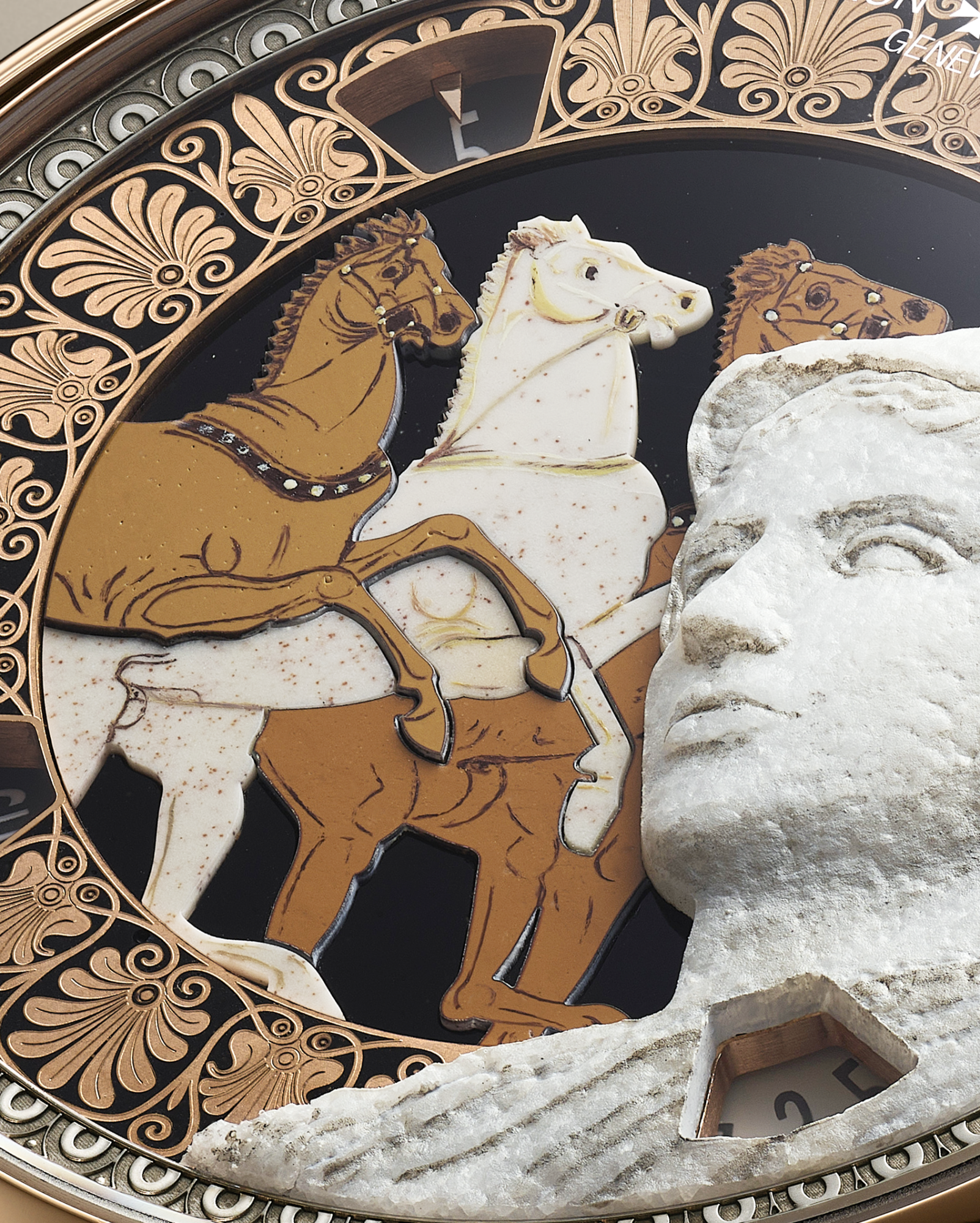
Engraving is equally intimate. The engraver draws directly into the metal with a burin, under a microscope, removing gold a hair at a time. There is no undo. Two engravers given the same motif will produce two different surfaces, as recognisable as handwriting. We had the privilege of watching one of these master engravers at work alongside a trainee, an experience that made the individuality of the process particularly clear. These hand-carved marks are unique. No one will ever carve the same line again.
Guilloché brings another relationship between machine and maker. Geometric patterns are cut on rose engines and straight-line machines, many of them a century old and no longer manufactured. The machine guides the pattern, but the craftsman controls the cutter and pressure by hand. Some of these machines have themselves been in use for generations, making them a form of living history.
These are not simply decorative additions to a finished watch. They are métiers d’art in their own right, disciplines that can take years to master, and in a Les Cabinotiers piece they become part of the same pursuit of precision and craftsmanship that defines the movement itself.
But the tour wasn’t only impressive because of what was being created and the people behind it. It was also because of what had already been created, and the people of the past who had worked on it. That history was waiting in the incredible archive.
Walking into the archive had an amazing feeling. Among the rows of files, folders and neatly stacked records sits the history of a brand that has seen, survived and thrived through revolution, disasters, the changing map of the world and technological advancements.
The ledgers run back through the centuries in ink. Each watch is entered by hand, some with its number, some with its specification, some with descriptive notes, and some with the name of the person it was made for. Alongside them are letters, sketches and orders, the paperwork of commissions for clients who either knew exactly what they wanted or requested iterations of something fantastical.
Some of the names are famous. The maison made bespoke pieces for the Maharaja of Patiala in 1916, for the American car maker James Ward Packard in 1919 and for King Fouad I of Egypt in 1929. But most of the names are not famous at all, people lost to time.
What the pages record is a conversation. A client wrote with a wish: a particular complication, a coat of arms, a portrait in enamel, a chime pitched to his liking. The workshop wrote back with what could be done or with a catalogue of what was available. Buying a watch was a correspondence that could last years, closer to commissioning a portrait than to shopping.
I had expected the archive to be a catalogue of products. It is a record of relationships between people, the objects they asked for and the craftsmen who made them.
By the end of the trip, it was difficult to look at a watch simply as an object. What appears on the wrist as a single, finished thing is actually the accumulation of hundreds, perhaps thousands, of individual decisions. The precision of a machine, the judgement of a watchmaker, the patience of an engraver, the steady hand of an enameller, the knowledge passed from one generation to the next, and the history of a city that has spent centuries refining these skills are all contained within it.
Much of that work will never be seen. But perhaps that is part of what gives a mechanical watch its value. It is not simply the materials, the complications or the hours it takes to assemble. It is an object imbued with the passion, precision and human touch of so many people, carrying centuries of knowledge, the history of a place and the hands of those who continue to keep that knowledge alive.


