
News


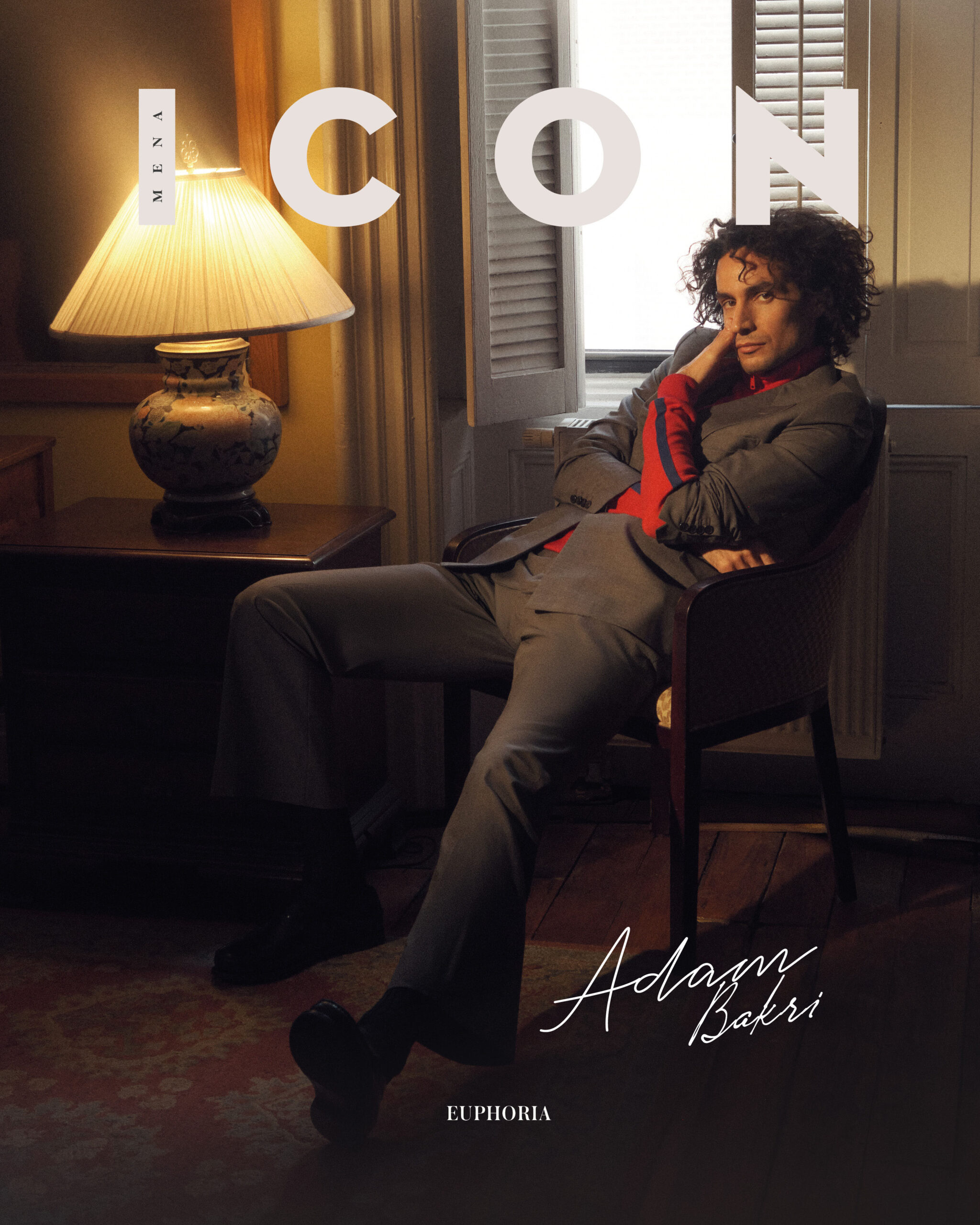
There is a moment Adam Bakri keeps returning to in his mind. His father, Mohammad Bakri, is sitting beside him in a darkened cinema for the premiere of is All That’s Left of You (2025). On screen, Adam is playing the young version of his father. At some point in the dark, Mohammad reaches over and presses his son’s hand. “Just so you know,” he says quietly. “You’re perfect.” Adam will not tell you this story without pausing.
We lost Mohammad Bakri a few months later. He was one of the most consequential artists the Arab world has produced in the last half-century, a man who made a documentary about the Battle of Jenin so exposing that it brought death threats to his front door, and who performed a one-man show adaptation of Emile Habibi’s novel The Secret Life of Saeed the Pessoptimist nearly fifteen hundred times across four decades, from Jerusalem to Tokyo. Adam was even initially named Wala’a, after the character of Sa’id’s son in The Pessoptimist. Walaa, the guerrilla fighter, the hero who embodies a new Palestinian generation surging toward resistance. “A resistance hero, not some hapless hero!” Adam tells me with conviction during our interview.
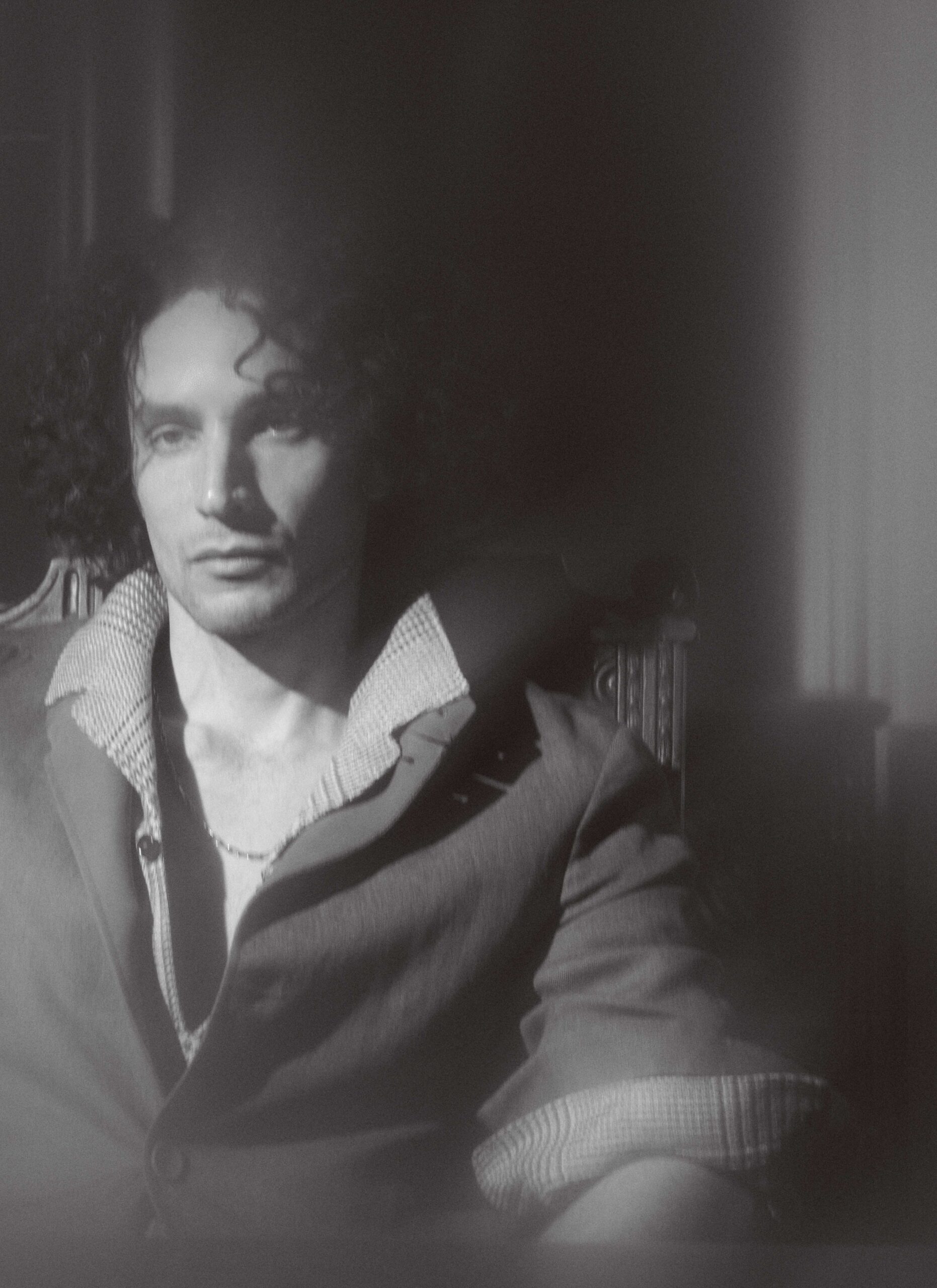
To the world, Mohammad Bakri was a monument. To Adam, he was a father who was often away, consumed by a theatre, a cause, a magnitude of presence that filled every room he entered, and who, when he was there, was entirely there.
Adam Bakri was born in Jaffa and raised in Bi’neh with five siblings, in a household where art was not a pursuit but a condition of the air. His father moved through the world at a scale that was, as Adam puts it, larger than life, a phrase he rightfully keeps returning to, though it took him years, and an ocean, to arrive at that equanimity. He went to New York in his twenties to build something of his own, to step out from under a shadow that was, by any measure, very long. He studied English literature and theatre, and began the slow, steady work of becoming an actor in his own right.
His first major role, in Hany Abu-Assad’s Omar (2013), earned an Academy Award nomination. His most recent have arrived in a pair; All That’s Left of You (2025), directed by Cherien Dabis, the first and last film to bring him, his dad and his brother together on screen; and Indigenous (2026), a Ramadan drama about the people of Gaza. In the latter, Adam plays a young journalist, a category that the Israeli occupation has been eliminating with a consistency that the historical record has no precedent for, with more than 274 journalists killed since the beginning of the genocide.
There is an obvious irony in the fact that this issue is themed Euphoia. But then again, there is no way to live except through both. We met over a conversation that moved between laughter and long silences, between the lightness of a man who still watches animated films to feel like a child again and the weight of someone who has spent the last year holding more grief than one’s heart can carry. He is a painter, a reader, a writer of screenplays, a man whose Instagram account reads like the library of someone who never stops accumulating wonder. He is also, beneath all of it, a person of precise and hard-won faith, in art, in the people he loves, and in a God he says he could not have survived this year without.
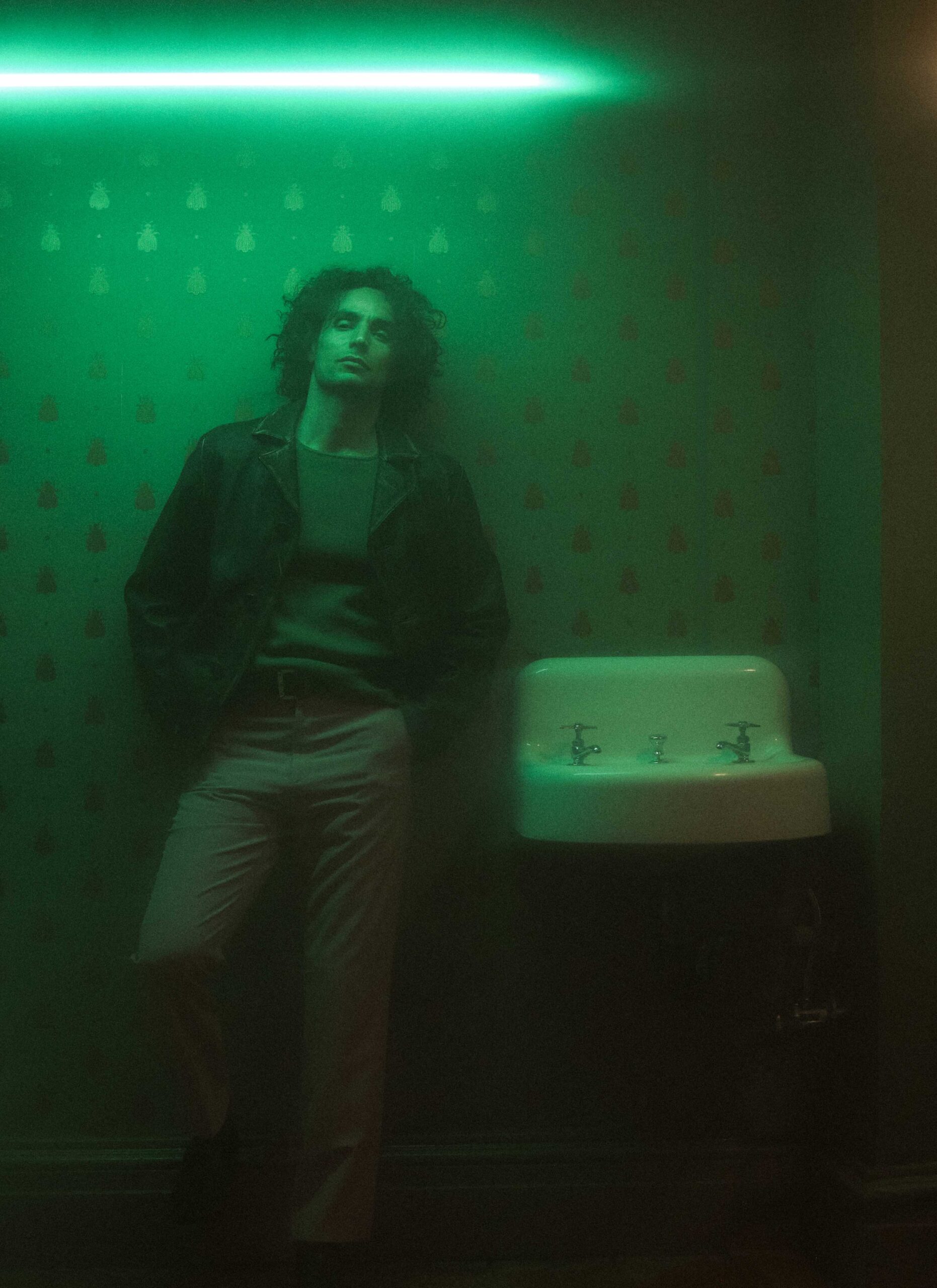
You were born with the name Wala’a. When was Adam born?
“Wala’a” is a feminine name among Arabs. Wherever I went as a child, people assumed I was a girl, especially on the first day of every school year, when I would introduce myself in front of the class. The moment I said my name, the teacher would continue as though I were female. It bothered me enormously.
And after I stepped into the broader society, every new introduction became a source of anxiety because of the name. Then, when I decided I wanted to become an actor, after the first play I performed with my father at the age of 13, the tension started mounting again: if I wanted to be an actor, how could my name be Wala’a? And when I grew a little older and my father’s guests from abroad would visit and he’d introduce me by name, they’d pronounce it “Vala” or “Wala,” unable to produce the hamza at the end. The tension deepened.
I decided just before university to change my name, so that my student card would carry a different one. My family wasn’t pleased at first, because the name meant a lot to them. By law, a minor’s name cannot be changed without parental accompaniment, so I waited until I turned eighteen, went alone to change it, and started university at nineteen.
Over time, I came to love the old name and began to see in it what my father saw. As far as I’m concerned: I am both. I am Wala’a, and I am Adam.
Why did you choose the name Adam?
My cousin’s name is Adam, and people had been telling us since we were kids that we look alike. I secretly envied: why does he get a normal name and I don’t? Maybe that was when I first wanted to be Adam.
You mentioned your first acting experience was in a play with your father. Did that come from genuine desire, or was there some element of pressure?
I had an overwhelming desire to act alongside my father. There was a film he directed before I was offered anything, my name was put on the table, but it ultimately went to someone else. It was a short film called Ka’k Ala Al-Rasif “Cake on the Sidewalk.” To be fair, the actor who got the role was better suited for it; when I watch the film today, I can see that clearly.
From that moment on, the desire settled inside me and took root. So when my father casually suggested one day that I try acting, I leapt with joy and said yes immediately. We worked together on a play called Zaghroudat Al-Ard, and we were barely apart throughout that entire period, literally, we were together on that stage at every moment. From that experience, the passion was born and the love for the craft was cemented.
Your brother Saleh, the eldest, began his acting career before you. Did that play a role in your own decision?
I’m convinced that my love for acting also came from my brother. He would come home from theatre school carrying his experiences and share them with us He was a painter and an artist. His life and his appearance were different from anything I was used to seeing in the village, and I fell in love with the whole idea as a package before I even understood what acting meant. I was enchanted by the notion of a life like Saleh’s: traveling, going out, long hair, carrying a guitar. The entire image captivated me as a child.
And we would always go with my father to film sets and to the theatre, entering another world entirely. When he stood on stage, we were transported somewhere else, somewhere magical. Growing up in the small village of Bi’neh in the Galilee, the theatre meant for me an opening onto the wider world, a world of imagination and dreams in which a child could swim far away.
I imagine it was difficult to carve out your own artistic path independent of your father’s and brother’s influence.
Very difficult, very difficult. I still have self-doubt. When you grow up in an environment like that and see your father as this enormous presence who has achieved what he has, you inevitably ask: how could I ever achieve what he achieved?
On top of that, my father didn’t encourage me to act at first. He rejected the idea, and that rejection somehow doubled my self-doubt; the fact that he withheld his encouragement, even during the play. Then when I appeared in Omar, my first film, I felt that my father began to take me seriously. He started encouraging me, and I sensed he was beginning to treat me as a friend, as a creative partner. When he watched the film, a real conversation between us suddenly emerged.
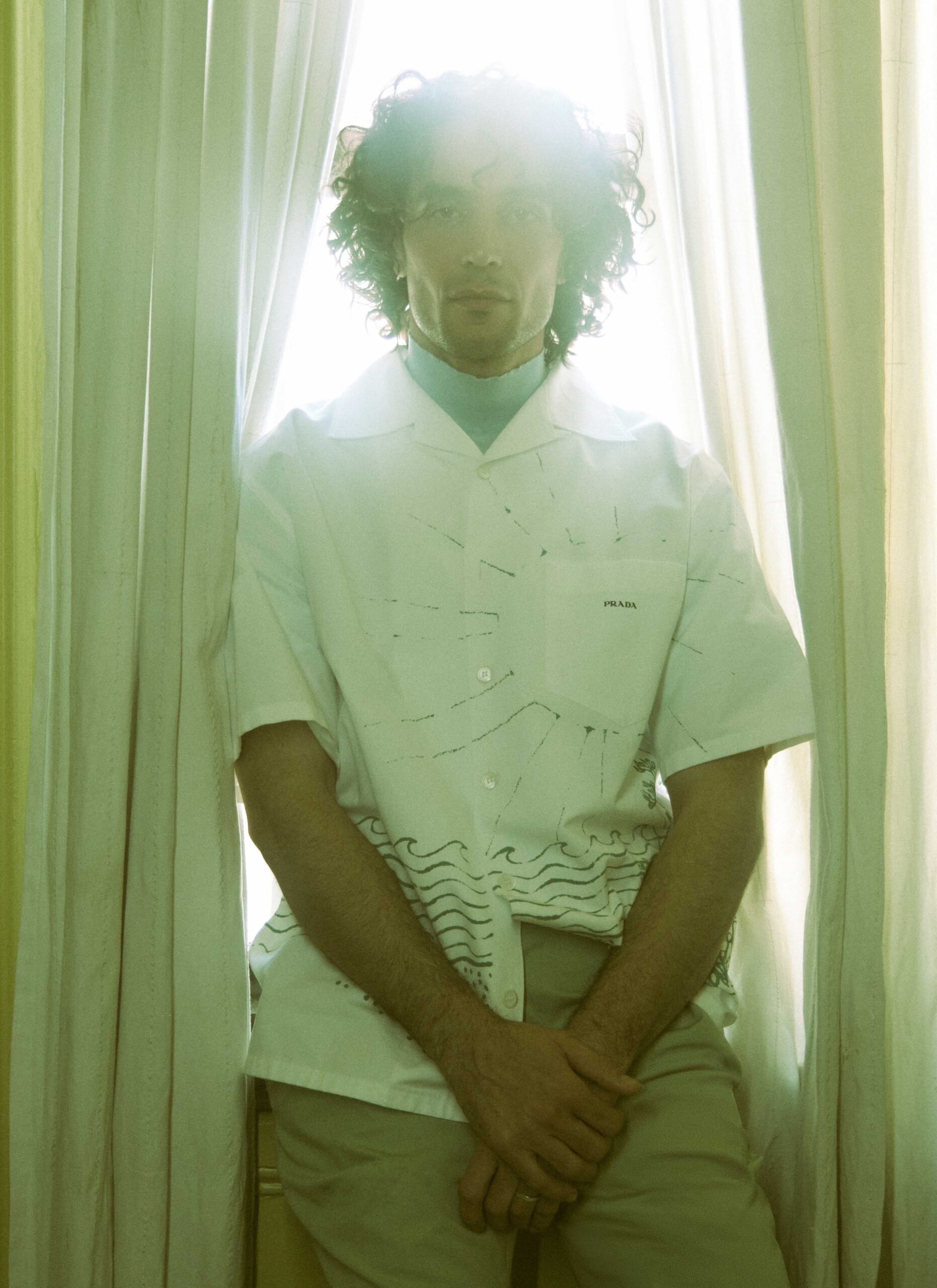
Where did his rejection come from?
He didn’t live an easy life at the end of the day. In our Arab world, especially in Palestine and smaller countries outside Egypt, which is a different case entirely, there is no concept of stardom the way there is in America, that stardom which grants its holder lasting stability and financial security. His life was not easy, and he was a loud, vocal Palestinian who did not soften his presence, and I saw how much that weighed on him.
Zionism in the occupation state is institutionally entrenched, built up even before the entity came into existence, with structures and mechanisms for everything, so when a dissenter comes along, they already have a ready response. They know in advance what they will do. And my father fought from inside the lion’s mouth, resisting from within.
He was larger than life, and even as a child I understood that this man was enormous. Perhaps my decision to leave the country and go to America was partly driven by a desire to escape his shadow, to build myself away from him. The moment I mention my surname, people ask whether I’m related to him. I didn’t like that, that they would know and then compare me to my brother, compare me to my father.
He was worried about us. He also opposed my sister Yafa acting, but we all followed our brother Saleh — Ziad, then me, then Mahmoud, then Yafa. My father wanted a normal life for us: focus on your studies, live as people live.
I imagine the atmosphere at home was saturated with warmth and art and literature, so it would be difficult not to be shaped by an environment like that.
Exactly! You keep asking me not to be in this field, and yet you are the finest example of it! You are the most beautiful example. How could I not want to be like you?
And my mother, at the same time, was fiercely supportive of him. To the point that when death threats began arriving after my father released the documentary Jenin, Jenin (2002), she was overcome by a permanent anxiety that never left her whenever she went out with him. Once, at a screening of one of my father’s films, she noticed a man slowly reaching into his pocket and glancing sideways, and she panicked. She jumped in front of my father with her arm raised and screamed. It was a false alarm, of course. And so we always felt that for my father, art was something sacred, and the role of the artist was sacred. A family movie night was a genuine ritual for him: he would turn the volume up high, switch off all the lights, as though we were in a cinema and allow no one to speak during the film — though that never stopped my mother from commenting. He would then stop her and say: “Spare us the commentary.”
As for my sister Yafa, he discovered her talent when she was five years old, noticing that her voice was exceptional even at that age. He brought her a cassette of Asmahan’s Dakhalat Marra Fi Genina. I will never forget that cassette. He gave her the tape and asked her to memorise the song. And indeed, that was the first song she ever learned. She sang it at a competition and won first place. He later incorporated her voice into his first documentary film 1948 (1998) about the Nakba, and in his third documentary as well, and wrote a musical play which he directed and in which Saleh played one of the roles.
In the midst of everything we are witnessing in the region, a feeling creeps in that the role of art has grown small, almost negligible, that it makes no difference. Do you still believe in art’s sacredness?
Of course I believe in it. If art did not exist, the world would be far more ugly. And sometimes we feel that we are useless. During the filming of All That’s Left of You, which coincided with the war on Gaza, we were destroyed. We felt useless and hopeless.
The entire film was originally supposed to be shot in Jaffa and Ramallah. I went to Palestine to shoot the film on the fifth of October, then the seventh of October happened and everything that followed. We stopped for a month, then returned and finished shooting. We would be glued to our phones, witnessing the genocide literally between takes.
During that period, we felt genuine helplessness. We were making art, making a film about the Nakba, and yet we were in despair. And as profoundly as we were disheartened in that time, our faith in humanity was at its lowest point. Personally, I stopped believing in people after the genocide. It was a dark period.
But when the film was screened for the first time in the Czech Republic, one of the most Zionist countries in Europe and among the least informed about the Palestinian cause, we received a fifteen-minute standing ovation. During the Q&A, many asked what they can do for Palestine and how they could help. Mahmoud Darwish famously wrote “The butterfly’s effect cannot be seen; the butterfly’s effect does not disappear.” How would I know what mark a single line in a film, or a single piece of music, might leave on a human soul? It could be vast. I believe in the sanctity of art, without question.
“I wish my father’s love had been a little less. I wish he had been a more ordinary father, less expressive, less warm, perhaps the void I felt after his passing would have been lighter.”
Speaking of All That’s Left of You, the film follows a Palestinian family across three generations. You play the young Shareef, and your father Mohammad takes over the same character in older age. Despite having no scenes together, did you build the character jointly, or did you rely on the natural resemblance between you?
I feel that in many ways we resemble each other in expression and movement, all of us. Even if we don’t look alike, we share blood and spirit and voice and a way of performing. I saw one scene of my father playing with his grandchild, changing his voice and pretending to be the monster, and when I saw that shot I told him: “I’m going to do something similar.” We simply resemble each other, there was nothing that needed preparation.
We were living in the same building in Cyprus during the shoot. We would have breakfast together and they would walk to the set through the old town while I joined them. We had no shared scenes. This film is the most important thing I have made in my life. Omar reached the Oscars, but this film surpasses it by far, in every respect. Omar is an important film, but this is a film for history.
I am personally attached to it because my father is in it, and because it is the first film I made with him. He had been telling our story through films since before I was born, so to grow up and embody his younger self and tell this story together is something of immense depth to me.
Having him sit beside me during the screening was moving beyond words. He reached over and pressed my hand, saying: “Just so you know, you’re perfect.” A testimony I will never forget. One of the most beautiful moments between my father and me. Afterward, he was deeply moved. He never said it in words, but I always knew how much he loved us all.
I wish my father’s love had been a little less. I wish he had been a more ordinary father, less expressive, less warm, perhaps the void I felt after his passing would have been lighter. He was an exceptional person. Even though he was often absent in my childhood, always travelling, always consumed by the theatre. But when he was present, he was entirely present.
The release of All That’s Left of You coincided with the airing of Indigenous, which addressed the war on Gaza. The harrowing scenes on our screens have left a significant psychological impact on viewers, despite their distance from it. The show’s set was enormous, as though it was actually filmed in Gaza. What psychological toll did that leave on you?
I was psychologically destroyed during the filming period, for several reasons. First, my father passed away two weeks into the shoot. Second, I was afraid that I was inadequate to to the responsibility of representing Gaza and the genocide. And this was for three reasons: the first was that not much time had passed since the war began. The second was that I received messages and comments accusing us of exploiting the genocide for profit, and those comments hurt me. No matter how self-aware and mature you are, a comment can still wound. How can you judge this work and attack me and attack it before you’ve even watched it? Watch it first. What exploitation? Who is asking about money? I have turned down projects with major directors, so how could I have come to capitalise on Gaza for a few coins? It hurt me more because they know what family I come from, and who my father was. And the third: how can any artist do justice to a tragedy of this magnitude? However broad your imagination as an artist, this is the tragedy of centuries.
And this psychological weight, born from a sense of artistic responsibility, with my father’s death piled on top of it all, made the burden multiply. I would arrive on set and the production design alone was enough; I felt I was genuinely in Gaza. After shooting, black soot from the smoke would come out of my lungs, and they were actually demolishing buildings on set. I tried throughout to place myself in the right state, and I was already in a state of deep grief. My father had died; I went to his funeral and returned. The condition I was in, that grief, was in harmony with what the character was living through, and I felt that something completed itself on its own. I would go in and out with the same feeling: a sense of brokenness, defeat, and a grief that words cannot hold.
It was the crew that made the experience bearable. The director Peter Mimi was very kind. The Egyptians are warm, generous people, Eyad Nassar and Menna Shalabi and the rest of the team. That is what made it lighter.
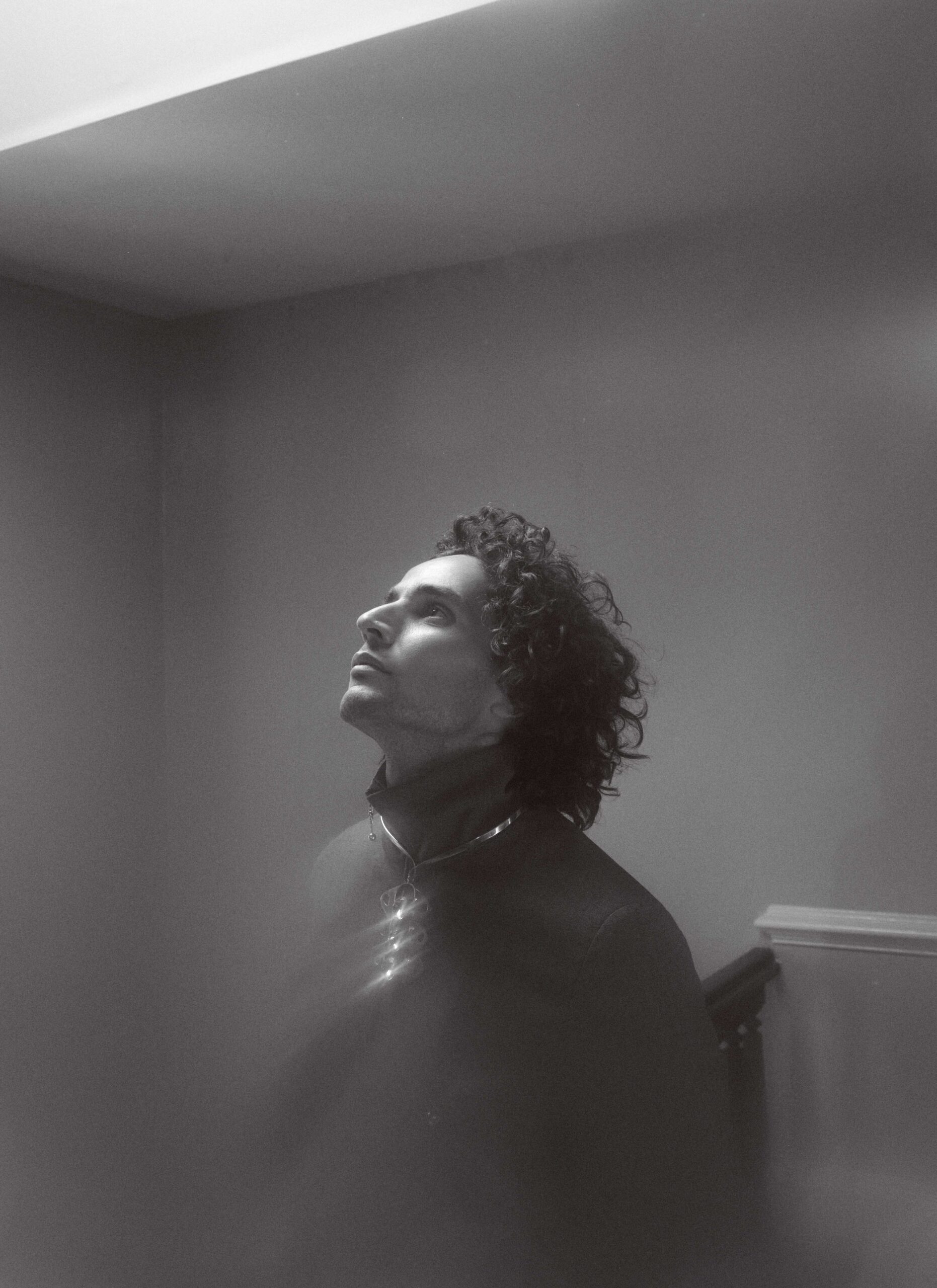
What ultimately drove you to take on this project?
I agreed initially only to the first three episodes, since I wasn’t sent the full series. The first thing I did was send it to my father to help me decide. I agreed for more than one reason: first, I felt the material, as a script, carried a high degree of honesty. Second, I asked myself: what is the use of refusing? The series would be made regardless, what does my refusal add to the cause? And there is no real law in art that demands you wait before making something about a historical event that has just occurred. There are people in Gaza making art in the middle of the genocide, painting pictures. Art does not stop, and has never stopped. But that does not mean I didn’t feel the pressure and the responsibility.
There are no conditions on art. There should be no conditions, as long as you are not promoting propaganda or creating art that incites evil and destruction in the world. Beyond that, there should be no restrictions whatsoever.
Playing a journalist in Gaza is an enormous responsibility. How did the audience receive the character of Majd?
I tried to develop Majd as a three-dimensional character. He is a journalist striving to deliver his people’s voice to the world. I was afraid, too. I kept watching the episodes anxiously, wondering whether viewers were grasping Majd’s purpose. Perhaps up to episode eight, the picture wasn’t entirely clear to some viewers, but when Majd’s arc concluded in the series, I went to look at the reactions and found that people had truly understood this young man and recognised what he had been reaching for.
I am always striving for perfection and I am hard on myself. I feel I could have given a far better performance than what I delivered, and I often find myself revisiting what happened. I tell myself: maybe if my father hadn’t gone, if my state of mind had been better, I would’ve given a better performance.
But eventually, I built my conviction about the project when I saw its artistic and human value, and of course, the opinion of the people of Gaza was what mattered most, and it is what gave me peace with the outcome.
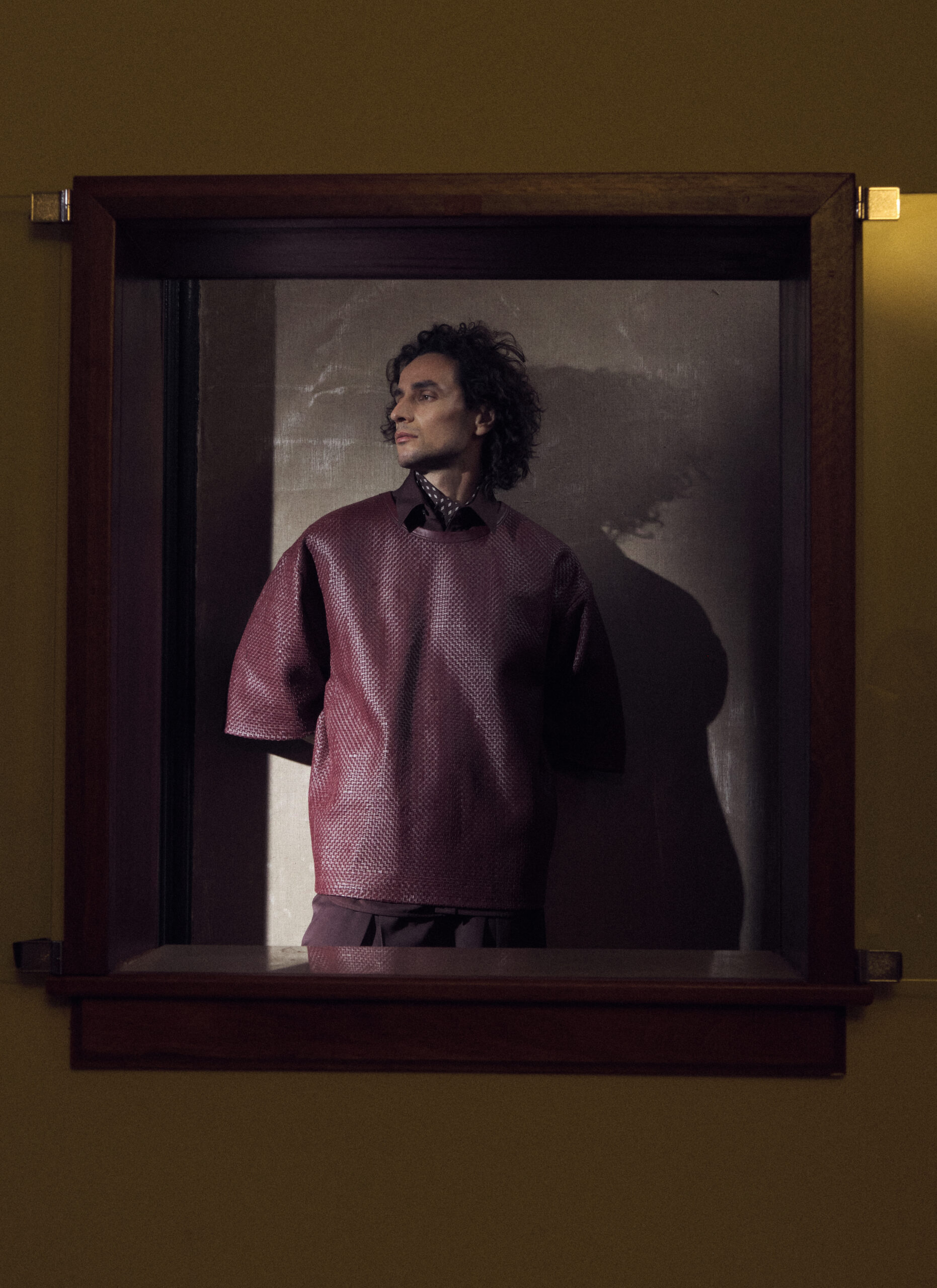
How do you deal with loss?
By believing that life continues beyond it, and that those who die do not truly die. Victor Hugo said: “You are not where you were, but you are everywhere I am.” I cannot imagine how a person without faith deals with loss. I don’t know what would have happened to me if I hadn’t been a person of faith. After my father’s passing, would I have received the signs I received from him? Would I have felt any form of solace?
Do you still feel his presence?
I feel him often. I feel him when I work, when I act. Everything expands. The place my father occupied expands, everything expands. Love grows larger in the human heart. Perhaps it is only my experience, but everything connected to my father now carries a different meaning. When I went back to the village after he passed, the mountain held a different meaning, and the sea held a different meaning. Wider… everything became wider.
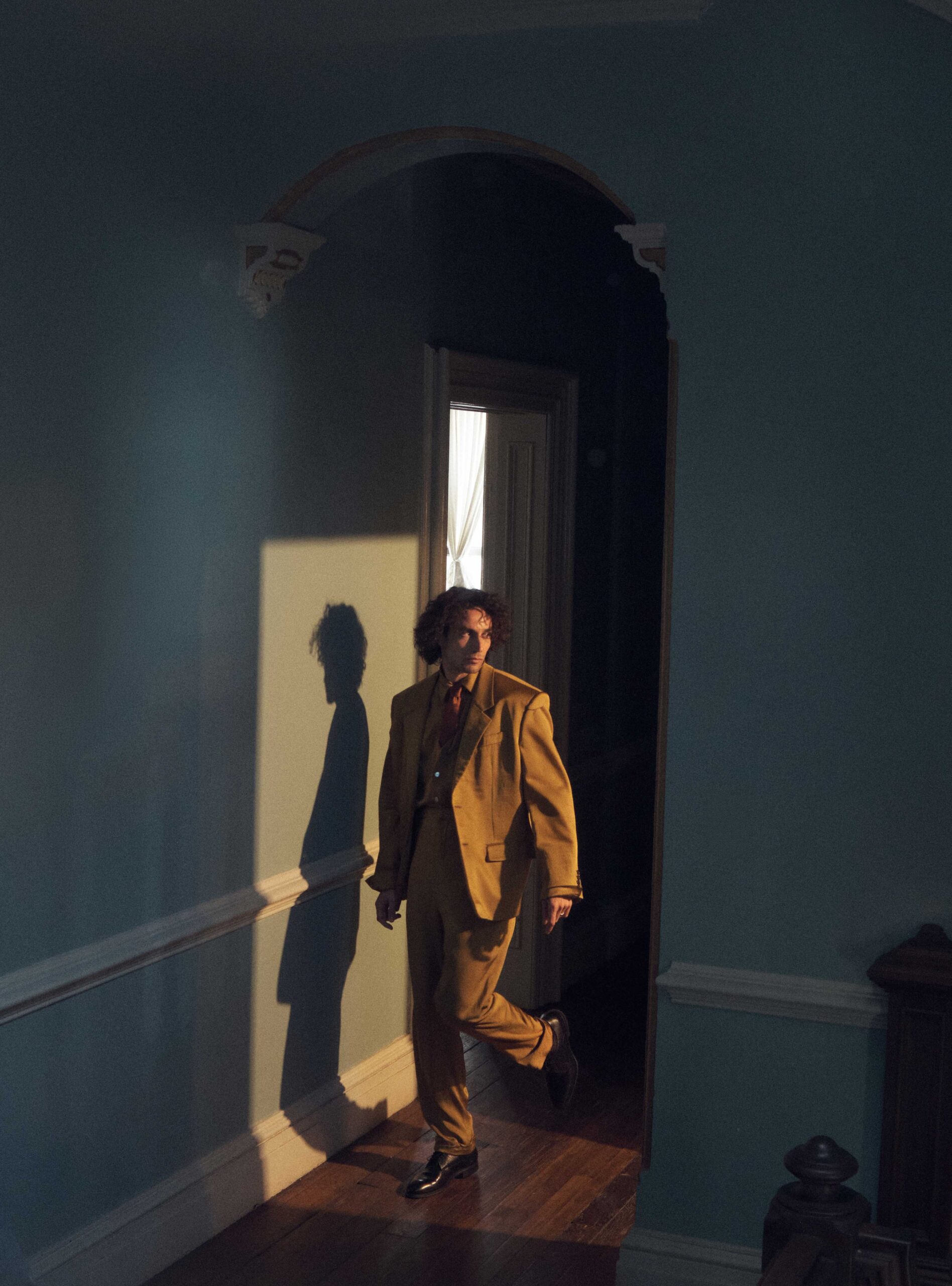
What are the things that still bring you joy?
Anything that reminds me of my childhood brings me joy. Sitting down to watch animated films. Drawing, I love drawing more than I love acting. And the time I spend with my wife and my friends, who are few. Nature. Writing, I love it deeply, I barely stop writing; I’ve started writing screenplays. I wrote a feature film and a short film. And reading. Reading is one of the most beautiful things in the world. I read all of Murakami’s books and was thinking of returning to him. Every period of my life I discover a writer, read everything they’ve written, and then move on.
Last year saw the release of films by Palestinian women directors, among them Palestine 36 by Anne Marie Jacir and All That’s Left of You by Cherien Dabis, both reaching international platforms and festivals. Do you sense a shift in the way Palestinian stories are told and the financial support they receive?
There are certainly still difficulties, because most of the funding comes from the European world, and the European world is not yet ready to give Palestinians a platform to tell their story on their own terms. They impose conditions: include the Israeli narrative. If you want to make a Palestinian film and you insert the Israeli perspective, things become considerably easier. But the Palestinian today does not want to insert the Israeli into every story they want to tell. What does it have to do with you? Your presence in our lives is coerced and unwanted. If I want to film a scene of a Palestinian going grocery shopping in the West Bank, the Israeli will inevitably appear, because the occupation is there. But Europe’s condition to fund your film is that you include it not merely as an element but as a point of view: if you include it as a perspective, you get the funding; if you include it only as a backdrop for your own point of view, you don’t. Your chances become dramatically smaller. That is the difficulty we face.
It has eased somewhat, and I imagine awareness in Europe has grown since the genocide. But if we speak of positives, there is significant development in cinematic language, and there are now as many Palestinian women directors as there are men.
Finally, who’s your icon?
My father. I used to tell him all the time: “You are an icon.” Mahmoud Darwish is a legend, one of the greatest artists history has ever produced, not just in Palestine; he is far larger than that. I don’t know how to describe him. His was an exceptional journey, he managed to reach the world and speak to people in a genuinely human way. Naji Al-Ali is an icon. And Ghassan Kanafani.
Photography Jack Waterlot
Creative Direction Kevin Breen
Senior Producer Fatima Mourad
Stylist Willyum Beck
Styling Assistants Jonathan Baez, Jaciaihus Watson
Grooming Jenni Wimmerstedt
Makeup Alexa Hernandez
Photo Assistant Saul Barrera
Producer Nathalie Akiya
Production Manager Raz Segal
Production Assistants Wayne Saville, Greg Gabb
Words Sami Abd Elbaki
Talent Adam Bakri


