News


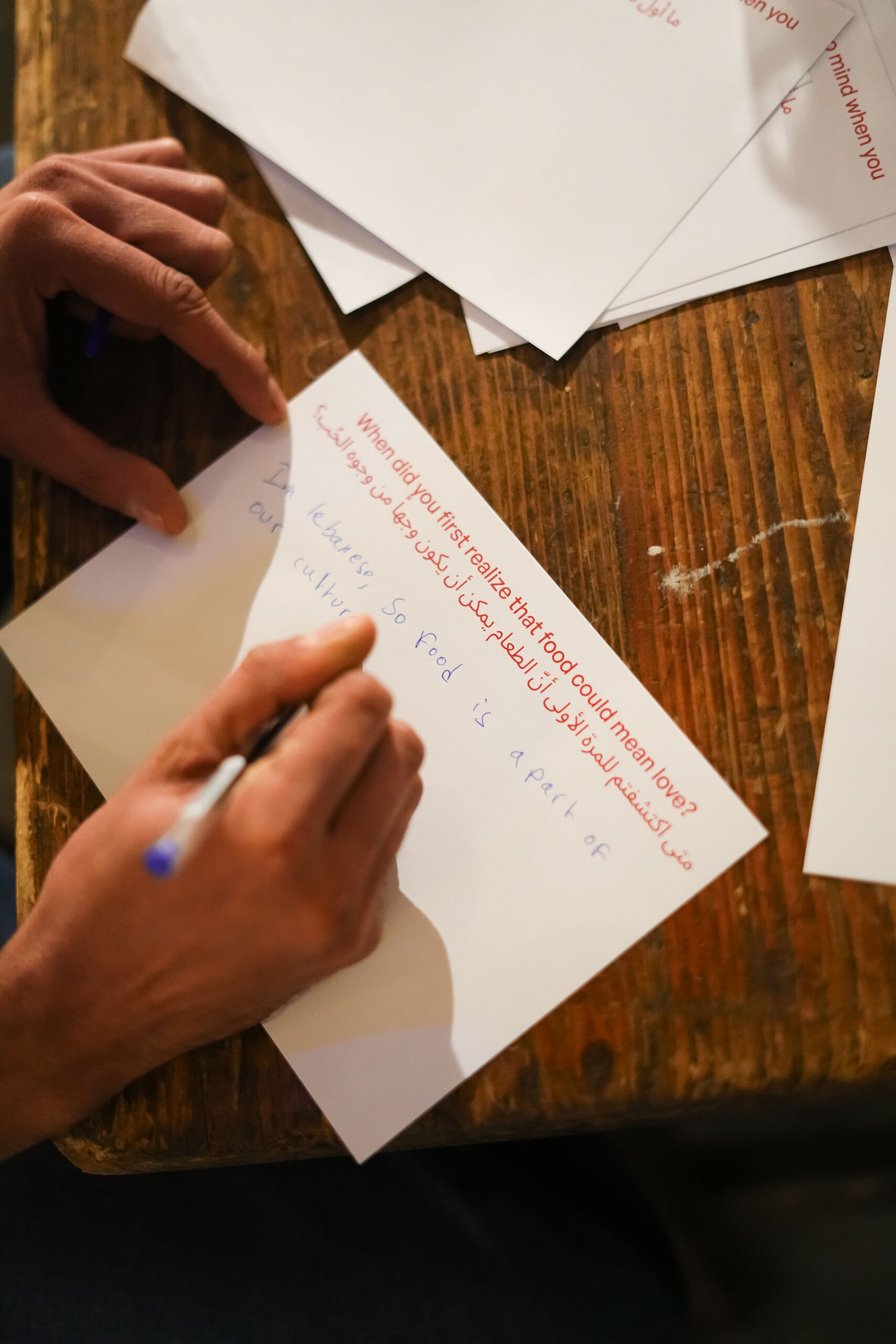
There are few things as universal, or as unifying, as food. In the Levant, food was made to be shared. Families and friends gather around the table, the sounds of clinking plates filling the air, passing dishes across when your arm can’t quite reach, scooping bites of food with pita from the same platter. Once the meal ends, it’s followed by coffee, desserts, and fruit, leaving you in a blissful food-induced haze. Many of our core memories revolve around these moments, yet we often overlook the socio-psychological impact that food has on our minds, our palettes, and our sense of connection.
Food is a reflection of the land we come from, and in that, we are our land. Losing access to that land, whether by choice, like leaving home, or by force, such as living under occupation, means losing access to the food that shapes our identity. Our food is as occupied as we are. Our food is as diverse as we are. At the same time, food can be a source of tension, and Arab aunties will never hesitate to comment on your weight at family gatherings, along with all the psychological baggage that comes with it.
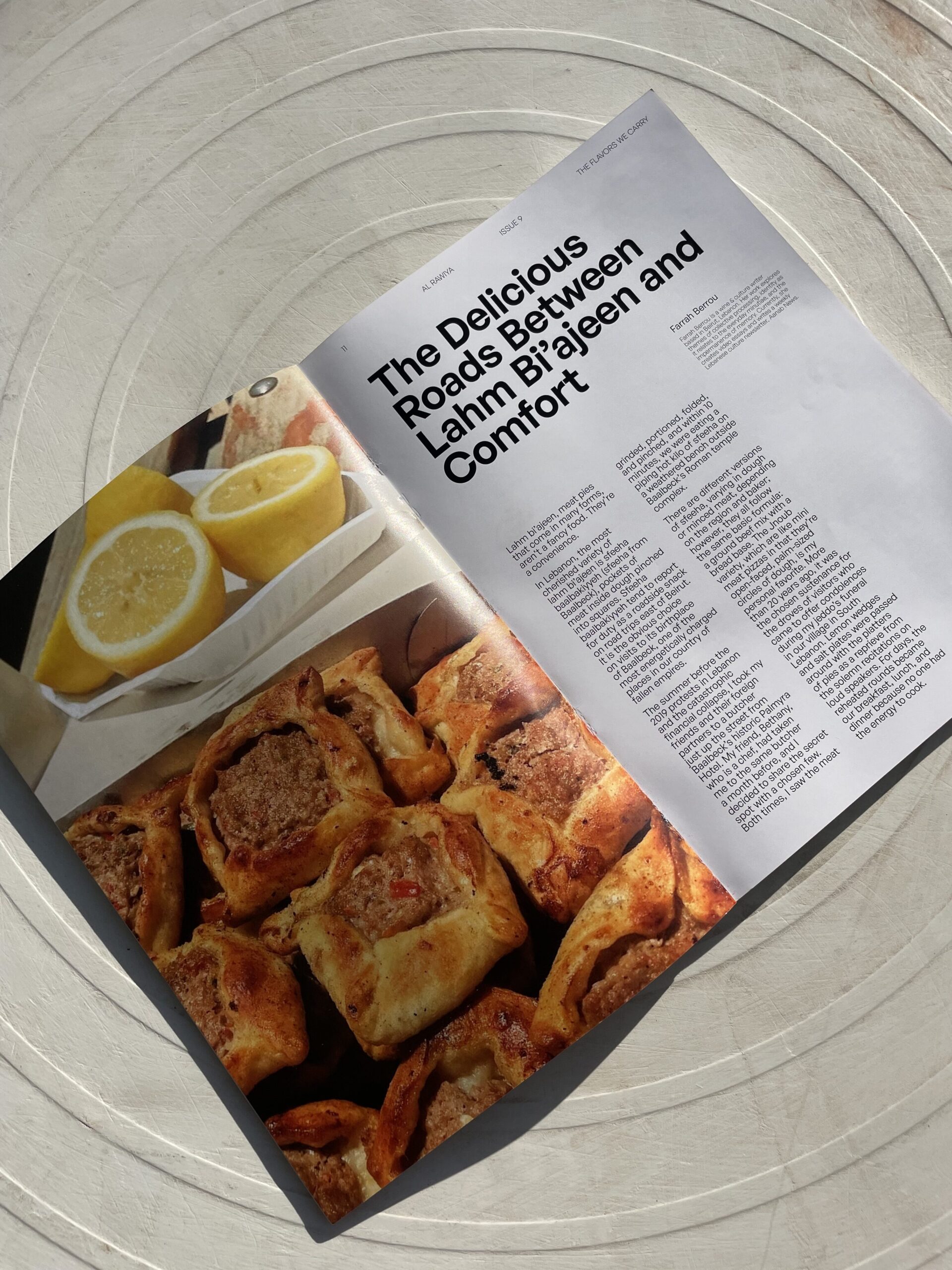
These nuances are explored in Al-Rawiya’s ninth bilingual issue, Flavors We Carry. It looks at Levantine food through multiple lenses, from Circassian cuisine in Jordan to Lebanon’s avocado craze and beyond, and marks the Beirut-based publication’s first print edition, a milestone in its journey.
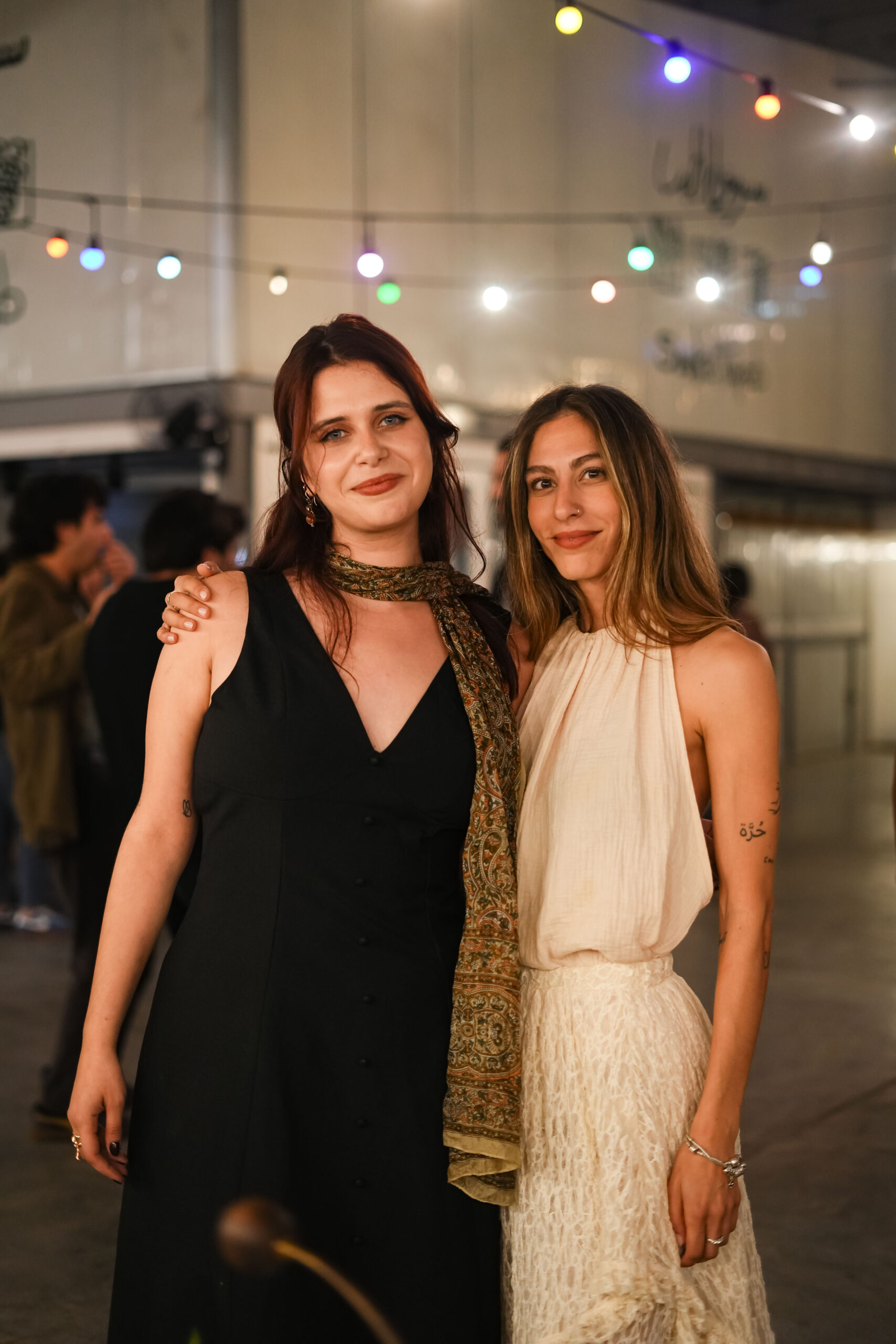
The word Rawiya in Arabic carries a dual meaning: storyteller and thirst-quencher. The magazine is helmed by founder and publisher Stéphani Moukhaiber and editor-in-chief Michelle Eid, who, after years in the diaspora and launching Al-Rawiya online to reach diasporic communities, have returned to Beirut in recent years. “If we’re going to be platforming these stories, it’s very important to be around, living and experiencing what everyone in the region is going through,” Michelle tells me.
ICON MENA sat down with Stéphani and Michelle for a conversation as warm and comforting as a home-cooked meal.
Some say print is dead, while others argue it’s alive and thriving. What made you decide that now was the right time to launch a print edition?
Stéphani: We’ve been doing this for five years. We started as a digital platform. We wanted to grow as a digital platform and digital magazine. And now we’re at the point where we saw that, through our content, we’re archiving our histories, our tradition, our stories. We thought that, having something to hold and having our stories take physical shape and space in the world is something that’s very much needed.
Us as Arabs, we take only a very tiny percentage and margin globally in print, especially when we’re releasing and publishing things that relate to our generation that are accessible, that are attractive and written in a way that are also digestible. This is why we decided to go to print and the feedback on it and the way that it was received was major compared to the way when we used to release in digital.
The visual identity of the print edition feels very organic; photos taken on iPhones, low-res, yet warm and vibrant. Was it challenging to translate your digital aesthetic into print?
Michelle: Our entire brand and identity on the digital platform always had this authenticity where people can relate to the content that we put out, whether it’s wording, the photos they see, the audios they hear. We wanted to translate that perfectly into the print. That’s why we didn’t go for this very extravagant, very neat, or tightly knit style.
I love the issue and how it came out. When I think about it, I don’t think about the word perfect. I think about the word authentic. I think about how closer it gets you to the author and the stories that they try to portray. The reason we have these different photos that are not very all professionally taken or have the highest quality is because a lot of these photos are the authors themselves or people who are involved in telling the story. The art direction is meant to really allow the reader to not think of themselves while reading the print that they’re in this very rigid box, but that they’re in the world of Al-Rawiyah.
Stéphani: We also were new to this and we were learning how to do it. It was a lot of effort put in from Michelle and myself also in terms of finding a few of these images and relying on the community to be able to also submit some of these images because we also wanted to get images from Jordan, Palestine, Lebanon and Syria. We wanted not just to have representation in the content that’s written, but also in the content that’s also visual. It took us longer than expected. We were supposed to release this issue in June and release it in November, but we wouldn’t have had it any other way. I think it’s because of the community that contributed to it, that we were able to actually finalise it and get it done in the way that we have. Where the authors, for example, couldn’t send visuals or images accompanying the article, we had to pivot and figure out ways to be scrappy around it. This is where the community stepped in. For example, the article about the Circassian cuisine, we had reached out to people on Instagram and said, OK, who would like to go and have dinner on us? But please, if you could also take a few pictures of the food that you’re having. And that’s what we did.
Why food?
Michelle: When we’re conceptualising this theme, obviously a lot of us in Lebanon, in Palestine, in the region, we’re at a very low phase of our moments and low phase of our lives and we wanted something that can unite us around and we thought what better than food and the land and the stories that come from food and the land that can bring us together. It’s very easy for us in Lebanon, Syria, Jordan and Palestine to be divided. It’s been happening since the French mandate, and before with the British, the French, the Ottomans. Their entire strategy has been trying to figure out how to tear us apart. Even today, with all these different international politics, all they want to do is make you forget that you belong to the same place in one way or another. So we thought, what better way to remind everyone and remind the different and diverse communities in our regions and the Levant that we are one in the same? Food can bring everyone together, but it also has such a political aspect to it, even historical, cultural, social and economic. We got over 75 submissions, and it was our biggest number ever. We ended up taking 17 contributors for this issue.
The selection process must’ve been challenging.
Michelle: It was a tragic process. There were so many stories to be told, and it sucks to be the one to come and say, oh, maybe we can table this for later. To be quite honest, the diversity of submissions that came in was intense and insane. We wanted to make sure with this issue to have the balance of the good and the bad. We didn’t want to do this romanticisation of food, when we’re dancing around food and everything. Food has a very deeper meaning when it comes to resistance, when it comes to mourning, when it comes to the psychological aspects that come with it, the negative aspects that come in our community.
We build this negative relationship with food because of our surroundings and because of societal norms. We wanted to bring everything out. We also wanted our readers to be able to not only find something that they enjoy, but also diversify their palette as well.
Tell us about the launch event that took place in Souk El Tayeb.
Stéphani: At the end of the night, after everybody left, Michelle and I looked at each other and we just bawled our eyes out. We are unable to comprehend what had just happened.
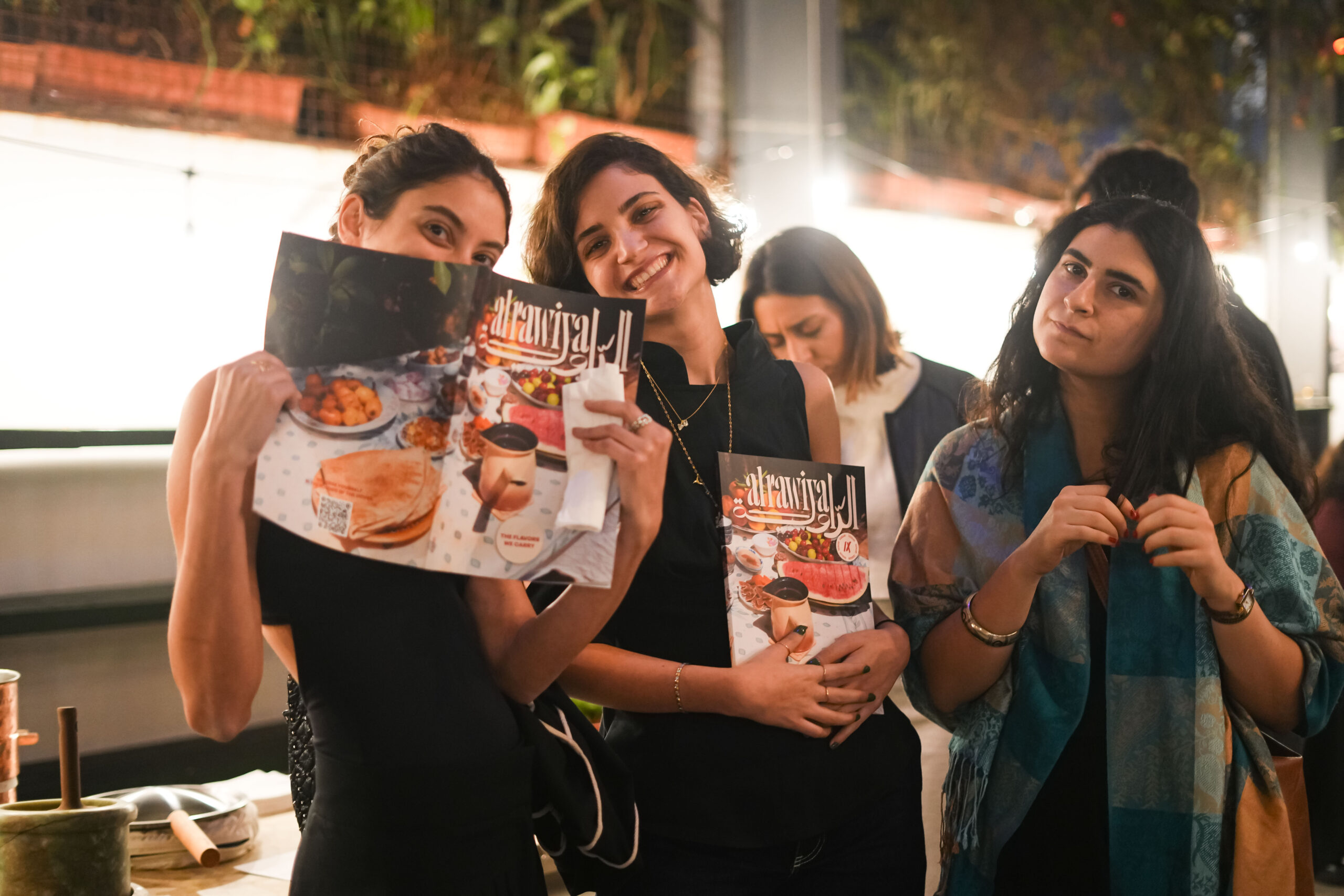
I think we had printed around 150 copies and we left with maybe 30 left. We were not expecting to sell that many. People were going to buy the first copy and then getting another one for their aunt, for their mom, for their grandma, and it felt amazing.
We also tried to make the event a multi-sensorial experience where people could go and touch and smell and taste spices and herbs from our region. We had also curated an auditory room where they can listen to the audio that we had playing around when we were shooting the actual cover. We tried to target all of their senses.
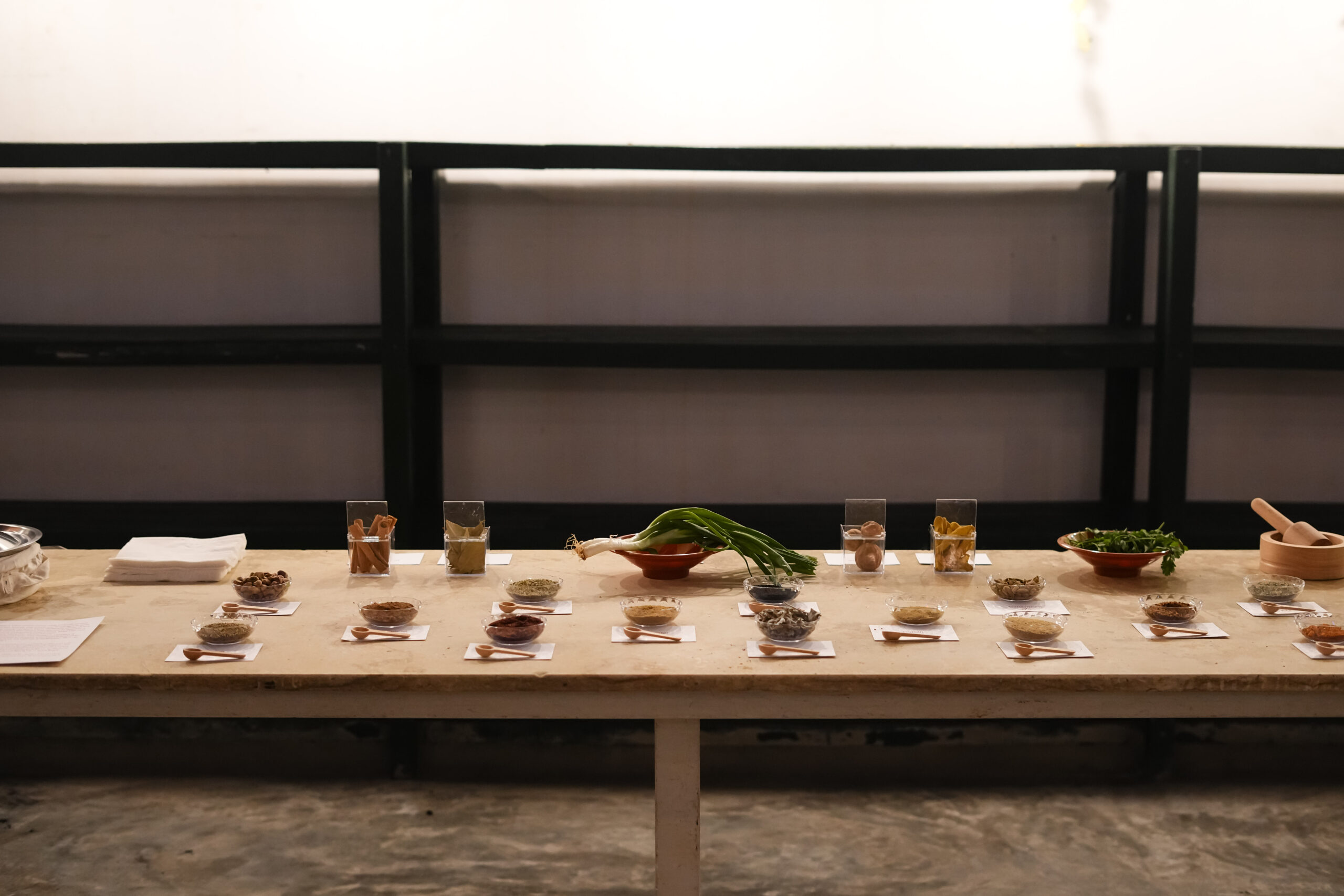
Because at the core, this is where we started. We started in the diaspora before we moved to Lebanon. So we do have our audience there that are asking us now, where and how, where can I get it? Are you going to put it in independent bookstores? And we’re like, yes! We’re just, we’re a dynamic duo. Just give us a week to figure everything out. Alhamdulillah. It’s been amazing.
Michelle: I try to remember it and my mind goes blank. I think I said the words love and gratitude, that night more than I’ve ever said them in my life. We were surrounded by people who appreciate our work, who were saying the things that we’ve hoped for them to feel and say. The magazine is community-based it’s it’s created by the community for the community with the community.
Was it tricky trying to choose what food was going to be the star of the cover?
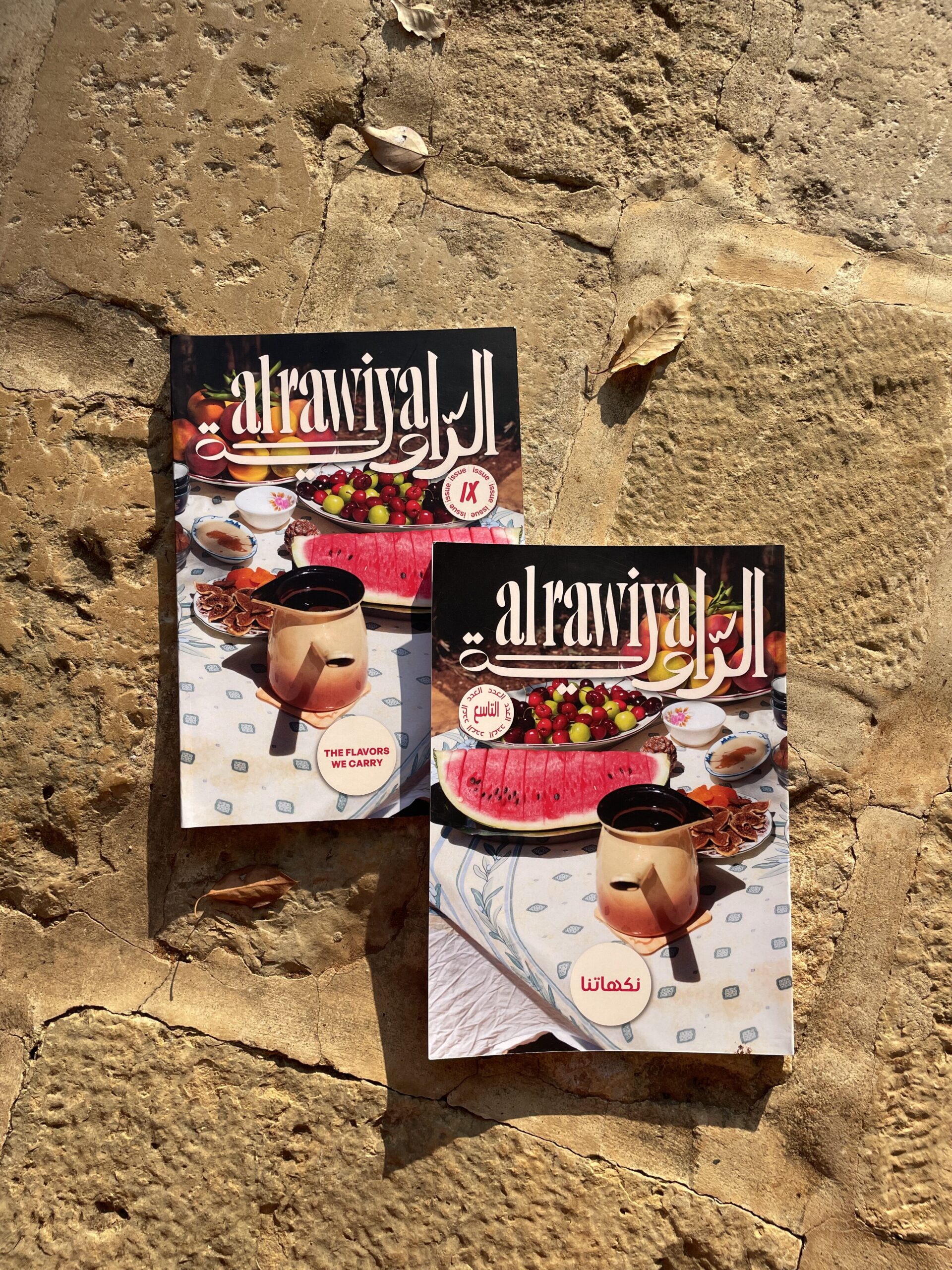
Stéphani: It was the first time actually that we have anything to do with the cover. Usually we find a photographer and we see either something in their archive or we ask them to shoot something. But this time around we actually directed the whole thing in my garden. Rabab Chamseddine, the photographer, came from the south and she had all the sharshaf and the rakweh. The inspiration was conversations that happen after we have our meals, the conversations that happen in the afternoon, where we’re having coffee after lunch. When you’ve spoken about everything and anything during your lunch and then it becomes intimate, it becomes more quiet. Everyone has a food coma and they’re just chilling and they’re speaking from the heart. This is what we wanted to show in the end.
Michelle: It screams tenderness and love and intimacy. Again, what we’re intending through this issue is for everything to be multi-sensory, so we want people to be able to touch, smell, see, taste, hear everything. On the back of the cover, we have a little QR code which allows you to fully immerse yourself into the sounds that were around us during the cover shoot. It really sets the scene, where there is no car noise, no noise of daily life, you’re not crushed under the weight of capitalism. You just sit here and now in the moment with watermelon and coffee in front of you, and you’re present in the moment.
Do you have any favourite stories from the issue?
Michelle: This is like asking who your favourite child is. I really like all the articles. All 17 of the kids, I love them so dearly. But the last article by Ghayad El-Khatib; Sage, Thyme, and Mallow: Prisoners in our Land, about meramiye, khebbayzeh, and zaatar. I cried when I first read it. The way that she gives life to the bread, the meramiye, the zaatar, the moon. She tells such a powerful story through these herbs themselves. As a Palestinian, you can’t go and pick herbs and plants that are around you. Sometimes we think about it in a very impersonal way, but Ghayad was able to bring it to light in such a personal way. Maybe it’s my tree-hugging nature-loving self but I love the way she portrayed the story.

Stéphani: For me, I have two that spoke to me. One is The Taste of Loss: How Humans Grieve Through Food by Tamara Saade, and the second one is Cactus: An Incomplete Taxonomy of Stolen Palestinian Time by N.A Mansour. The latter looks at cactus in Gaza where there’s a huge famine but because of the lack of time and education, they didn’t grow up understanding their land and how to really harvest the cacti and properly grow it. It was heartbreaking for me because it’s right there but at the same time you can’t access it because there is someone else on your land. You’re working day in and day out, 24 hours a day, so you don’t have the luxury of time to learn about your land.
Where do you see yourselves in this theme, in this issue?
Michelle: All of it. Genuinely all of it. of it because I have such an affinity for the land and everything that comes out of the land. These stories are not all in rainbows and butterflies at the end of the day, because I do believe in the revitalisation of our land, especially in the face of an oppressor that wants to destroy it. But at the same time, I think it’s very important to approach how society uses things that come out of our land against us. That’s why we wanted to include the article on eating disorders, and the “downsides” of food. To sum it up, for me, this issue speaks the multisensorial language of the land, and the stories that oppressive systems try to shut down, whether it’s capitalist systems, agro-corporations, the occupation itself. This issue resists all these mainstream narratives.
Stéphani: Personally, I have a very interesting connection with food and I’ve struggled a lot to build a healthy relationship with it. It also brings back memories with my grandmother and my family when I used to come back to Lebanon and visit. My last interaction with my grandmother at the time was during Christmas in 2019 when she made us the full feast and, it was the only time I had spent with her before she passed. This issue brought me back to the core of who I am. It really brought me a healthy kind of vision for me to build this relationship and a certain level of self-acceptance towards my eating habits.