
News

In 1976, Jean-Luc Godard and Anne-Marie Miéville released Ici et Ailleurs (Here and Elsewhere), an essay film that turns the camera on itself to question the ethics of political image-making. Built from footage of Palestinian fedayeen shot years earlier with Jean-Pierre Gorin, it sets the armed struggle “elsewhere” against a French family “here”, watching it all unfold from the comfort of their living room.
Fifty years, many wars and more than one genocide later, lived, documented and livestreamed, that distance and the numbness it breeds have only grown. Another divide has opened beside it, as more and more Arabs find themselves driven from their countries and living elsewhere. Many of us now exist somewhere in between, whatever here and elsewhere have come to mean.
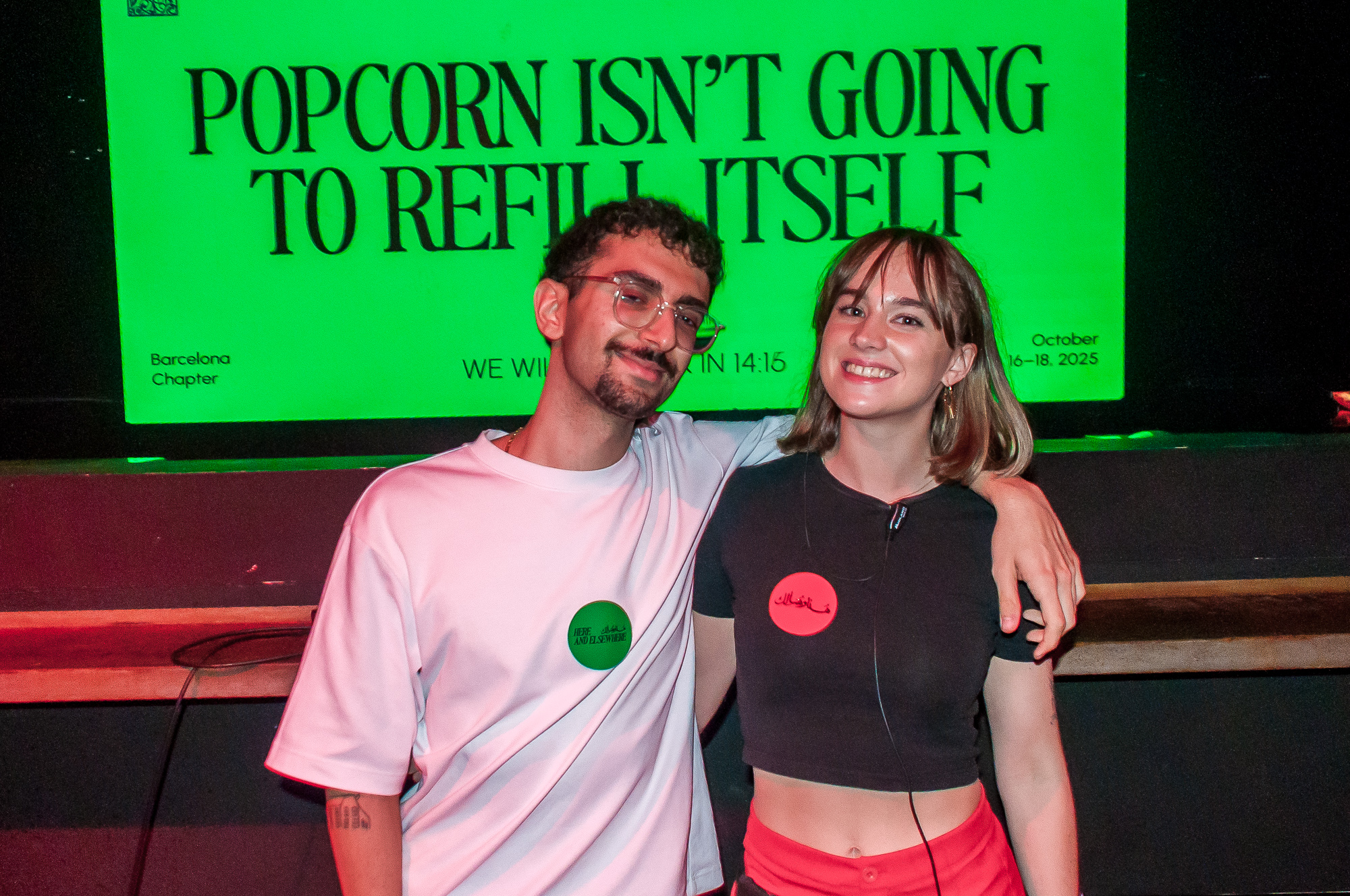
It is in that in-between that Here & Elsewhere has taken root. Founded in 2025 by Habib Habib and Lilith Blazek, the independent, non-profit festival dedicated to SWANA cinema lives up to its name. Beirut is its permanent “here”, while it moves elsewhere to a new city each year, screening the same films in both locations only a few weeks apart. The aim isn’t cultural exchange for its own sake, as the programme travels largely unchanged, but to carry films from the region to wider audiences. Its selections tend to circle resilience, resistance, and cultural identity, and this year’s edition zooms in on memory, how it is fragmented, rewritten, forgotten and archived, a theme that could hardly feel more urgent in the region right now.
It all began with a simple impulse to help one filmmaker fund her film. That crowdfunding effort has since grown into a two-city festival now in its second year, and the same spirit still shapes its model. Half of the proceeds go to a charity (Gaza Skate Team last year, Nation Station this year) and the other half to the production of a spotlight director’s film (Toronto-based Palestinian filmmaker Fateema Al-Hamaydeh Miller in 2025, Lebanese archival filmmaker Cindy Chehab in 2026).
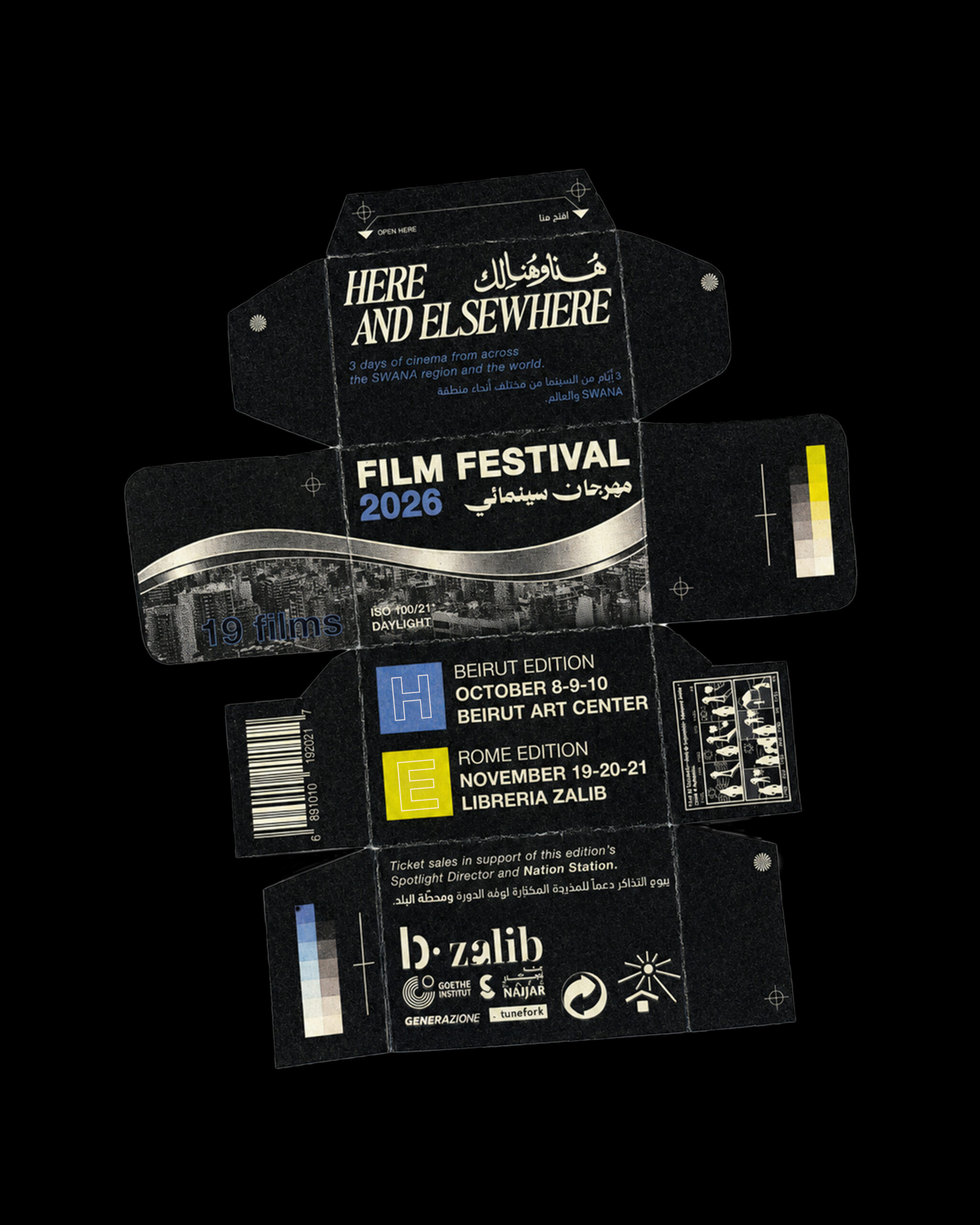
Ahead of this year’s edition, which runs “Here” in Beirut from 8–10 October and “Elsewhere” in Rome from 19–21 November, we sat down with Habib to talk about a chance encounter over super glue in Gemmayze, running a festival across continents, and why putting films on screen is its own way of writing history.
ICON MENA: First of all, I was wondering if you are you a filmmaker yourself?
Habib: Yes, actually, I am. I finished my master’s a month ago. So I’m a “new” filmmaker. I did my master’s and bachelor’s degrees at ALBA in Beirut. I’m not on the production side; I’m more on the editing side of filmmaking. Here & Elsewhere was very random, the way it all happened.
So how did it happen?
I was at a bar in Gemmayze, and this blonde girl was sitting, smoking a cigarette, and she said, “Do you have super glue?” I didn’t know who she was. I was like, “Why would you need super glue on a Friday night?” Apparently, her friend’s shoe had broken, and they thought that my friends and I looked like artists, and that maybe we’d have super glue in the car. This girl is Lilith Blazek, the co-founder of Here & Elsewhere. That’s the moment we started talking. I said, “I don’t have super glue, so what do you do?” And eventually, that’s how it led to Here & Elsewhere, that little interaction.
How did that interaction turn into a collaboration?
There’s this filmmaker in Toronto, her name is Fateema Al-Hamaydeh Miller, who was last year’s spotlight director. She’s a Palestinian filmmaker based in Canada, and she hadn’t had many opportunities to grow up around or connect with people and communities in the region. She needed funds for the production of her film, and Lily was trying to help so she was thinking of doing a crowdfunding event, and I was thinking along the same lines but making it more of an interesting thing for people to show up. That made the collaboration particularly meaningful to us, as part of what we’re trying to do with Here & Elsewhere is create those connections across the diaspora and the region. That’s kind of how we came together, me directing the festival artistically, and her being the project manager.
As the project progressed, we settled on the title Here & Elsewhere, reflecting the whole identity of it happening here and there. Eventually it turned into a real crowdfunding festival, which was very exciting to see come to fruition. And it grew into a second year, and hopefully a third and a fourth.
The festival name plays on the sense of belonging and presence between here and elsewhere, and it’s also the title of a film by Jean-Luc Godard. Was that also an inspiration, or not?
Yes, actually, of course it was. In the film, there’s a French family sitting in their living room watching the news, and then there’s this parallel with Palestinian children training for war and defence. We thought that was interesting. First of all, it’s a catchy name, and I think Jean-Luc Godard, the icon himself, had a very interesting creative point in naming the film that. And eventually, the festival being initially built to support this filmmaker who was from here but based elsewhere also came together with that. Everything happened very naturally. The whole foundation of Here & Elsewhere happened within about a month. We met and decided to work on the project in June, and did the festival in October. It was a very quick period. There were no regrets.
Why is the crowdfunding element important to you?
Because there’s a need for funds for filmmakers in the region, and especially young filmmakers from here. I know a lot of people living in the “West” who receive less funding just because of where they’re from or the stories they want to tell, and eventually get censored. So the goal was: how can we help those filmmakers make the film they want to make without all the restrictions that come with industry standards?
Was it planned from the start to have the festival take place across two locations?
A: No. Lily is based in Barcelona, and she had access to a venue [La Textil], that was going to host the festival for free and allow us to screen whatever films we wanted. She thought it would be an even greater idea to have the festival happen here first, then in Barcelona, so the crowdfunding would work in a way that would fund the film more effectively. Because of that, with the title being Here & Elsewhere, and her having access to this theatre in Barcelona, it really came together into what it is right now. Honestly, I didn’t know we were going to do a second edition elsewhere this year. I thought it was going to be Beirut-Barcelona again, but then we decided it would be nice to have a tour and take the team to a different city every year. So we’re going to Rome this year!
And was the choice of Rome also natural and organic?
We want to bring SWANA and Lebanese cinema to different cities each year, sharing these perspectives elsewhere and reaching Arab diasporas who might be missing their ‘here’.
How was it received last year in Barcelona?
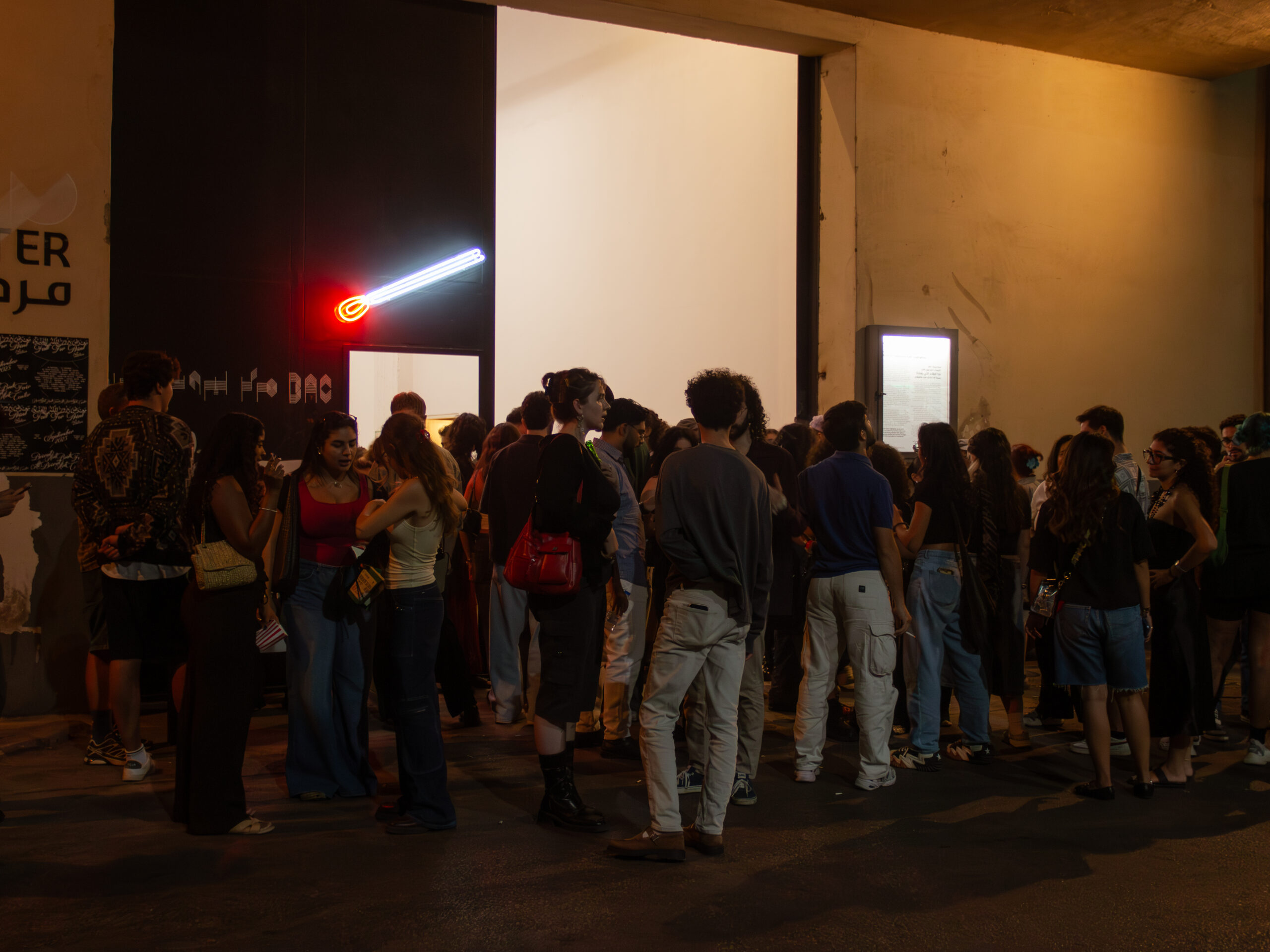
In Barcelona, the audience took it more as an activism event than the people in Lebanon did. People in Lebanon showed up because they wanted to support, first of all, the cause of SWANA cinema, but also the team behind the festival, since we all have connections across different sides of the art scene in Beirut. In Barcelona, the audience showed up with Palestinian flags and stopped by after a protest. It was interesting to see how both audiences received it differently, but it still led to the same place.
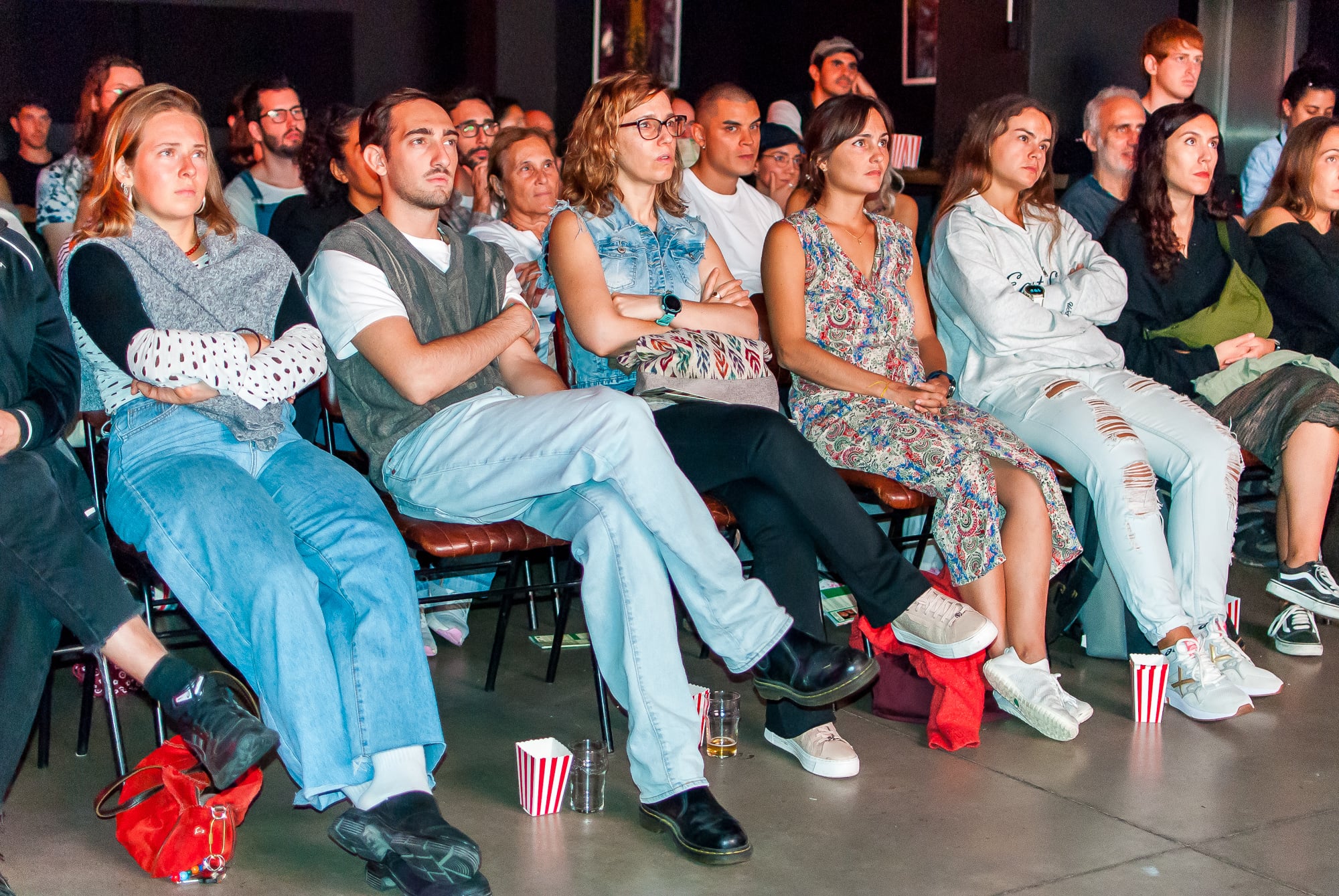
“We want to bring SWANA and Lebanese cinema to different cities each year, sharing these perspectives elsewhere and reaching Arab diasporas who might be missing their ‘here’.”
Are the films that are chosen screened the same in both cities, or does every city get a different share of films?
Last year we actually had two different programmes. Some films weren’t meant to be screened in Beirut because of the weight of their story, or how triggering they could be, given the festival was happening during the war. These films went to Barcelona instead. This year we only have one film that differs, and the only reason is distribution. Otherwise, all the films are the same this year.
For two editions now, you’ve worked literally across continents. In terms of logistics and preparation, how hard is that? Does it feel like two festivals or one?
It does feel like two festivals when I’m on the ground. It’s a whole different venue and a whole different set of crew members, and the way they communicate and get things done is very different. But during pre-production, it really feels like one cohesive festival. We’re lucky to have found teams, both in Barcelona last year and in Rome this year, who are fully willing to help on the ground and give us their all. I’m so grateful for that. It’s beautiful to see people actually care and want to support events like this.
Who is the team, and how big is it?
It’s actually quite a big team, and everyone is volunteering their time. Lily and I are the co-founders, with me directing and her producing. We have a community manager alongside our communications team and our visual design team. There’s also an editorial team working across the programme copy, editorial design and Arabic translation, as well as technical management and Arabic transcription for films that don’t have Arabic subtitles. And this year we brought on an experience manager as we’re expanding our side events. For Rome, we also have a producer and a number of assistants.
I know it’s only been one year, but how do you feel this year is different from last year’s?
I think this year is different because, first of all, the team is way bigger, and more people are interested in being part of it and supporting. We know what we’re doing a bit more than last year. That edition also happened quickly, so we didn’t really get time to process and take more time with decision-making. This year we’ve had more freedom, in a way. Time gave us more freedom. And having a grant from the Goethe-Institut to help make this edition happen also helped.
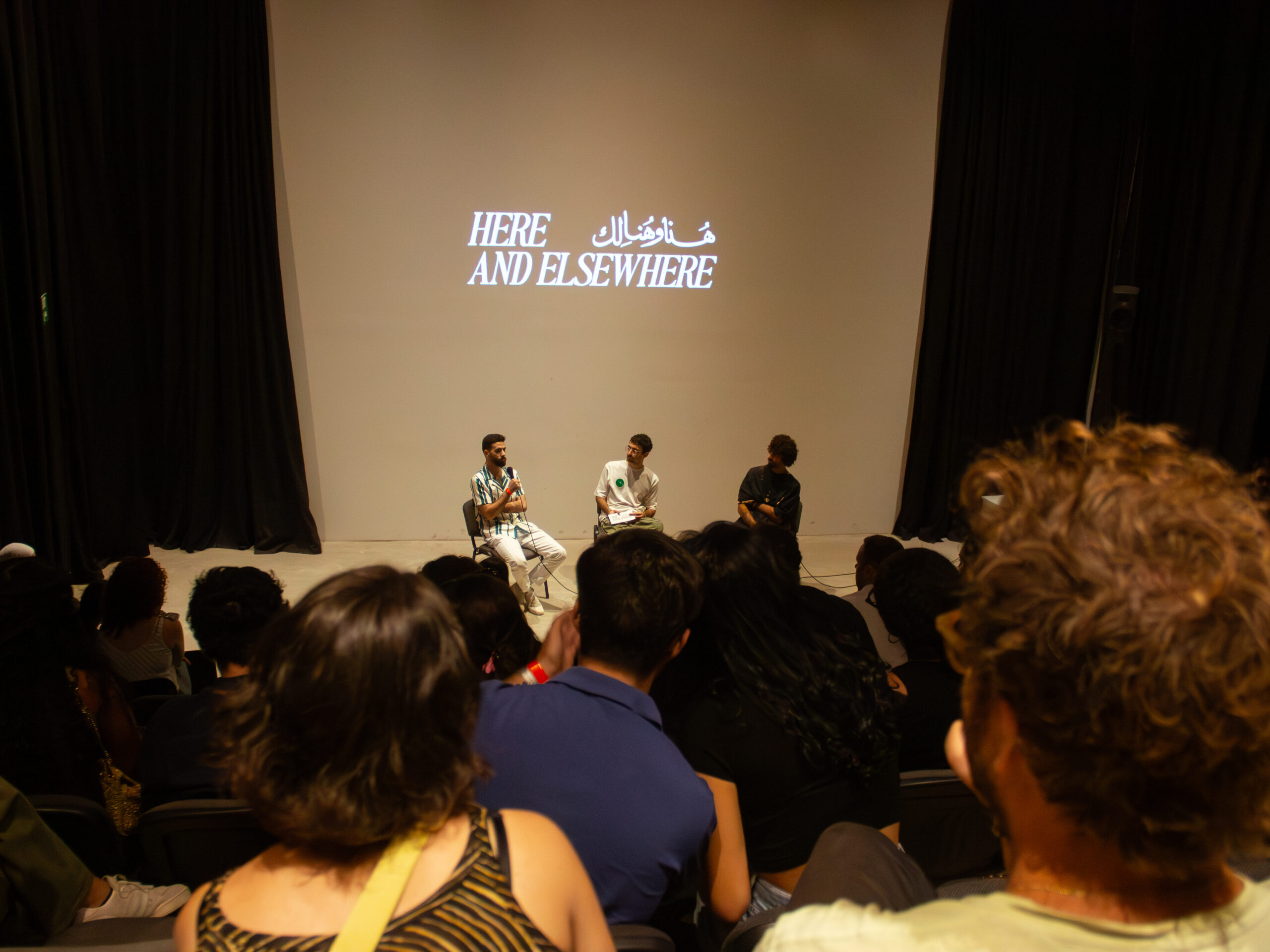
Cindy Chehab is the spotlight director for this year. How does her work tie into this year’s theme?
“We wanted this year’s edition to support a film, by a Lebanese filmmaker. With everything happening in the south and in the country in general, there’s a need for more films. Cindy had an interest in archiving. [Her film explores] how an archive can either lie or tell the truth, and how it’s able to write the past and eventually the future, in a very poetic way. I loved her sensibility and her approach to archiving and memory.
For this year, I wanted the festival to focus on the different devices of memory storage, and how nowadays we’re able to grab a memory and put it in our pockets and travel with it, whether it’s on an SD card or a hard drive, and how you can be feeling a memory here, wherever you are. When I saw Cindy’s project, I Had to Learn How to Scream, it immediately overlapped in a way that felt so right.
How was the response to your open calls for submissions, last year and this year?
I was so surprised last year by the number of films submitted. We’re a bunch of twenty-something-year-olds running the event, and we got so many films, in a very overwhelming and shocking way. This year, we went in without high expectations. We thought maybe there’d be less excitement around the festival. We also had around 200 films submitted. There’s so much talent in the region, but little platform.
And does the film have to be from this one region?
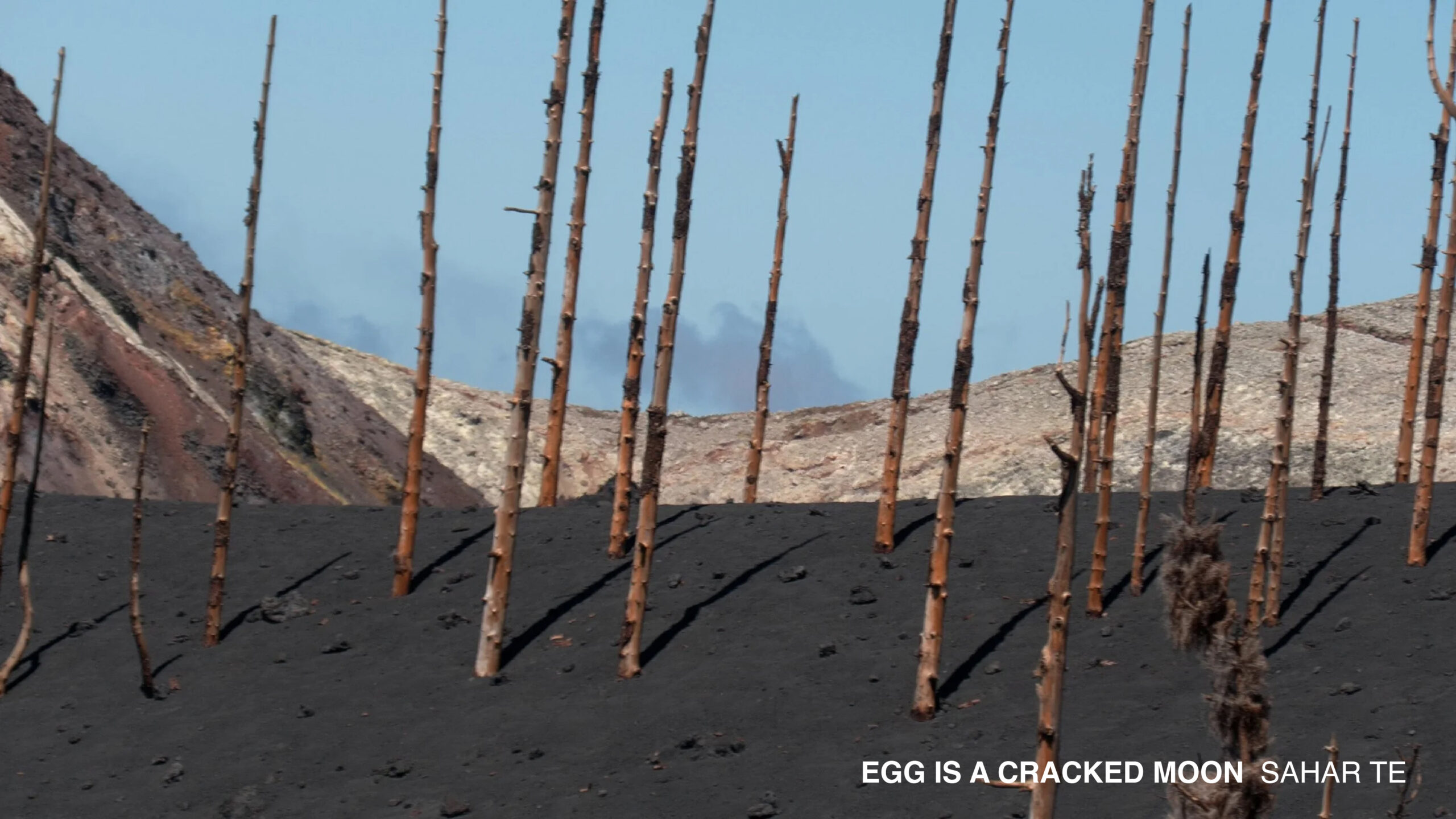
It doesn’t have to be. It’s mainly about the themes of what “here” or “elsewhere,” or resistance, might mean to the filmmaker. We have a few from Spain or Canada, for example, that have an interesting approach to what land or homeland means. A Spanish film that was selected this year, Egg is a Cracked Moon by Sahar Te, is about a man’s relationship with his land after a volcanic eruption. It was a beautiful approach to how land can be destroyed, and to belonging, even when it’s not directly related to war or colonisation but natural disasters.
“We’re a bunch of twenty-something-year-olds running the event.”
Are there any films you’re excited for people to see?
Yes, actually. I’m very excited for people to see a film titled May God Take Years From My Life and Give Them to You, which is screening on the second day, by director Tadeo Boustany. I love this film because the approach to filmmaking is very DIY, in a way, and I think this type of filmmaking is a direct response to the industry and how elitist it can be sometimes. We end up resorting to our phones and our own recordings. It’s an interesting act of resistance, the way this experimental piece says so much without trying to say so much.
Can you tell me a bit more about the charity model for this year?
This year, with the war continuing and people facing more hardship economically and financially, Nation Station is still standing and supporting neighbourhoods and families in Beirut, offering meals and produce. During the war, they were making meals for an even wider range of people who lost their homes or simply needed food. This is why we wanted to support Nation Station. Without initiatives like Nation Station, Beirut would be struggling in much scarier ways.
We’re supporting Nation Station, with 50% of all ticket sales and submission fees going directly to them, while the other 50% goes to the production of the spotlight director’s film, which this year is Cindy Chehab’s.
With everything happening in the region right now, and especially in Lebanon, it’s an interesting time in one way to start a film festival, and in another way, it makes a lot of sense. What pushes you to keep doing this?
It’s important that we remember that film, in some way, is a way of writing history. Once a film is made and screened, you can’t really manipulate the narrative in it, whether it’s fiction or non-fiction. There’s an important responsibility for filmmakers to keep making films, because the stories they tell are meant to be heard and seen, and there’s a lack of hearing and seeing when a film is from a specific side of the world or by a specific group of people. So this is why Here & Elsewhere is fulfilling this need of showing and sharing these films, whether for the community around them or the communities far from them. That’s also the other side of the crowdfunding. You can raise awareness; this film is out there, on a hard drive, on the internet. Go see it, learn the truth, and put a history behind this region.
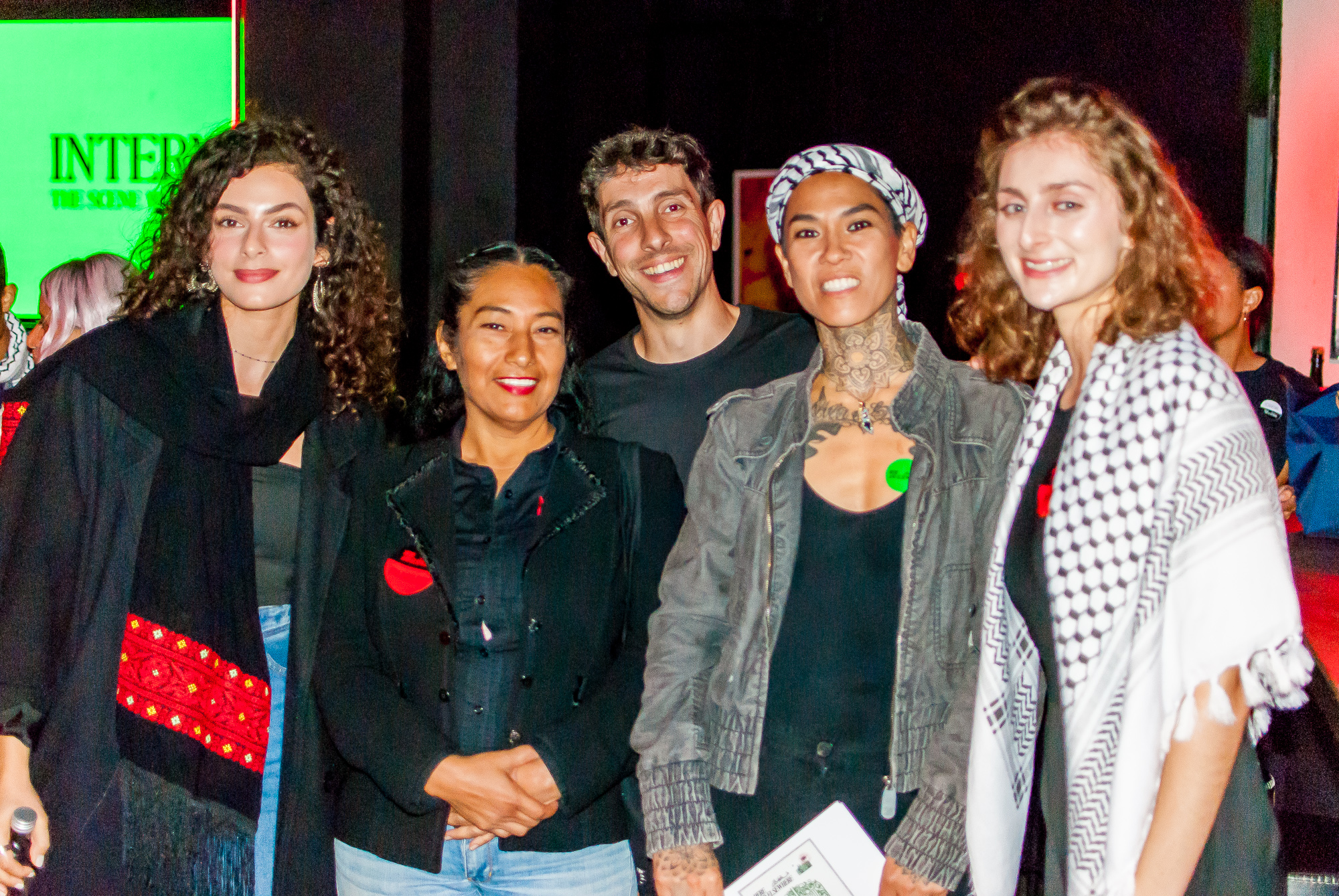
Here & Elsewhere runs 8–10 October at Beirut Art Center in Beirut, with tickets available via Ihjoz, and 19–21 November at Zalib Circolo Arci in Rome, where tickets are sold at the door and RSVPs are encouraged via Eventbrite. All proceeds are split between Nation Station and the production of Cindy Chehab’s I Had to Learn How to Scream. For the full programme, visit hereandelsewhere.org or follow @hereandelsewherefest on Instagram


