
News

Words_Dounia El Barhdadi
“If you had Algiers for one night, what would you do?”
“Algiers for a night?”
Lyes is silent, thinking.
“I’d burn it. Set it on fire. Tomorrow there would be nothing…
Algiers is gone.”
A long, long pause. And then a big sigh: “Oh, Algeria.”
Lyes, almost 40, sits on a hill looking out at Algiers at night. The city gleams with streetlamps and lighted windows, as though already on fire. He is speaking to filmmaker Amine Hattou, as he condemns Algeria with no venom, and no hatred.
Under France’s 132-year-old occupation, Algeria’s cultural sector had been saturated with French media, which pushed French values, beauty standards and political ideologies. When Algeria gained independence in 1962, culture became both a tool for constructing national identity and a reflection of long-held Algerian values. Cinema, in particular, was the second frontier of decolonisation, after the military battles had been won and French troops had withdrawn.
Houari Boumediene, who was the second head of state of independent Algeria, had a vision of a socialist, anti-imperialist Algeria which required a cultural landscape that didn’t revolve around French film peddling Nouvelle Vague individualism, or Hollywood, a mere Trojan horse for Western capitalism. The state-run broadcaster, Radiodiffusion Télévision Algérienne, thus turned to the Non-Aligned Movement, filling the vacancies with Egyptian, Soviet and Indian cinema. The government systematically imported and broadcast films that promoted Pan-Arab nationalism, socialism and traditional Muslim values into living rooms across the country, but not all cinema was received equally.
After six years of war, Algerians found Soviet film to be grim, grey, and just as ideologically obnoxious as French film. Egypt’s nationalist output was more culturally aligned, but politically, still too heavy-handed. Algerians were tired of struggle, and they didn’t want to watch suffering on the big screen as if it were some foreign experience, conjured up for their viewing pleasure. So, unexpectedly, Bollywood — purveyor of high-energy, musical dramas — emerged as the leader of cinema in post-independence Algeria and the primary source of cultural production, nurturing an already sturdy Indo-Algerian relationship.
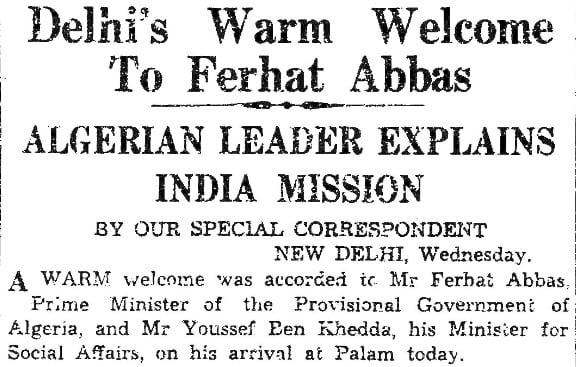
In 1959, at the height of the Algerian War, India allowed the FLN to open a representative office in New Delhi, and Prime Minister Nehru repeatedly declared his support and sympathy for Algerians in their struggle against colonialism. India also consistently provided material and medical help to Algerian fighters, and advocated for Algerian independence at the United Nations. In June 1962, one month after the ceasefire, India granted de jure recognition of Ahmed Ben Bella’s new government. Algerians, therefore, had a pre-existing respect for India, which soon became awe.
For a traumatised Algeria, the pageantry of Bollywood became a huge source of emotional comfort, promoting similar family values, respect for elders, unconditional hospitality and, most critically, modest love. Amid a rigorous post-independence Arabisation and Islamisation drive, the chastity of Bollywood was hugely appreciated. Algeria consumed Bollywood films hungrily, and with divine reverence for the pantomimic characters and the happy endings. The absence of revolutionary propaganda was welcomed, and the universality of the storylines embedded Bollywood film, fashion and music into both public and private social rituals for decades to come.
Lehengas and sarees became popular amongst Algerian brides in the ’80s, and in my online digging, I found that in response to the question ‘What clothes do men find most attractive on women?’ on r/AlgeriaRelationships, a comment posted only two months ago was ‘Saree >>>>>’, indicating an enduring, nostalgic admiration of Indian attire.
The introduction of Indian culture and cinema to Algeria in the 1960s was state-sanctioned, but its surprising popularity was entirely organic. In fact, the surreal melodrama of Bollywood was so beloved that cinemagoing in Algeria hit an all-time peak in 1975, with 45 million tickets sold across a population of less than 20 million.
My dad, born in Oran in the ‘50s, explained how films were shown in cinemas for three months at a time, so people would go and watch the same thing again and again, getting intimately familiar with the stories and the songs. For all their rivalries now, Algeria and Morocco have always shared culture, so the Bollywood phenomenon which first took hold in Algeria naturally spread across the border in time, from Oran to Oujda and beyond.
Across the Maghreb, a love for Hindi cinema became a point of shared experience for the Independence generation. Mohammed, my friend’s dad from Fes, described how Bollywood films were usually programmed in the poorer neighbourhoods of the city. Centred around simple plots resolved with simple solutions, Bollywood cinema was considered “cinema naïf,” requiring less critical analysis than French film and providing perfectly-timed, jewel-toned escapism.
In 2008, Zee Aflam was launched with headquarters in Dubai, made to capitalise on Arab nostalgia for Hindi film with Arabic subtitles and dubbing for audiences across the Middle East and North Africa. It was followed by MBC Bollywood in 2013, launched under the Saudi media group MBC. During the boom of the ’60s and ’70s, however, Bollywood films were consumed without subtitles, and the stories were understood through visuals and music solely. The population of Algeria after French withdrawal was not only linguistically fragmented — older generations spoke Darija or Kabyle, and younger generations only French — but also largely illiterate, and so the unintelligibility of Hindi came without guilt or admonishment.
Indian cinema became so popular in Algeria that what had initially begun as a manufactured cultural importation scheme became an exchange, where raï music reached unusual levels of popularity in India, and eventually a collaboration. Bollywood filmmakers began to incorporate famous Algerian songs in their work; Cheb Khaled’s “Didi,” a generational raï tune, topped charts in India and Pakistan after its release in 1991, and was later adapted for movies Shreemaan Aashique (1993) and Had Kar Di Apne (2000).
Another Hindi remake of “Didi,” renamed “Di Cheez Tujhe Dedi,” also featured in Airlift (2016) by Raja Krishna Menon, indicating an enduring love and nostalgia for the original Algerian track 25 years after its release. Even today, the most-liked comments on the song’s music video on YouTube are by Indians.
“Ya Rayah,” another hugely famous Algerian song, popularised by Rachid Taha, was also adapted into “Kaali Nagin Ke Jaisi” for the 1999 film Mann. In the same year, Cheb Khaled released a Bollywood edit of “El Harba Wine” featuring Amar, a testament to a healthy Indo-Algerian cultural relationship.
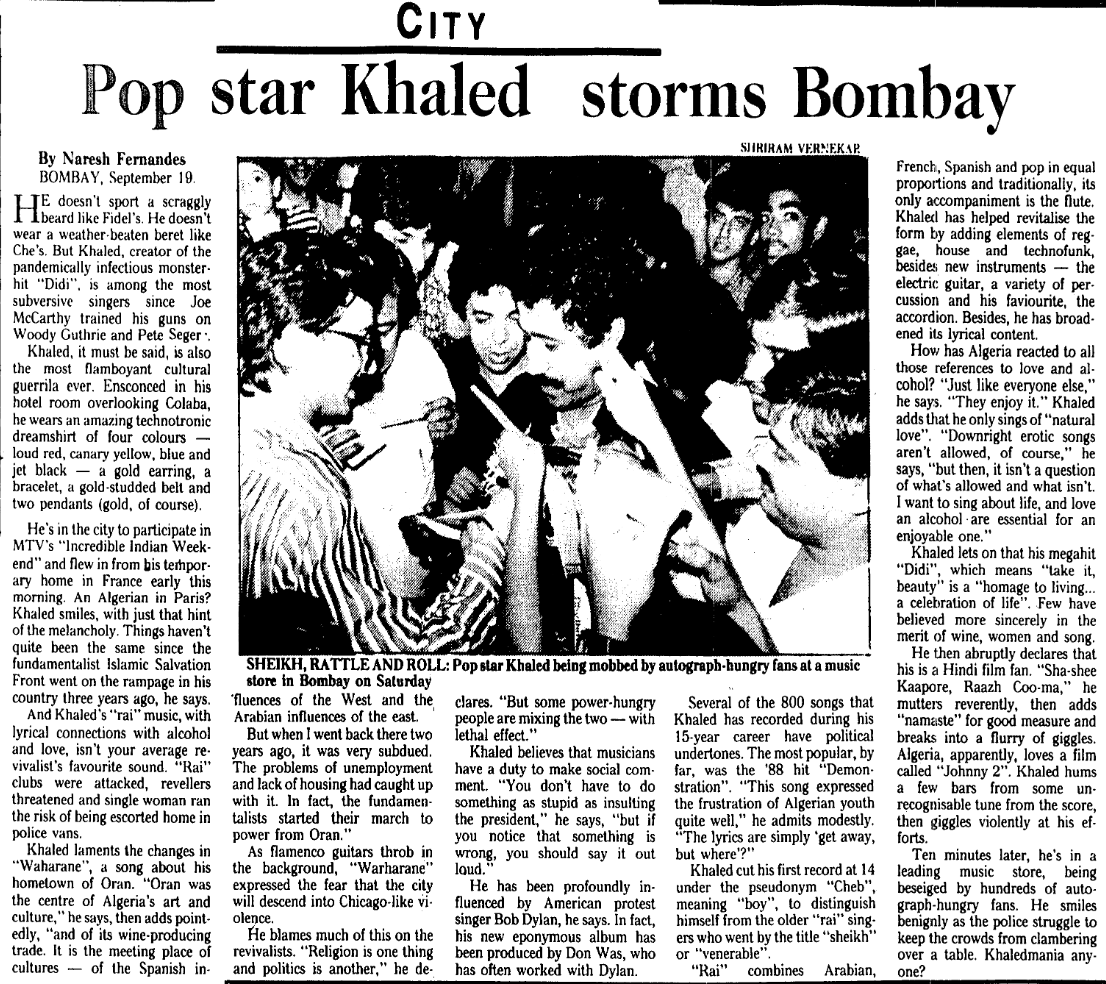
An icon in India by September 1992, Cheb Khaled was flown to Mumbai for MTV’s Incredible Indian Weekend, where The Times of India described him as “the creator of the pandemically infectious monster-hit ‘Didi’” and “the most flamboyant guerilla ever.” Before being mobbed by hundreds of “autograph-hungry fans” suffering from “Khaledmania,” he made sure to tell journalist Naresh Fernandes that he was a Hindi film fan himself. “Algeria, apparently, loves a film called Johnny 2,” Fernandes wrote. “Khaled hums a few bars from some unrecognisable tune from the score, then giggles…”
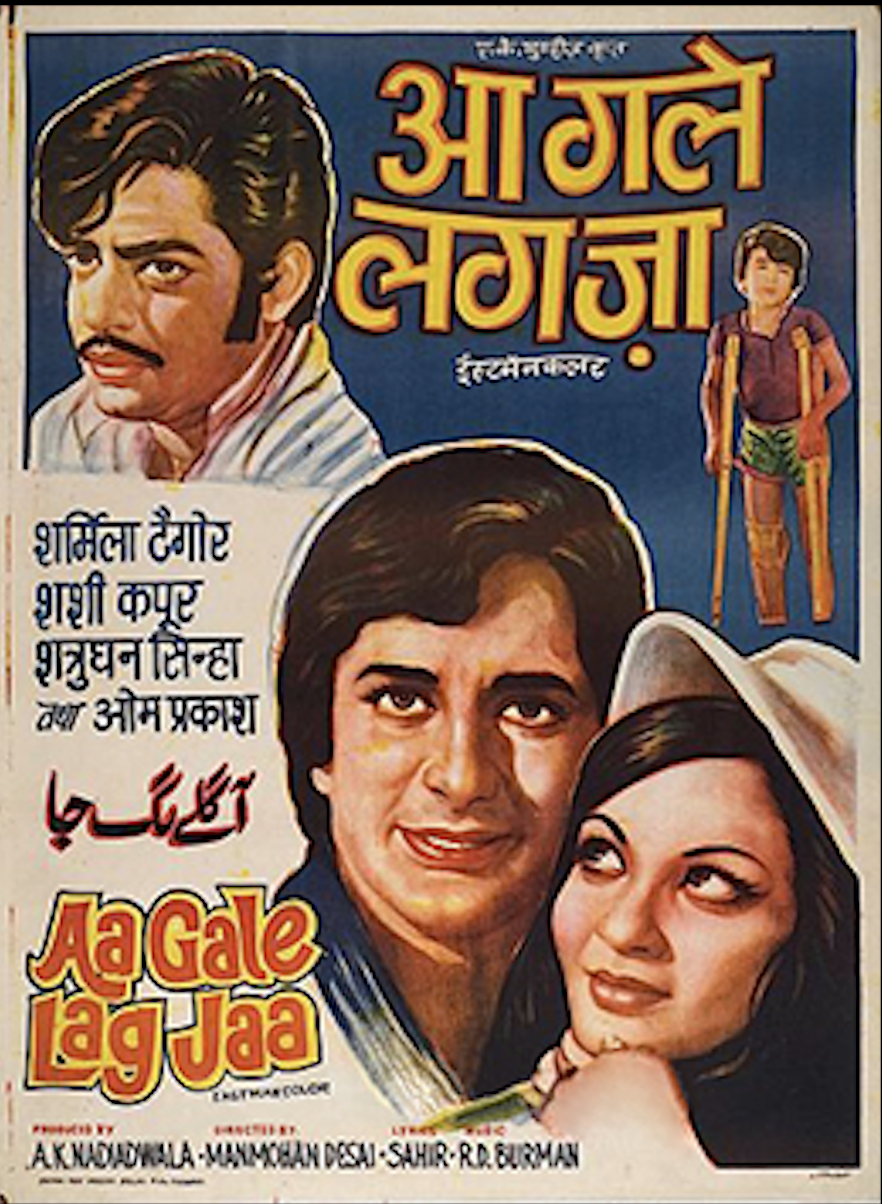
The film Cheb Khaled is referencing is actually Aa Gale Lag Jaa (1973), the Algerian cult favourite nicknamed “Janitou.” The film, directed by Manmohan Desai and starring Bollywood stars Shashi Kapoor and Sharmila Tagore, was released shortly before Algeria’s record-breaking year in cinemagoing. Scored by Pancham Da, its theme tune, “Tera Mujhse Hai Pehle Ka Naata Koi,” featured the repeated phrase “Jaane Tu Ya Jaane Na,” fondly mispronounced by Algerians and shortened to ‘Janitou.’
Crucially, Janitou was a total flop in India, and most Indians have never even heard of it. Similarly, the Bollywood film Awaara (1951), found incredible fame outside its realm of production and was the highest grossing movie in the Soviet Union with 64 million tickets sold. Yet Awaara was a hit across South Asia before finding a place in Eastern European hearts and minds. In India, Aa Gale Laag Ja made such little commotion that Naresh Fernandes mistook the word ‘Janitou’ for ‘Johnny 2’ in his interview with Cheb Khaled, and no one at The Times of India picked up on the mistake.
In spite of its lack of impact in South Asia, Janitou resonated so deeply in Algeria that it is etched into the national consciousness, and has become representative of a post-independence and pre-civil war ‘Golden Age’. When football is not on, familiar scenes play again and again on a glowing TV in the corner of chaabi cafes, like a flickering vision of an Algeria gone by. Indian holidaymakers in Morocco and Algeria may still hear themselves fondly nicknamed ‘Shashi Kapoor’ and ‘Sharmila’ by drivers and vendors, or, much to their confusion, ‘Janitou’ – a particularly specific expression of familiarity and love for Bollywood culture.
The word ‘Janitou’ itself, in fact, seems to have a resurrective effect on famously quiet Algerian dads, who suddenly come alive in a way that their children rarely see.
My dad described what Janitou means to him with a levity in his voice that I have seldom heard: “When I think about Janitou, I feel good. It reminds me of a good time. The best time. I watched it recently and I cried.” After seeing the effect of this magic word on my dad, I asked my Algerian peers to ask their dads about Janitou:
“Dounia what is this? My dad just went mad listening to this hahaha.”
“Asked my dad about Janitou and now I’m getting voice notes of him singing the song.”
“He said when he was younger every single Algerian knew about Janitou. Kind of offended he’s never told me before.”
On a Facebook group reminiscing about Janitou, one particularly poetic comment by an Ahmed Benmoulai reads:
“There was a time when a single television was enough to bring an entire world together…Djanitou was not merely a film…it was raw emotion, a story that crossed people’s hearts without asking permission…everyone found a part of themselves in it…We still remember those evenings when the electricity might [have flickered], but never the audience’s attention…The opening credits alone were enough to create a solemn silence…Ah yamat zaman…those days of old, when happiness was measured in simple moments…and when a film like Djanitou could make an entire country cry…together.”
In the late 1980s, the country was hit by a catastrophic oil recession, and the national budget for the arts was severely impacted. Cinema began to stagnate as the government was no longer able to import foreign films, and Janitou very quickly became a sweet nostalgic marker of the 1970s, when hope was high and culture was thriving.
Then on 29th June 1992, only six months into the Algerian Civil War, President Mohamed Boudiaf was shot three times on live national television, plunging Algeria into a brutal civil war, and the role of broadcast was inevitably altered. Cinema, music and television were declared morally corrupt by the extremists who seized power, and an unofficial ban was imposed on cinemas and cultural spaces. Bollywood as a path of escape came to a dead end.
“I felt that a story ended, and a new story had started for the country. A story with no room for love and dreams. A story of a collapse that changed every one of us.”
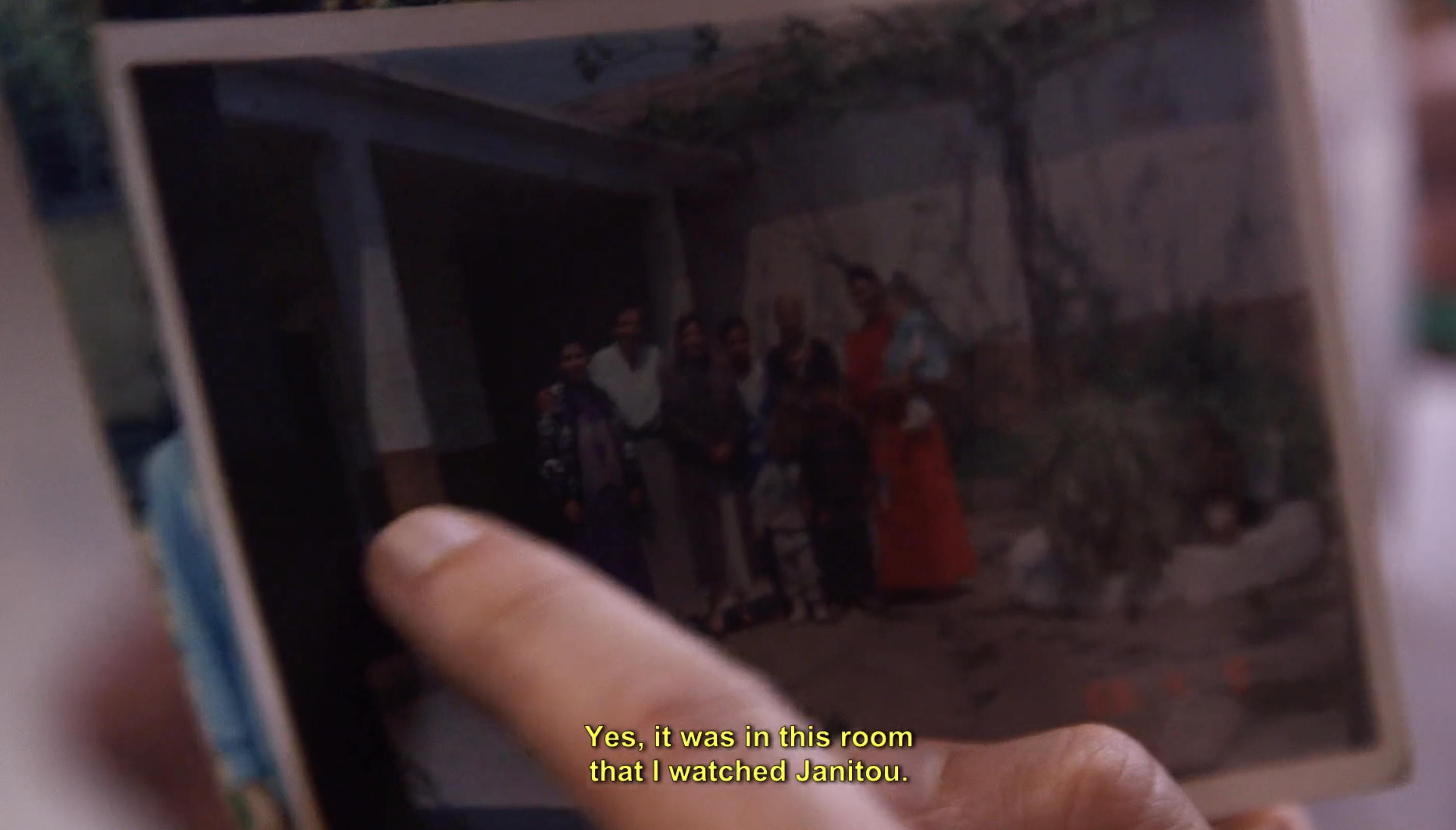
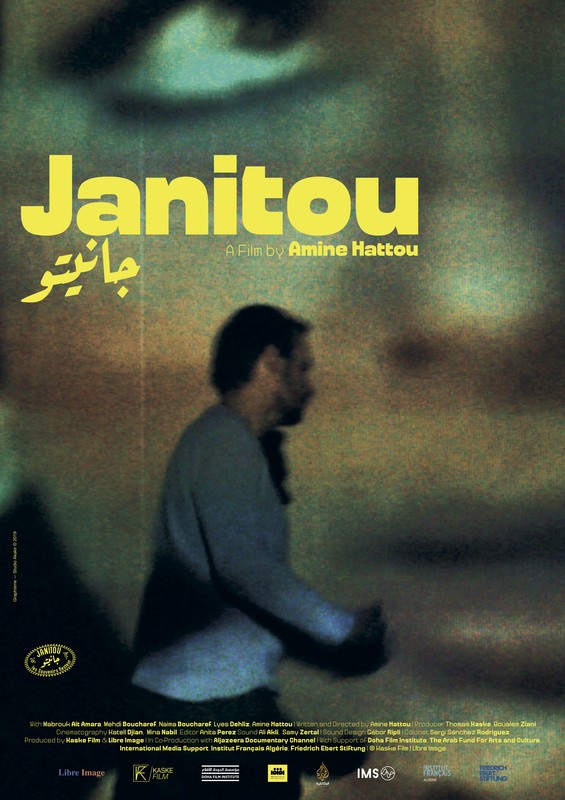
Algerian filmmaker Amine Hattou, driven by his own childhood nostalgia for Bollywood in Algeria and supported by the Arab Fund for Arts and Culture, produced his full-length documentary Janitou in 2020.
The film features Mabrouk, who has worked at the Cinémathèque d’Alger all his life, with Hattou looking through old posters with him, reminiscing on Algeria’s Bollywood era. He held one for Janitou up to the camera, customised by hand after arriving from India with Arabic script reading “تعال يا ولدي” (Come here, my son).
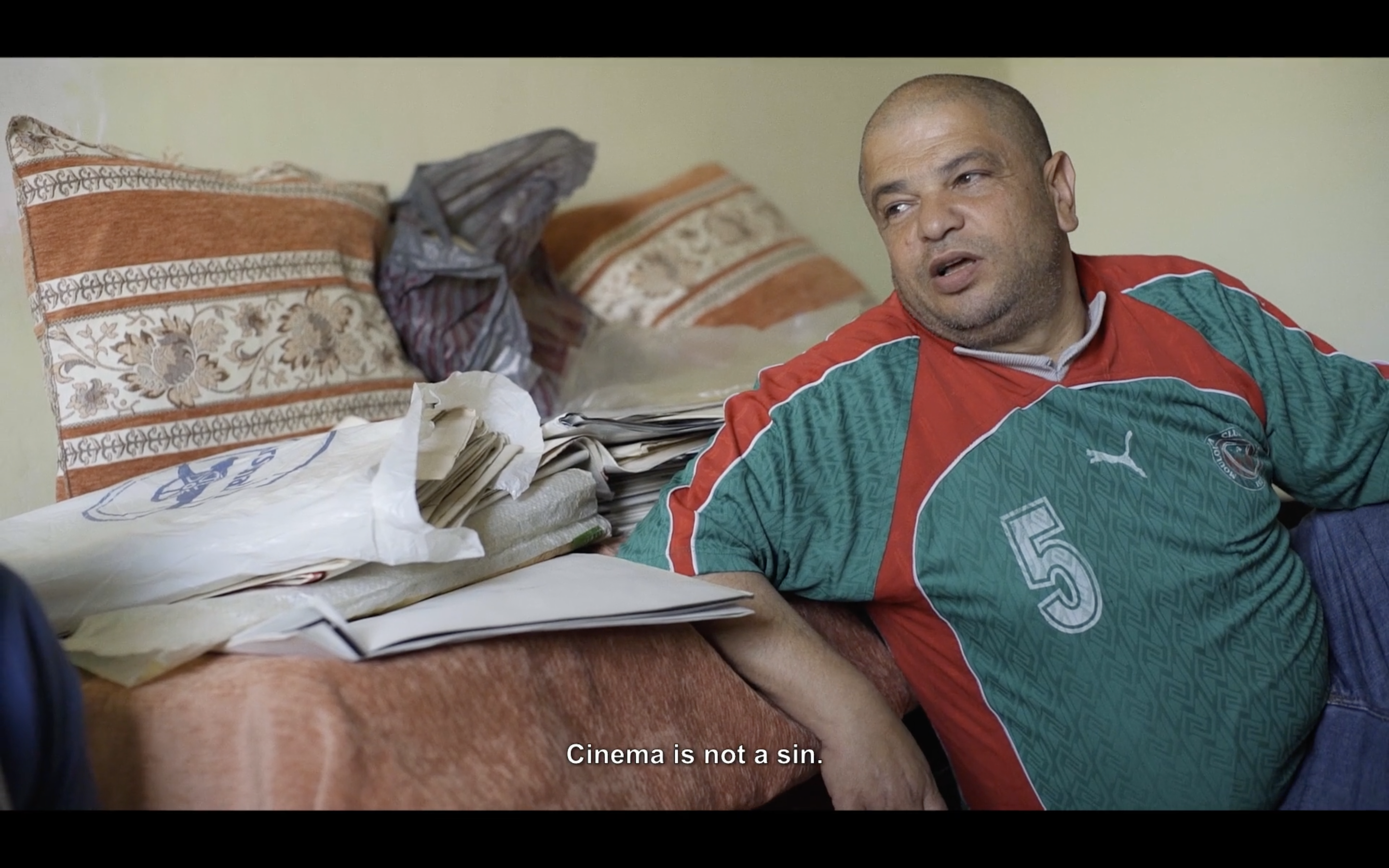
Mabrouk described how, during the decline of cinema in the ’80s, the Cinématèque managed to stay open despite threats from the extremists: “Islamists were saying they would turn the cinema into public showers. And some said they’d hang us in there. They’d walk past calling us enemies of Allah.” One Friday, a bomb went off, but malfunctioned and caused no damage.
“Cinema is not a sin. It cultures people. People learn how to dress. They learn a lot from it.” Mabrouk played at a James Dean impression: “With his collar up, and his attitude! That was masculinity.” He and so many others learned how to be a man from the big screen.
Mabrouk watched Janitou for the first time at Cinema Olympia, aged 12. “There were crowds and screaming. Huge success. The cinemas were full night and day. Three screenings a day at 1PM, 4PM and 8PM. Every one full… Myself and millions of Algerians who know this song more than the national anthem.”
Hattou himself spends some time reminiscing about the film with his mother, and how they used to watch with the whole family when he was a boy, which defied the social norms of the time.
“We never watched films all together, boys and girls. It was complicated, but the Bollywood movies we did. Janitou, I watched with my cousins.”
“Yes, because it’s innocent. It wasn’t for the adults only.”
“We could watch it with the girls. It was an inevitable rendez-vous.”
Hattou goes on to appear as a guest on Radio Show Chadi Madi for a special episode on Janitou, and though we can only hear them, the callers are evidently frenzied, overwhelmed by their own memories of the film. A doctor calls in to tell listeners about her nephew, who had polio in the ‘70s and couldn’t walk. Towards the end of the film, young Rahul, also sick with polio, throws away his crutches to walk, and mimicking him, her nephew also – miraculously – began to walk again. “He is now 50 years old, and still walking.”
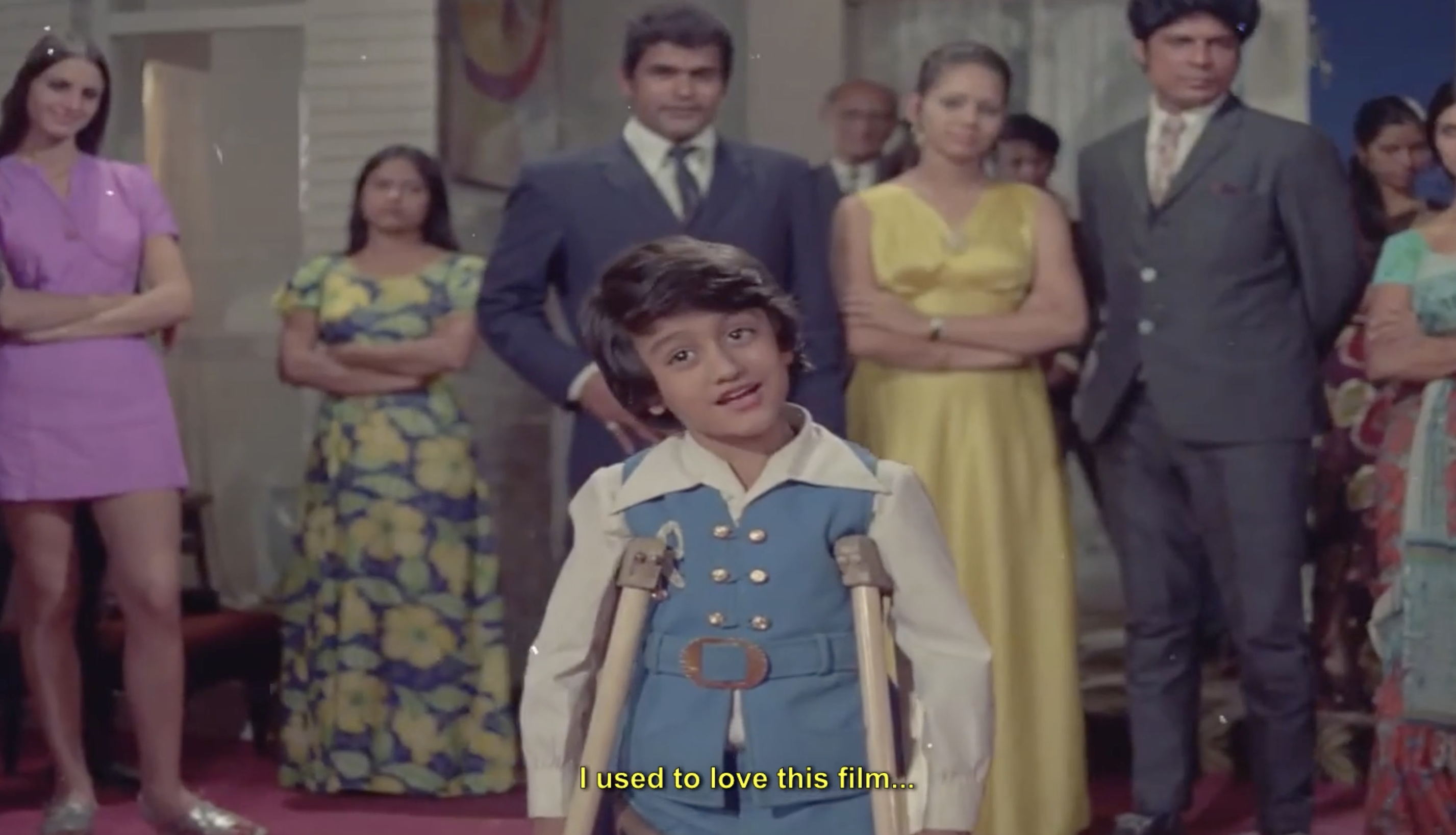
After her, a young woman from Blida calls in with a desperate appeal. “When I was very young, I loved a boy called Kheireddine, who used to walk me to school and sing me songs from Janitou. Unfortunately our love was not meant to be, but when I hear ‘Janitou’, I cry and I remember that boy. And I want to know if he’s alive or still in Blida. You tattooed my name on your arm, so you know who I am. I tattooed yours on my heart.”
Janitou itself is a love story, and it plays a role in Algerian love stories, but most importantly, Janitou’s popularity points to a love for life that blossomed in Algerians after independence, in spite of battle fatigue.
“[Janitou] reminds me of the first feelings, the first gaze, the first love. The possibility of an Algeria where women and men can exist without the cause of the nation, without the glorious revolution. The possibility of an Algeria where the hero can be a lover and not a freedom fighter.”
Lyes, sitting on the hill, wants to watch lovers, not heroes. Lyes misses escapism, and contentment, and romance. The Battle of Algiers is over, but Algeria only seems trapped in a cycle of reenacting struggle and victory, lest we forget what was lost and what was earned, and Lyes would burn Algiers to the ground to set it free and allow Algeria to taste blissful mundanity, romance and contentment once again.
The Bollywood pageant of the ‘70s invited Algerians to be part of the dance, to sing away the years of revolution and practice joy without guilt, happiness without struggle, movement without uniform. The subsequent withdrawal of Bollywood, then, calcified a version of Algeria that was truly free and not just independent. Dreams of what Algeria could have been and never was are abstract, undefined and undiagnosed, but they can feel almost tangible in some sites, objects, words, and one such site is Janitou.
THIS FEATURE WAS PUBLISHED IN THE 11TH EDITION OF ICON MENA PRINT MAGAZINE. ORDER YOUR COPY HERE.


