
News


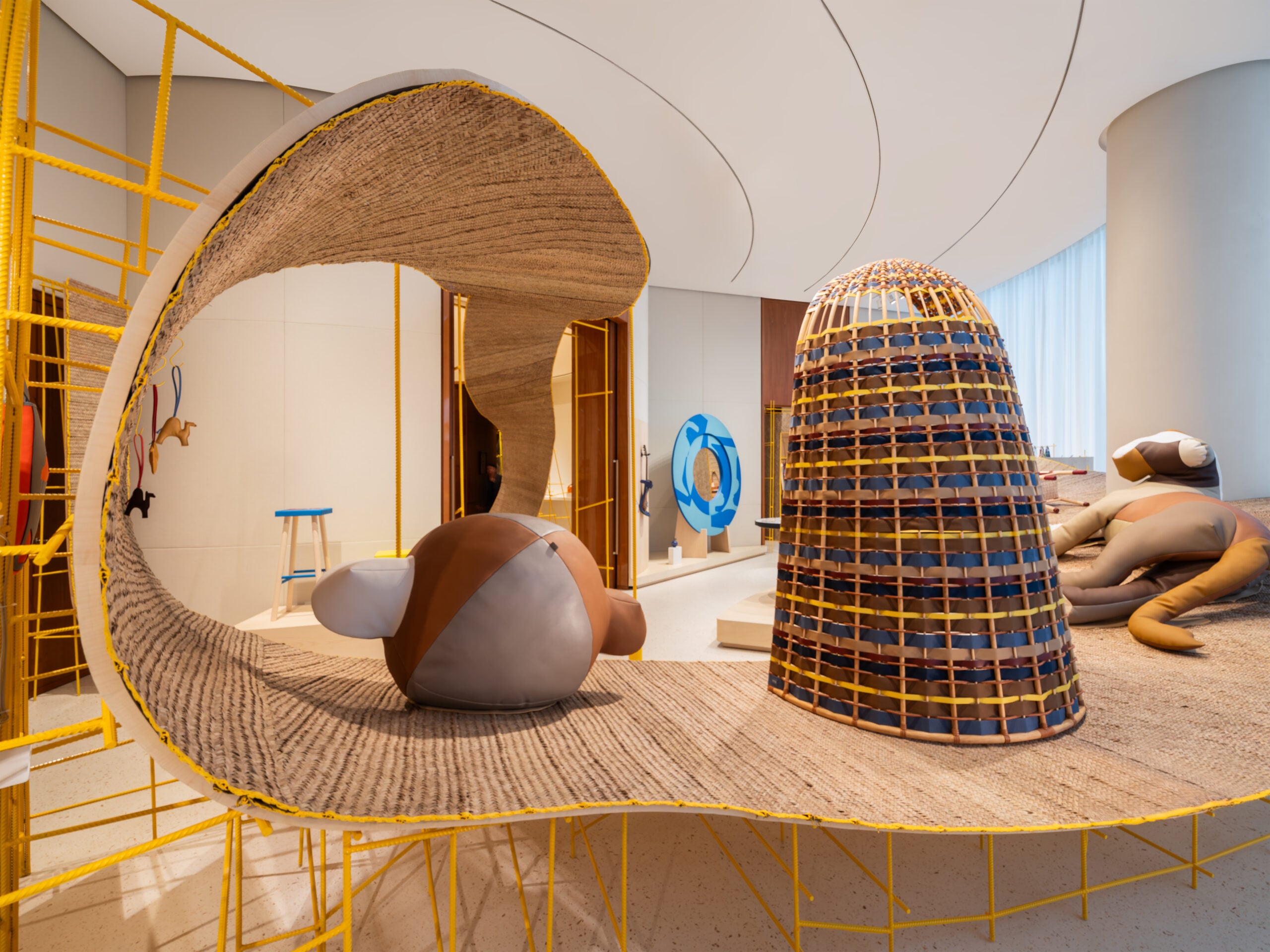
Most luxury houses guard their offcuts like trade secrets, or quietly bin them. Hermès gave its own a workshop, a creative director and, this October, an entire floor of its Dubai Mall store. For two weeks, petit h, the house’s laboratory of re-creation, returned to the city with an installation designed by its creative director Godefroy de Virieu, built around a single, sprawling gesture: a carpet woven from palm leaves.
The carpet, held up by metal supports, sets the tone and rolls out high and low across the space, climbing walls, dipping into platforms and folding over itself along one continuous path. Palm-frond weaving is among the oldest crafts in the region, and setting it against slim industrial supports gives the old technique a strange new posture with each petit h stopover featuring a local set designer to draw on the traditions of the host country.
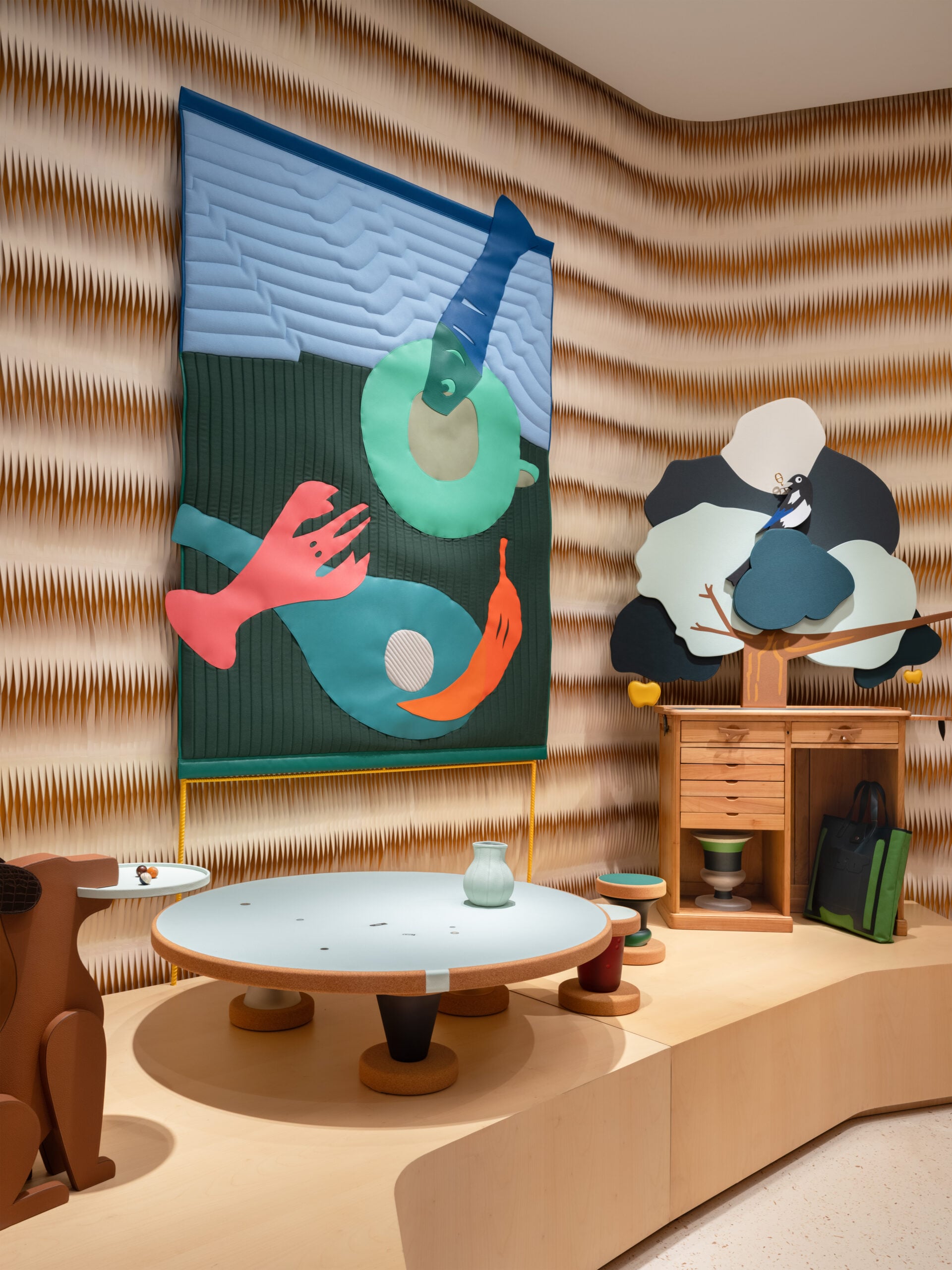
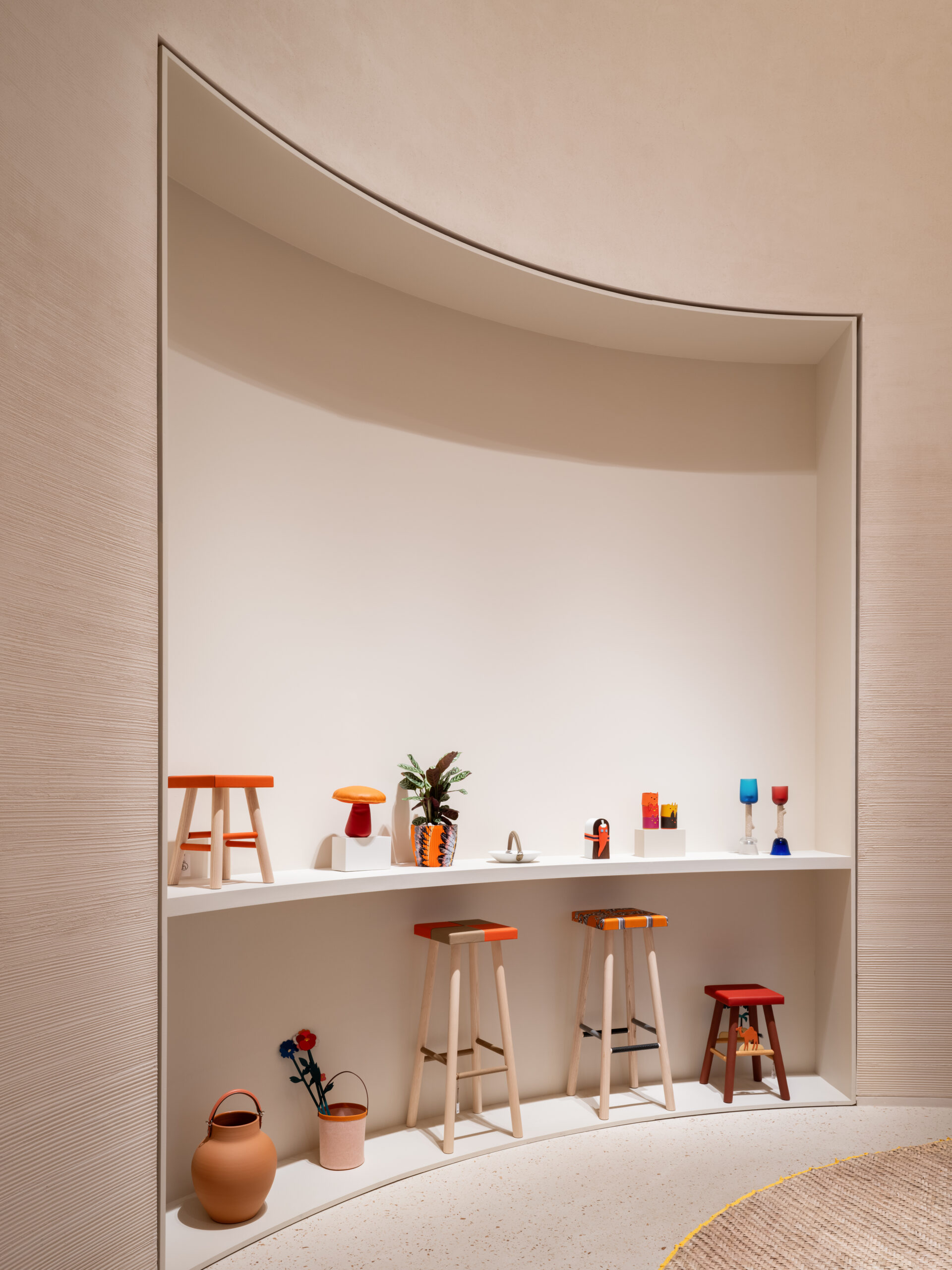
The designs on display include the Cheval sur Roues, a horse-shaped bookshelf by Liz Stirling, rolling on wheels in ash wood and bullcalf and wearing the house’s Rocabar blanket like a fresh saddle cloth. Stirling was also behind the Nuage pillow, eye mask and slippers, cut from silk carrés and pitched somewhere between a nap and a long-haul flight. Elsewhere, a trestle stool topped in cocciopesto, the Roman technique of crushed terracotta, invited visitors to sit and inspect what was pressed into its surface. Marion Vidal’s table mirror stacked cork, crystal and bullcalf into something closer to a totem, while Nicolas Daul and Julien Demanche set terrazzo lids on frosted crystal containers. The patchwork jar, terracotta wrapped in leather and braided silk, was the clearest summary of the workshop’s whole philosophy in one vessel.
That philosophy goes back to 2010, when Pascale Mussard, a sixth-generation member of the Hermès family, had the idea for a métier that would work with whatever the other fifteen left behind. Everything starts at the materials store in Pantin, on the edge of Paris, where dormant silk, leather, porcelain, crystal and hardware from across the house sit on tall shelves in a riot of colour. Artists and artisans pick through it, test unlikely pairings and let the material lead. Petit h calls this creation in reverse: the materials come first, and the idea follows from whatever the hands find. Its motto puts it plainly, “nothing is lost, everything is transformed and an object is created”.
The results are often limited editions or one-offs, because the supply is unpredictable by nature. Shards from Hermès dinner services have become a porcelain mosaic coffee table. Handles borrowed from a Kelly bag have ended up on a carafe sealed with a crystal stopper. One of France’s best luthiers once built a fully playable electric guitar from a saddle tree originally destined for a saddle seat. On a previous visit to Dubai, the workshop produced a falcon stand and an incense holder, a reminder that each stopover leaves something behind in the local vocabulary.
De Virieu, who trained in industrial design at Ensci in Paris and took over from Mussard in 2018, approaches all of this with a kind of serious play. He is an inveterate tinkerer, drawn to ideas that are practical, durable and clever in equal measure. “If we have a style,” he has said, “it is a style of astonishment and the unexpected.”
Dubai got plenty of both. In a city that rarely does anything by halves, there was something quietly radical about a luxury floor given over to leftovers, and something very Hermès about making them look this inevitable.


