
News

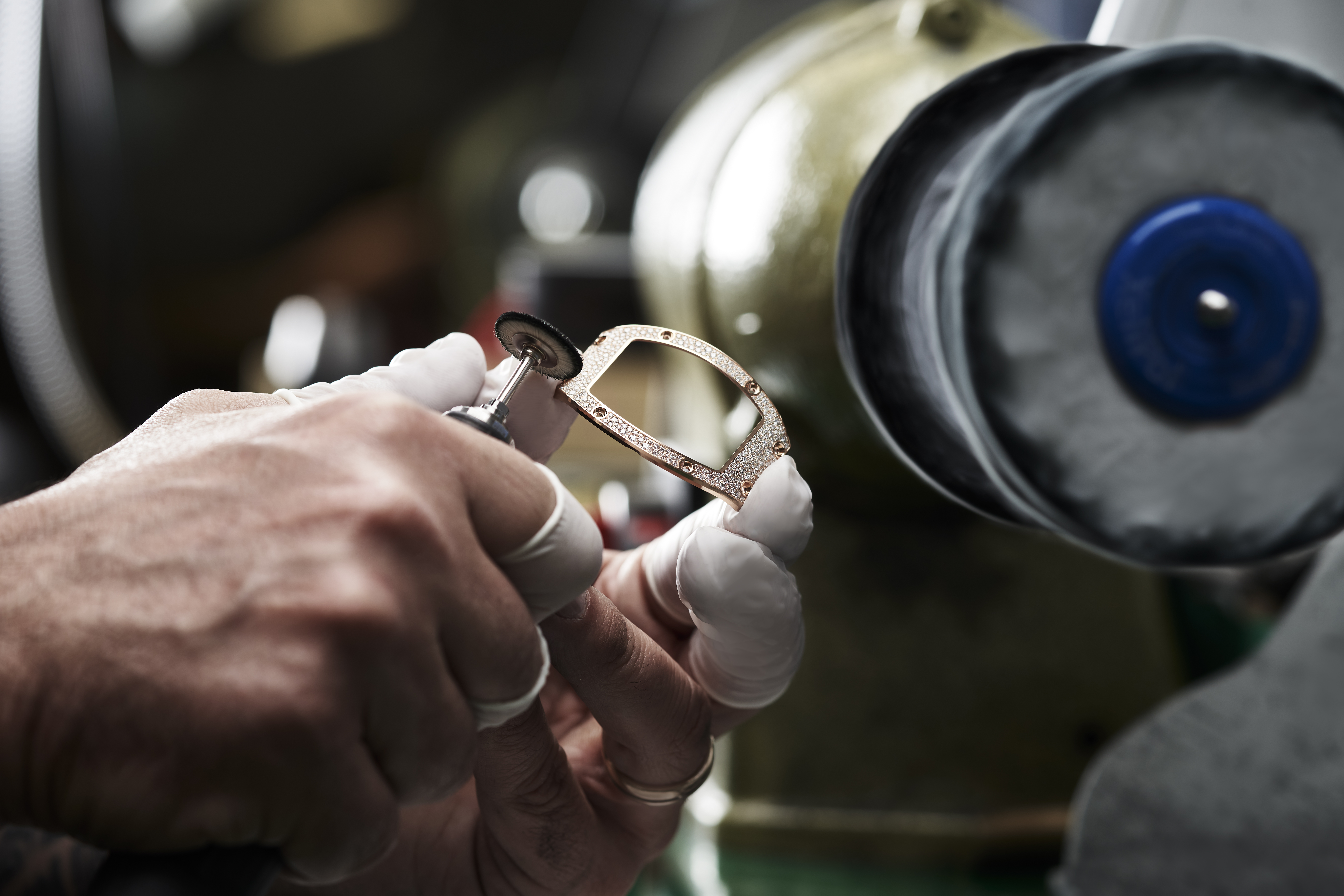
The desire to adorn objects with precious stones stretches back thousands of years, from the jewellery of ancient Egypt and Mesopotamia to the regal crowns and ceremonial objects now displayed in museums. Gemstones have long signified wealth, power, spirituality, and beauty, and it’s important to understand that the techniques used to secure them have evolved alongside the materials and tools available. Among the earliest and most enduring is the bezel setting, where a metal rim surrounds the edge of a stone to hold it in place. As cutting techniques and metallurgy advanced, prong (or claw) setting allowed more of a stone’s surface to show, while pavé setting created continuous fields of gemstones with minimal visible metal. The 20th century brought further innovation, most famously the Mystery Settings and later advances in micro-setting let craftsmen work with increasingly small stones across increasingly intricate surfaces.
But for most of this history, gem-setting relied on one fundamental advantage: metal is forgiving. A skilled setter can forge, cut, engrave, and manipulate precious metals around a stone, raising tiny beads or claws directly from the surface. The craft has always been a negotiation between the stone and the material around it, but that negotiation changes entirely when the material can’t be bent, carved, or manipulated the same way. That’s the territory Richard Mille has moved into.
At a maison built around testing the limits of materials and engineering, gem-setting has become an extension of the same philosophy. Since the release of the RM 007 in 2005, Richard Mille has pushed into bead-setting, invisible techniques, and the integration of stones directly into a watch’s architecture. The goal is not to just to add diamonds onto an existing object, but to figure out how far the craft can go when the surface beneath those stones is no longer gold or a conventional alloy, but something engineered for an entirely different purpose.
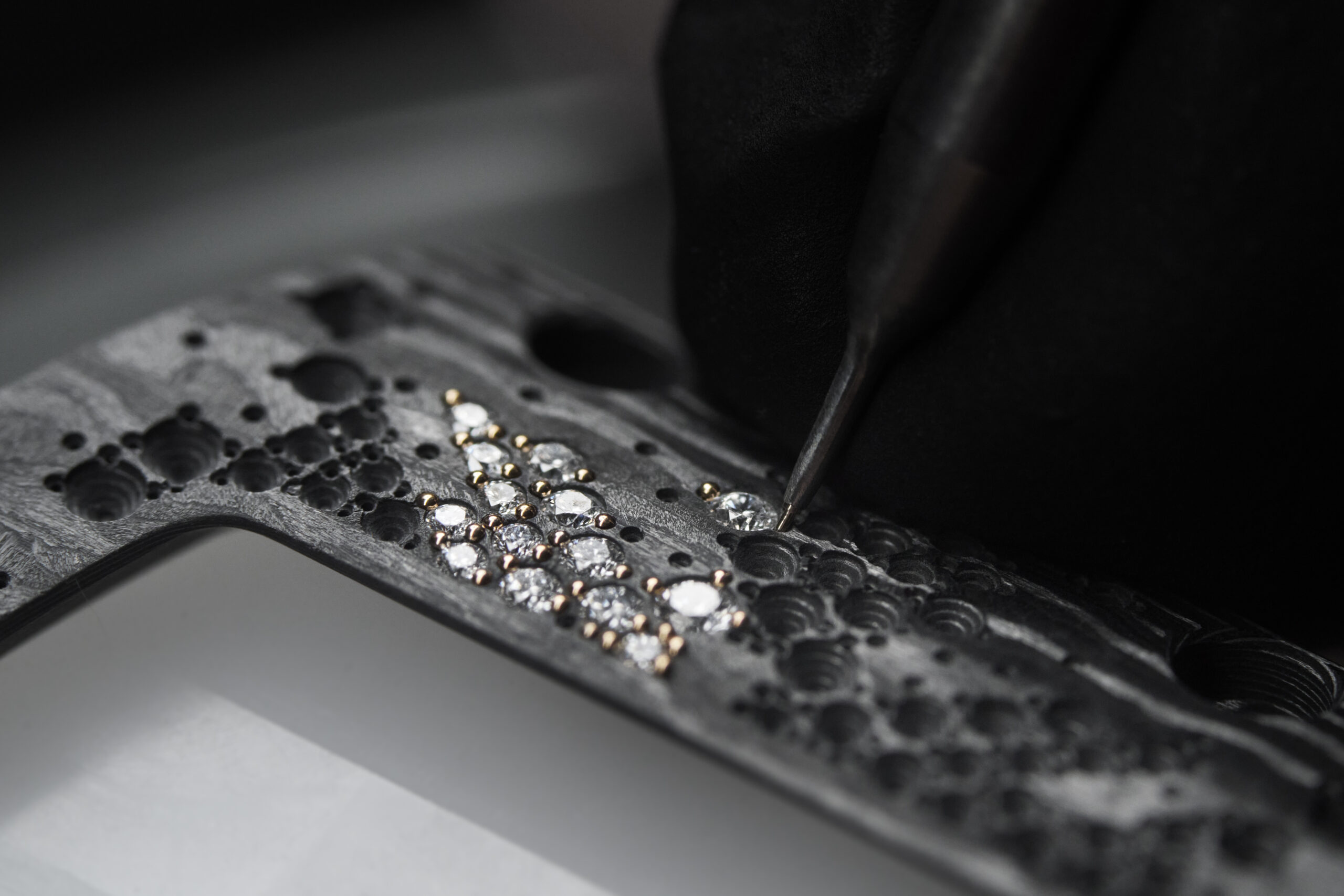
Even the geometry of a Richard Mille case is a complication. The brand’s tonneau shapes are neither flat nor conventionally proportioned, and their arched surfaces and structural elements mean every cavity has to be planned around both the individual stone and the complex form of the case. Since 2016, that challenge has grown further still, as Richard Mille has extended its gem-setting work to Carbon TPT®, advanced ceramics, and sapphire crystal. These materials are prized for the same technical properties that make them exceptionally hard to work with. A traditional graver can’t raise a claw from carbon composite. Sapphire can’t be reshaped like gold. Ceramic leaves almost no margin for error. This difficulty is the driving force behind innovation.
The setting process itself had to be rethought. For these technical materials, work begins with engineering rather than craft. Minute cavities are cut using CNC machinery or with lasers in the case of sapphire, to tolerances of around a single micron. Only once the cavity exists are tiny gold claws individually inserted to secure each gemstone.
This is a real departure from traditional gem-setting which would carve a setting directly from the material beneath the stone. Here, the surface first has to be engineered to receive a separate setting mechanism entirely, and the technical material, the gold claw, and the gemstone all have to work together without compromising the structural integrity of the watch.
Carbon TPT® illustrates the challenge well. Built from many layers of carbon fibre, it’s become one of Richard Mille’s signature materials; visually distinctive, remarkably light, and offering none of the malleability a gemsetter would normally rely on. Setting stones into it takes precision machining paired with a craftsman’s hand judgement at every step.
Sapphire presents another challenge. It’s among the hardest materials used in watchmaking, prized for its transparency but almost entirely unforgiving of error. Setting diamonds into a sapphire case means laser-cutting cavities to exacting accuracy before each gold element is placed by hand. This complex combination of digital precision and manual craftsmanship reads as an effortless arrangement of stones when displayed on the wrist.
These technical challenges have widened the creative range of the craft, but Ricahrd Mille continues to push its capabilities even when working with more conventional material. The RM HJ-01 brings bezel, bead, and snow-setting together across four unique pieces, and Richard Mille’s gem-set work used rubies, emeralds, and coloured sapphires alongside diamonds. The end result looks effortless, but the process is anything but. Snow setting is a good example of the tension involved. Using stones of varying sizes, it creates a pattern that looks irregular and spontaneous, even though every stone has to be deliberately placed to achieve that effect. These pieces bring together raw materials and refines them into what can only be described as art.

Richard Mille formalised its investment in this area by opening an in-house gem-setting workshop in 2019, a sign that expanding the craft further would take on new technologies and materials, not just inherited technique.
Gem-setting is an ancient craft, but never a static one. Each era has expanded what’s possible in how a stone is held and displayed, and Richard Mille’s contribution isn’t just adding more diamonds to a piece. It is about rethinking which surfaces stones can be set into. Look past the brilliance of the stones on a gem-set Richard Mille, and what’s really on display is the engineering and innovation that made the setting possible in the first place.
THIS FEATURE WAS PUBLISHED IN THE 11TH EDITION OF ICON MENA PRINT MAGAZINE. ORDER YOUR COPY HERE.


