
News

Words_ Sami Abd Elbaki
Moroccan pop has never quite had someone like El Mehdi. The 32-year-old was born in Rabat, raised in Montreal, and now lives between there, Paris and home, making music that sounds like all three at once, sung in English, French and Darija. His debut single “EL KASS HLOU” has millions of views and streams and pushed into Anghami’s Top 50 across MENA, and this year he poured everything into SALAM, a debut EP and accompanying El Film short film that he wrote, directed, choreographed and styled himself. Now he has stepped in front of someone else’s camera too, taking the lead in Heir to Secrets, the first Moroccan feature to take on trans identity. El Mehdi is well aware the change he’s pushing for takes time, but he’s determined to do his part “moving us closer to that future.”
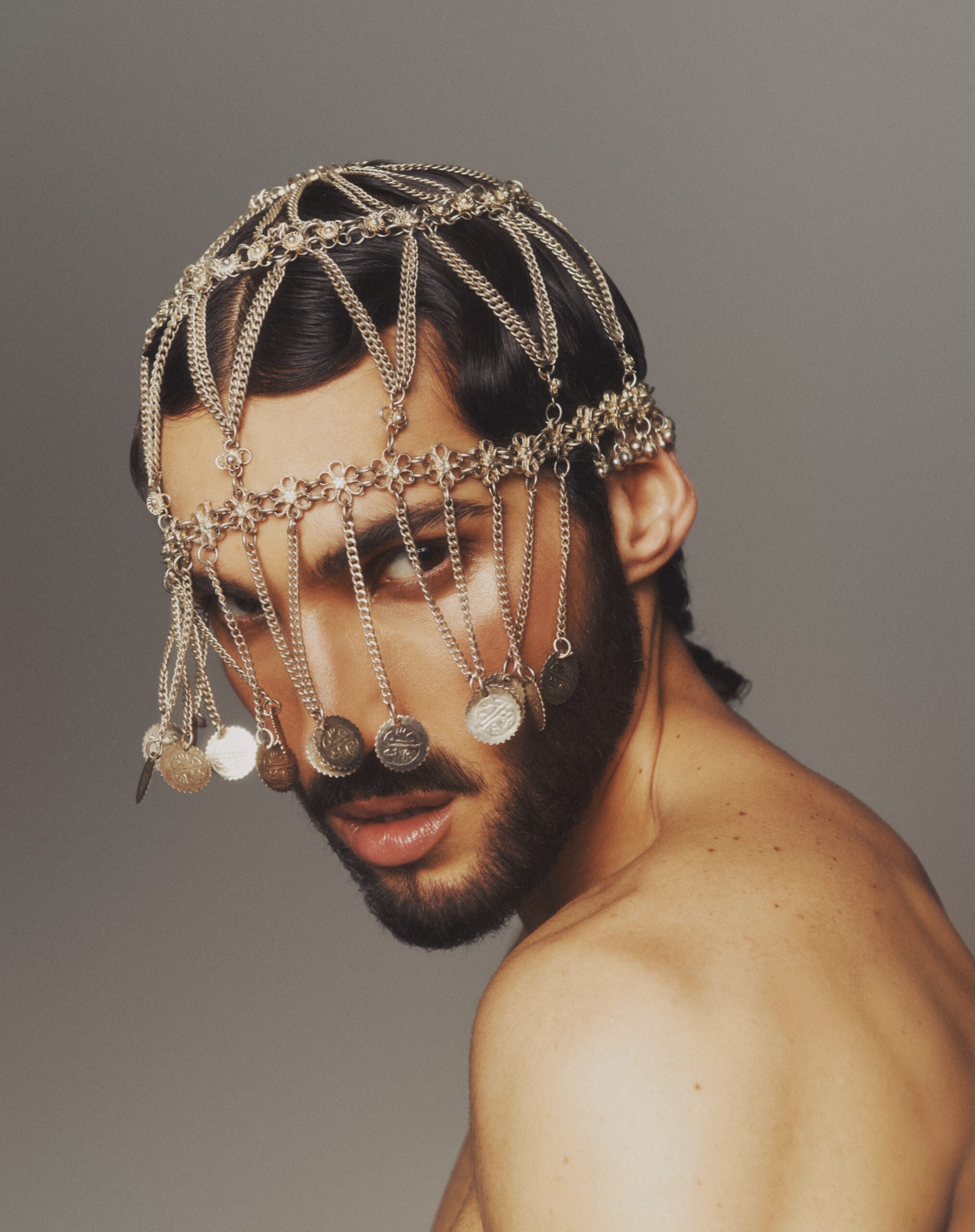
1.You’re El Mehdi when you sing; salamelmehdi when you post; Mehdi Bahmad, your real name, when you act. You also choreograph, direct, and design costumes. Beyond these many different roles, have we seen all sides of you yet?
I’d say all of those sides are really just different expressions of who El Mehdi is.
I’ve never approached different art forms as separate disciplines. To me, they’re just different vessels for the same instinct. They belong to the same vision, the same core message. A look can inspire a title, which can become a song, and sometimes I can already see the music video while I’m writing it. They’re all extensions of the same language and feed into one another with no fixed order. It can flow in any direction. I tend to overthink a lot of things in life, but creation is one of the few places where I don’t. I try to follow whatever feels right and see where it takes me.
One thing I’m learning more and more about myself is that my creative process is always evolving. So no, I don’t think you’ve seen every side of me just yet. I’m not even sure I’ve seen them all myself. I think we’ll discover them together along the way.
2. You’ve said you’re building on tradition, not erasing it, but you’ve also had people tell you that you’re “not Moroccan enough” to touch it. Where do you think that instinct, to gatekeep who’s “allowed” to reinterpret culture, actually comes from?
Oof, that’s a complex question (and a triggering one haha). The answer is layered. But I think a lot of that gatekeeping comes from an intolerance of difference, especially when the way we engage with tradition doesn’t conform to norms shaped by patriarchy and colonial history. There is also a certain complacency among those who benefit from those norms and have little reason to question them.
I also think oppression can reproduce itself. North Africans at home live under all kinds of social, political and religious pressures, while many in the diaspora also experience racism and Islamophobia. That can create frustration, defensiveness and a sense of powerlessness around identity. And sometimes, policing or shaming someone else for doing something you’ve been told not to do becomes a way of displacing that frustration or reclaiming some sense of control. People can end up reproducing some of the very systems that constrained them. But you can’t fight one form of oppression while practising another.
There is often a very specific and acceptable way you’re expected to engage with culture. The moment your expression challenges certain ideas around gender, modesty, religious norms, your body or simply how you choose to live, your belonging itself starts being questioned. It’s as if difference becomes betrayal. And that only contributes to keeping the space for cultural reinterpretation and representation incredibly narrow.
All that being said, Maghrebi cultures themselves have never been static. Amazigh identity is foundational to North Africa, but our societies have also been shaped over centuries by external influence, migration, conquest and exchange: African and Mediterranean connections, Arabisation and Islamisation, Andalusian heritage, Ottoman influence in parts of the region and later European colonialism. People can be very selective about which parts of that history they choose to remember and which influences they decide to frame as threatening or “foreign.”
Even something as everyday as Moroccan mint tea, which we now see as deeply traditional, is made with Chinese green tea that reached Morocco through international trade. We absorbed it, transformed it and made it ours. None of it has ever been fixed. It’s always been layered, changing and, most importantly, alive. So when people try to flatten all of that into one rigid, “pure” idea of what is authentically Moroccan, North African or even “Arab,” I think the real question becomes: what are they trying to erase in the name of authenticity?
But I’m hopeful. I do see minds changing. People are questioning things more and becoming more open. Change can be slow and uncomfortable, but it’s already happening.
3. You move between Canada, France, and Morocco. What does that distance give you?
Distance gave me perspective. It gave me the space to question my culture and, most importantly, engage with it without having to compromise parts of myself.
Being able to experience Morocco from both the inside and the outside allowed me to see what I love about it, what I couldn’t live without, but also what I aspire to. If Morocco gave me roots, a deep sense of pride and shaped so much of my sonic and visual language, it also left me with longing, contradiction and sometimes shame. Canada, on the other hand, gave me the space to explore, freedom, openness, and access to a different kind of pride.
And I think the beauty lies in where those two forms of pride meet. They may come from different places, but they’re both connected to the same desire for belonging, community and feeling whole. Finding that connection helped me move beyond some of the shame. To me, pride is really about owning all the fragments of who you are. And through my work, I try to create the space I once longed for and bridge some of those contradictions, at least for myself.
Over time, that distance gave me something else too: safety. I don’t think I could have embraced who I am as fully or expressed myself this unapologetically without the protection and freedom that came with also being Canadian. I’m very conscious that this is a privilege, and I think that comes with a responsibility to use the freedom I have to speak more openly, especially when others may not have the same space or safety to do so.
4. You’ve spoken about receiving threats in your DMs, even hearing insults on your own sets. Plenty of artists in your position choose to base themselves elsewhere and keep a comfortable distance. Why have you chosen to stay close to it instead?
I just can’t let hate win. I refuse to walk away from a culture I belong to, and that is a fundamental part of who I am—not just as an artist, but as a person—because of someone else’s ignorance or intolerance. And I believe that where there is ignorance, there is room for understanding. I love my country deeply. I’ve moved around a lot from a young age, but Morocco is the place I’ll always call home.
I genuinely believe Morocco has everything to be a paradise on earth: the richness and diversity of our culture, the warmth of our people, our craftsmanship, our sense of humour and our landscapes, from the mountains to the desert, from the Mediterranean to the Atlantic. There is so much beauty there. I can’t accept the idea that hatred gets to claim all of that or decide who gets to belong to it. Call me patriotic, but as a Moroccan, I also feel a responsibility and a right to contribute to my country.
But once again, I’m very aware that I can take this position partly because I have a privilege many others don’t. And that makes me feel even more strongly that I shouldn’t use that freedom to retreat. I’m deeply hopeful, and I believe things will change. I may not see the full extent of that change in my lifetime, but I believe future generations will. I just want to do my part in moving us closer to that future.
5. You’ve said English gave you distance growing up, while Darija feels more intimate and exposed. Did singing “Salam” in Darija feel like a different kind of vulnerability than the original version?
Darija does feel more intimate because it’s the language we speak at home. But with SALAM, it actually felt more defiant and empowering than vulnerable. I was singing it in the language of the very people I was speaking to. No distance, nowhere to hide. I knew my family would understand every word and so would the people I was really speaking to. That made everything feel much more immediate.
If writing in English once gave me a certain distance from what I was saying, singing SALAM in Darija felt like a conscious move toward being heard. It was also a way of reclaiming the language for myself. Of saying to those who tell me I’m not “Moroccan enough” that this language is mine too and I’ll use it to tell my story.
English, French and Darija all belong to different parts of my story, and each one brings out something different.
“Change rarely happens without resistance”
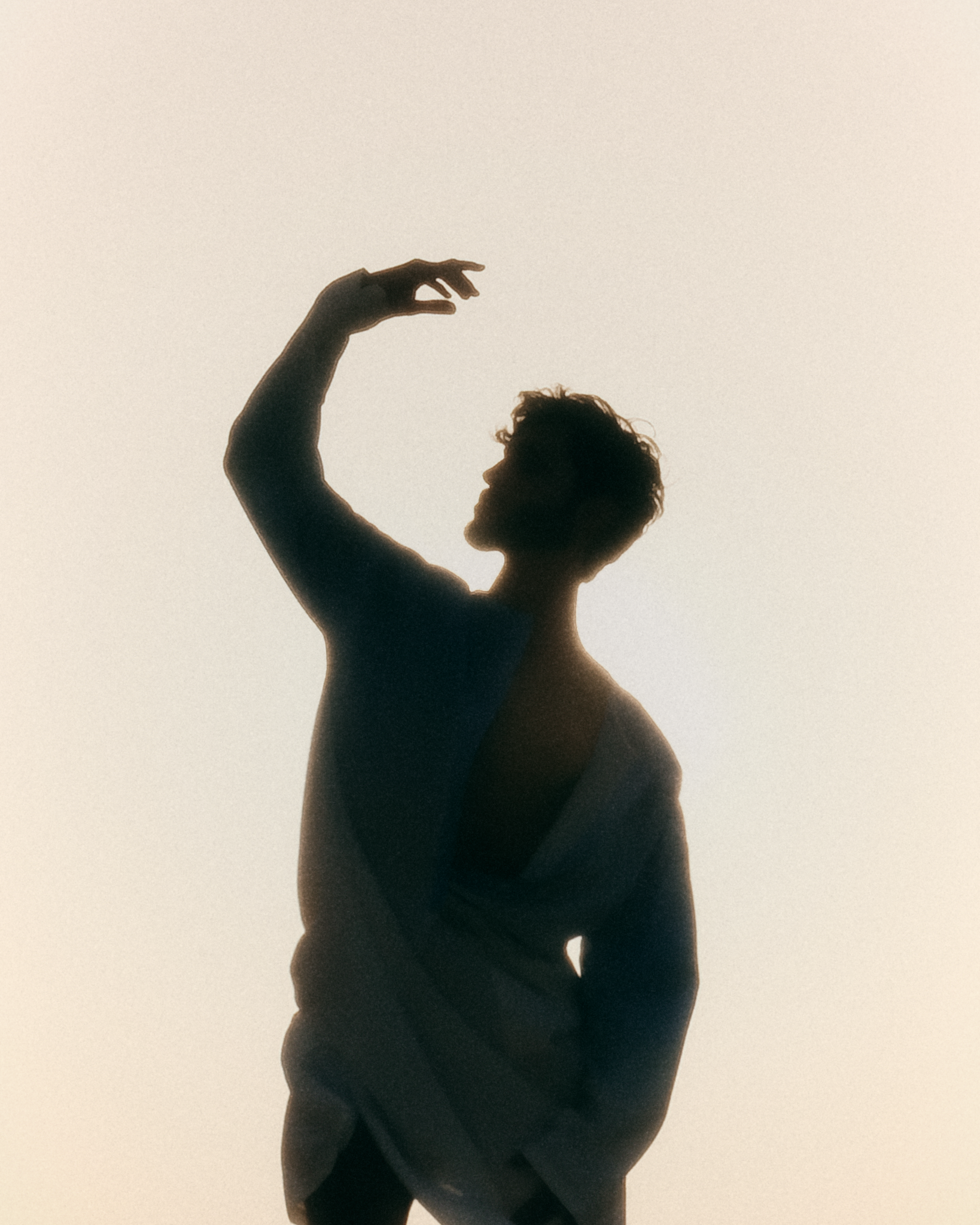
6. The acoustic version of Salam was recorded in Rabat, Morocco. El Film and other videos were shot there too. Rabat seems to be where a lot of your visual and musical universe takes shape: your videos, your sound. What does that place give you creatively that you don’t find elsewhere?
I was born in Rabat and partly grew up there. I can hardly put into words what I feel when I’m there. It honestly feels like the source. It is to me the most beautiful city in Morocco. It’s also where I first became aware that I was different, and where I experienced some of my earliest feelings of shame, fear and powerlessness. But instead of trying to leave those memories behind, I’ve chosen to build from them. There’s something so natural, but also incredibly powerful, about creating there because it feels like reclaiming the place on my own terms. It’s transformative. Making music, images and films there allowed me to give those places and memories a whole new meaning. I’m no longer just the child who experienced them; I get to decide what they can become now. Creatively, that gives me a sense of agency I don’t think I find anywhere else.
7. You play Azzeddine/Aziza in Heir to Secrets, perhaps the first Moroccan film to take on trans identity, and it’s beautiful to see a queer character played by a queer man. How did this role come about? What was it about the script, or the character, that made you say yes?
The producers saw me perform at Pride Montreal and approached me about the role. At first, I was very hesitant and honestly afraid. It was a Moroccan-Canadian co-production, my dialogue was in Darija, and that really tapped into my fear of being seen by the people whose reactions I was most afraid of. But that fear quickly became part of the reason I said yes. Fear is often exactly what keeps us from taking up space and telling certain stories, and I felt that this was one of those stories that needed to exist.
Once I knew I wanted to do it, I sent in a self-tape and later met with the director, Mohamed Nadif, in Rabat, who has since become a friend. It also happened while I was creating SALAM, which was already a very personal process of letting go of hiding and learning to embrace my culture and identity without feeling that I had to compromise either one. So the role felt very connected to what I was already going through at the time, both personally and artistically. The film and SALAM became somewhat intertwined. They were both part of the same artistic cycle of choosing to be more visible and helping create the kind of representation we had rarely seen growing up.
It also gave me a chance to deepen my relationship with cinema, image and performance, and to expand the way I think about my work more broadly. I’m really proud to have been part of it, and I’m very open to doing more!
8. This is a real leap, stepping in front of someone else’s camera and into someone else’s script after years of being the one in control. What was that experience like for you?
Surprisingly, it was really fun and liberating. I thought I would struggle much more with giving up control, but I actually found myself able to let go and give myself more fully to the character.
I still spent a lot of time behind the monitor and asked to watch playbacks whenever I could, because that’s usually part of my process when I’m both behind and in front of the camera in my own work. But it wasn’t really about control, though; I just needed to understand the bigger picture and see how my performance existed within the frame. Once I could see that, it helped me refine things and be more precise about what I wanted to communicate.
I also had the chance to share the screen with an incredible cast. Working alongside Nisrin Erradi, Younes Bouab, Nadia Kounda and Mounia Zahzam made it much easier to let go, stay present and fully immerse myself in the character.
“This language is mine too and I’ll use it to tell my story”
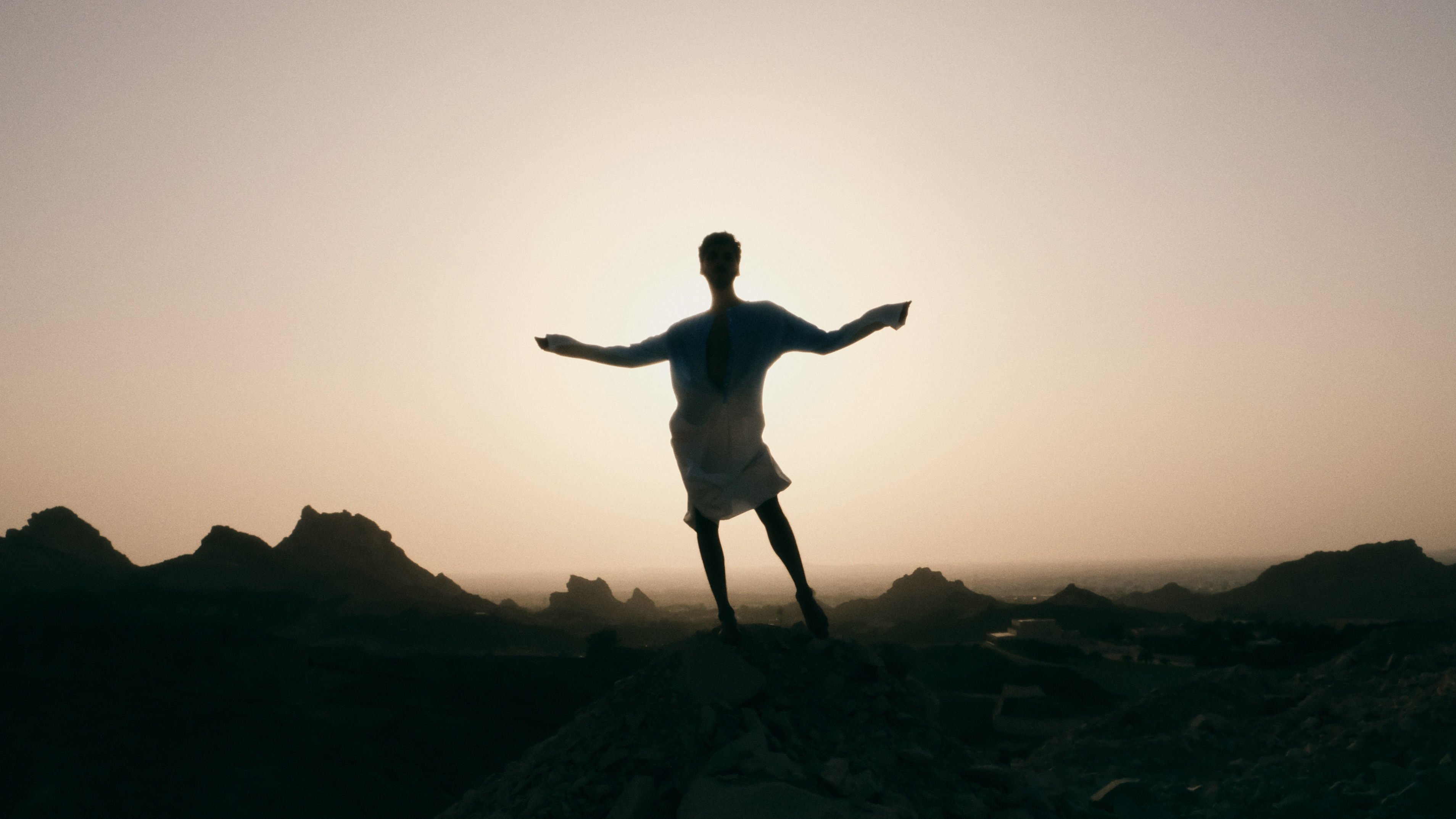
10. How was the film received in Canada and how do you think it’ll be received in Morocco?
The reception has been very warm so far. At both the Canadian premiere during Cinémania in Montreal and in Paris at the Institut du Monde Arabe, people in the audience shared incredibly moving stories about their own experiences of being queer and having to leave their homeland in order to live freely. Others came from completely different backgrounds and still connected with the film.
As for Morocco, it’s hard to predict. The film was supported by the CCM (Centre cinématographique marocain), so there is clearly some institutional openness and a willingness to make space for diverse Moroccan stories. But at the same time, that openness can feel very fragile and unpredictable. And openness doesn’t necessarily equal safety.
There can be something deeply contradictory about our society. I’ll always remember attending the premiere of The Blue Caftan by Maryam Touzani in Rabat, such a delicate and tender Moroccan queer story. The theatre was packed, and the film received a standing ovation. It was honestly the first time I had experienced public openness toward a queer story in Morocco, and it stayed with me. It meant a lot.
Moments like that remind me that the reality is much more complex than simply saying Morocco, or even the broader MENA region, is either open or closed to these stories. There is an audience, of course, and there is room for change. But change rarely happens without resistance.
11. What did the character teach you? Things you hadn’t had to sit with before?
Despite being heartbroken, Aziza had a choice to make, and she chose herself. She chose her truth, even when it meant disappointing people she loved. That made me realise how much I’ve learned to soften, adapt and edit my own identity in order not to disturb, disappoint or make anyone uncomfortable. I became very good at making myself easier to accept. Her courage reminded me that loving people does not have to mean sacrificing yourself in exchange for their love. That’s not love. That’s not peace. In that sense, she inspired me to be braver, to take up more space and to embrace myself more unapologetically.
Beyond that, the character and the experience of making the film gave me a sense of hope and possibility I hadn’t fully experienced before. Shooting in Morocco, with an entirely Moroccan crew, making a film about trans identity. If you had told me years ago that I would one day be part of something like this in my own country, I honestly wouldn’t have believed you.
We often speak about change as something that belongs to the future, but here I was watching an entire team come together to tell this story. It reminded me that the people capable of creating that change are already there. Suddenly, that future felt a little less distant.
That meant even more because I haven’t always felt that same sense of safety or legitimacy when creating in Morocco. I’ve been lucky to be surrounded by genuine, supportive people, but there have also been moments that made me very aware of how differently a queer independent artist can be received.
So maybe it wasn’t only the character itself, but the whole process that gave me back some of the hope I had started to doubt. It reminded me that these stories can exist in Morocco and that there are people ready to help tell them. At the same time, there’s still a difference between making space for our stories and creating the conditions for us to tell them safely ourselves.
THIS FEATURE WAS PUBLISHED IN THE 11TH EDITION OF ICON MENA PRINT MAGAZINE. ORDER YOUR COPY HERE.


