
News
Words_ Amelia Dhuga
A certain level of spectacle has become customary at Mister Lebanon. If anything, the 2025 edition appeared intent on taking this reputation a step further. Held at Casino du Liban and broadcast on MTV Lebanon, the evening begins on a red carpet lined with candles and gold baubles. Violinists provide the soundtrack as photographers coax black-tie guests into position. Particular attention is reserved for the evening’s better-known arrivals, among them former Miss Lebanon and Miss International winner Christina Sawaya, alongside local businessman Anthony Abou Antoun.
Inside, the spectacle intensifies. Eighteen contestants appear with a troupe of dancers, sweeping around the stage in loose linen kaftans to Camila Cabello’s “Don’t Go Yet.” Lebanese singer Mirva Kady then arrives by car to perform her single “ANA HIYÉ” for the first time. By now, the kaftans have disappeared. The contestants, topless and meticulously groomed, lift Kady above their heads as she sings. Similar musical interludes recur throughout the two-and-a-half-hour broadcast, including repeated appearances from Lebanese pop star Nawal Al Zoghbi.
Eventually, the entertainment gives way to the business of judging. The panel is an eclectic one, bringing together models and fashion designers alongside plastic surgeons and cosmetic dentists. Contestants parade before the judges in swimwear before appearing individually in pre-recorded clips intended to introduce the men. One plays chess. Another boxes towards the camera. A third tentatively works on a painting of a naked woman. Then come the scores.
There is remarkably little room at the lower end of the scale. Marks hover around nine, distinguished by increasingly precise decimal points, as though the difference between one handsome man and another might reasonably be calculated to the nearest twentieth. Ten contestants survive. From here, the criteria shift. They are asked what they would change about Lebanon, what they would say to people suffering in the country. Later, after footage of the past year spent training, shopping and grooming, six are left standing. The contestants answer one final question: What is it that still makes love real?
Then the titles are announced. Mister Photogenic. Mister Personality. The third, second and first runners-up. Finally, Saad El Din Hneineh is crowned Mister Lebanon 2025 under strobe lights, fireworks and falling gold confetti. For the next year, Hneineh will represent Lebanon at international competitions. It is also common for the crown to bring modelling work, sponsorships and public attention. His fate appears sealed: Hneineh is set for fame.
If you step back from the glitz and glamour of the competition, Mister Lebanon exists against a far less celebratory backdrop. Over the past several years, Lebanon has endured economic collapse, the Covid-19 pandemic, the devastating 2020 Beirut port explosion and repeated Israeli attacks. Yet inside Casino du Liban, eighteen men are still walking beneath the stage lights, dedicating heaps of time, effort and money for the chance to win. Why, then, has a show celebrating male beauty not only survived, but remained culturally relevant and viable in Lebanon for 30 years?
Mister Lebanon first emerged as Lebanon was rebuilding, five years after its 15-year Civil War had ended in 1990. Entertainment venues were reopening, and television was transforming. Lebanon’s 1994 Audiovisual Media Law ended Télé Liban’s monopoly over licensed broadcasting, allowing private stations to compete for viewers. Many of these channels were closely tied to particular sects or political patrons, effectively becoming their mouthpieces.
Among them was LBC, launched in 1985 by the Lebanese Forces, which quickly became the country’s most popular station. By the mid-1990s, it was raising serious capital – $30 million in 1995 – as it sought to establish itself as the dominant licensed broadcaster once the new law took effect. MTV, launched in 1991 by the Murr family, carved out its own space alongside it, eventually becoming just as central to Lebanon’s entertainment landscape. As television emerged from a period of widespread deregulation into a newly licensed but still politically apportioned system, glossy entertainment programming became closely entwined with the postwar push towards normality and reconstruction. LBC and MTV were particularly important to this, even as the wider broadcast landscape remained firmly under sectarian and political influence. Amid all this, Mister Lebanon offered something rather more straightforward: entertainment.
The first Mister Lebanon, Hadi Esta, was crowned on LBC in 1995, before the competition moved to MTV for its next few editions. In 1999, the pageant went on hiatus, with no formal crowning ceremony held for several years, although Mister Lebanon titleholders continued to be selected and sent to represent the country internationally. The competition eventually returned to television and settled into MTV as its long-term home, while Miss Lebanon remained LBC’s domain.
The concept itself was unusual in the region, however. Other countries in the Arab world have since held male pageants or sent representatives to international competitions. Still, few have sustained anything comparable: a nationally recognised male beauty competition broadcast on major television networks for three decades.
“Lebanese men are better looking than other Arabs,” Assaad Tarabay, Mister Lebanon 2003, says jokingly. The previous winner goes on to claim that he underwent relatively little training before appearing on stage back in 2003. Rabih Zein, Mister Lebanon 2014, tells a similar story. “I did nothing special to prepare,” he says.
Beauty may well come naturally, but celebrating it also appears particularly culturally acceptable in the country. “Lebanese culture has always had a strong relationship with beauty,” Jean Bou Doumit, one of the judges of Mister Lebanon 2025, tells me. “Not only in how we look, but in how we dress, live and create our surroundings.”
These standards extend to men, who mostly maintain a certain level of personal appearance. “In our culture, men are expected to take care of themselves and be presentable,” Zein says.
Mister Lebanon simply plays into these prospects, with its own judging criteria fitting neatly into local ideas of conventional masculinity: muscularity, physical strength and confidence remain central to its image.
What the competition has brought into question, however, is the arsenal of interventions permitted in pursuit of perfection. “Traditionally, men are told not to overdo things or go to extremes to change their appearance,” Zein explains.
Increasingly, this is changing. Beauty is now not simply something contestants possess, but something they actively produce through sculpting the body, altering the face and investing significant time and money in how they are perceived. The result is an interesting contradiction: practices once considered less conventionally masculine are increasingly accepted in pursuit of a highly masculine ideal.
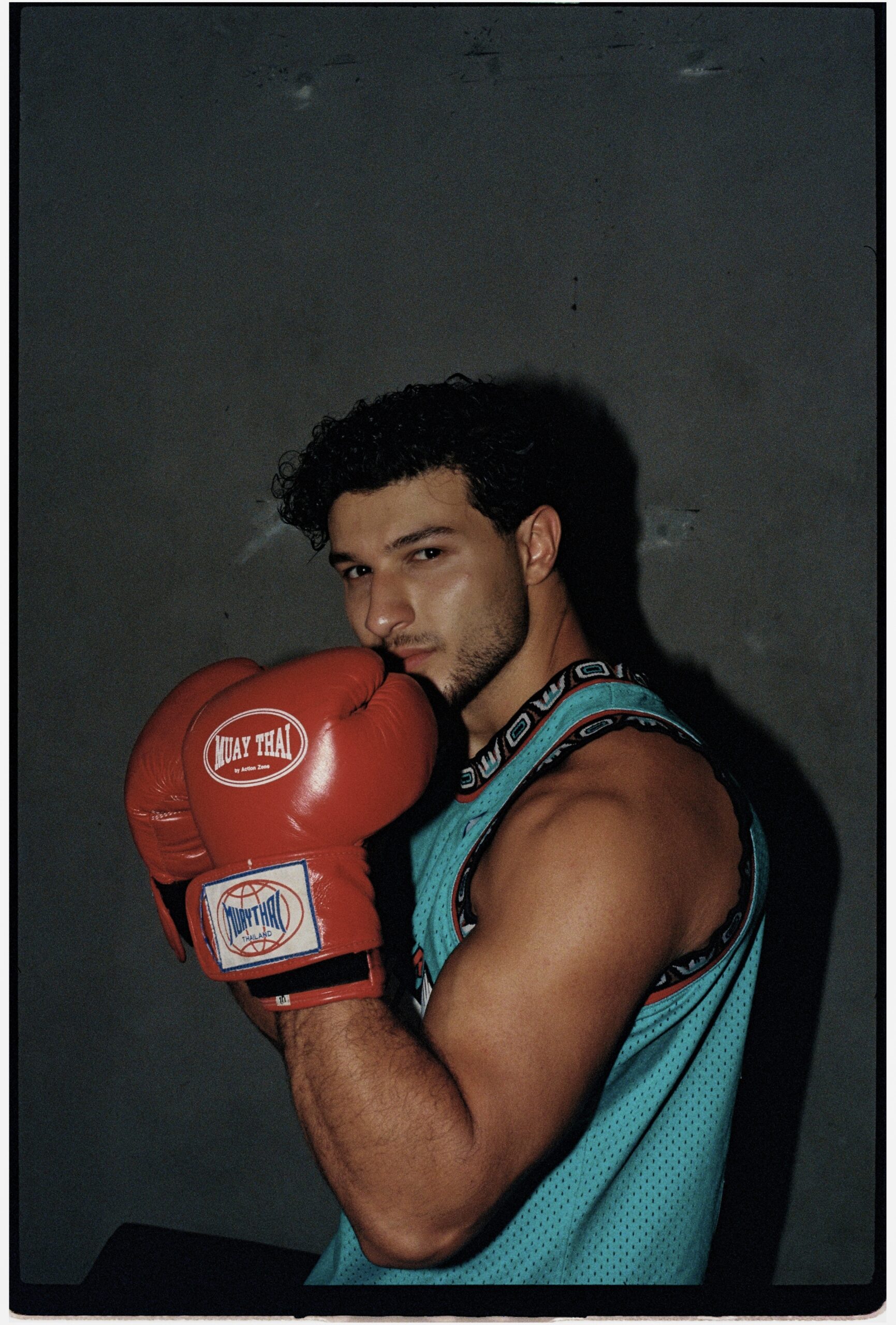
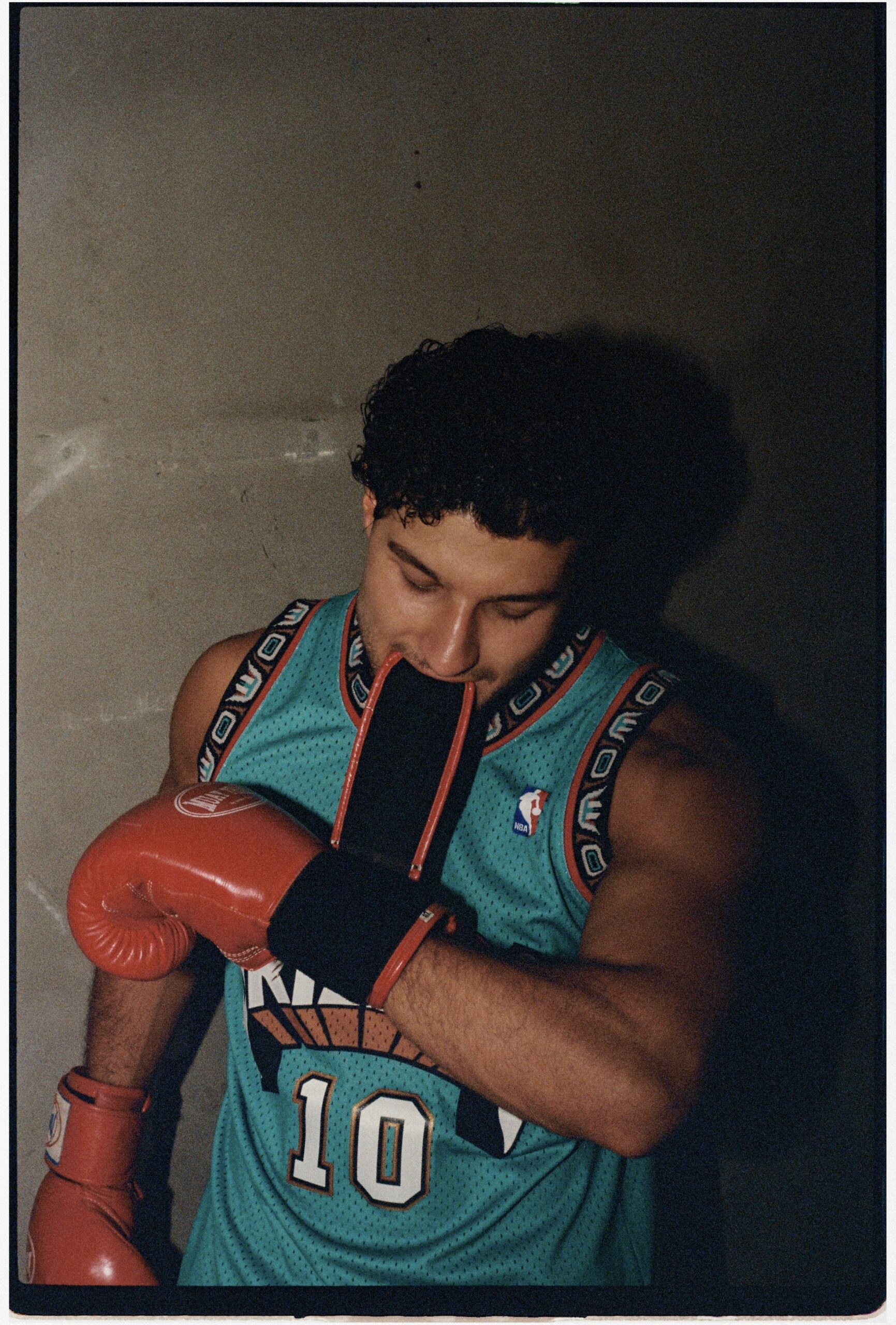
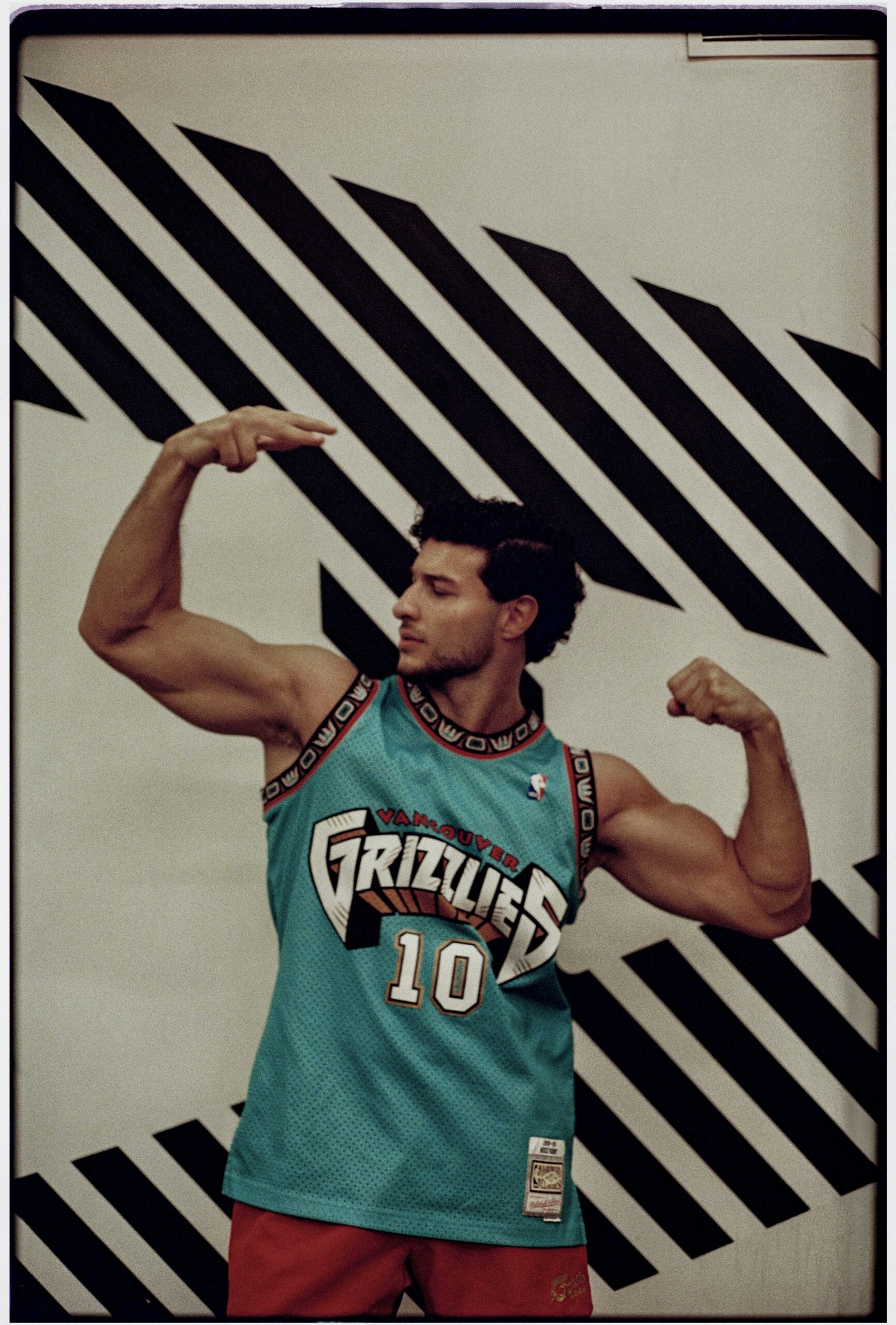
Jean Geagea, second runner-up at Mister Lebanon 2025, later first runner-up at Man of the Year 2025 in Bali
Jean Geagea, who placed second runner-up in Mister Lebanon 2025, describes a long period of preparation ahead of the competition. “I am 179 cm tall, which is on the shorter side in the pageant world,” he admits. Unable to change his height, Geagea concentrated on what he could control. “I knew I could improve my body,” he continues. “So I set myself a goal to be in the best shape of my life.”
Getting there was not straightforward. He describes periods of persistent hunger while trying to reduce his body fat without losing muscle. “I went to the gym, I ran, I boxed,” he says, rattling off the details of an intensive workout routine. “I had to maintain 8% body fat for a very long time – it was hard.”
In some cases, contestants even undergo cosmetic intervention. “When you’re being judged on your appearance and constantly comparing yourself with other contestants, you naturally become more aware of small details about your face and body,” Antonio Apkarian, a contestant in 2021 and 2025, explains. “Some contestants may choose to have cosmetic procedures such as a nose job, Botox, jawline or facial fillers.”
The boundaries of acceptable masculine vanity have clearly shifted. But Mister Lebanon may simply be the most explicit expression of a broader change. “Even politicians and businessmen in Lebanon are now expected to look a certain way,” Zein tells me. “It is an era of appearance.”
These mounting expectations also come at a cost, raising a less comfortable question: who can afford to meet them?
For Geagea, even getting to the gym could be difficult. He shared a car with his brother, leaving him reliant on friends for lifts. “They would pick me up and drop me off on the highway near the gym,” he says. “It was difficult, but I was determined.”
The financial pressure soon became more acute. As Israel’s attacks on Lebanon intensified in 2024, modelling and acting work dried up, and Geagea could no longer afford his gym membership. His solution was unusually resourceful. “Another gym was running a competition in which participants accumulated points over four consecutive days,” he tells me. “I managed to get the highest points so I could win two months of free membership.”
The irony is that just as contestants have had to become more exacting in the work they undertake on their appearance, Mister Lebanon itself has become increasingly insistent that looks alone are not enough.
This shift is partly a response to criticism. “We were more manly in our days,” Tarabay tells me. His comment echoes a sentiment found on social media, where critics point to plastic surgery and meticulously sculpted bodies as evidence that contestants now devote an overly feminine degree of attention to their appearance.
Others take issue with the limited attention paid to the men’s personalities. “I did not like the competition before I joined,” admits Bou Doumit, who became a judge in 2023 and also styles the contestants through his fashion label, JEAN 327. “No one cared about what the boys said, or how they thought. I agreed to join because I wanted to help change the perception of the show so that we see the contestants as human beings, not just products.”
The organisers say the competition has evolved in response to these comments. “Every pageant is bound to have negative feedback,” Carla Aad Chahine, the supervising producer of Mister Lebanon at MTV, affirms. “We now focus more on the contestants’ personality, intelligence and communication skills.”
Some of those changes are surprisingly tangible. While designing clothes for the contestants, Bou Doumit pushed against the uniformity that had characterised earlier editions. “Rather than putting them all in matching tuxedos, I got to know each of the men over the course of three months,” he explains. “Then I created clothes for them that would suit their personalities and individual style.”
This shift is also clear once the initial appearance-based judging is over and the remaining contestants must answer a series of questions. “I knew I had to be ready to talk to the jury,” Geagea explains. “So I focused on building my confidence and answering questions on the spot.” He studied previous competitions, then practised mock interviews with friends until speaking under pressure became less intimidating.
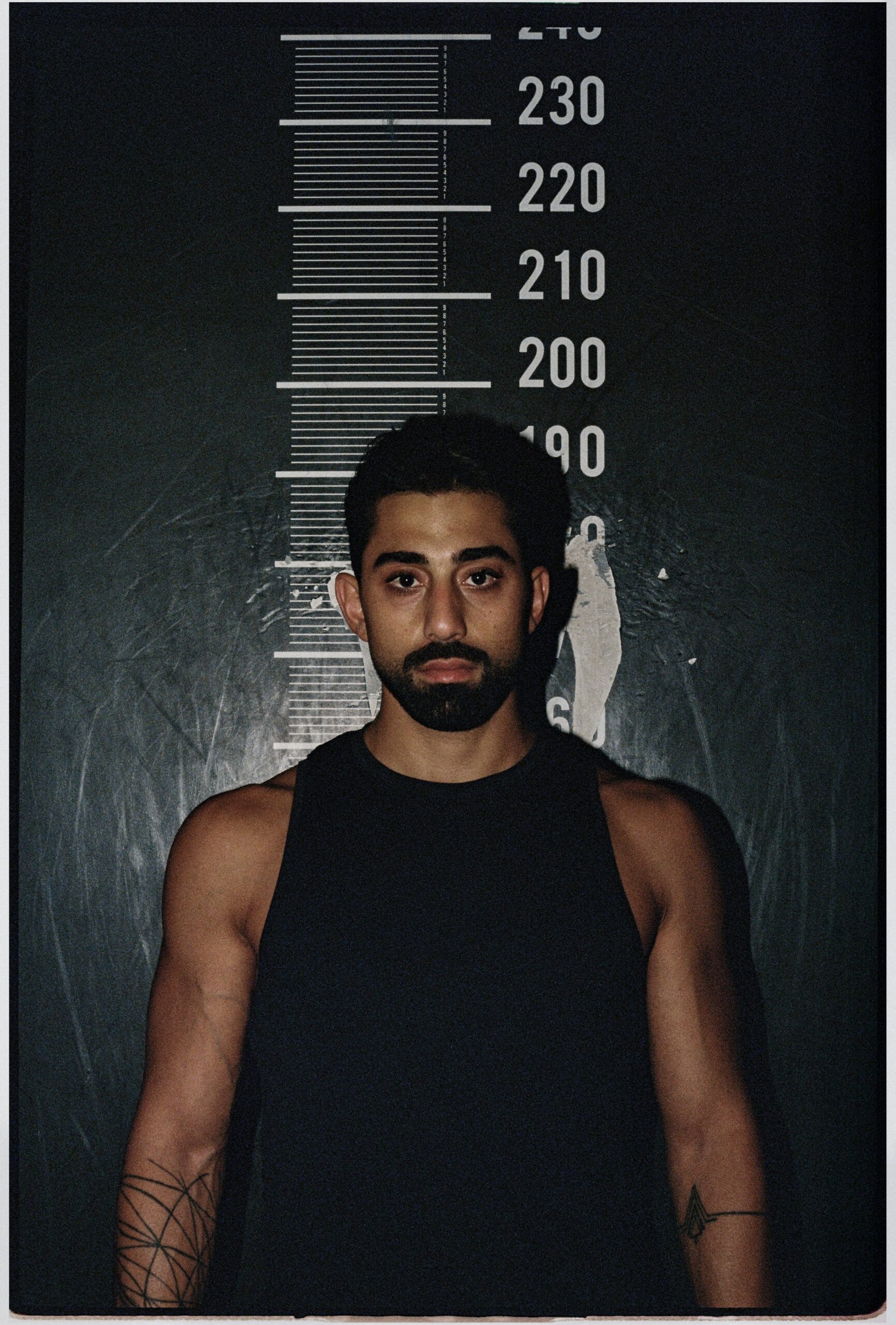
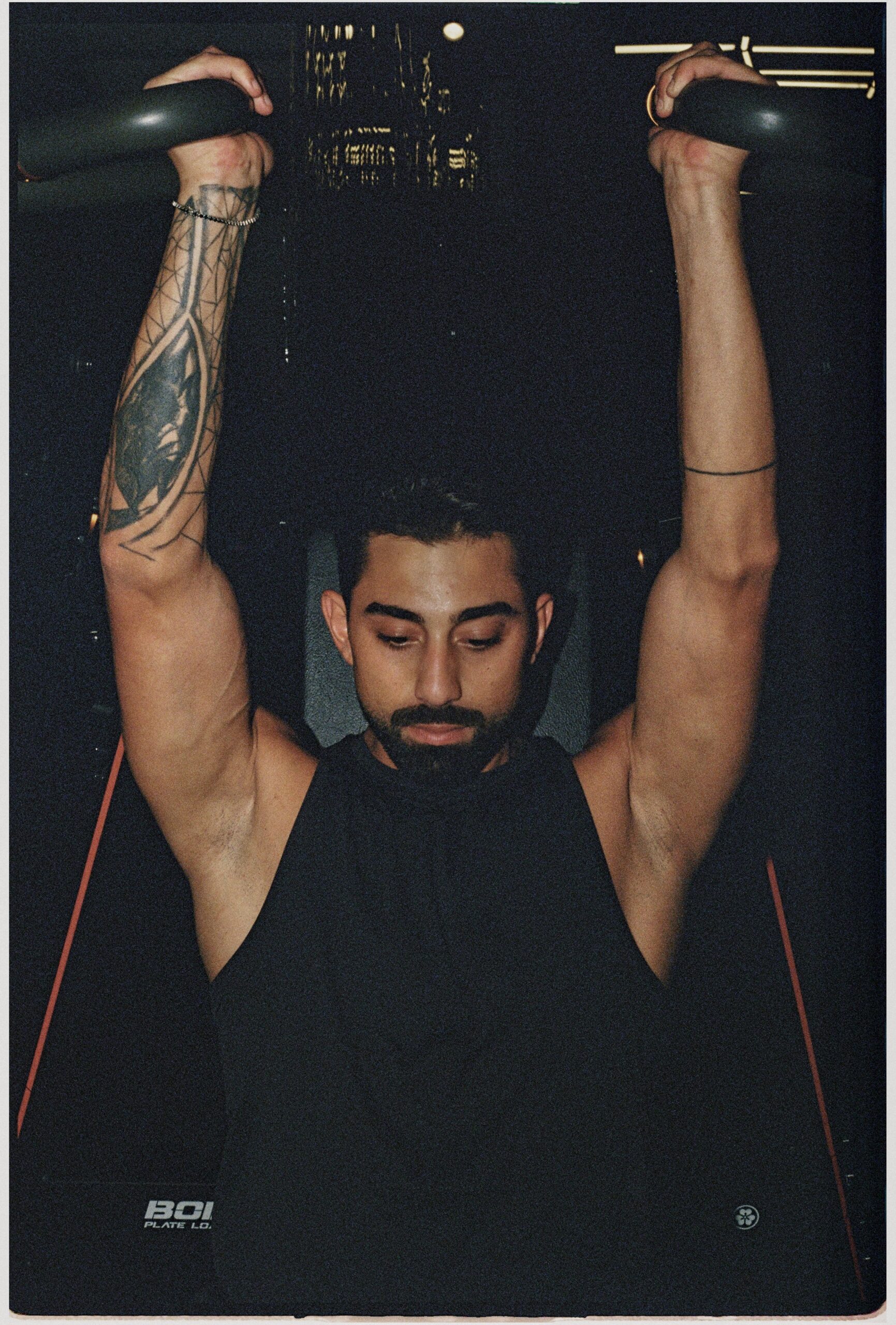
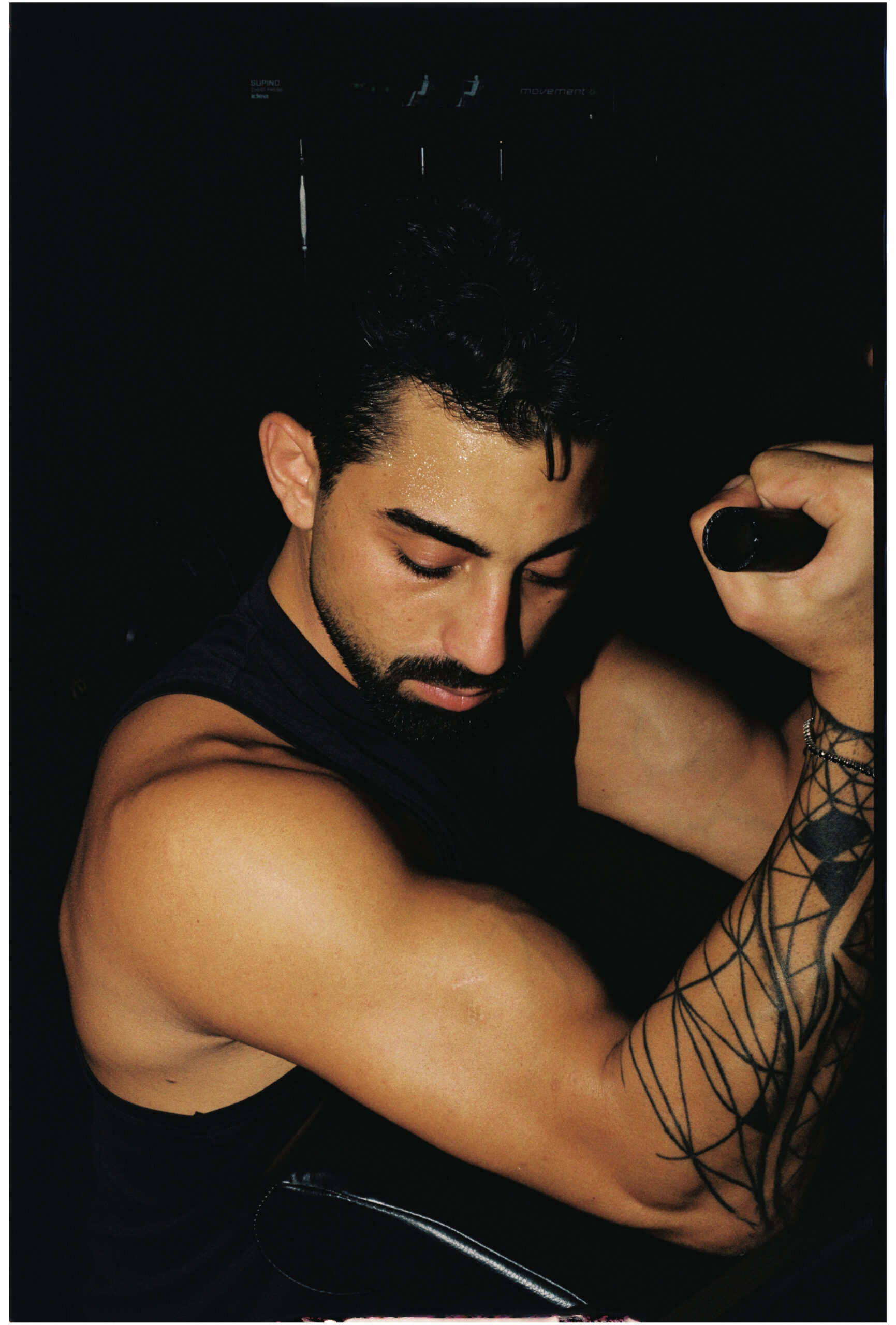
Antonio Apkarian, contestant in 2021 (final ten) and 2025
The modern Mister Lebanon contestant, then, is expected to optimise more than his appearance. Preparation is required to hone your eloquence and public persona. Increasingly, the pageant also asks him to demonstrate social purpose.
“During the competition, the contestants have to tell us about a charity cause they will pursue if elected,” Aad Chahine explains. “MTV will then follow the stories of the winner to see how they are achieving their mission.”
Mario El Hajj, who won Mister Lebanon in 2024, embraced that responsibility by working with Kids First Association to support children undergoing cancer treatment. “It was the most meaningful part of Mister Lebanon for me,” he says.
Although much of this preparation may indeed be enjoyable or beneficial to the contestants’ personal growth, the investment required raises an obvious question: why go to such lengths? Increasingly, the answer lies in what Mister Lebanon can offer in return. Over time, the title became attached not simply to physical attractiveness but to the possibility of something afterwards: international competitions, modelling contracts and, for a select few, genuine celebrity.
Ironically, that reputation was built by a generation of contestants who often entered with far less at stake. “The only reason I joined the competition was because one lady told me, ‘If you go and participate, I will go on a date with you,’” Tarabay tells me, laughing. “It was just for fun.”
What followed was considerably more serious. Tarabay won Mister Lebanon, then represented the country at Mister World, where he finished as first runner-up. “When I arrived home, the organisers grabbed me off the plane,” he recalls. “There were so many press and onlookers at the gate, they told me to get changed and be ready to greet everyone.”
“I started doing TV interviews and going out every single night,” Tarabay continues. “Everyone used to know us, and eventually, I opened my own nightclub in Beirut with the 2004 Mister Lebanon, Anthony Hakim.” The connections he made during those years also helped him establish a production house in 2007.
The fame surrounding subsequent winners only grew. Wissam Hanna is perhaps the clearest example. After becoming Mister Lebanon in 2005, he represented the country internationally, ultimately winning Mister International in 2006. Modelling and television presenting followed, then acting. Today, Hanna remains a prominent public figure with an Instagram following of more than one million.
All of the recent participants I speak to vividly recall watching these success stories unfold as children. “I grew up in a small village,” Geagea explains. “I remember watching the show and thinking I would love to be that kind of guy one day. When I was 22, I found the strength to apply to the competition, hoping it might help me build a career in acting.”
The contrast is striking. Tarabay stumbled into Mister Lebanon on the promise of a date; two decades later, contestants like Geagea approach the same stage as a chance to grow their future careers. Given the precedent set, investing in their bodies and public personas seems like a small price to pay.
Perhaps the eagerness to enter is also because the competition offers something relatively scarce in Lebanon: a route into modelling and entertainment. “The country does not have many agencies or platforms to help us enter these industries,” Apkarian says. “Especially ones that are tailored to men.”
That route became more established as Mister Lebanon itself grew. Growing popularity brought bigger budgets, more elaborate productions and high-profile guests such as Haifa Wehbe, whose performances became an almost yearly fixture. The opportunities expanded with it. “The winner becomes part of the MTV family,” supervising producer Aad Chahine tells me. “We always give them visibility.”
Nidal’s Agency took over the organisation of the pageant in 2009, further formalising that route into the industry. Today, the final five contestants are offered year-long contracts with the modelling agency. “We help them find the right opportunities, manage their image and media presence, and make sure their rights are protected in every project they take part in,” organiser Nidal Bsherrawi tells me.
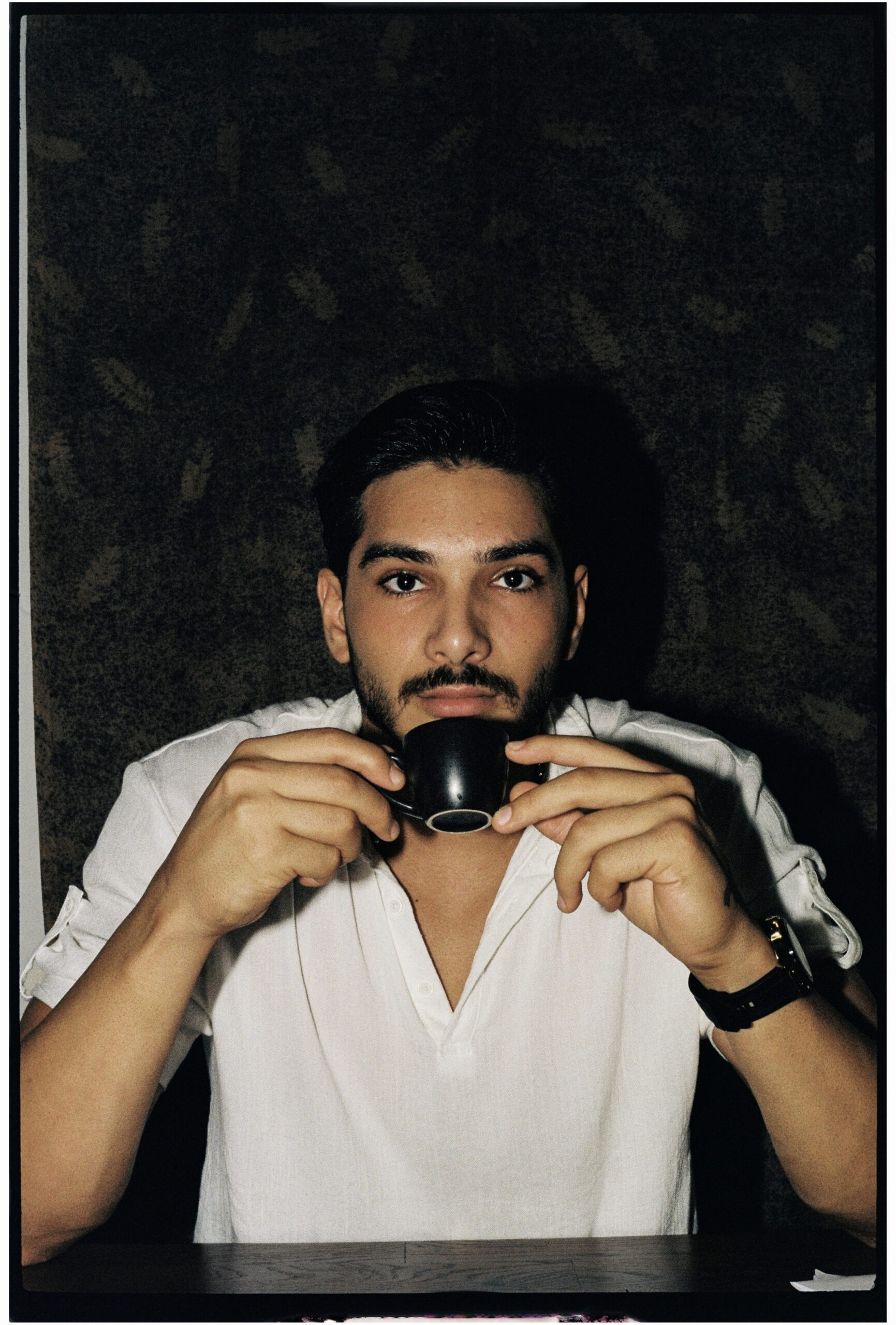
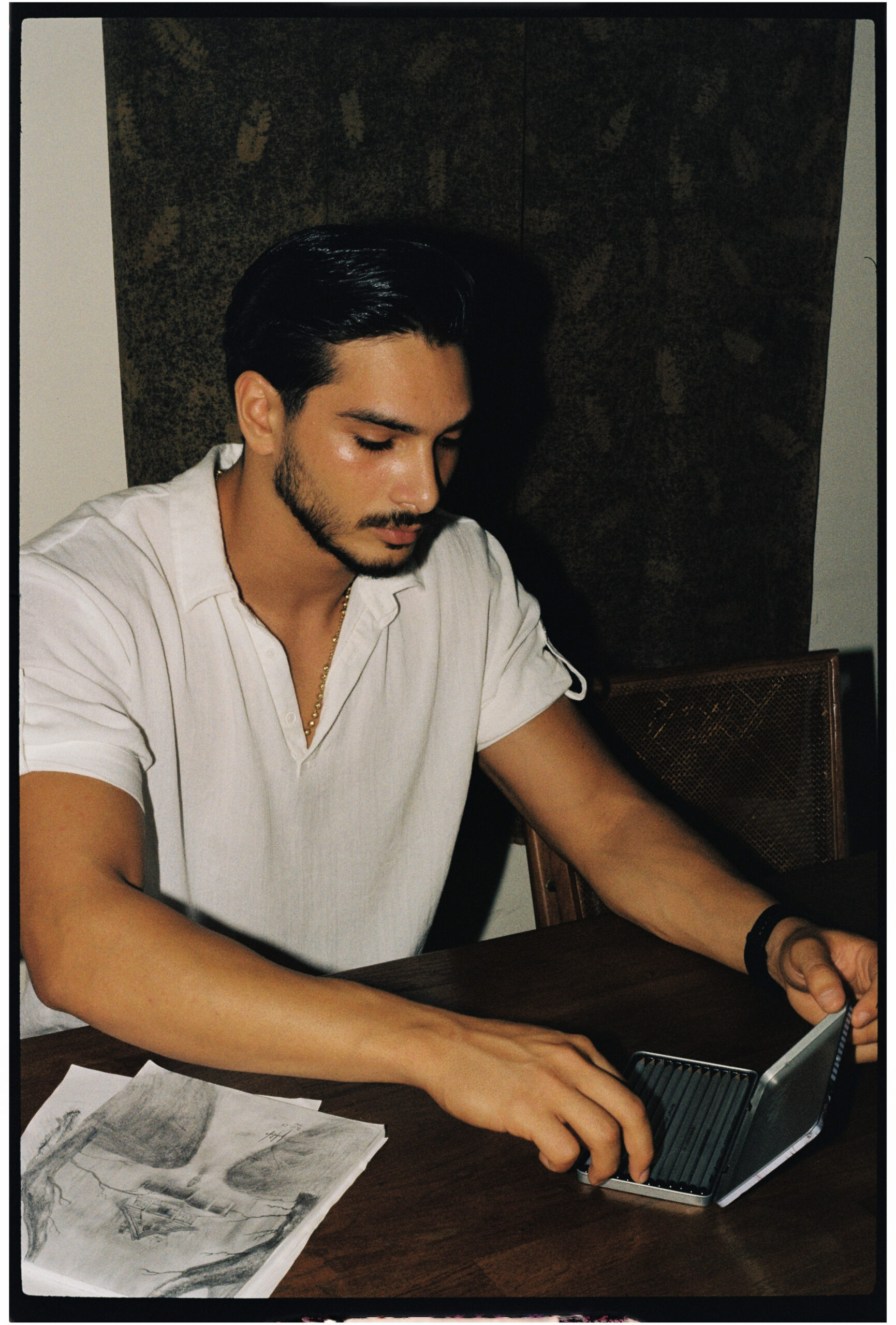
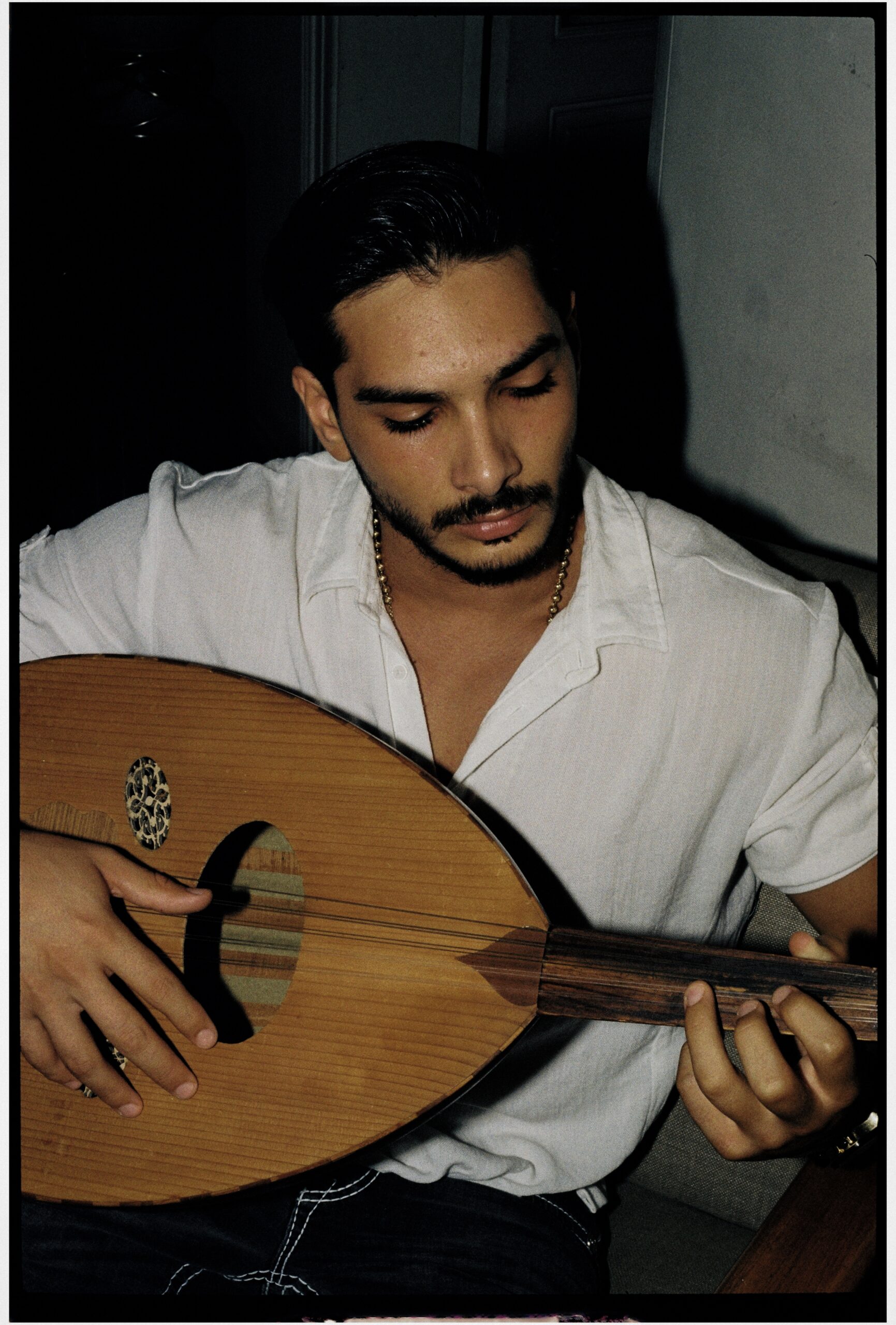
Charbel Chamo, contestant in 2025
Those promises help explain why Mister Lebanon has endured through Lebanon’s successive crises, even as they repeatedly disrupted the competition. The pageant was not held in 2020, the year of the port explosion and pandemic, while further instability interrupted the 2022 edition. The 2024 competition was also significantly delayed as Israel’s war on Lebanon escalated.
A television pageant might appear peripheral against events of this magnitude, yet abandoning Mister Lebanon altogether was never seriously considered. “Despite all the difficult circumstances Lebanon has gone through, we have always been determined to keep going and never stop,” Bsherrawi tells me.
There is something revealing in that insistence. Mister Lebanon is hardly essential infrastructure, nor would its organisers claim it to be. So what role can a beauty pageant realistically play during a national crisis, and why keep holding one at all?
One answer is entertainment itself. In a country where ordinary life has been repeatedly interrupted, spectacle can offer a temporary reprieve. “It gives the audience something positive to look forward to,” Aad Chahine says.
When the show did go ahead, its producers also attempted to acknowledge the reality beyond the stage. “We did not ignore what Lebanon was going through,” Aad Chahine tells me. “We had tributes to those who died in the Port Blast and shifted our charity efforts towards those affected by the crises. Some of our contestants visited villages, taking food to people in need.”
For contestants, however, the promise is more personal. Successive crises have only further diminished modelling and acting opportunities in Lebanon, making the opportunities offered by Mister Lebanon all the more valuable.
That sense of possibility brings some contestants back more than once. Apkarian first entered Mister Lebanon in 2021, hoping to build on his modelling career. “I saw the competition as a way to grow my personal brand,” he says. After reaching the final ten in 2021, Apkarian returned in 2025.
“Life in Lebanon was becoming more difficult because of the war and economic collapse,” he says. “Mister Lebanon gave me something hopeful to work towards.”
That possibility should not be mistaken for a guarantee, however. Bou Doumit has seen what happens when contestants invest too heavily in the future they imagine the crown will provide. As a judge, he developed a reputation for being harsh, on two occasions even encouraging contestants to withdraw. “They were attached to the idea that they were the best and the most beautiful,” he says. “I even saw a few boys having problems after leaving the competition. They had built a prediction of the future in their minds, and then afterwards, when it did not happen the way they had dreamed, they struggled.”
For that reason, he encourages contestants to treat Mister Lebanon as an opportunity rather than an endpoint. “The most successful contestants build on the experience,” he says. “They know the work has only just begun at the end of the competition.”
For those willing to do the work, it is clear that winning is not the only path to success. In his most recent attempt at Mister Lebanon, Apkarian was eliminated in the first round. Yet his experience suggests that the crown is no longer the only measure of success. “I never saw it as a failure,” he says. “I grew a lot as a person, and also built useful professional connections.”
That visibility can also travel well beyond Lebanon. Despite finishing as second runner-up in Mister Lebanon 2025, Geagea was selected to represent Lebanon at Man of the Year 2025 in Bali, where he ultimately placed as first runner-up. He regales me with stories of these travels, excitedly describing the island’s climate and culture. “It was an amazing opportunity to see the world,” he says.
Representing Lebanon abroad also brought a different kind of opportunity. “People kept asking me about the war, even in the interviews for the pageant,” he says. “One contestant did not speak a lot of English. When I said I came from Lebanon, he just made a gesture of a gun and shooting noises.”
Geagea drew directly on the skills he had developed to challenge these stereotypes. “I was now used to being interviewed, so I was ready to answer,” he says. “I explained what was actually happening in the country, then made sure to also tell them about the beautiful and happy parts of Lebanon too.”
The experience appears to have served him well beyond the stage. His international success brought further visibility, while the connections made through both competitions translated into modelling work and new professional opportunities.
Three decades on, it seems that Mister Lebanon asks more of its contestants than ever: more work on their bodies, their confidence and the image they present to the world. But the potential rewards have grown too. In a country where routes into modelling and entertainment remain limited, the pageant still offers something powerful: the chance to be seen. For hundreds of men applying each year, it seems that possibility is enough to go all in.
THIS FEATURE WAS PUBLISHED IN THE 11TH EDITION OF ICON MENA PRINT MAGAZINE. ORDER YOUR COPY HERE.


