
News


Stone is one of the oldest building materials on earth, and one of the most politically charged. Its extraction reshapes landscapes, displaces communities, and, in the wrong hands, becomes a tool of resource exploitation rather than construction. Its use in architecture, done responsibly, offers something concrete can’t: a low-carbon structural material with a simple supply chain, a long lifespan, and the capacity to be endlessly reclaimed. The difference between those two versions of stone, extractive and restorative, destructive and structural, is almost entirely a question of politics.
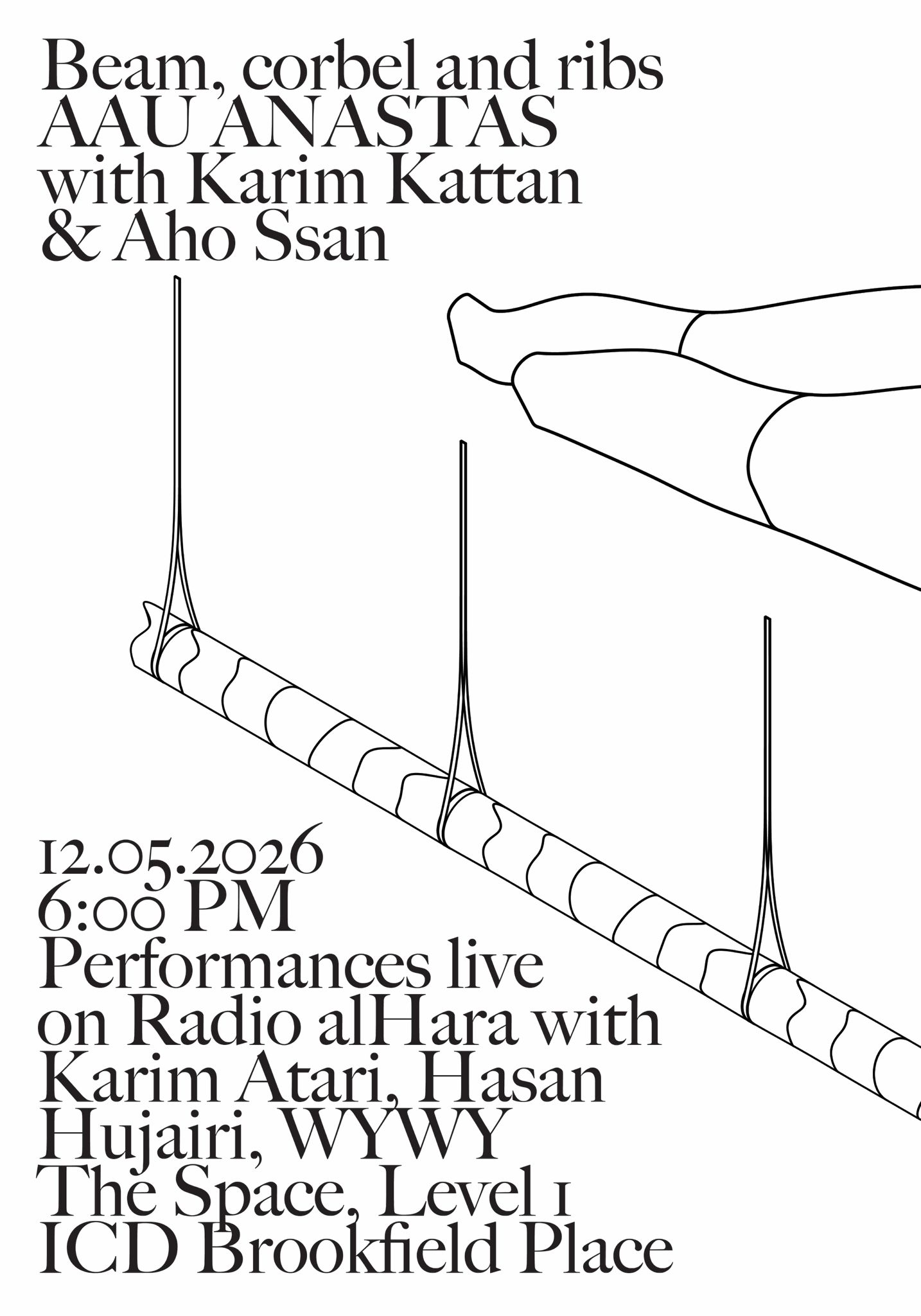
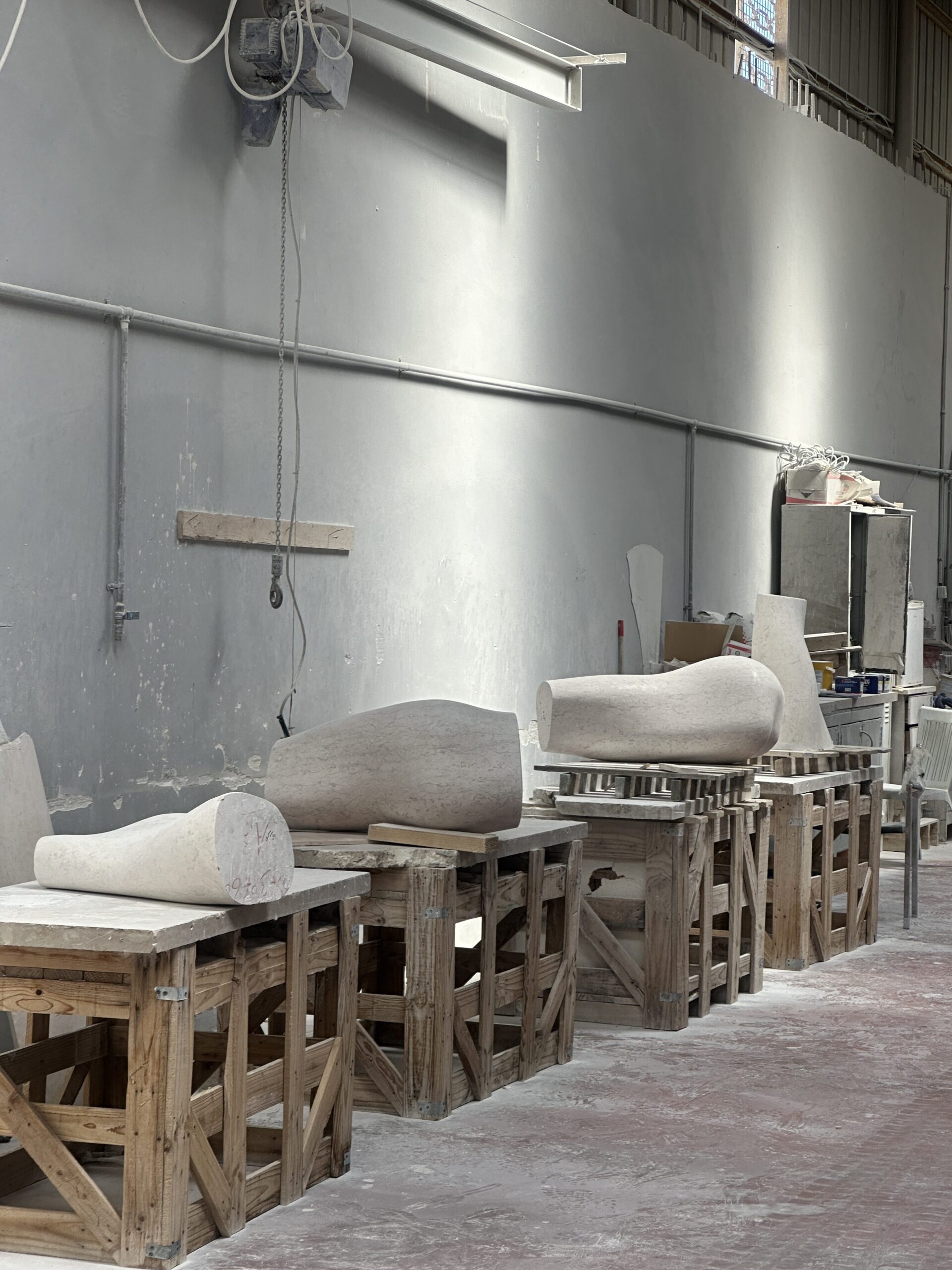
It is precisely this question that has driven the practice of Elias and Yousef Anastas since 2012. The Bethlehem-based architects of AAU Anastas have spent over a decade investigating stone not as a contemporary structural proposition and as a lens through which to read the occupation of Palestine, where the quarrying of natural resources has long served as an instrument of control. Their new exhibition, Beam, Corbel, Ribs, commissioned by ICD Brookfield Place Arts Programme and opening in Dubai on 12 May, distils that research into three limestone fragments: a beam, a corbelling structure, a ribbed vault. Unbuilt architectures, given voice through a multilingual monologue by Karim Kattan and a sonic composition by Aho Ssan.
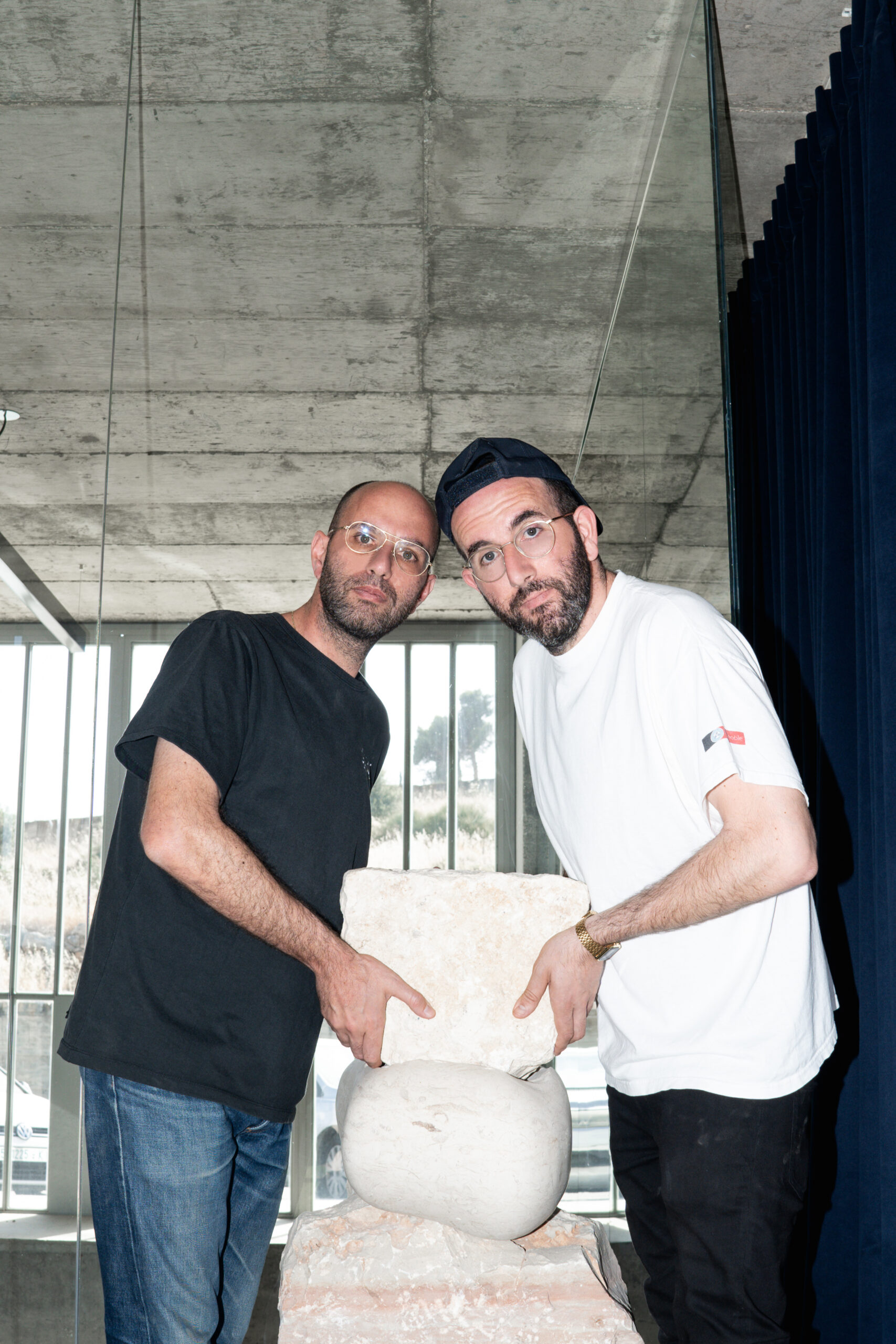
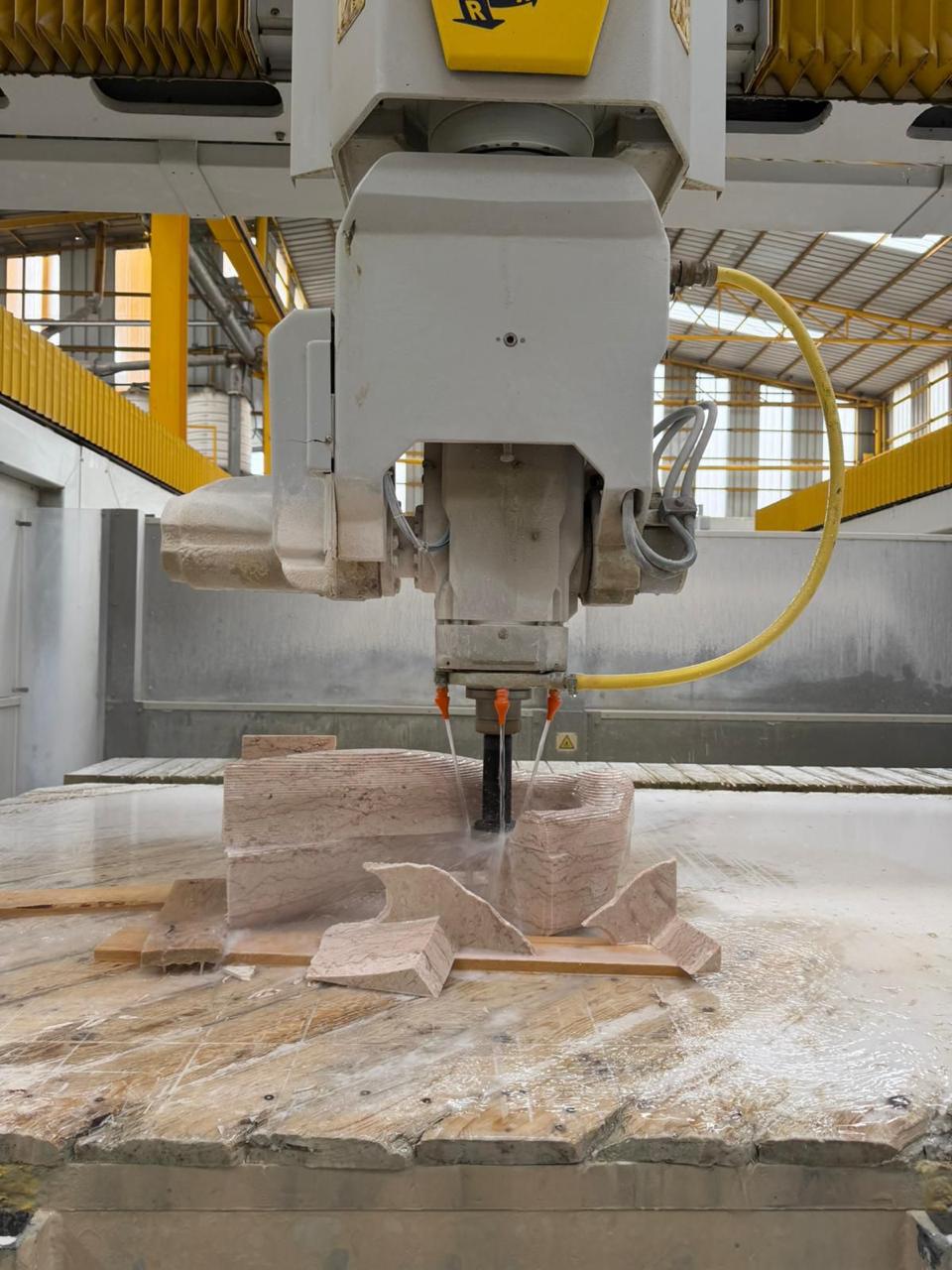
The case for structural stone is, on its own terms, compelling. Cement production accounts for over eight percent of global carbon emissions, while stone, by contrast, requires only extraction, cutting, and transportation to become a load-bearing material. Its emissions will continue to fall as electricity grids decarbonise. It can be reclaimed from demolished buildings and reused indefinitely. But AAU Anastas are not making an environmental pitch so much as a political one. In Palestine, the right to quarry, to build, to occupy space in the most literal sense, is not a given. Stone here is not simply a material choice and a territorial one. “Our practice is shaped by our environment and observations on the exploitation of natural resources by the occupation,” Elias and Yousef Anastas have said of their work. “This exhibition is grounded in tectonics, in joints, interfaces, gravity, unloading, formwork, repair, and the mystical, prophetic, and mythological imaginaries of Palestine, extending them beyond borders, language and geography.”
Beam, Corbel, Ribs makes that extension literal. Set in Dubai, a city defined by constant change and reconfiguration, the exhibition’s three structural acts take on an added resonance. Karim Kattan’s monologues, which wind through the space alongside Aho Ssan’s sonic composition, are heard in Arabic, English, Hindi, Urdu, and Tagalog as a deliberate acknowledgement of the city’s demographic reality, and a refusal to let the work speak only to one audience. “Expanding into architecture and sound, working with AAU Anastas, has been fascinating and inspiring,” says Malak Abu Qaoud, Director of Arts and Events at ICD Brookfield Place. “This commission is particularly educational. I hope it sparks new connections and ideas.”
The opening will also be broadcast live on Radio alHara. Elias and Yousef Anastas are co-founders of the station, which they established in Bethlehem during the first Covid-19 lockdown in 2020 as an act of communal defiance and creative solidarity. Radio alHara now draws on a network of over 300 contributors across Palestine and the diaspora, broadcasting experimental music, art, conversation, and documentary work across time zones and borders. Broadcasting the opening of Beam, Corbel, Ribs through the station connects the exhibition to that wider community and reminds you that the audience for this work extends well beyond Dubai.
Since its launch, ICD Brookfield Place Arts stands as one of Dubai’s most genuinely adventurous public cultural platforms. Its track record spans the full breadth of contemporary practice from graphic design exhibitions to performance art.
Beam, Corbel, Ribs is, in that sense, a natural next chapter. AAU Anastas’s built work includes the Tulkarem and Hebron Courthouses, a reinforced flat stone vault in Abu Ghosh, and the restoration of Dar al-Majus in Bethlehem. They co-founded Local Industries, a network of makers whose output ranges from furniture to experimental architecture, among them the Jamil Chair, now held in the Vitra Design Museum collection. Their work is also part of the permanent collection of the Victoria and Albert Museum. In 2021, they participated in the Venice Architecture Biennale with All Purpose, a stone installation proposing a new model of stone habitat. And through Wonder Cabinet, a space for experimental production in Bethlehem, they received the Aga Khan Award for Architecture, the same institution that now, through ICD Brookfield Place’s programming, is helping bring their work to a Dubai audience.
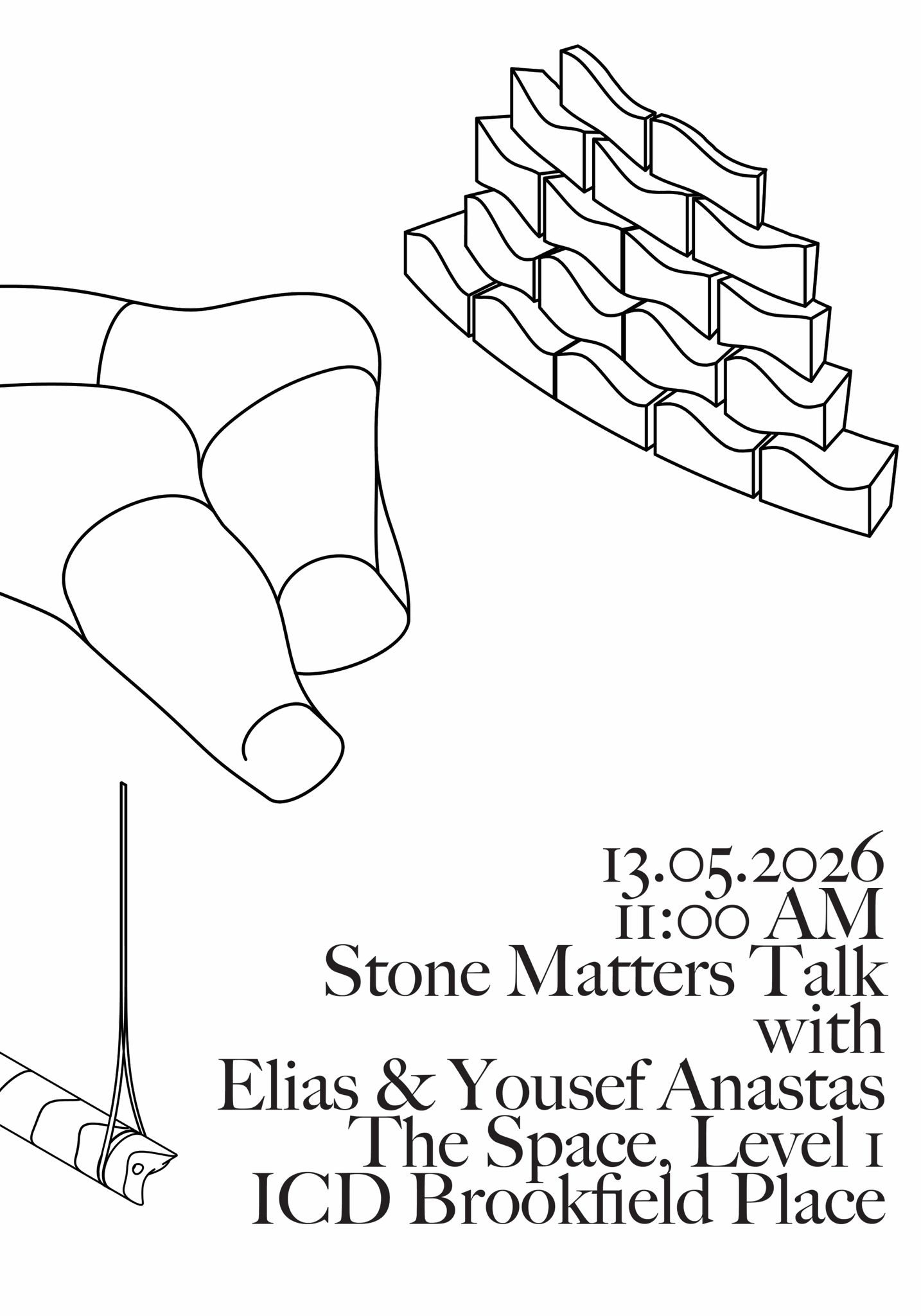
Beam, Corbel, Ribs runs from 12 May to 2 June 2026 at ICD Brookfield Place, Dubai International Financial Centre. Entry is free, open daily from 9 AM to 11 PM. On 13 May, Elias and Yousef Anastas will be in conversation for Stone Matters, a talk at 11 AM.


