
News


There’s always something compelling about artists branded as “unconventional,” not because the label means much anymore, but because it often means that their work has reached (and provoked) the right people. In an art and social media economy that rewards spectacle, telling the artist who panders from the artist who commits to a vision is an exercise of finding the diamond in the rough. This reality is even muddier for young Arab artists, who are routinely boxed into performing “temporality” and “locality,” or worse, shoved into the identity politics panopticon of the White Curator. With this mental image in mind, the fact that a photographer like Abdulaziz Al-Hosni exists both prolifically and insistently – and unsettlingly, to some – feels almost anomalous. Provocative, though, isn’t quite the right word. He wouldn’t like it either. “Art is supposed to make you feel something… Happy, loved, maybe even violated. I’ve watched so many movies where I didn’t like the ending, but I still loved the movie,” he tells me with a half smile during our video call.
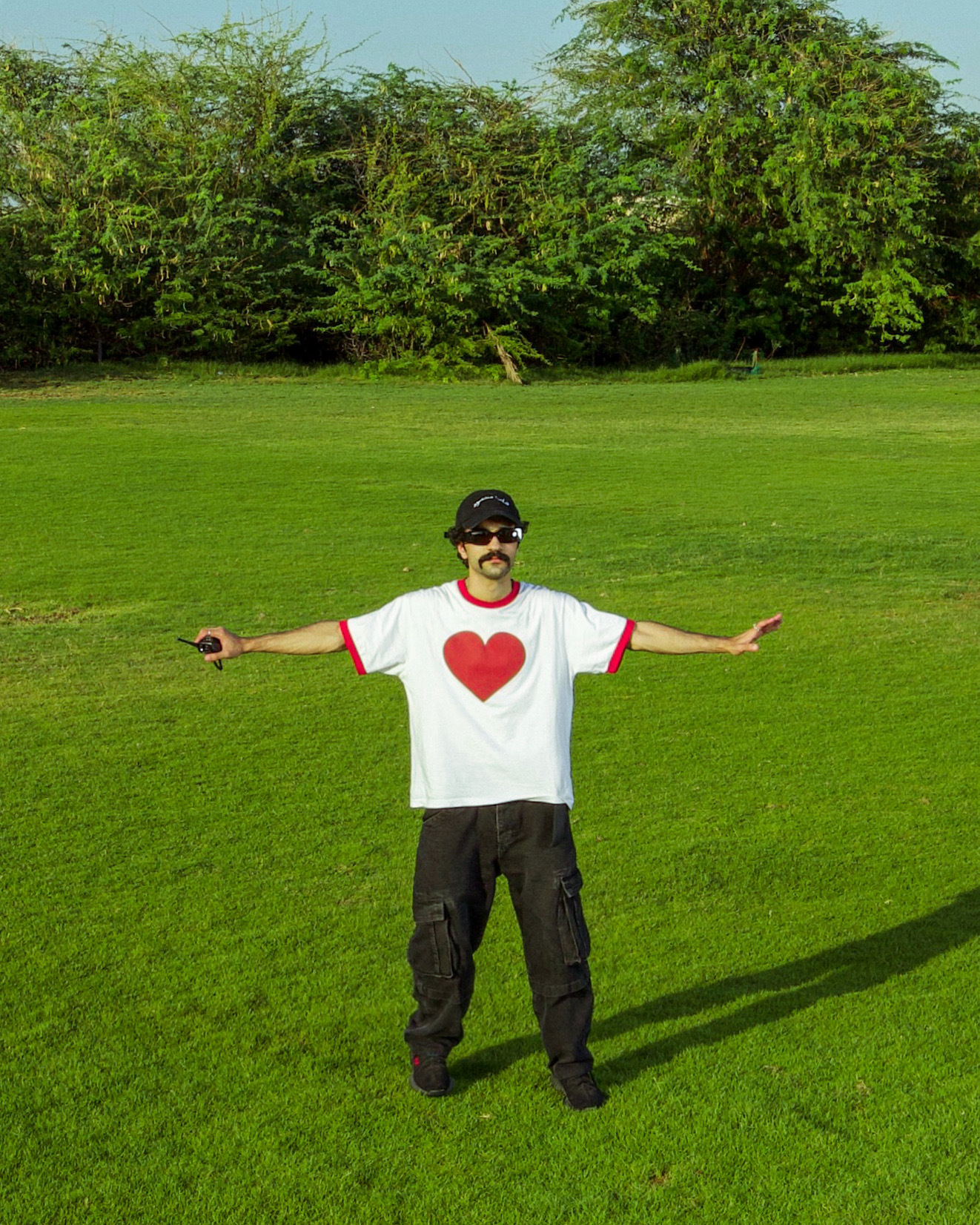
Abdulaziz, or Aziz, as he prefers it, appears on camera with a red cap inscribed “Qalb Mahmood” (Mahmood’s heart), the title of his most expansive photographic project to date, commissioned by WePresent and exhibited at Melkweg Expo in Amsterdam in late 2024. He positions himself deliberately on the left third of the frame, ensuring the hot-pink magazine covers to the right, each featuring his work, are unmistakably in view. It’s hard not to feel that every detail of this young photographer’s existence has been accounted for, curated right down to the tea. And almost immediately, that suspicion is proven right. The impression is convincing, but also misleading. Curated, yes – but curated without a guiding hand. An IT-then-graphic design dropout, the artist never really cared to finish his university studies. Not out of rebellion, but out of conviction that working a corporate creative job with a manager breathing down his neck was absolutely not the move for him. We both agree that he made the right choice.
Growing up on a farmhouse in Al Khabourah, a small town in North Oman far removed from the art world’s infrastructure, he was building a vision long before the world was watching. Ultimately, that isolation served him well, because with little external stimulation, his imagination had room to sprawl. He drew constantly, gravitated toward colours, and learned early on that sitting with his interiority was his vehicle for creation. This delicate sensibility was quietly fostered by his father, who encouraged him to imagine freely and took his curiosity with the seriousness it deserved. “I used to have so many conversations with him, asking about the sky and the stars. He accepted my imagination and just gave me the love I needed to guide me,” he recalls. “He gave me a lot of strength to express and be who I am.”
By the time he tells me he began taking photography “seriously” around 2019, he makes it clear that it had little to do with the career aspect of the work and everything to do with commitment. His sketches started turning into full-fledged concepts, which he funded through college money that he siphoned off to fund small shoots, borrow equipment, and make handmade props with friends. The vision, turns out, was incredibly serious from the get-go.
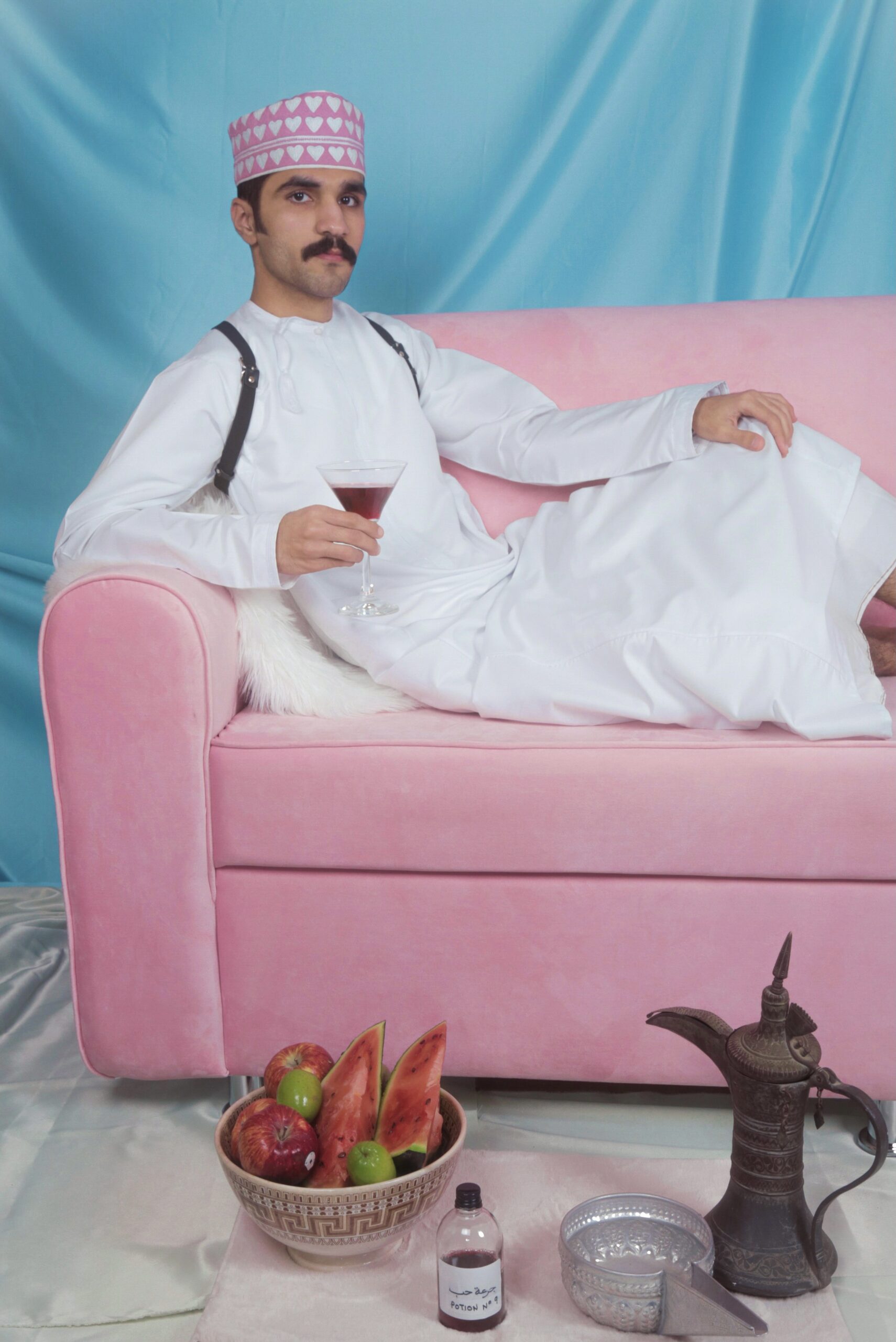
Much of his early output took shape as gorgeously composed self-portraits, images first published online that slowly but surely placed him on the radar. From there, beginning in 2021, his practice expanded into a series of projects that more fully articulated the emotional architecture and thematic concepts that would come to define his work. Habayeb Club (2021) is a fictionalised social club imagined for “people who are afraid to express their feelings and emotions.” In the photo, Al-Hosni appears on a mock promotional poster for the club, reclining on a pink couch, drink in hand, “a love potion” carefully placed bottom-centre of the frame, the whole composition awash in a pastel blue background. Every element is considered. The pink kummah (traditional Omani cap) perched on his head is embroidered with white hearts, a detail which, at the time, drew mixed reactions. “That feeling of being scared to draw the heart or being able to like to [metaphorically] put your heart out there… It just made me want to do it more,” he cheekily admits. These early images feel deliberately insular, made from within the artist’s circle, which, to his credit, resists the almost moral ethnographic task so often imposed on Arab photographers. The world-building is rife, rich, contrived, and colorful. For all the talk surrounding his work – masculinity, the Arab man, and every other gendered reading projected onto it – and for all the on-the-nose themes and portrait titles he played around with in his earlier work, such as Colorful Masculinity (2021), and Love top of the sky (2021), Al-Hosni shows little interest in over-explaining himself outside of what is shown in the frame. His attitude towards the work is quite telling on that front.
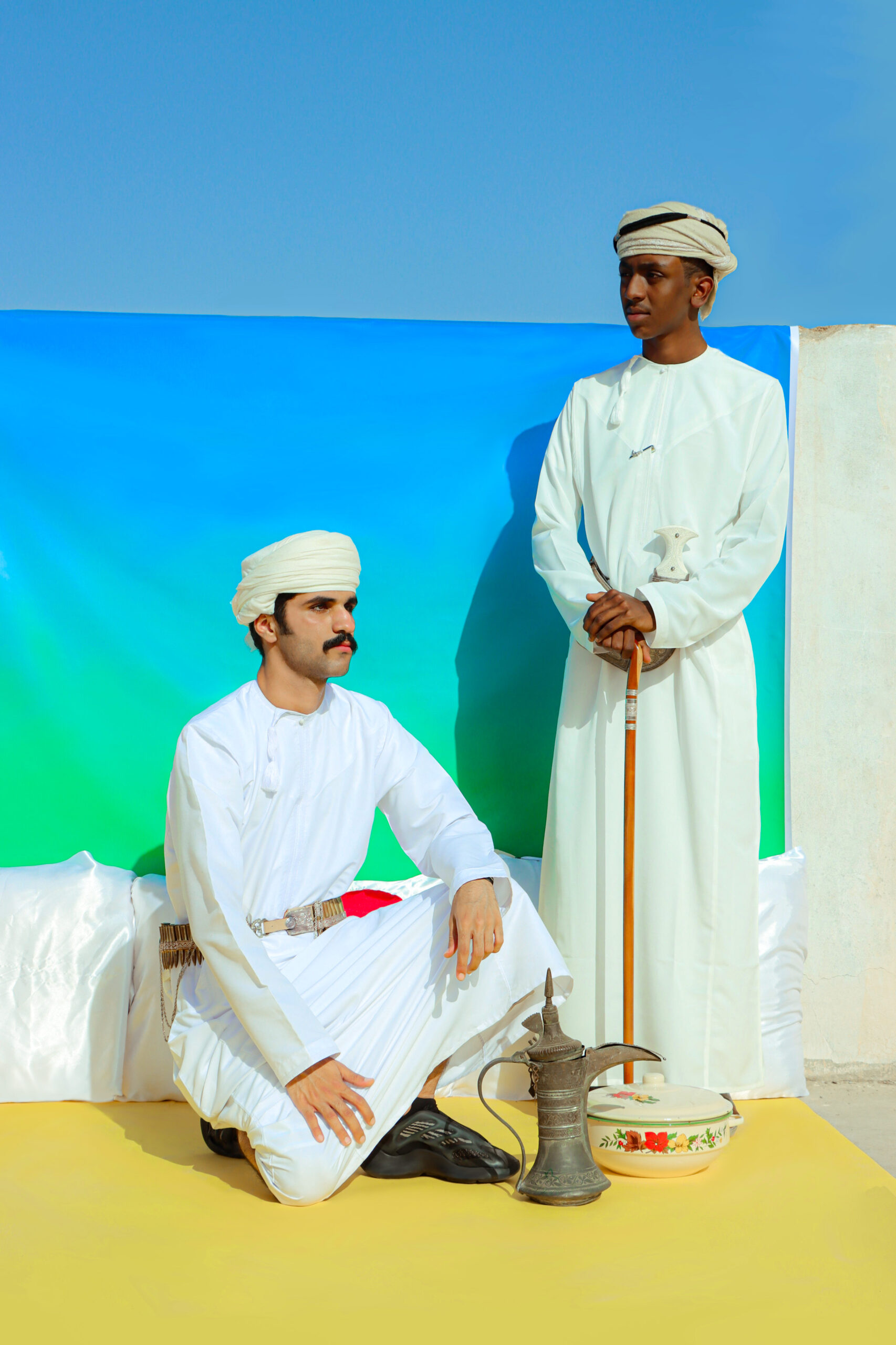
Since then, the small shoots he once posted to Instagram have snowballed into magazine collaborations, quick-turnaround work trips, and a steady expansion into an art world increasingly fascinated with his subversive lens. He recounts this steady career climb with an almost disarming calm, tracing the arc from that desolate farm to his present moment for me without theatrics or exaggeration. If no one else believed that little boy would make it this far, he certainly did. “To be honest, nothing surprises me. I’m very chill about these things because I believe anything can happen at any time… I might die next week, let me just do what I love. So I did that.”
By 2024, the moment arrived for the photographer to decisively turn his lens outward, away from his own body and toward the men orbiting his world. An email from WePresent came first as a collaboration request, a set of images. But what began as a commission gradually grew into something far larger, into a full-fledged exhibition at Melkweg Expo. And from that momentum, Qalb Mahmood came to be, giving the young artist a budget and the creative freedom to explore freely. And that he did.
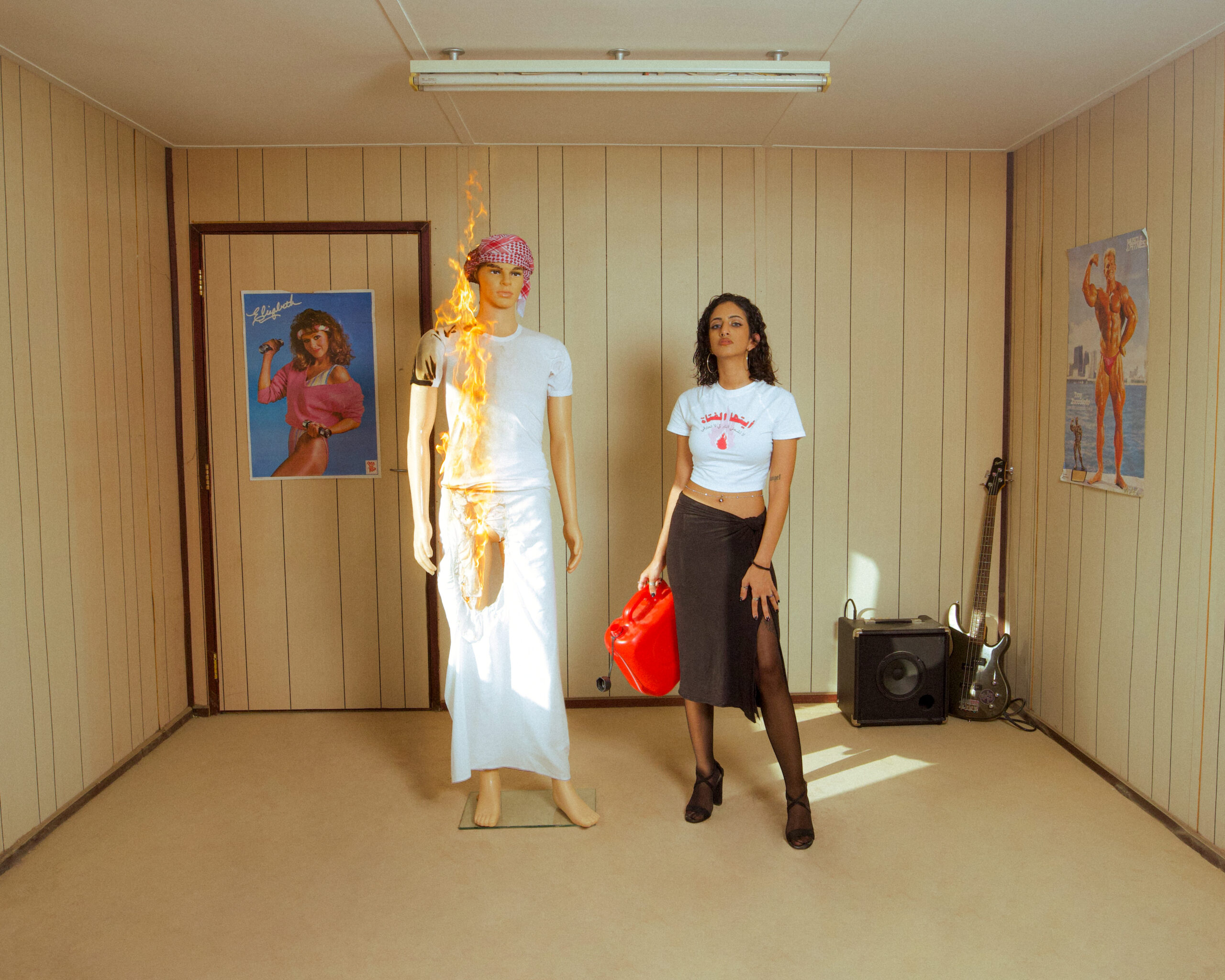
His earlier work had often relied on his own body simply because convincing others to participate felt too taxing. He anticipated their hesitation. It wasn’t the themes that intimidated them per se, but the kind of visibility he was asking for: a vulnerability men are rarely permitted to practice, or even know how to. So, for this project, he built a process around trust. He prefaced his shoots with long conversations with his subjects. He shared his sketches and concepts thoroughly ahead of time. He took his subjects through the possible reactions that people could have to the photographs, ones he’s trained in dealing with. Al-Hosni’s work strives on engaging with his community – it would be dishonest otherwise. Most of the men he photographed for this project had never modelled before. They were friends of friends, hometown acquaintances, people who “don’t even know what [‘the art world’] is,” he tells me. “Sometimes you see a random person and you think this person can walk a runway at Paris Fashion Week. I want to work with these kinds of people. They need our love and attention. We should think about giving these opportunities to everyone.”
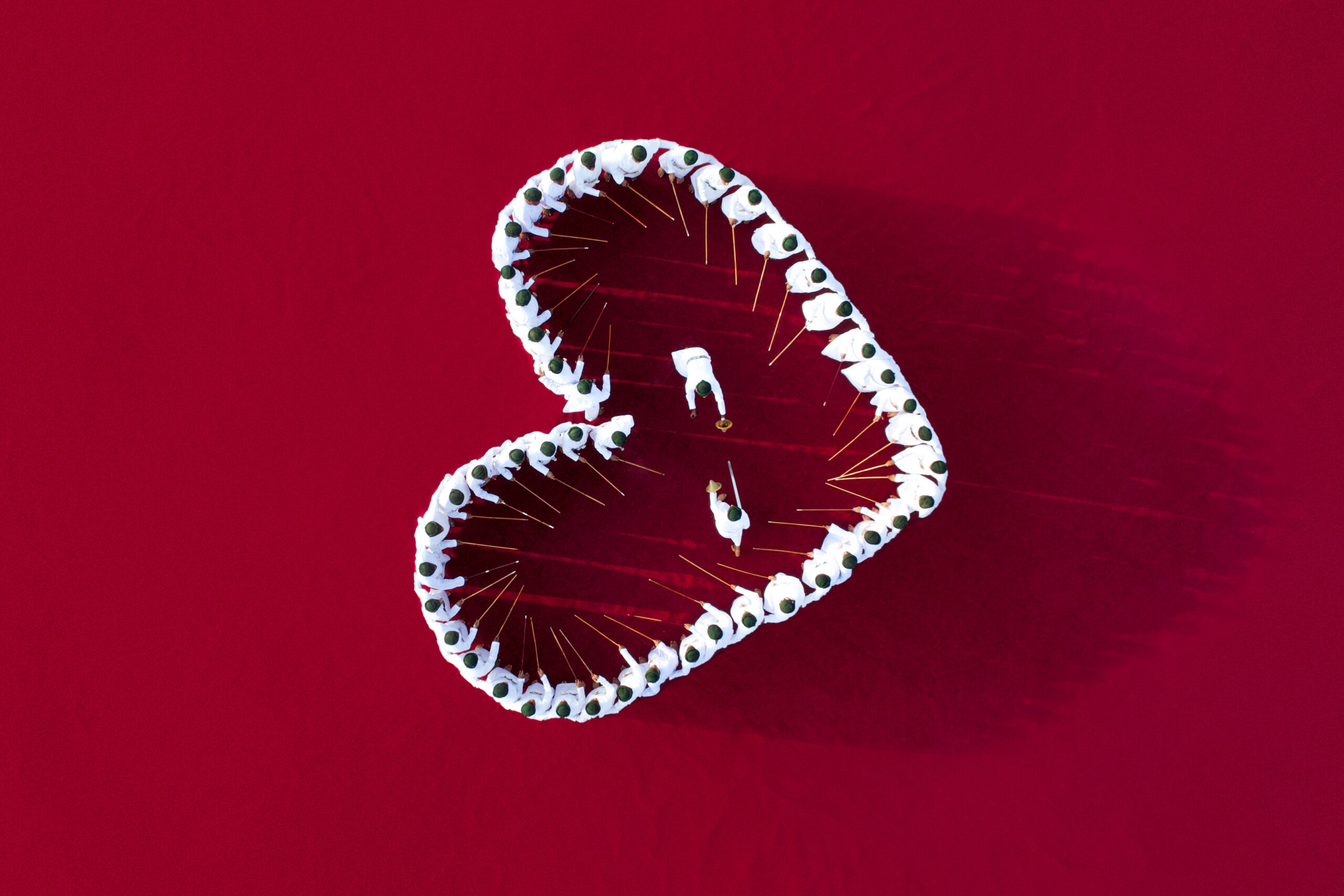
In the expansive series, the heart motif makes a comeback, this time on a grander and more elevated scale, as the artist puts his heart out on the line like never before. After all, It is no small undertaking to assemble 50 real Al-Razha dancers – practitioners of the traditional Omani performance – into the precise formation of a heart, captured from a commanding top view against a saturated red carpeted floor. The image presents itself with a delicious graphic clarity, turning tradition into something more connective and monumental, but executing something on this scale requires a coordination and cultural fluency that an artist cannot simply feign and hope for the best. That fluency is a throughline in Qalb Mahmood.
“That feeling of being scared to draw the heart or being able to like to [metaphorically] put your heart out there… It just made me want to do it more,”
For all intents and purposes, Mahmood operates less as a singular figure and more as a universal archetype that gathers every man Al-Hosni places before his lens. Mahmood is the common denominator. A guiding light. A beacon of tenderness and vulnerability. A good man with a capacious heart. At least that is how the photographer describes him to me. But Mahmood also doubles as a shield, a mischievous alibi that spares the artist from over-justifying his sensibilities. “If anyone asks me why I did a certain thing, I can just say Mahmood told me to do it,” he laughs. So, in many ways, Mahmood is also the accomplice. It is precisely this cheeky, almost irreverent “defiance” and curiosity that make Al-Hosni’s work such a pleasure to approach with canines bared.
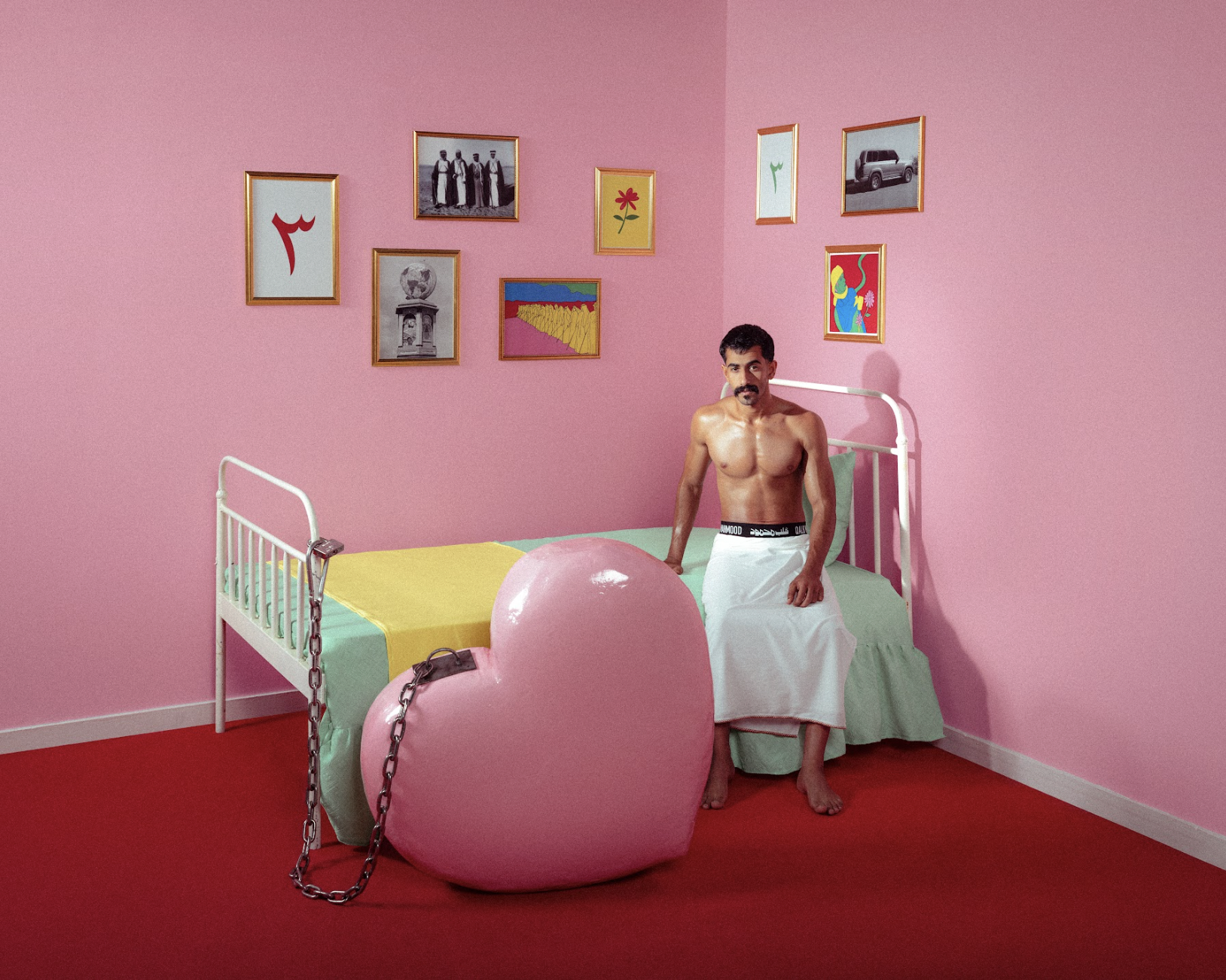
Mid-conversation, Al-Hosni suddenly reaches for his phone and thrusts it toward the camera, eagerly. On the screen is a sketch he drew at nine years old: a young Aziz, clad in a heart-printed t-shirt, standing inside a brightly coloured bedroom. Years later, that childhood image re-emerges, reconstructed and amplified, in his series. But the boy has been replaced by a muscular, topless young man seated on a bed in a baby-pink-walled, red-carpeted room. A large pink heart is chained to the bed frame – the heart externalised. The innocence of the sketch has evolved into something much more charged, dispelling any claims that the artist’s work is anything but rife with childhood wonder, right down to the intricate colour theory behind each image.
“When I was younger, I loved warm colours. I loved pink. It all started with colours,” he tells me. And yet, by high school, that instinct became grounds for ridicule. “For some reason, drawing a heart, it was something I was bullied for,” he says. “In my head, all I could think was, ‘What’s wrong with love?’” The question lingers in his head. What is wrong with love? Not the romantic kind, but the kind rooted in vulnerability and an almost radical compassion.
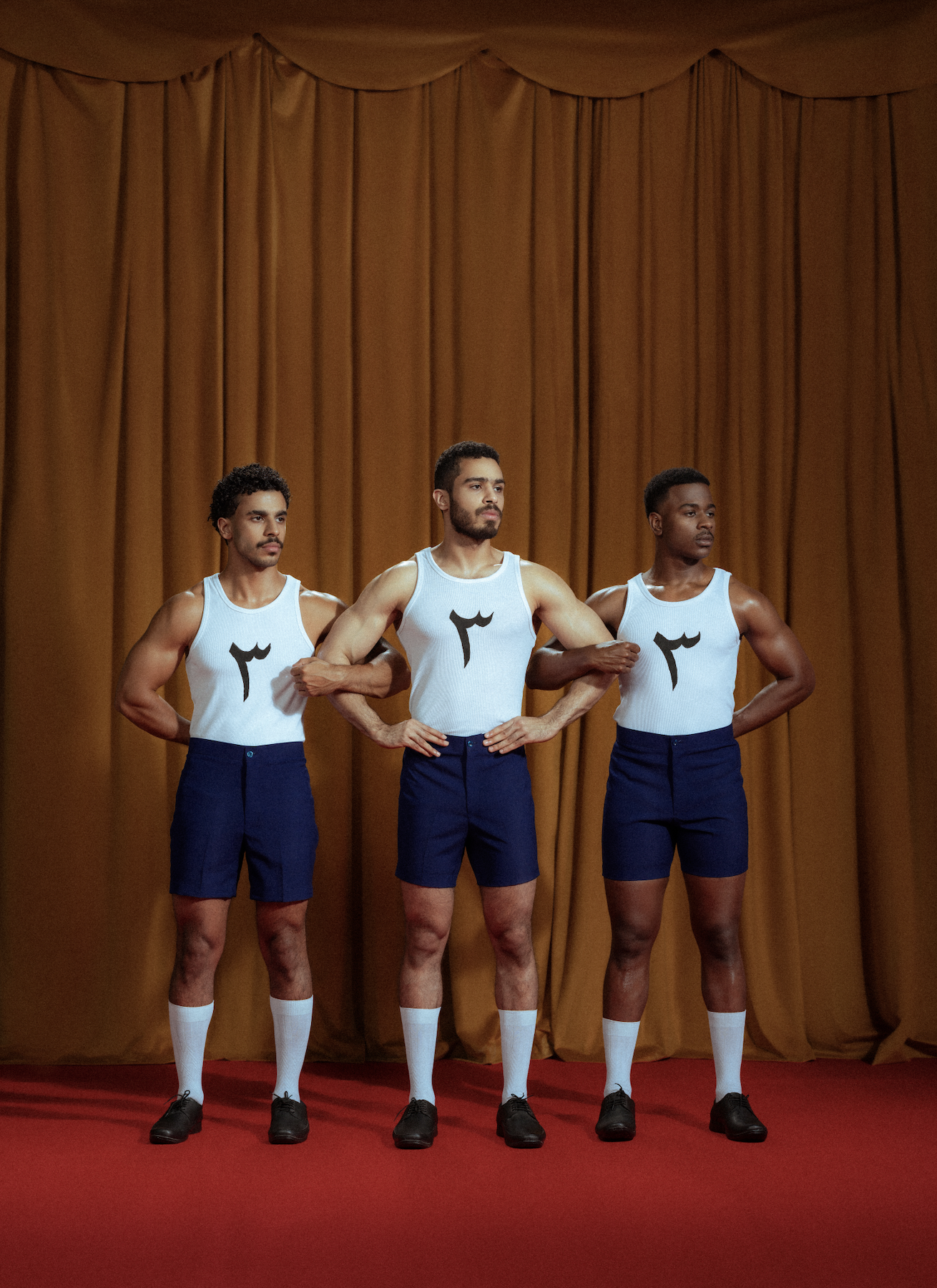
If the heart once marked him as soft, then works like Bad Boys from Maabilah (2024) flip that accusation inside out. In the image, three men from Maabilah, a coastal district in northeast Oman, stand shoulder to shoulder in a tight line formation, dressed in white tank tops and blue shorts, gazing steadily into the distance. They look composed, self-possessed, but definitely not delinquent. Their only transgression seems to be their refusal to contort themselves into something more palatable. They show up as they are. Again, Al-Hosni performs his alchemy: the mundane becomes monumental, the small-town boy becomes mythic. “It’s a way of saying I’m [from this small town] in Oman, and I can change the world,” he explains. It’s a contradictory type of bravado.
For the first time in his career, Qalb Mahmood sees Al-Hosni directing his lens towards female subjects. But, in these works, his delicate gaze is substituted for something else, something more assertive. In I love you Mahmood (2024), A woman stands centered against a saturated red wall in a black niqab and abaya, a sweeping white cloth draped over her shoulders. Beneath it, one leg is uncovered in sheer black stockings and a pointed heel. Behind her, a pink velvet couch and hyper-saturated blocks of colour sharpen the theatrical tension. You almost don’t know where to look. On the corresponding post on social media, the comments have been turned off. It does not take much to imagine why.
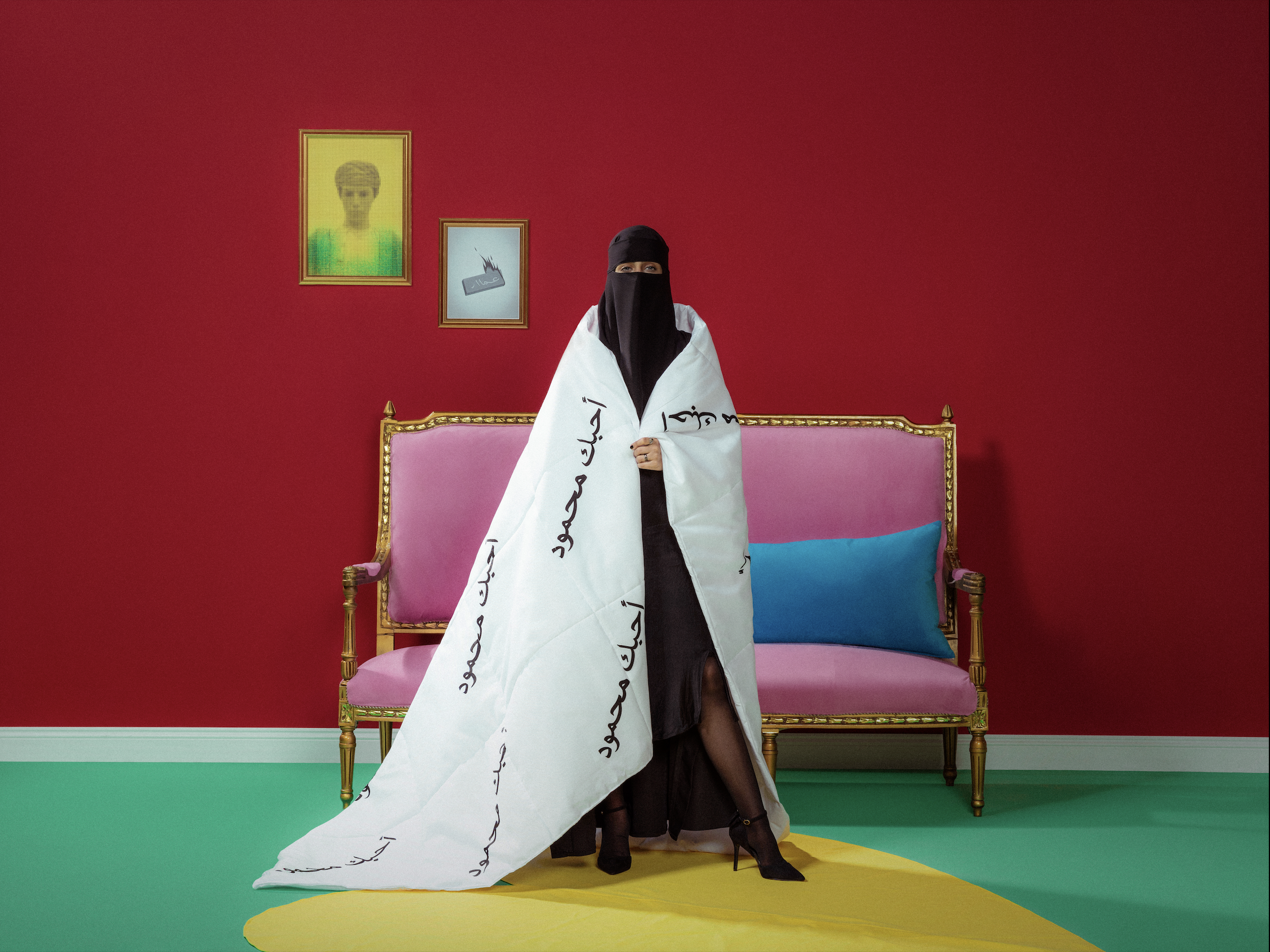
“‘I love you Mahmood’ literally means ‘I love myself.’ Mahmood is her inner guide. She is a complete woman, no man is involved,” he explains. His vision may not be understood by many, but that’s not something that fazes the young artist. Had he waited for consensus, the work would have been stalled years ago. However, his ultimate intention is clearly clear in the work.
When I finally press him on how he navigates the more precarious edges of his career, he flips over his notepad, already crowded with sketches from earlier in our conversation, to a fresh page and slides it toward the camera. He draws a large circle, then fills it with smaller ones. “These are the people who love and understand you,” he explains. Then he extends an arrow beyond the boundary of the circle, pointing outward. What exists inside it – his people, his faith, his grounding – cannot be easily penetrated. “Even if you are alone in this circle,” he adds, “you still have your connection with God.
We end on a peculiar note. He tells me of his hate for Instagram, and about how existing outside of social media brings him the most peace. If social media were to be shut down tomorrow, he would be among the first to rejoice. On his plans for the future, they’re very simple: “I can’t wait to continue experiencing things. To be sad, to feel loved… I’m excited to keep feeling and living and expressing and putting my heart out there,” he tells me. “I’m just trying to be a kid. I think artists should act more like kids.” Perhaps, more than anything, that sums up the ethos of his work. And that’s his provocation to the world: choose softness, again and again.


