News


While most children are raised on Little Red Riding Hood and Peter Pan, Ahmed Emad’s earliest companions were Hamlet, Macbeth, Romeo and Juliet.
An English literature professor, his mother would recite classics to Emad and his brother when he was just four years old, reshaping Shakespeare’s language into something gentler and more digestible, a child’s edition of the canon. These were not bedtime stories so much as early encounters with drama, character, and conflict.
After each retelling, she would ask him to sketch what he had heard: scenes, figures, locations pulled from language and translated into image. It was an unintentional apprenticeship, one that quietly paved his first path toward art. Of all the influences that might have introduced him to art, it was William Shakespeare. His mother opened his mind to the Bard of Avon, and by extension, his eyes.
She also inadvertently introduced him to museums. His first, he recalls, was the Sharjah Museum of Islamic Civilization. As a child, the visits were woven into the everyday rituals of the city: trips with his mother through El Souk, and the old quarters of Sharjah, areas that now fall under the stewardship of the Sharjah Art Foundation, from Bait Obaid Al Shamsi, to Al Midfa and Al Marija.
While his mother moved through the souk, buying what she needed for Ramadan or else, Emad wandered the surrounding spaces, playing among old houses and slipping in and out of their courtyards. She would tell him stories about these buildings and the people who dwelled within their walls, how they lived, how they prayed, how they used to gather in the majlis.
Even then, he imagined a future within those walls. He remembers telling his mother that when he graduated from university, he wanted to work at the Sharjah Art Foundation. Today, Emad is a Public Programming Specialist at Guggenheim Abu Dhabi, following a three-year tenure as a museum educator at the Louvre Abu Dhabi.
Emad knew who he was from a very young age. The 32-year-old artist was born and raised in Sharjah, UAE in a household defined by passion and artistic curiosity. Creativity ran deep in the family. His grandfather was a fashion designer, often dressing Egypt’s golden-era film stars of the 1940s, from Rushdi Abaza to Omar Sharif, while his grandmother was a journalist at the storied Rose Al-Youssef, as well as a radio host and writer in the UAE.
Despite Emad knowing who he wanted to be and actively manifesting it, the path was, as it often is, anything but linear. Still, it felt inevitable. Under familial pressure to pursue more highbrow studies, as is common in many Arab households, he enrolled in Civil and Environmental Engineering at the University of Sharjah, fully aware that his heart lay elsewhere, in art. What followed was a road less travelled, slightly crooked but deliberate.
He would skip engineering lectures and sneak into art classes instead, staying for entire sessions, or until a professor noticed that he’s not an art student and asked him to leave. This went on for a couple of years, until he finally graduated from engineering and was free to pursue a career in art. “I really believe that if an artist wants to practise, they will find their passion anyway,” Emad insists. He may not have been an art student, but he was always studying art. He also credits his father, Emad Alshabrawy, an educational development expert at the Ministry of Education, with shaping his artistic sensibility and instilling in him a rigorous approach to research.
After a few jobs in office management and creative direction (working with brands like Harvey Nichols, Fendi, and Dior), he started working at the Louvre Abu Dhabi as a Museum Educator. A self-explanatory title, but I still felt obliged to ask him what a museum educator does exactly. “We study all the time,” he tells me. “We do research, we help develop synopsis of the artworks. I had a lot of knowledge about art history prior to that, but with no degrees.”
Emad isn’t working as a museum educator anymore, but he remains very much an embodiment of one. Ten minutes into our conversation, I was receiving a crash course on Van Gogh’s impasto technique, the dynamism of the Baroque era, the ephemerality in Jeremie Plume’s paintings, and Henri Toulouse-Lautrec, one of his favourite Post-Impressionist artists.
“Henri Toulouse-Lautrec had a life similar to mine,” Emad explains. “His family wanted him to study law. He graduated from law school, but later left it behind and moved to Montmartre in Paris. He would spend his days in cafés and cabarets, painting people randomly.”
Being both an artist and an art educator gives Emad a unique closeness to art and its makers. It allows him to understand where a work comes from, the life stories behind it, and to unlock a deeper, more personal appreciation of it.
“If you’re an artist, reading another artist’s paintings or talking about their work puts you in their position. When you go, for example, to the Musée d’Orsay in Paris and stand in front of a Monet, you are almost exactly a meter away from the painting. Back in the 19th century, Monet once stood in the same spot. You are looking at the artwork the same way he did. Thinking about it that way, you naturally end up reading and understanding much more about it.”
Having completed his Master’s degree at IULM University in Milano in Contemporary Museology and Museum Communication, Emad combines academic insight with professional experience in museums. He understands the journey of a museum, the feelings that erupt, and the moments that art evokes. He is also highly observant of the people who visit museums. “There’s the person who takes aesthetic pictures for Instagram, and then there’s the person who’s in the city for a single day and wants to see everything. Some visitors get fatigued, and you see that a lot. We should normalise fatigue in a museum, because people can get overwhelmed, especially in very large museums.”
His favourite museums include but are not limited to: Zayed National Museum (an emotional retelling of the journey of Zayed bin Sultan Al Nahyan), the Sharjah Maritime Museum (he recommends eating at Al Meena, a seafood restaurant next to it when visiting), Musée d’Orsay in France, and the Mahmoud Khalil palace-turned-museum in Egypt (where he spent around six hours to his brother’s frustration).
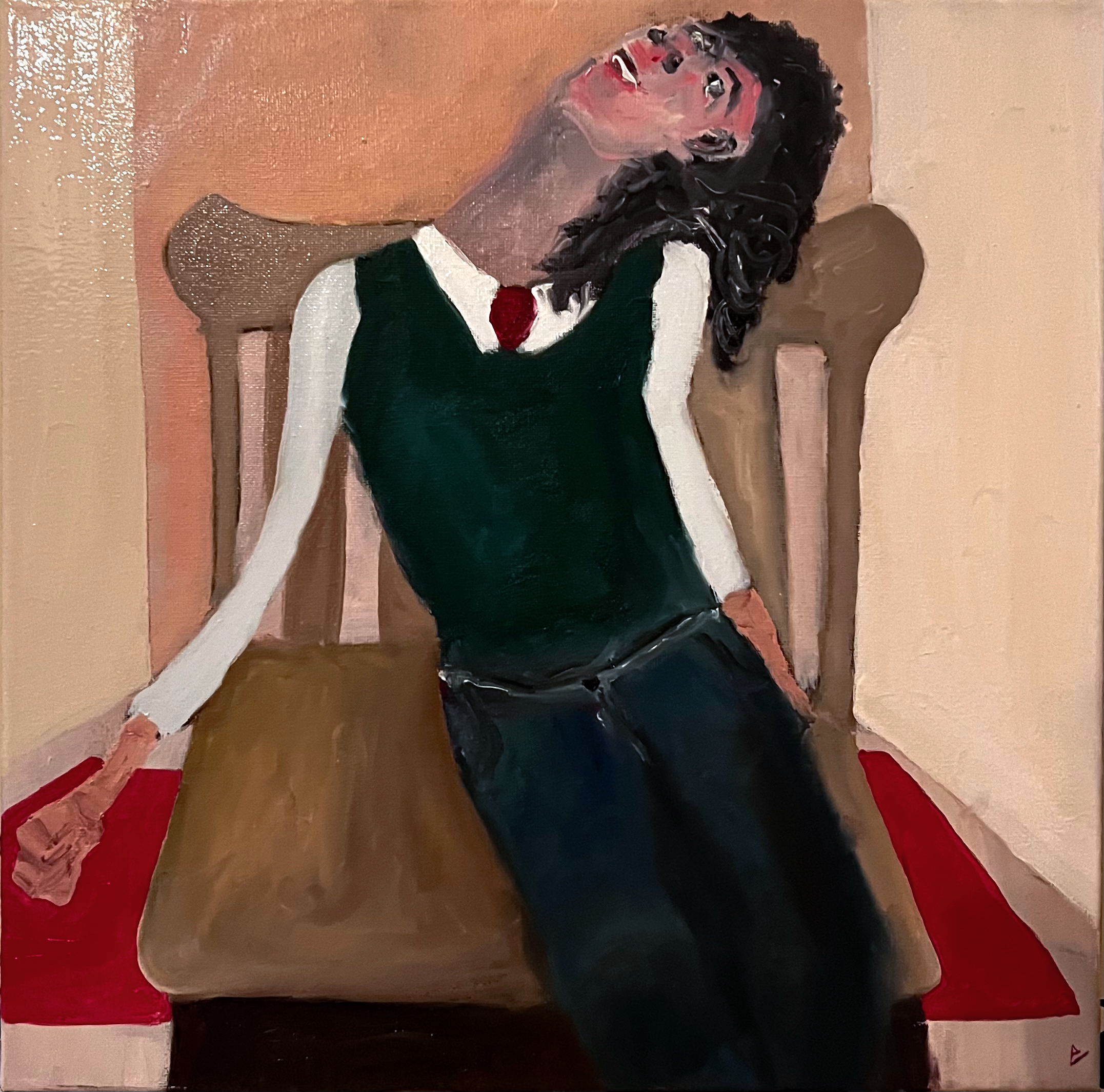
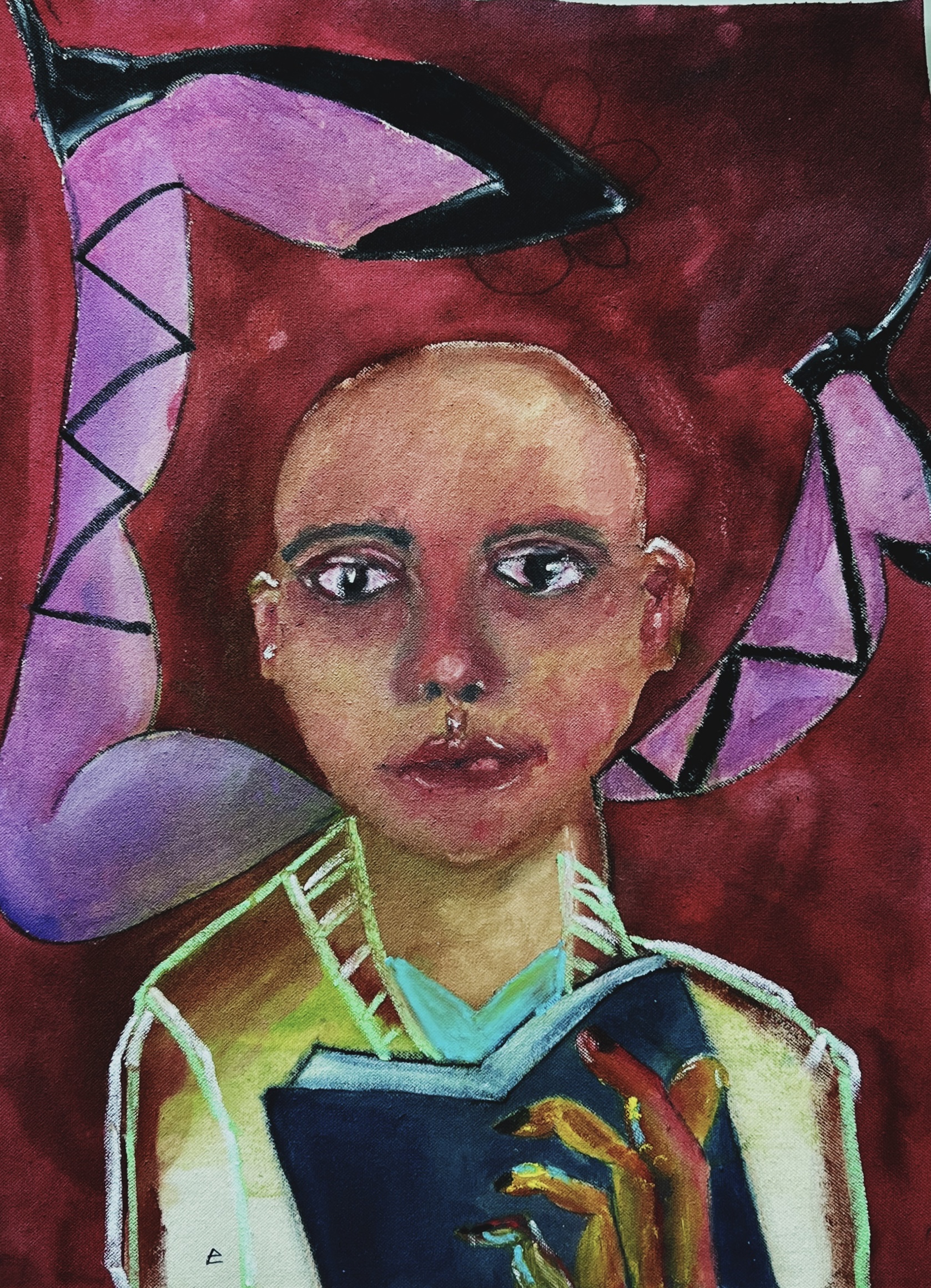
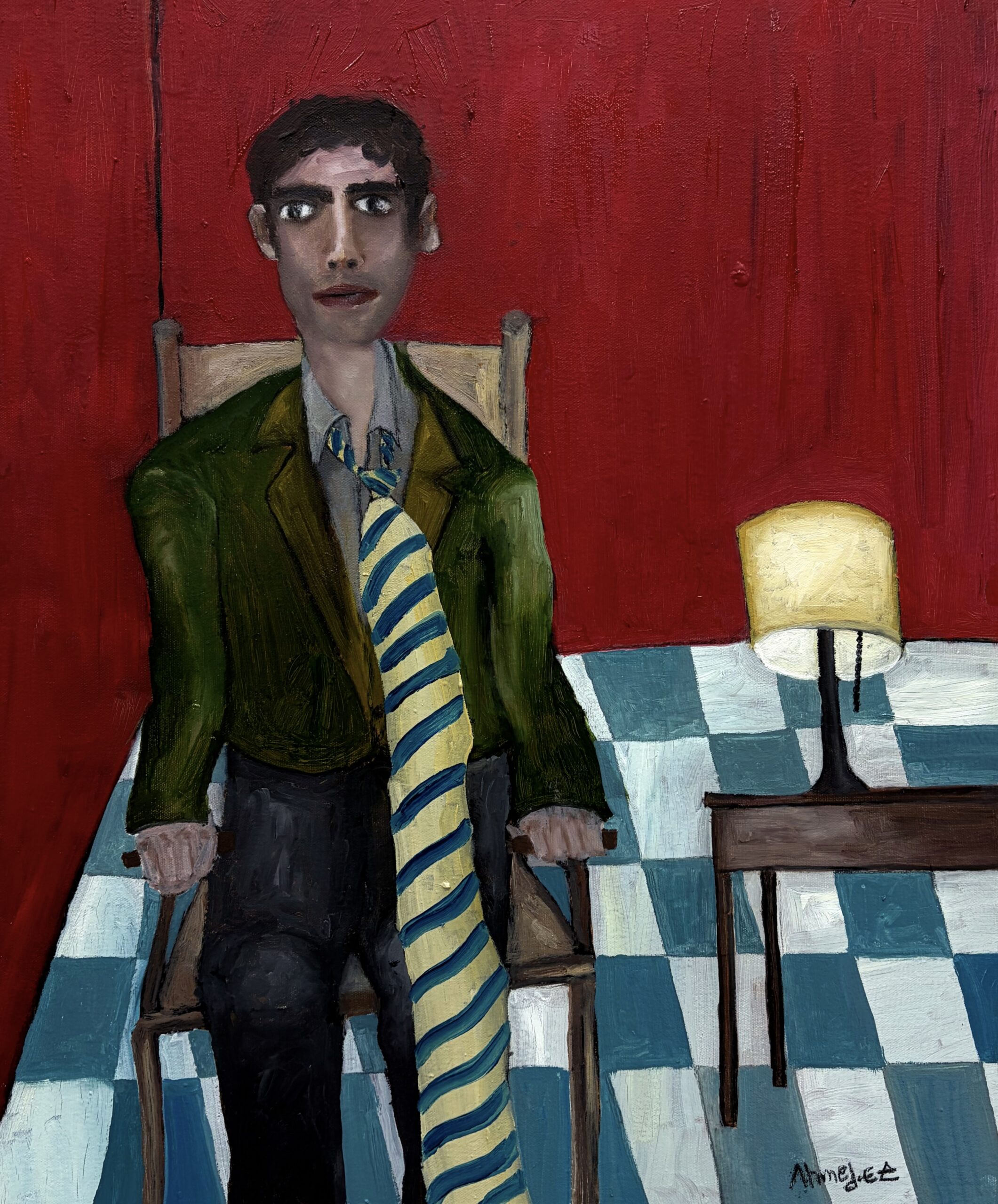
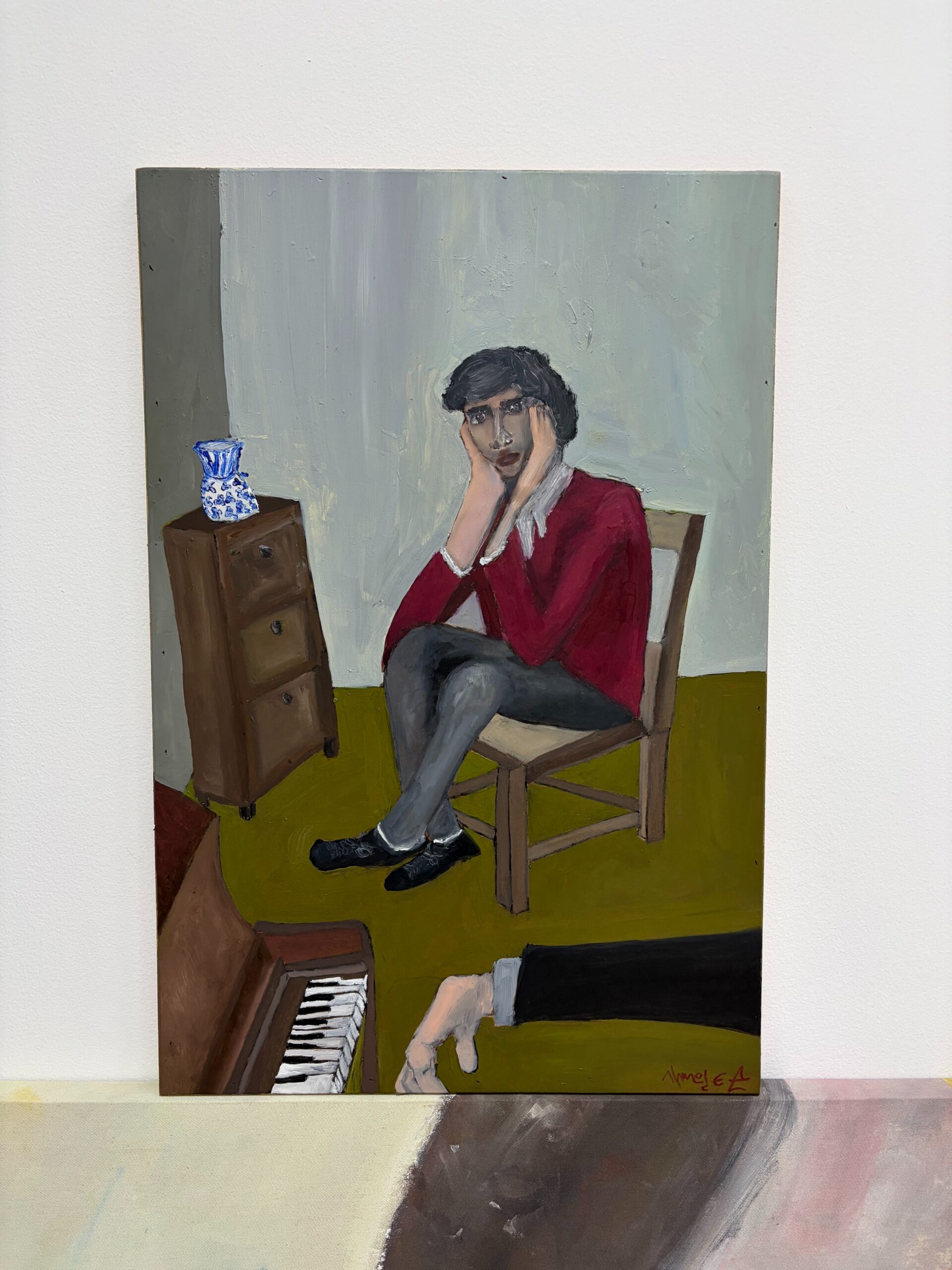
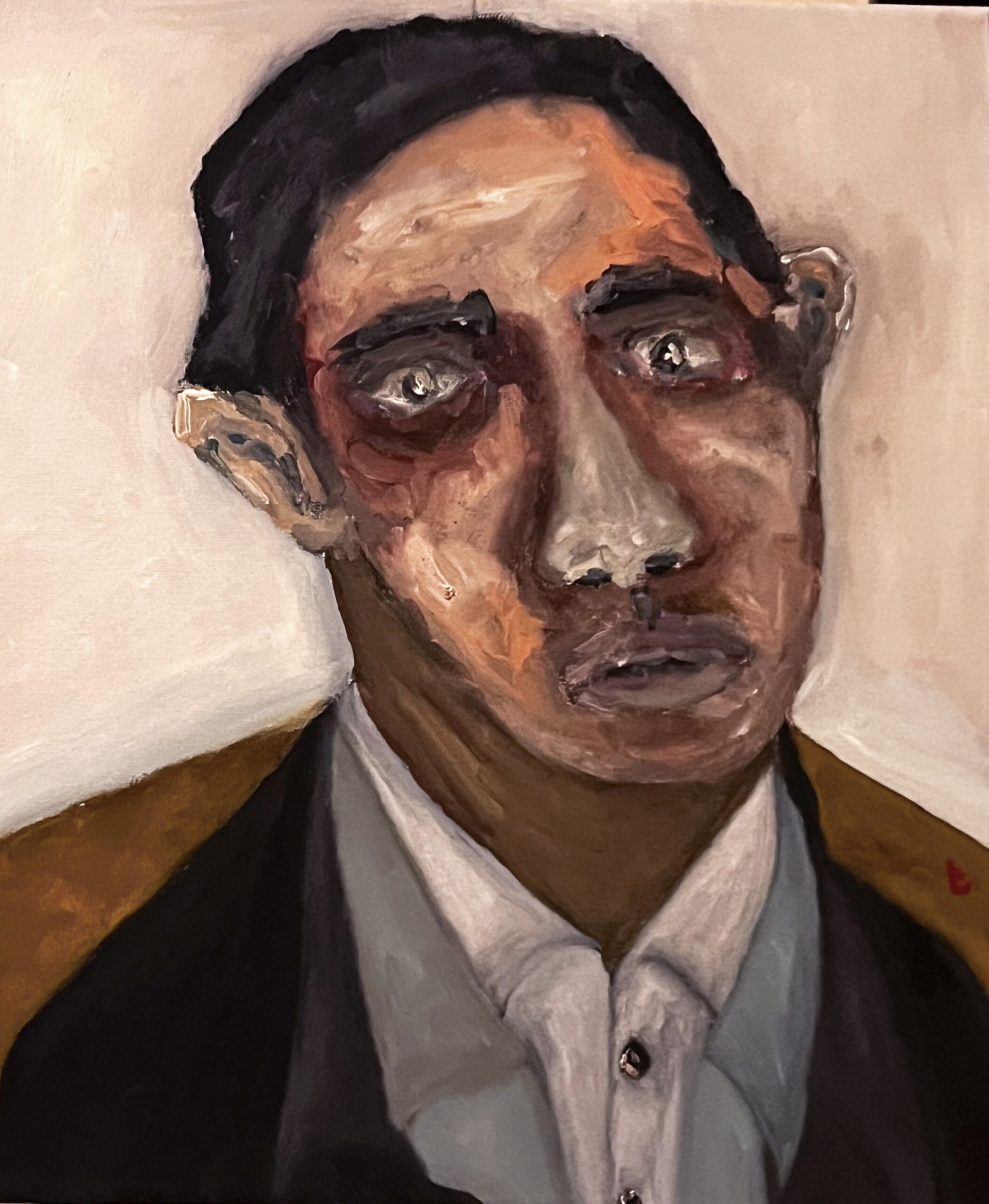
In parallel with his programming work, he also freelances as a curator, writer, and painter. His practice is figurative, shaped by society, people, and their stories, which became the driving force behind his art. This human-centered inspiration led him to explore figurative portraiture using oils, pastels, and charcoal, capturing the essence of his subjects through expressive forms and layered textures.
“I’ve been studying people’s postures for three years. They reveal unspoken emotions. There are certain feelings you sense but cannot put into words. Yet they show in your face, the way you sit, the way you place your hands on a chair, the way your body assumes a posture. This is what I’m exploring in my portraits. That’s the bliss of being an artist, expressing the unspoken.” This was the focus of his last solo exhibition in Cairo, titled Synonyms.
Reaching a level of art that feels truly “unique” to the artist is no easy feat, and for Emad, that moment came years ago when he was exhibiting his work at Art Dubai, showcasing primarily landscapes and portraits. It was there that a chance encounter shifted the trajectory of his artistic journey.
“In 2015, I met a lady at Art Dubai. Her name was Rossy,” he recalls. She looked at my portfolio and said, ‘Emad, I cannot see who you are.’ She asked me to pause and really ask myself whether I was painting for myself or for other people. She said, ‘If you paint for people, then anyone can paint a landscape in Paris. But if you paint for yourself, you express your feelings through your work. Only then will your style be truly yours. One day, I want to see your work without reading the label and know immediately that it’s you.’ That advice stuck with me.”
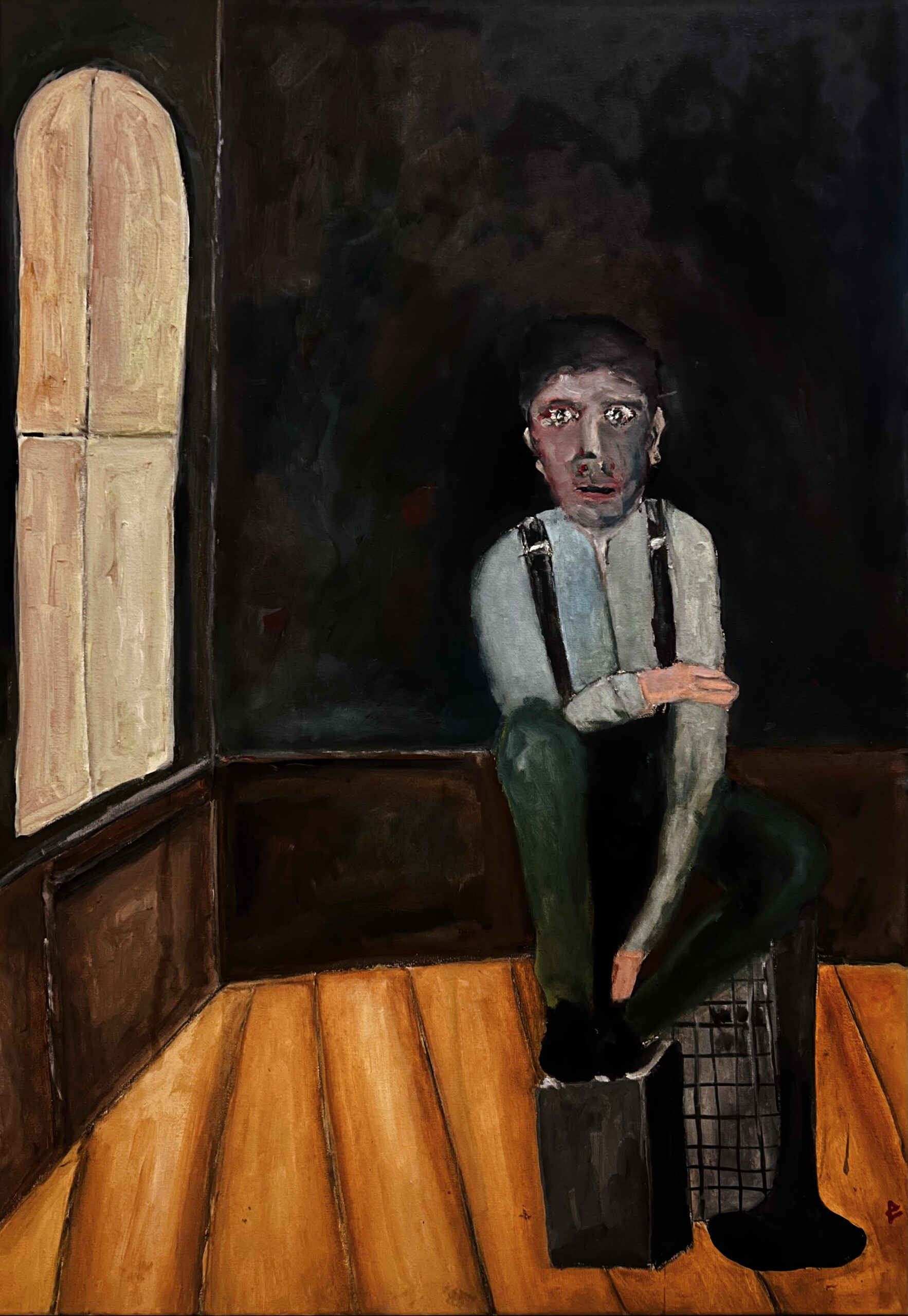
Emad’s figurative work now carries a distinct voice, a signature that is unmistakably his own. Today, his paintings form part of the permanent collections of the Barjeel Art Foundation and the Leila Ezzat Museum in Cairo, and are showcased in the Etihad museum in Dubai.
Yet, even with all his success and recognition, he remains deeply rooted in the UAE, the place that shaped him and to which he remains profoundly grateful. “Growing up in the UAE makes you different,” he explains. “You are, by default, very educated, culturally grounded, and inherently an art lover. There is a deep institutional commitment to education, research, culture, art, and the preservation of heritage, with museums and cultural spaces playing a central role in everyday life.”
Emad also credits the support that Emirati creatives receive from the government. “When you visit Art Dubai or Abu Dhabi Art and see all these Emirati artists, you realise the level of support the government provides, helping artists showcase their work, gain representation from major galleries, and participate in residencies. There are so many residency programs in Abu Dhabi and Sharjah, and this isn’t something new. It’s been there from the very foundation.”
For decades, the benchmark for Arab artists, the yardstick of education, recognition, and professional success, was overwhelmingly Western. Art schools and curricula abroad often highlight European methods, from Greek art to Renaissance and modernist paradigms, leaving little room for Arab students to relate to the material, in the absence of their own visual heritage. Ultimately, this results in emerging artists producing work that, consciously or not, catered to the Western eye, framing their creative output through a lens that was not their own.
Emad’s trajectory, by contrast, offers a profoundly refreshing counterpoint. His story begins in Sharjah, rooted in the region, informed by its culture, and nurtured by its artistic institutions. He studies locally, creates locally, and critically, contributes back to the very ecosystem that shaped him. It is a rare narrative in which the artist’s origin, education, and practice exist in dialogue with his own cultural context rather than in pursuit of an external standard. In Emad’s work, the region is not a backdrop but a living, breathing partner in his creative process.
When I make that observation, Emad recalls a quote by Hasan Sharif, a central figure in contemporary and conceptual art in the region, often hailed as the father of conceptual art in the Gulf. Sharif, known for experimenting with a wide range of materials, from waste, to recycled objects, mittens, tuna cans, and cardboard boxes, once said, “My home is where my medium is.” For Emad, the phrase speaks to creating from the context in which one lives, drawing inspiration and practice directly from one’s own surroundings rather than looking outward for validation or inspiration.