
News


Moroccan street photographers often find themselves reliant on the reproduction of stock images, to be sold to foreign news outlets – the medina door, the cat, the woman in a djellaba, or the weathered bookseller. The work of photographer Amine Houari not only documents significant moments of urban transition but is, in and of itself, a moment of transition within the Moroccan photography scene.
“We are the first generation of Moroccan storytellers to take photographs of things that really interest us without playing into clichés or trying to circulate an image of Morocco that sells,” Houari tells me through static. He is in Marseille for an exhibition at the time of our conversation, while I’m at home in Tangier, and we’re not sure if it is his device or mine that is causing the crackle.
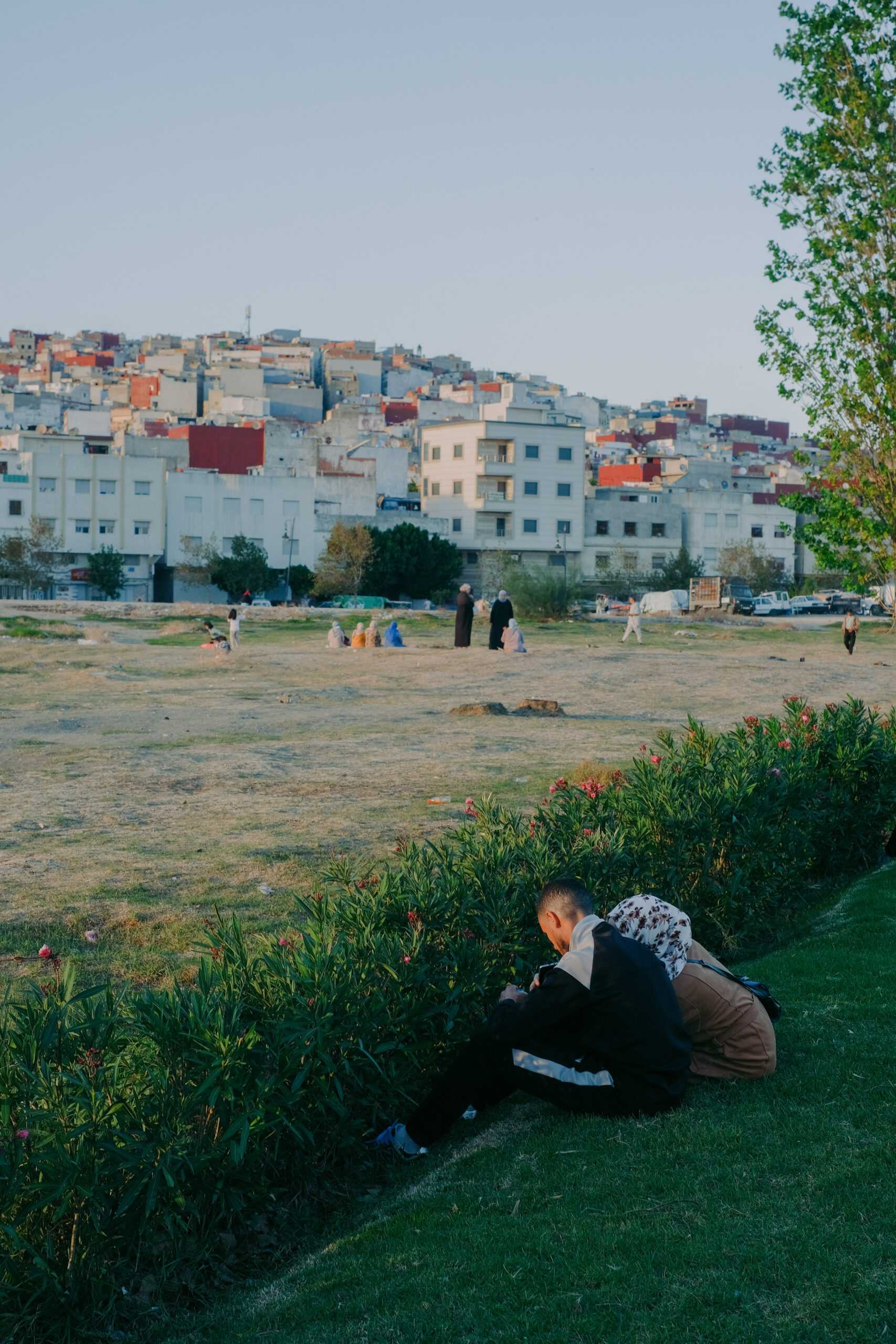
Houari’s work generally leans on the aesthetic contrast of lines, angles, and shadows. It doesn’t play into the shiny, perfumed image that the government seeks to project with football stadiums and upscale malls, nor the smoky, drug-addled memory of a 1920s Morocco that served as an escape from European monotony. Rather, Shifting Tangier speaks to a dangerous transformation, a mythological loss, and the further fracturing of an already-fragmented social identity.
After moving to Tangier from Fes in 2023, Houari encountered relentless construction across the city and felt compelled to document what he saw – not only visual contrast, embedded into the urban landscape of the city, but also the social significance of architectural change in Tangier.
His compositions, exhibited in the Musée National de la Photographie in Rabat since 2025, are neat, balanced, not heavily colour graded, and yet behind each image lies a strange, steady urgency – not a siren, but a hum.
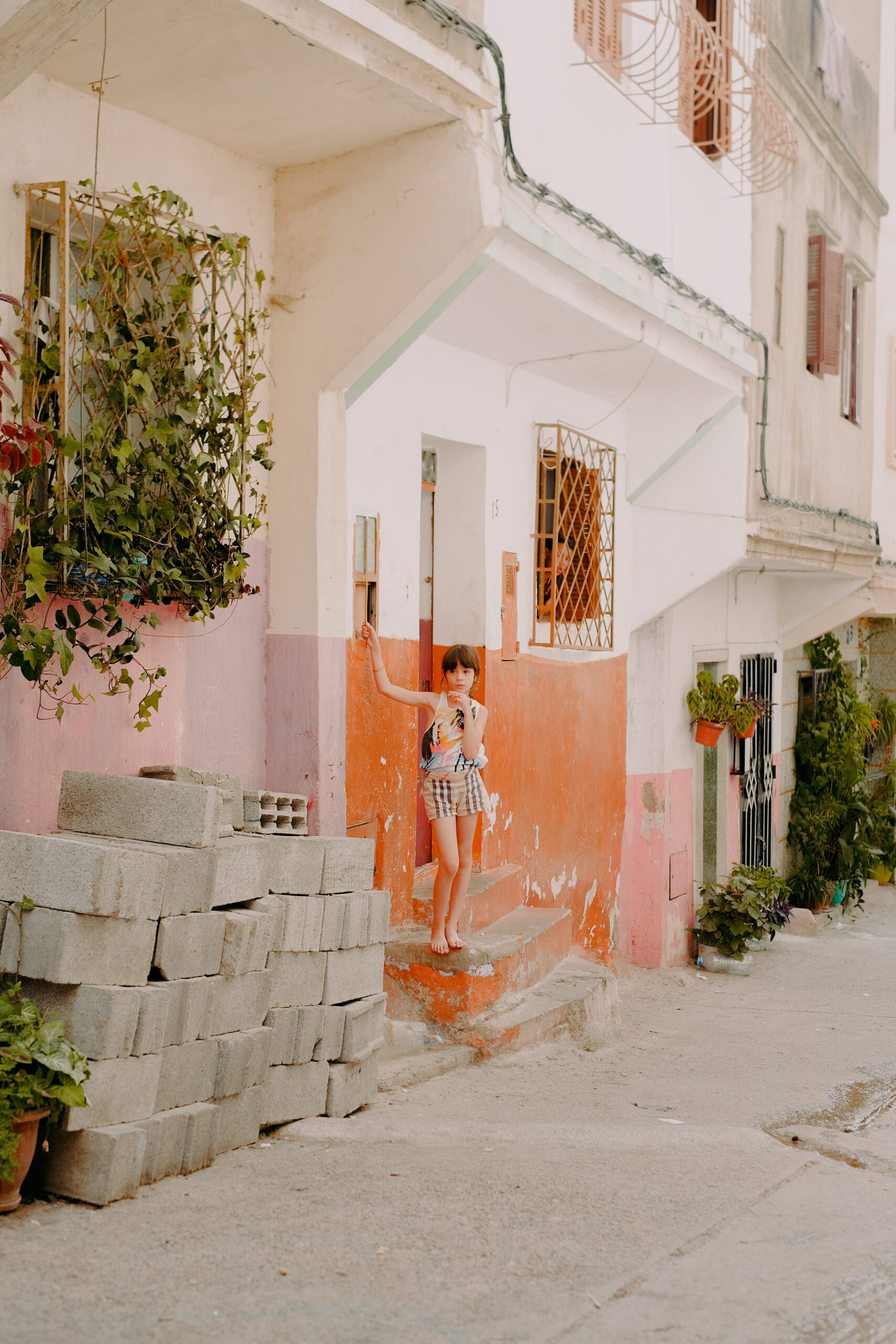
Houari found inspiration in the work of Yto Barrada, a renovationist of the Cinématèque du Tanger, who documented the city during the initial era of upheaval, tracing the dispersal of Iris Tingitana in Tangier. He was also influenced by the work of Hicham Gardaf, whose series In Praise of Slowness (2023) explores the notion of impermanence and socioeconomic change through the disappearance of Tangier’s bleach sellers – usually wizened men who walk around the town with hundreds of empty plastic bottles attached to a stick, like the candyfloss sellers of Alexandria.
Territoires, his first photo series, documented the abstract, and often surreal, abandoned structures found in the periurban areas of the Rif and Fes. “[The series came from] an amazement that I had for Moroccan landscapes, and an appreciation for architectural forms, without really knowing what I was looking at or why it looked that way.”
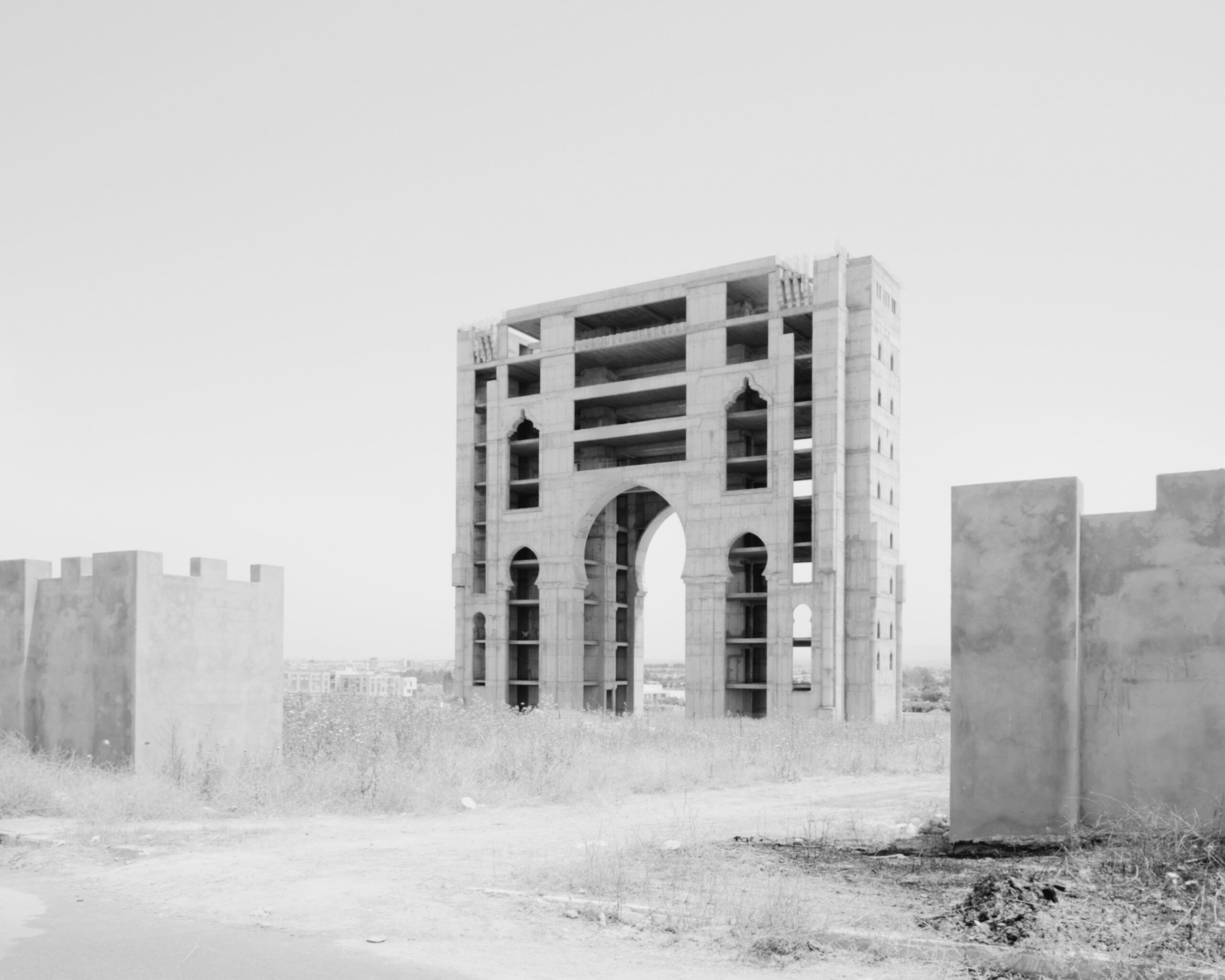
My favourite image in the series depicts an abandoned archway outside of Fes – a grandiose door to nowhere, standing in testament to an attempt at construction. I find that many of the photos in Territoires, like this one, present a haunting, almost uncanny, dimension to the Moroccan visual archive, which clashes with the vibrant and populated souk photos that overwhelm it.
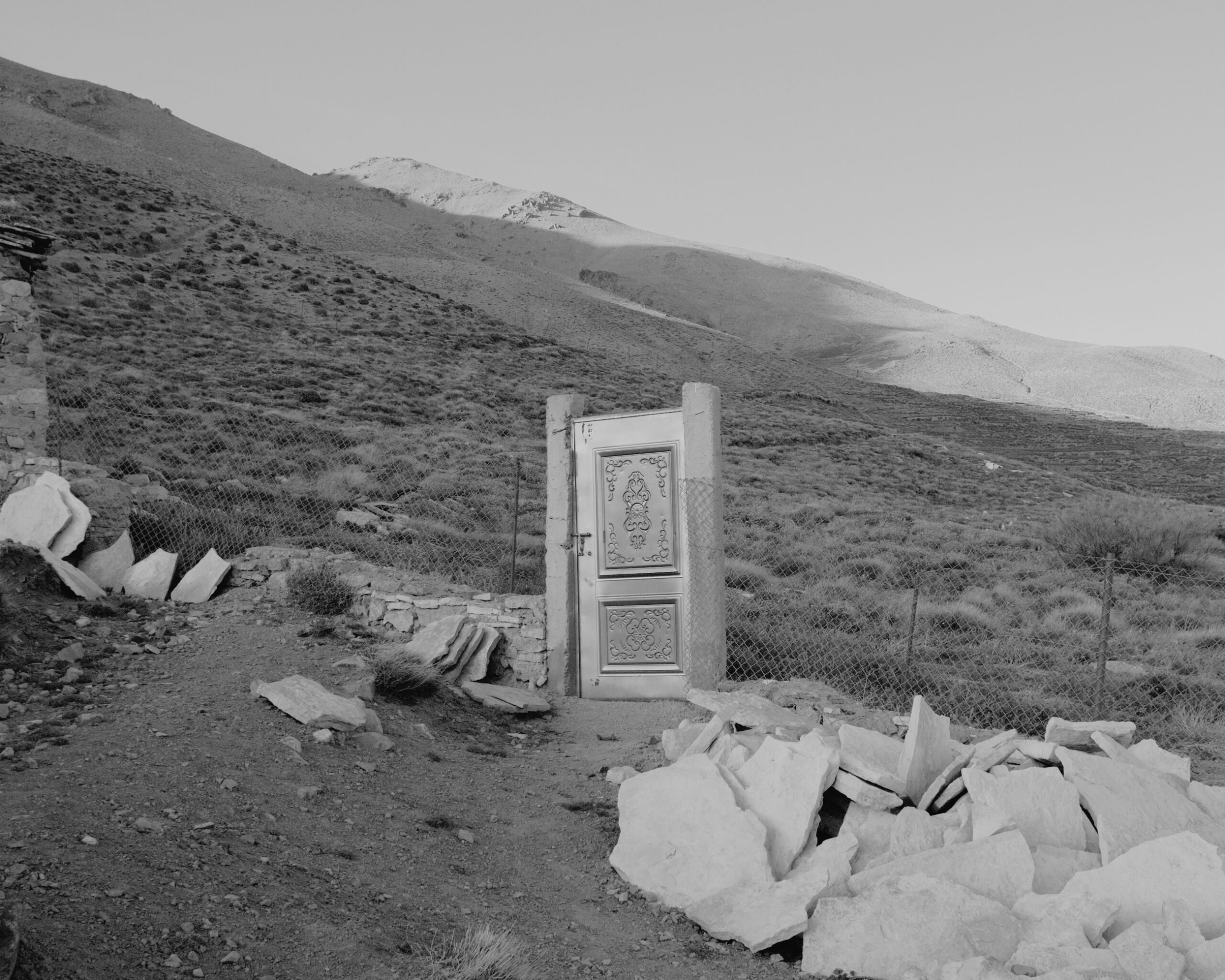
Houari initially worked in street photography, even winning his first competition with a picture of a boy playing football in the medina of Fes, but after choosing to study Architecture at university, Houari’s eye for structural intrigue became more refined, and his studies and photographic interests informed each other. He explains that through studying architecture, “I became interested in documenting the spaces where humans live, without seeing the humans – just the traces.”
“That’s why some of my pictures are empty. After years of taking street scenes, I was fed up with having humans in the frame, and I felt more attracted to and in tune with scenes and compositions with no people. I liked being able to take my time to compose a photo. I was able to locate a structure and then return another time to take the photo in the right light. There was something really nice about being in control, and taking my time, as opposed to the urgency of street photography.”
While Territoires may have been a successful exercise in finding his signature style, Shifting Tangier seems to me the inevitable continuation of a work that Houari began with his first camera, driven by an urge to immortalise moments of transformation, if only as a reminder that the end result is not, and was never, perpetual.
“When I was eight, I went on a school trip to Rabat, and my parents gave me an analogue camera, since they didn’t trust me with a digital one,” says Houari. “I took a photo of the construction of the marina in Rabat, and actually, that was my first archival photo of Moroccan architecture, because the whole area has changed so much now.”
Houari’s first contact with Tangier was back in 2009, when he and his family came to drop his sister off at the railway station. “Tangier is a city that I used to hate. A lot,” he admits. The area around the station was still under construction, and upon every venture to Tangier, he felt overwhelmed by the height of the buildings and the militant presence of cranes, diggers and road rollers. “Especially because I was so small, I felt like Tangier was just a dark, grey city with concrete and construction everywhere.”
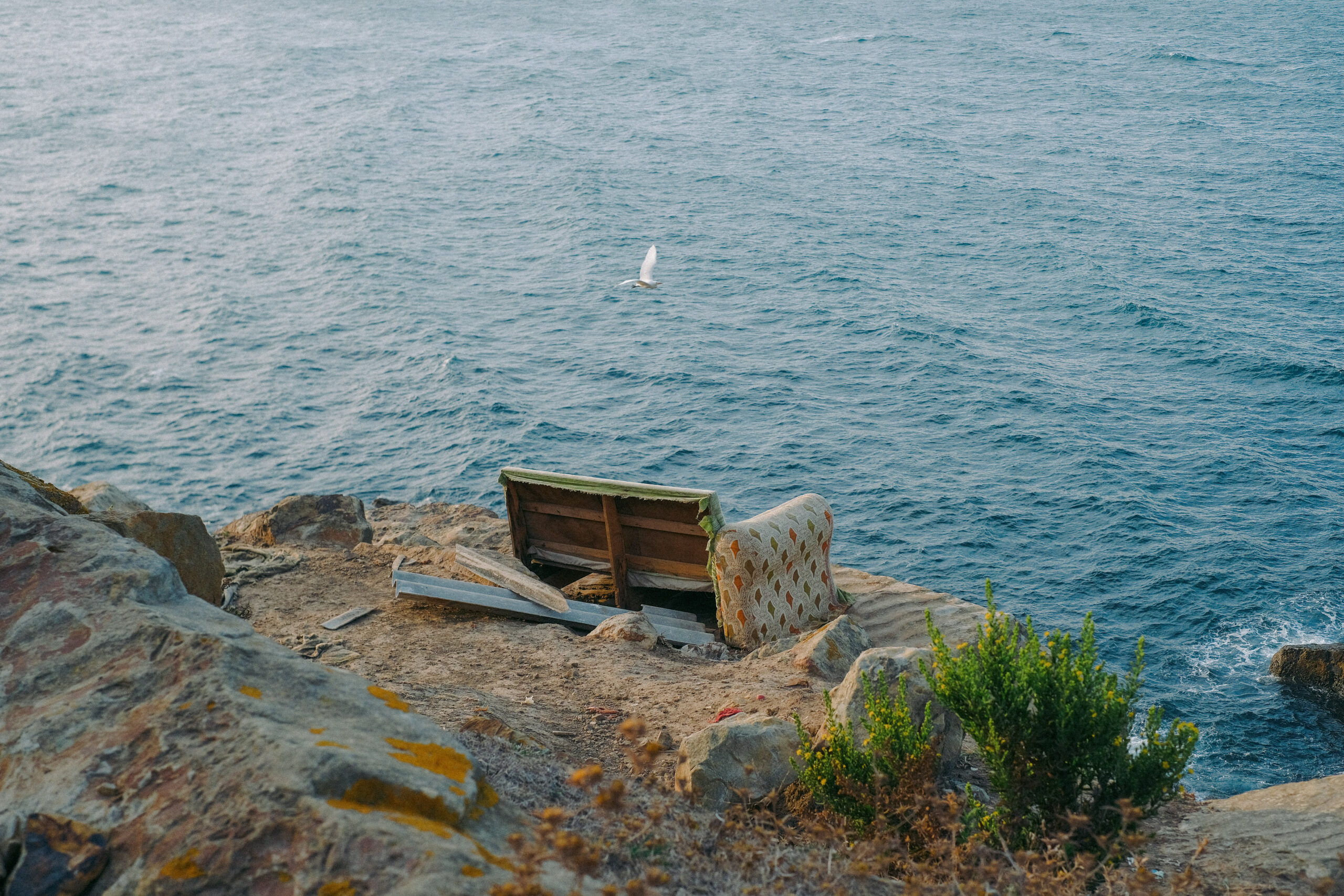
For most of the calendar year, Tangier is known for its huge drug economy, managed by youths in GUCCI caps and adidas slides, complemented by a dense sex work scene and strangely ubiquitous cabaret clubs. Tangier is also home to a large industrial workforce, tourism majors and engineering students, who benefit from the city’s unique geography between worlds and seas.
Large communities of Sub-Saharan migrants and harragas have settled in Tangier en route to the Mediterranean sea, ultimately deciding not to risk the journey to Europe, but contrarily – or perhaps inevitably – there’s also a growing population of European ‘expats’ who wear linen, shop at Carrefour and send their children to school in Socco Alto.
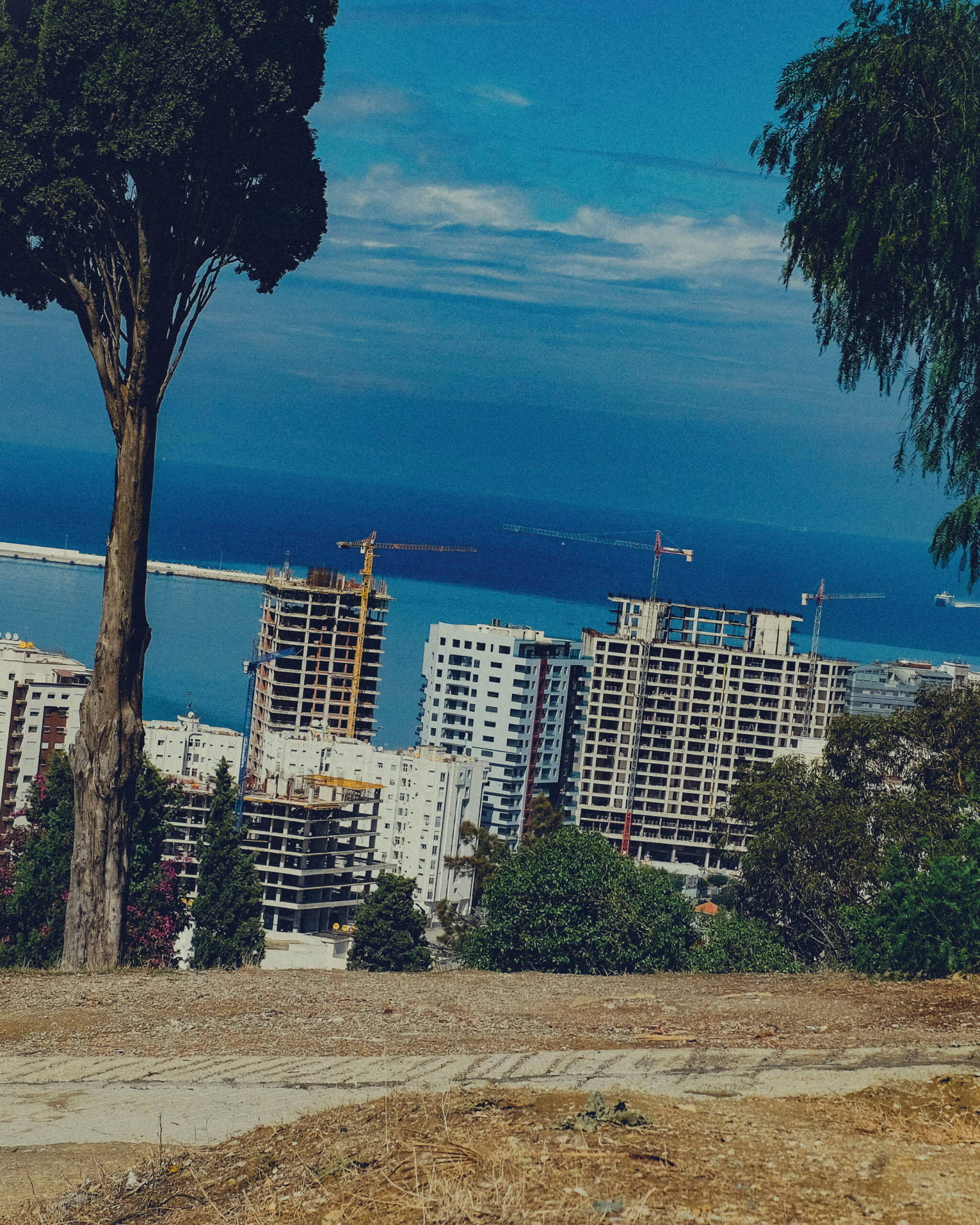
But one hundred years ago, Tangier was the mythical capital of the post-WWI International Zone, the point where Europe, Africa and the Muslim World collided. By the penning hands of the allies – infamous Paul Bowles, Mark Twain, Alexandre Dumas and Ian Fleming – the locals were declared barbarians, and the city a lawless playground.
As a solution to European monotony and colonial restlessness, they sculpted Tangier into the image of a sepia-toned Arabian seductress, the seven hills of the city her pillowy curves and the port, her watery point of entry. Tangier sometimes even took the form of the even more submissive, even more effeminate, homosexual indigenous man, upon whose back Bowles, Twain and Dumas built their careers.
Though described as a “dark grave” by Dumas himself, foreign artists came in droves to be ‘reborn’, inspired, redirected. They bled Tangier to give life to their pale writing, and then, in a still nascent North African cultural landscape, the runt of the European literary class found an acclaim that they then convinced themselves had been destined for them all along.
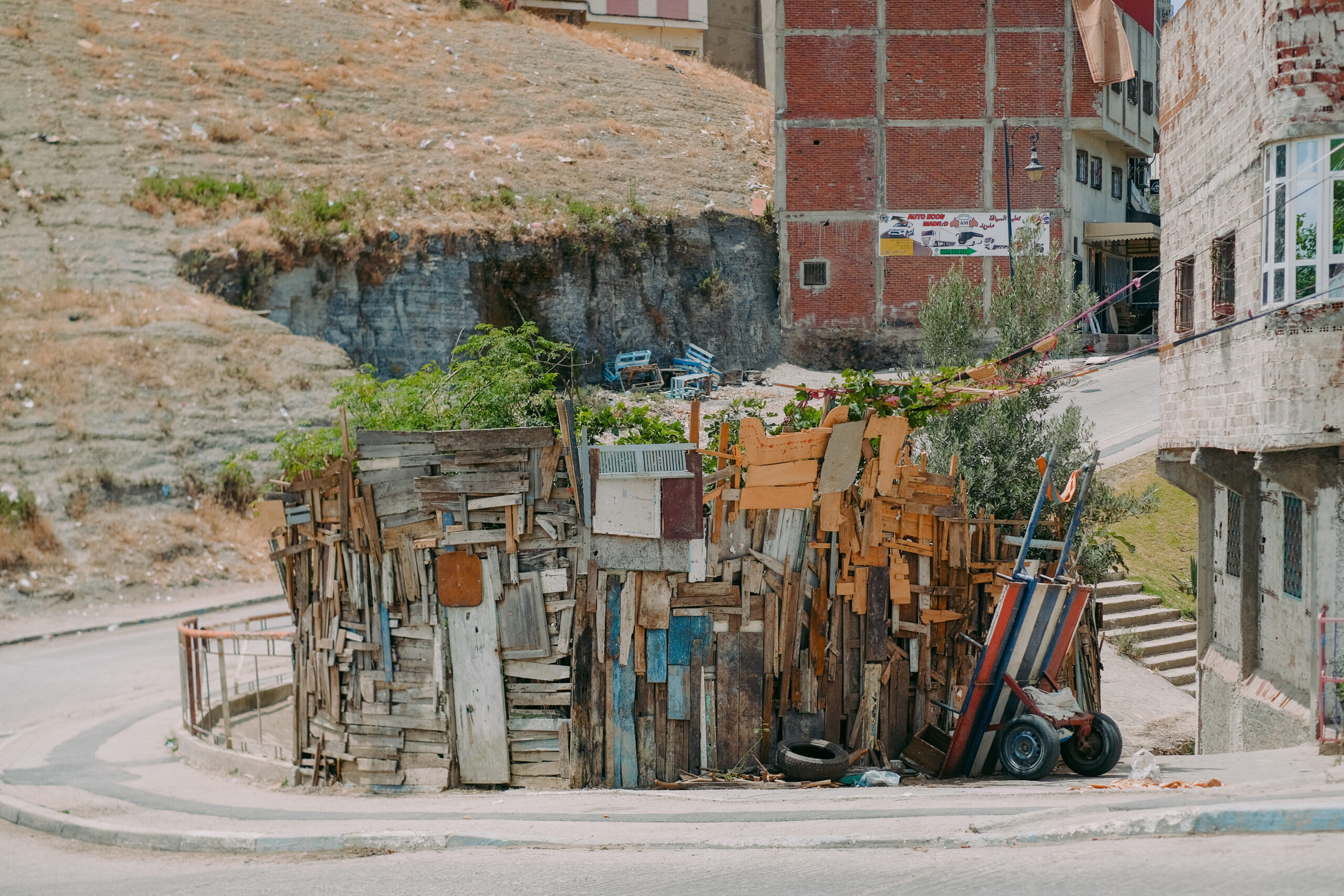
France, Spain, Great Britain, the United States, the Soviet Union, Italy, Portugal, the Netherlands, and Belgium all exercised influence on the International Zone of Tangier at one time, and amidst competition for long-term ownership, the larger powers staked their claim to the land by building in the likeness of their own.
The Spanish added flamboyant Art Deco balconies and buildings gilt with gold, while the French reproduced the Orientalist architecture of their colonial golden age, with tall doorways and white paint. The British built villas with gardens overlooking the Strait of Gibraltar – their priority, always – and the Americans built grand diplomatic centres in the name of charity.
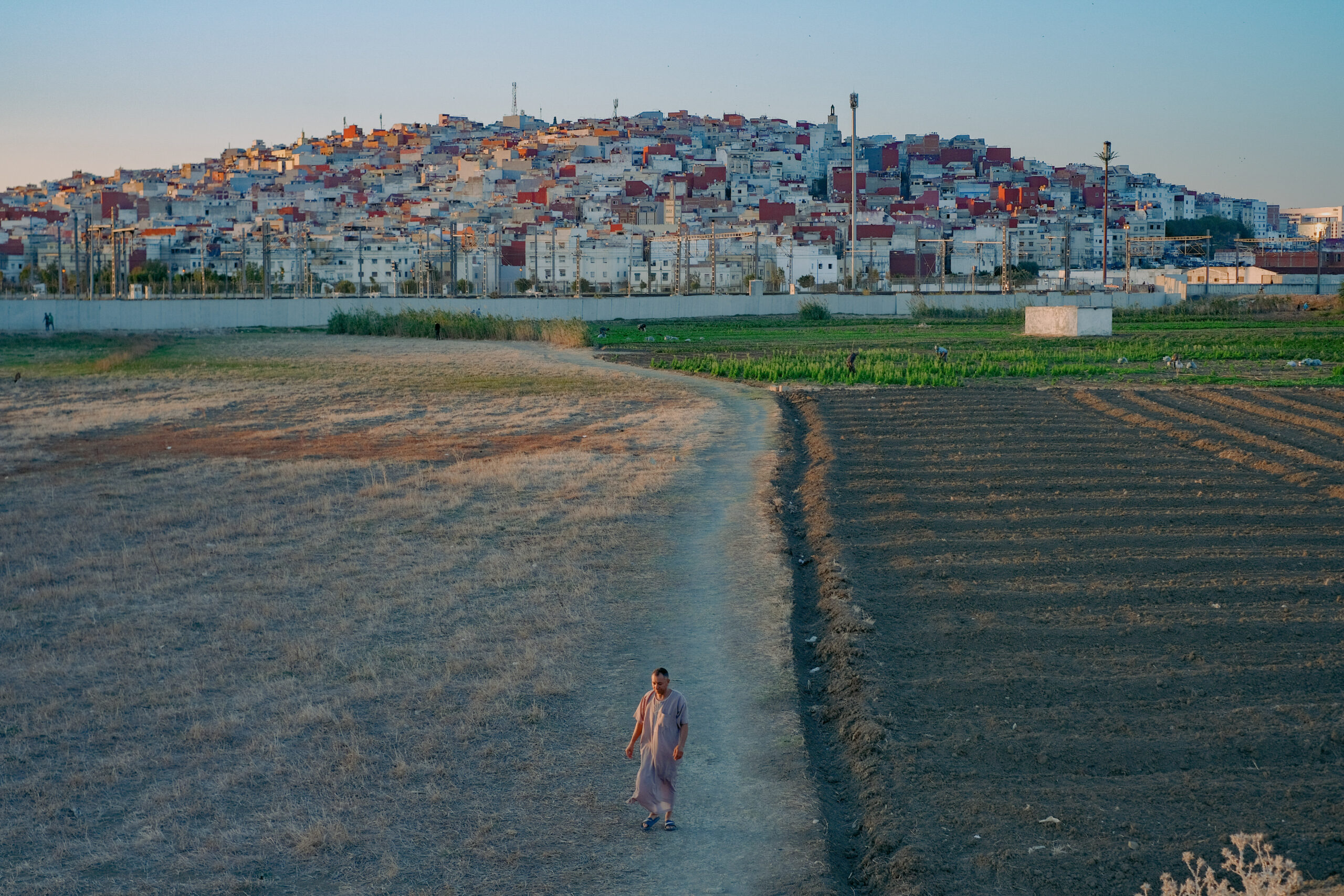
Tangier became a sort of Frankenstein’s monster, tattooed with the traces of every power that passed through it, and haunted by the writings of every starving artist that she had fed. Architecturally, the city is still a picture of every power exercised here: “a city of contrasts,” Houari calls it fondly.
After independence in 1956, King Mohammed V of Morocco was slow to take the hand of the Bride of the North, and so, as each nation and its literary military withdrew, Tangier began to drown. The locals turned to product smuggling and kif (cannabis mixed with tobacco) production to keep the internal economy afloat. But these activities only further isolated them from the rest of Morocco.
The city survived on these illicit trades, but its bloated Bowlesian legacy left little space for any real local identity to emerge. So, revered by outsiders and later vilified by Moroccans, Tangier developed a mythological similarity to the severed head of Medusa in the raised hand of Hercules, and little changed for 50 years.
It was into this suspended, mythologised stillness that Mohammed VI rode in on a white horse at the turn of the century to ‘save’ Tangier. He had an ambitious economic vision for Morocco, to which the revitalisation of the neglected port city was central, and in less than 15 years, Tangier became unrecognisable.
Houari moved to Tangier in 2022, after finishing his studies, and found the architectural change to be constant, rapid, brutal, and accelerating day by day. Shaken once again by the scale of construction and the militancy of machinery, scaffolding and ‘Coming Soon’ signs, the foundations of Shifting Tangier were laid – a project which, much like the architectural change it seeks to capture, remains ongoing.
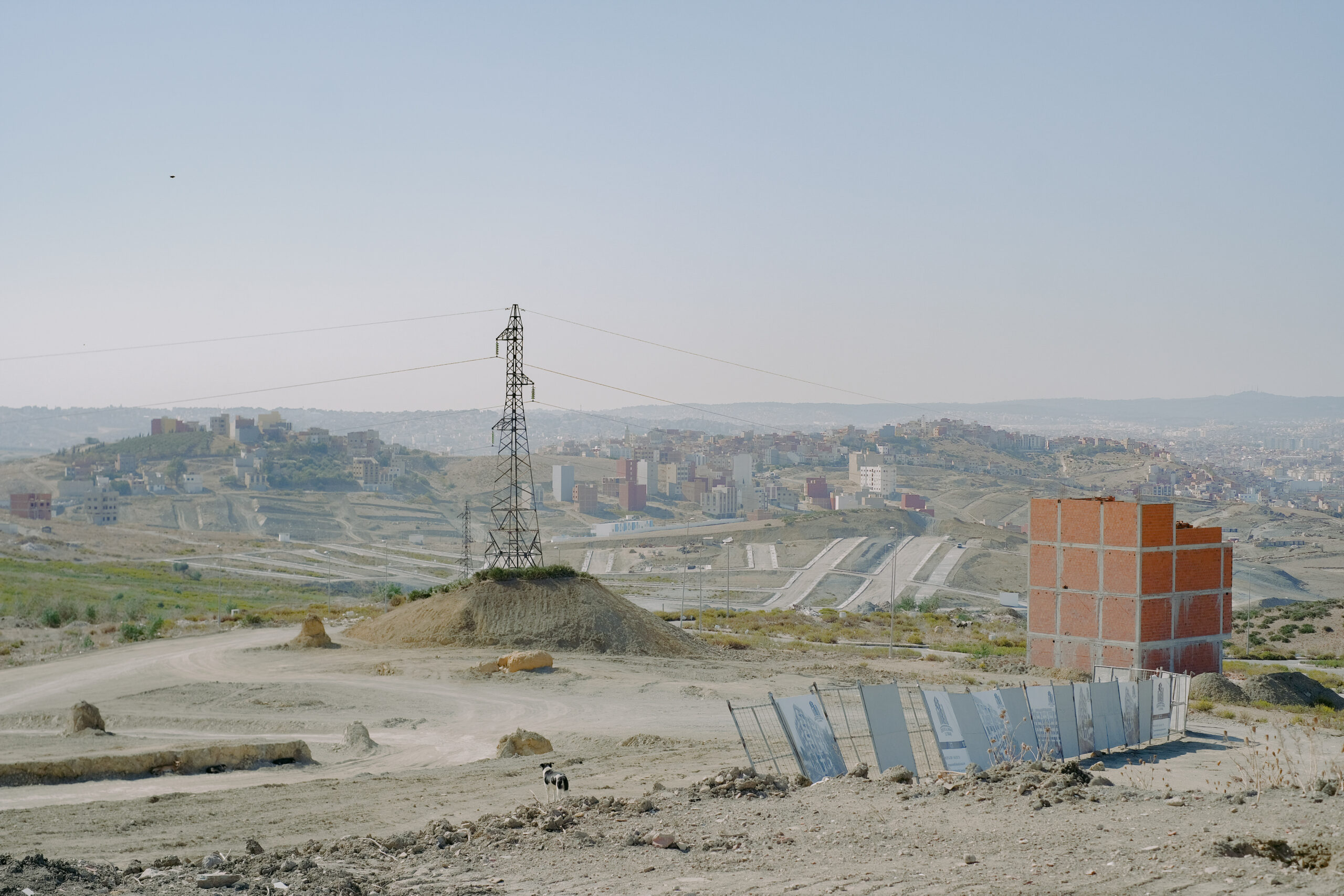
“With my work, I have to do a lot of walking tours of the city, and I would return to certain spots after a week and find them changed – or gone – already. It struck me that this was a city in transition, and actually, it felt urgent to document these changes. It felt a bit like I was compiling a living archive of the city.”
Walking and keeping score of the city week to week, Houari remarks how “Le Mirador used to be a high point where you had a panoramic view of Tangier, but the second time I went there, I took some photos of the construction of the Hilton hotel that had just begun. Now, there are five stories of Hilton in the way of what used to be an uninhibited view.”
In 2003, the railway station, which would become Houari’s first point of contact with Tangier, was completed, replacing a historic 1925 building and marking the beginning of a huge renovation of the entire municipality. The massive Ibn Batouta Stadium began construction in 2002 and was completed in 2011, with a total cost of over €440 million after a renovation for AFCON 2025.
The mall of the same name, the Ibn Batouta Mall, began construction in 2010 and was completed in 2017. In 2011, the construction of the high-speed railway line between Tangier and Casablanca began. The line took seven years to complete and connected the city not only to the creative and administrative capitals, but also to the midway towns like Kenitra, which in turn connected tourism students and engineers to Tangier.
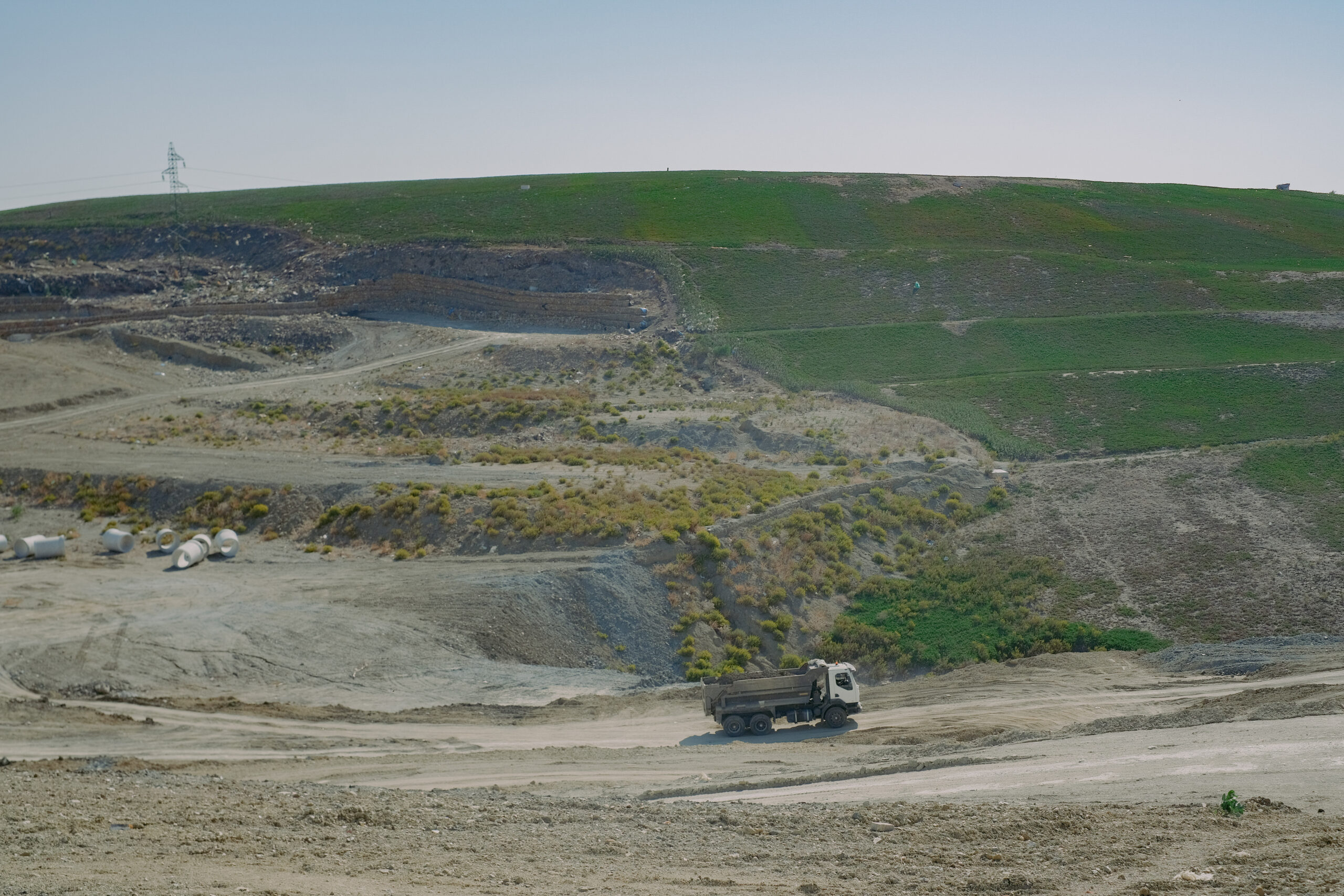
The central project, Tanger-Med Port, saw two phases of construction between 2003 and 2019, costing over €8 billion in total. Facing the Strait of Gibraltar, Tangier Port is now one of the five most efficient ports in the world.
With these projects and this new industrial status, Tangier’s estrangement from Morocco came to an end, and the city’s social fabric inevitably warped. Engineering students came from all over Morocco to the Second Industrial City in hopes of a placement with Tanger-Med, and somehow, in less than twenty years, Tangier has become the image of a ‘perfect’ Moroccan city, conceptually. “It’s very bling bling in some areas, some areas are cutesy and beautiful, there’s a traditional medina, but also lots of high-rise buildings and a nice corniche.”
Ironically, summer tourism is thus both propelled and enabled by the continued urbanisation of Tangier at such a rapid pace, and with the arrival of diaspora Moroccans from Spain, France, the Netherlands and the UK, the influx of Moroccan residents, and the uptick in foreign tourists, Tangier becomes an International Zone, again.
In the summertime, the population of the city triples. The heat rises, the air thickens, and the city becomes grotesquely engorged with swathes of (perceived-to-be) wealthy diaspora and the Moroccan upper classes. Through June, July and August, the picture of Tangier – complex but stable for nine months of the year – warps and distorts again, and new characters emerge.
The steady stream of non-Moroccan tourists is uninhibited year-round, but the summer cohorts often find themselves disappointed by the heat, the bling, and the bodies. This version of Tangier is a far cry from the idyllic Mediterranean town they had read about, where they had hoped to find nothing but a leathery man in the souk with a cryptic piece of advice for them, and a handmade leather bag.
Saturated with one and a half million visitors, Tangier becomes so full that it grinds, almost, to a halt. Drivers spend hours in transit from one end of the corniche to another – expensive cars flattened in mere symbols of expense – and passengers vibrate on the spot in the land where two seas meet, buzzing with summertime energy yet forcibly stationary, like the particles of a solid vibrating as it melts.
Tangier becomes a melting, shifting, warping, sticky commercial hive, the mythology of the city flattened by high-rise buildings and high-speed trains.
Commercialisation spells a new kind of colonialism, where the power that Tangier bends to is foreign investment, with which the city is built and rebuilt weekend to weekend, knocked down and reorganised between sunrise and sunset. Residents of the Kasbah are selling their homes to foreigners for extreme amounts of money, and rental contracts expire in the summertime so that landlords can rent rooms out to visitors for premium prices.
“Making a city takes time,” Houari says, the pitch of his voice rising in frustration.
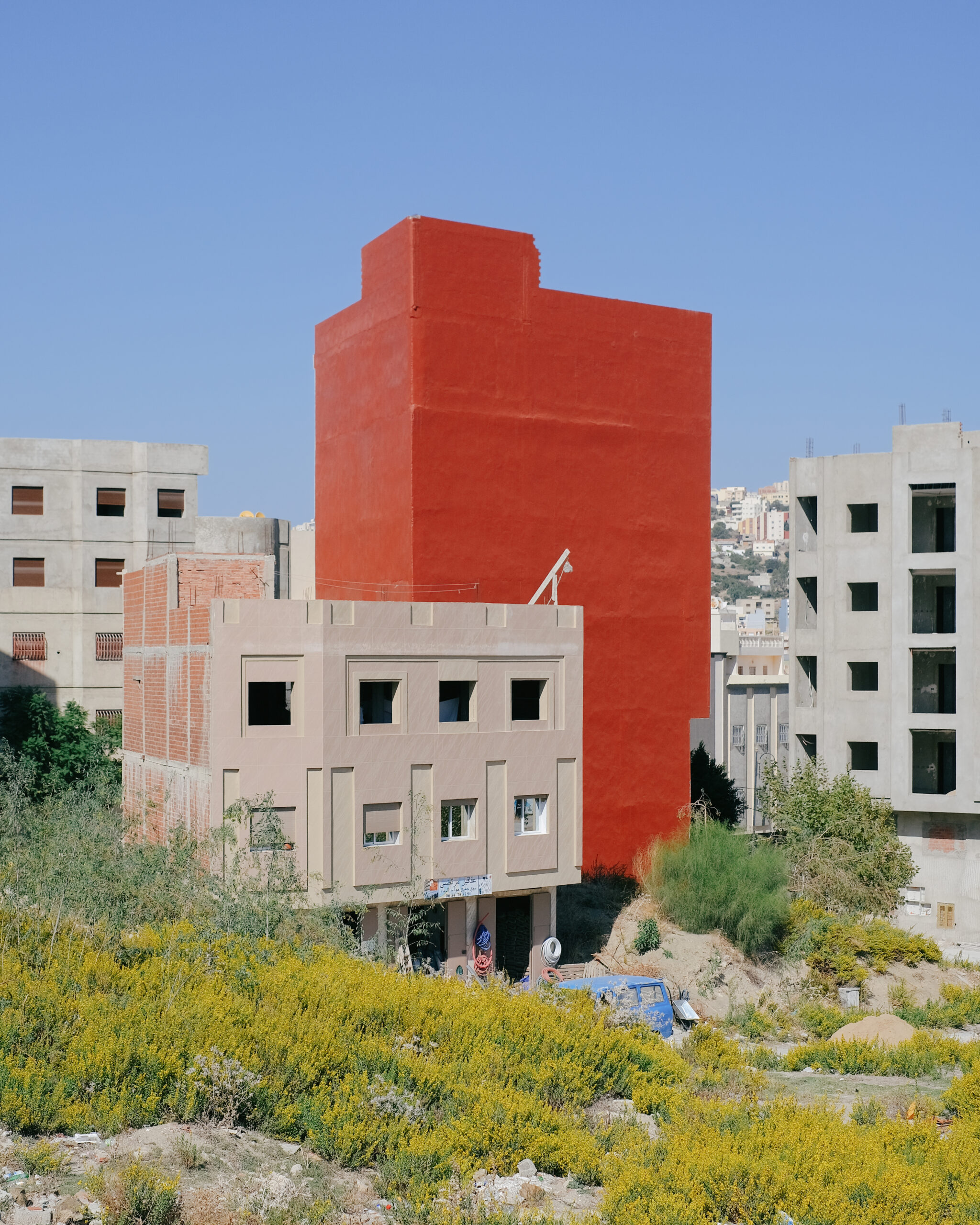
And Tangier deserves, like anywhere else, to reap the benefits of its own resources, but this rapid change has led to a sense of artificiality in the newer neighbourhoods, which “feel fake, like a film set or something that doesn’t belong there,” with that, Houari takes issue. “Central Tangier feels like your room when your mother is visiting. You’ve hidden all the bad things in the back of the wardrobe where she won’t see them.”
The Tangier that is well-documented in books and online exists within a 5km radius from Mohamed V Boulevard – the Kasbah, the new neighbourhoods, the beaches and the galleries – but when you turn your back to the sea and walk, you discover another Tangier, which is not feeling the benefits of the city’s sudden elevation.
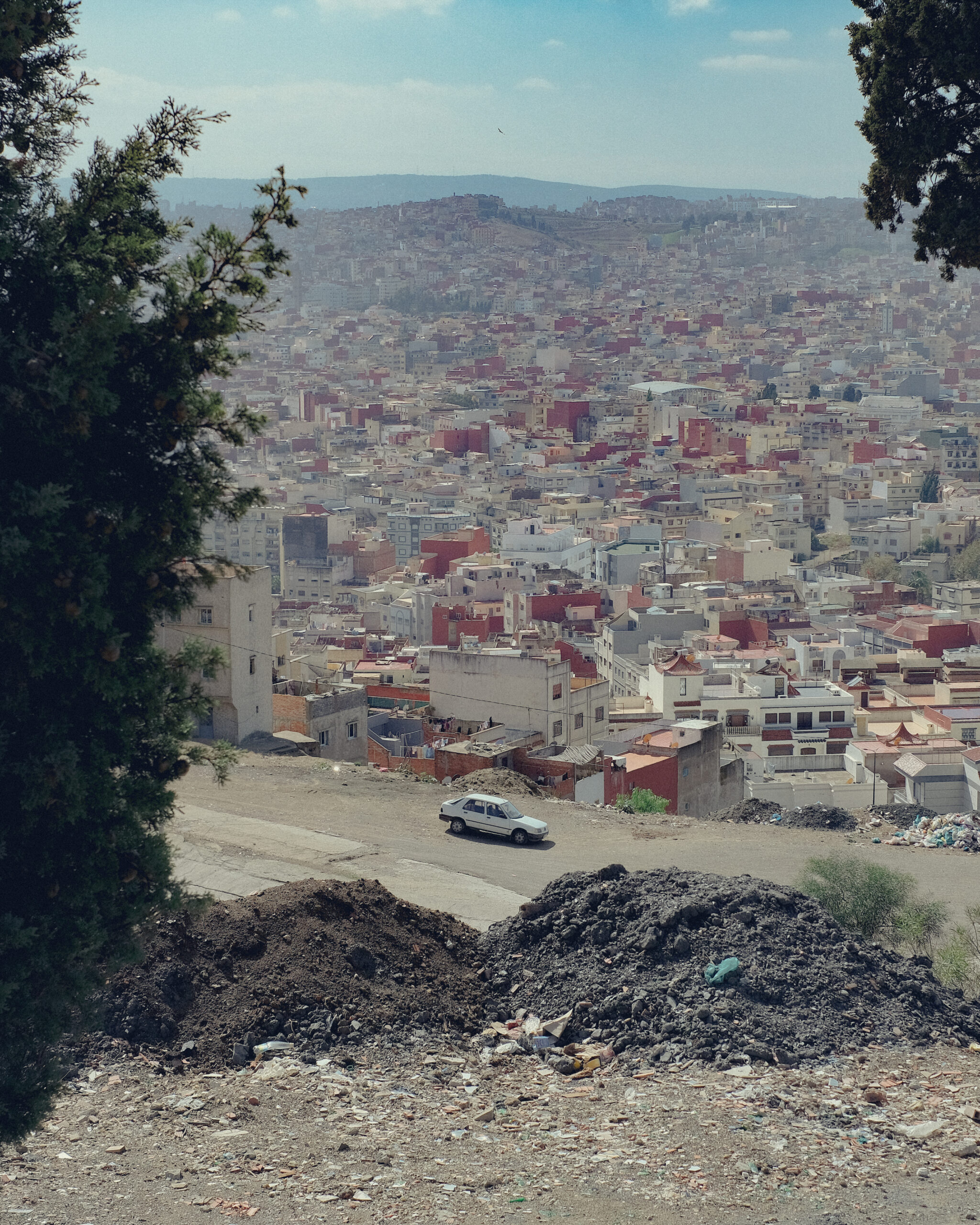
To the south of Tangier are the most dense and historic neighbourhoods, like Bir Chifae, Zouitina and Rahrah, built in the 1970s after independence. “The architecture of Tangier is like a witness to its history, to all its injustices. M’Sallah, for example, was the first neighbourhood outside of the Kasbah after independence, and now, it appears to be like a little vernacular medina. It takes the form of a medina but with more modern materials.”
“Bir Chifae, too, is a neighbourhood that appeared after a mass exodus from nearby rural areas due to drought. They went to live near the city because it was easier and there were opportunities for stable factory work.” These neighbourhoods, like many others, testify to events that happened in or around Tangier and shaped it – “Witnesses to historical periods”, as Houari calls them. “The qualities of M’Sallah and Bir Chifae as neighbourhoods are things that cannot be recreated in these new ones.”
There’s great social injustice in these older neighbourhoods, so Houari doesn’t like to be overly poetic about it, but Tangier is the sum of all its structures, where architectural styles represent pieces of Tangier’s history – some positive, and some painful. The latest additions, rather than positive or painful, are subtractive, signifying the injection of ‘lack’ through the replacement of sites of testament with emptiness.
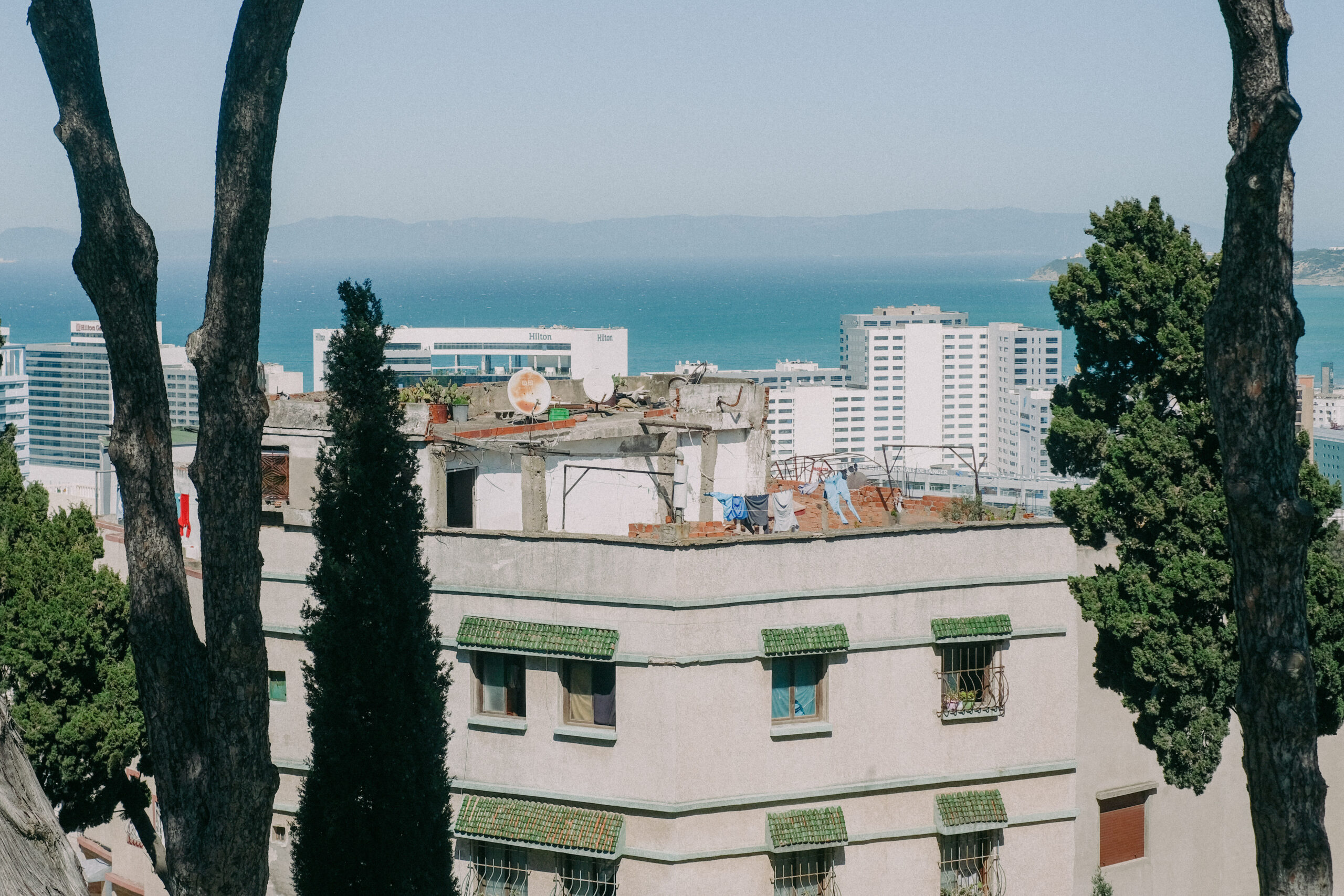
So three years into Shifting Tangier, the images still hum. “I try to make my pictures beautiful, but at the same time, they discuss an urgent matter, and that’s consuming. I try to show it poetically, but it does get to me sometimes, working on this topic every day, and even with the work I do now with Think Tanger, I really feel the pressure of this fast urbanisation, and I feel powerless to the capital.”
I flew into Tangier at the end of May, and making a special effort to look out of the window as we landed, I was struck by how uncanny and incongruous the new neighbourhoods appeared from the air. By the light of the setting sun, the buildings around the train station appeared glaringly white and square, like pixels more than homes. Low-quality, one-dimensional, unstoried, just as Houari had described.


