
News


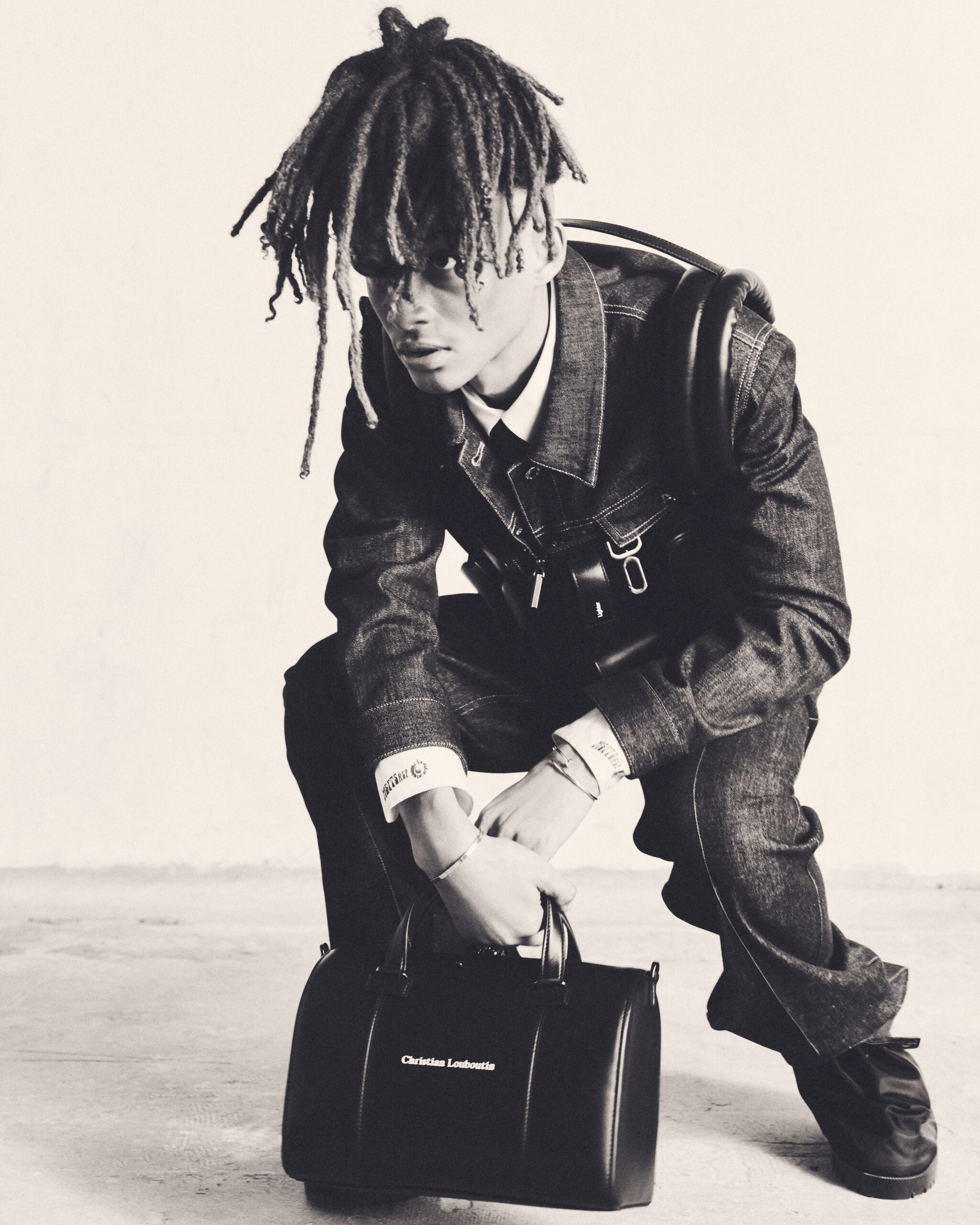
As the new creative director of Christian Louboutin’s menswear line, Jaden Smith views style as a creative language, one through which conventions can be questioned and rewritten. Echoing Marcel Duchamp’s ability to transform the ordinary into something unexpected, Smith relishes the act of disruption, using fashion to challenge assumptions and imagine new possibilities. For ICON, he opens up about his creative philosophy and the power of reinvention.
What’s your first fashion memory? Was there a moment growing up when you understood that clothing could be a language?
Very early on, I realised that the way I dressed changed things and affected the world around me. I was always experimenting with my outfits, and noticed the reactions they would provoke. Sometimes people felt calm, relaxed and comfortable. Other times they would think: “Oh my gosh, what’s going on? This is crazy!” From a young age, I understood that I could communicate something about myself without speaking. It made me realise how important fashion was to me, and I still feel the same way today. That’s what I try to do with my Christian Louboutin collection. I create products for people who want to express themselves from a distance, without words. Because that’s what a great outfit can do.
There is nothing more recognisable in the world of footwear, than a red sole. Do you remember the first time you saw one?
In so many of my favourite movies and shows, I would see people wearing the red soles on screen. But the first real encounter was in my mum’s closet. She was surrounded by these beautiful shoes, and they felt like jewels to her. At the time, I didn’t really understand what it meant to own designer shoes, but I could see how precious they were to her. It’s so special to see how much care people put into the things that we really enjoy and love. Later on, one of my best friends, Moises Arias, was also wearing the red soles. We worked together for years, and founded a fashion brand called MSFTS. He actually took the photograph we printed on the cowboy boot from my first Christian Louboutin collection. Being able to work with him as I take this next step means a lot to me. And yes, my very first girlfriend was also a huge fan of the red soles.
Red is omnipresent in your debut collection. What does the colour represent for you?
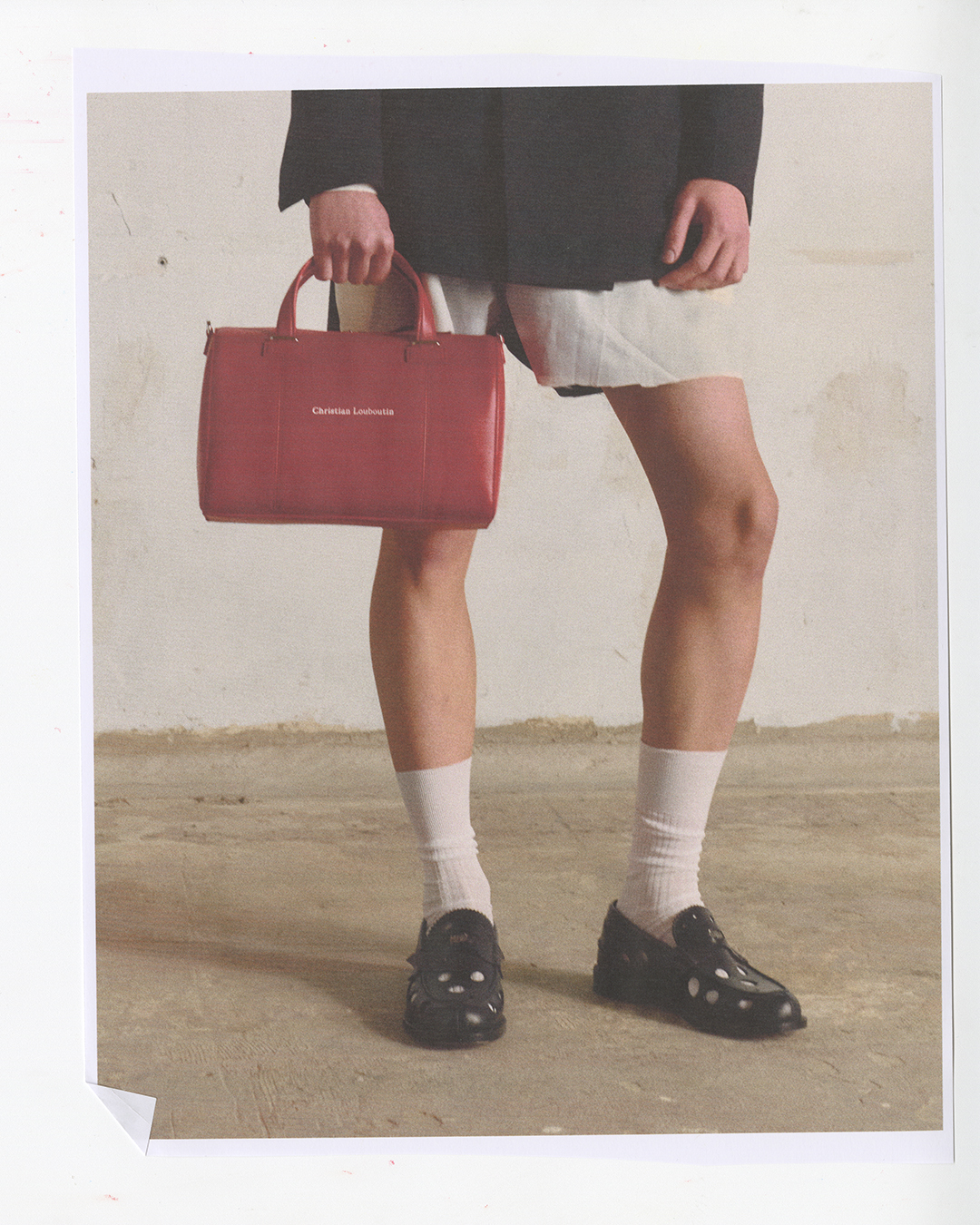
Red is the main character in the stories we tell at Christian Louboutin. It’s a part of everything we do. It’s our main lens. Like many children, it was my favourite colour growing up. For me, it symbolises passion and intensity. It also reminds me of beginnings, as it’s associated with the first chakra. Red is powerful. It’s a force of nature. But beyond all of that, it’s a character in the Louboutin story.
Napoleon Bonaparte and his entourage were said to paint their shoes in red as a symbol of power, so people called them the “Red Shoe Club”. Do you have an inner circle that inspires you?
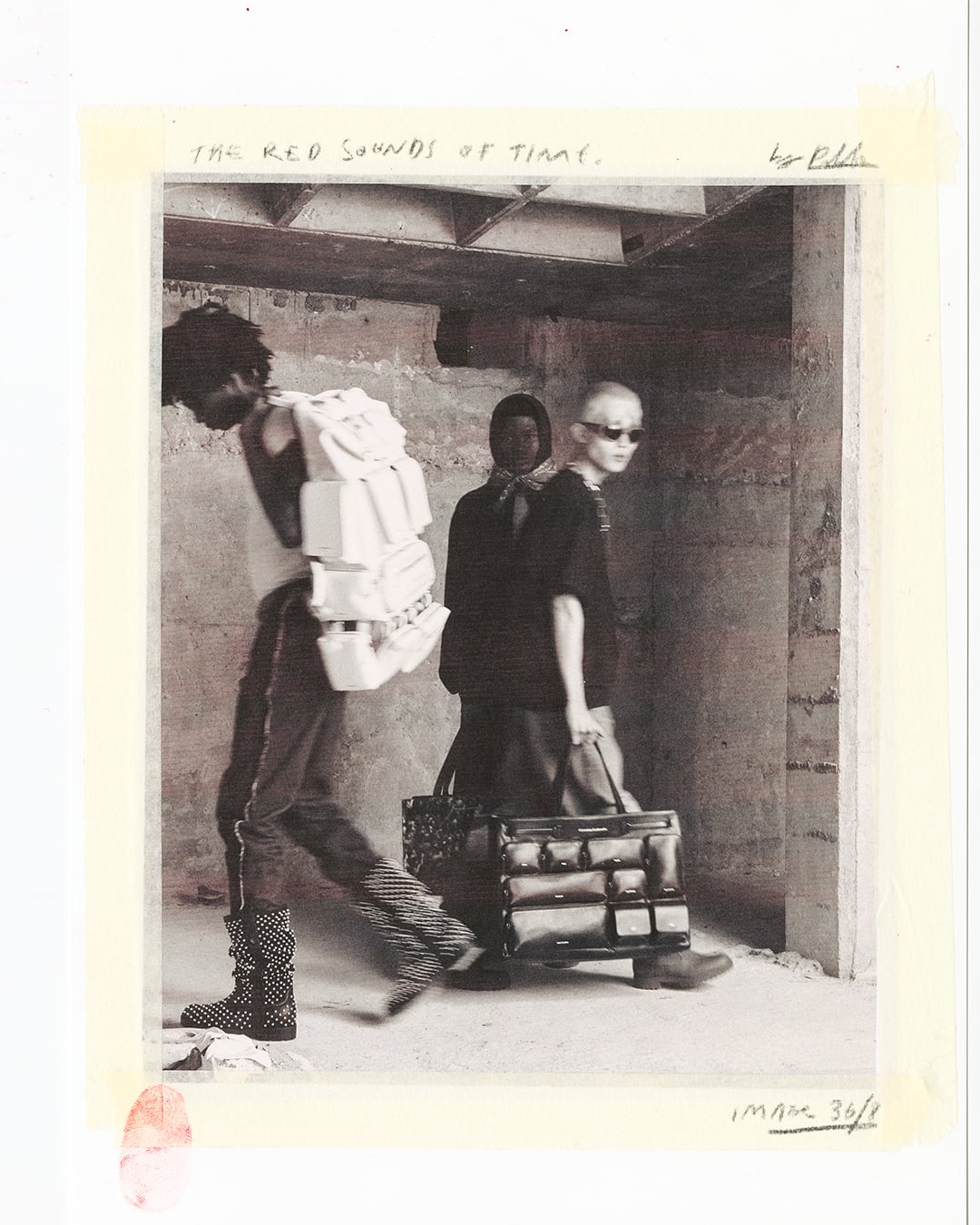
Wow, what a story! My community is a huge part of my life. It’s almost like a collective of creative voices from different backgrounds, music, fashion, art, that are around me at all times. Community was one of the driving forces behind MSFTS, and today we’re also building a community around the men’s collections at Christian Louboutin: creating spaces where people can engage with art, exchange ideas and spend time together. That’s why we chose to present the collection as an exhibition. We wanted different creative forces to coexist in the same room.
Why was it important to introduce the collection in dialogue with art? Would you say that fashion is art?
For me, fashion is art. That’s why I often describe my perspective as Dadaesque. I’m fascinated by the question of when something becomes a thing, and when it stops being that thing. As a creator, you get to draw those lines and invite people to decide whether they agree with them or not. Dadaism has had a tremendous influence on me, and Marcel Duchamp has always been a major inspiration. That’s one of the reasons I wanted to create an exhibition rather than simply stage a presentation. I wanted to create a dialogue. A space people could step inside. Normally, at a fashion show, you sit and watch others move around you. Here, the experience was reversed. You have to walk through the space yourself and decide at what pace you want to move through it and experience what you see.
Luxury can feel elitist at times. How are you planning to engage your community through the collections that you create?
As we move further into a world shaped by artificial intelligence and over-production, it becomes increasingly important to protect artisanship and craftsmanship.The price of luxury reflects generations of people who have dedicated their lives to perfecting those skills. In return, you receive something that can last for decades. My dad still owns handcrafted leather shoes that were made over twenty years ago, and they’re still incredible. At the same time, we want everyone to feel welcome within our community. That’s the beauty of art. Anyone can stand in front of a sculpture and experience something. I hope people can engage with our campaigns and projects in the same way. If something resonates with them, they become part of the conversation. That’s why I wanted to create an experience rather than a classic presentation and invite as many people as I could. It’s not only about products that you have to buy. It’s about creating something that people can connect with and be inspired by.
Could you describe your creative process? What does a moodboard look like for you? Is it visual, musical, intuitive?
I love to design, and I always have a lot of ideas, so I bring my scrapbook everywhere I go. Otherwise, the ideas just float away! [smiles] I’m also notorious for making company presentations, filled with images and words, on any given topic. That’s actually how we arrived at the idea of a multi-generational design philosophy. When we design something, we imagine the family of the Christian Louboutin maison. You have the patriarch of the family, the grandfather, the father, the eldest son, and the youngest son. Each perspective informs a different product line. A reimagined penny loafer might belong to the patriarch, a Chelsea boot to the father, while a printed cowboy boot might belong to the youngest son.
This issue is dedicated to sports. Do you have a favourite sport?
Skateboarding. I love practising and watching people skateboard around me. I like it because it fosters community and doesn’t really pit people against each other. It really comes down to a simple question: what type of tricks do you like? In fact, our sneakers are an extreme luxury reinterpretation of a classic skater shoe. We exaggerated the proportions until they began to resemble those oversized skate silhouettes from the 1990s.
When Christian Louboutin approached you, why did you say yes?
It has always been a dream of mine to design for a big house and to have a mentor that I could look up to, someone who could guide me inside the fashion industry. People always say that if you want to master something, you need someone who can show you the ropes. Christian has been a huge inspiration in my life, in fashion, but also in the way he thinks. He is also an architect, and has a passion for structure, shape and form. He can design anything. He has a spirit, an open-heartedness and a level of creativity that I’ve never really seen before. It’s something I would really love to absorb and learn from. Being able to spend time in Paris, visit the factories, understand every stage of the process and express myself through design has been an extraordinary opportunity. Christian lets me do crazy things, and I love that.
Now that one of your dreams has become a reality, what do you dream about?
I’ll be vague, but I do dream about high art, creation, and collaborations between different forces that can bring peace, positivity and understanding into the world.
WORDS: LIDIA AGEEVA


