
News


Each year the Blue Book arrives with a question: which part of its own past will Tiffany & Co. choose to dig up? The name goes back to 1845, when the House first published its Blue Book catalogue, and it now refers to Tiffany’s annual high jewellery collection, the most exceptional pieces it makes all year. For 2026, Nathalie Verdeille has gone into the undergrowth. Blue Book 2026: Hidden Garden, her fourth high jewellery collection as the House’s Chief Artistic Officer, looks at the quiet changes in the natural world that are easy to miss, like a wing drying after the chrysalis splits or a bud just before it opens. Its spring chapter has now been unveiled, and summer and autumn chapters will follow over the year.
As usual, the collection is built on Jean Schlumberger. Verdeille and the Tiffany Design Studio use the late designer’s flora and fauna as a starting point and turn them into sculptural pieces in platinum and gold, set with the closely matched gemstones the House has long been known for. Chief Executive Officer Anthony Ledru calls the Blue Book “one of Tiffany & Co.’s most important traditions for over a century,” and this season the tradition is about transformation and renewal.
The butterflies come first. In the Butterfly story, unenhanced padparadscha and Montana sapphires play pink-orange against denim blue, a colour pairing as delicate as the wings it describes. Two diamond stories sit alongside it. One builds an abstract butterfly from Fancy Vivid Yellow diamonds, and the other is a lighter study in oval white stones. Some pendants can be worn as brooches, which fits both the theme of metamorphosis and the House’s long habit of transformable design. Monarch goes deeper into the archive and reworks a Schlumberger necklace that once hid a monarch butterfly in its leaves. Here, vines of handcrafted platinum and 18k yellow gold hold unenhanced cushion-cut sapphires from Sri Lanka and Madagascar. Its diamond version includes a pair of earrings set with D-colour, internally flawless Type IIa emerald-cut diamonds totalling more than 10 carats.
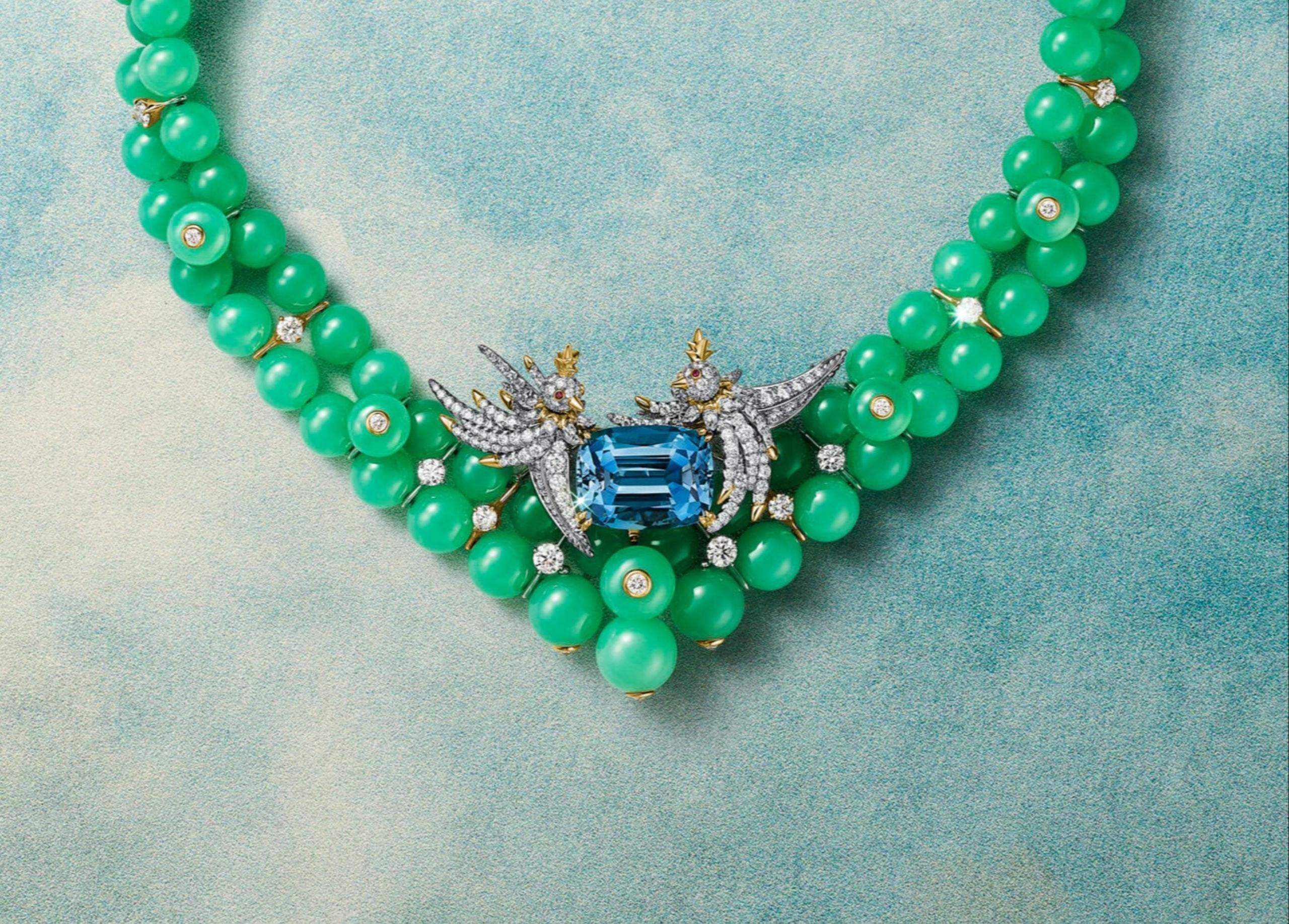
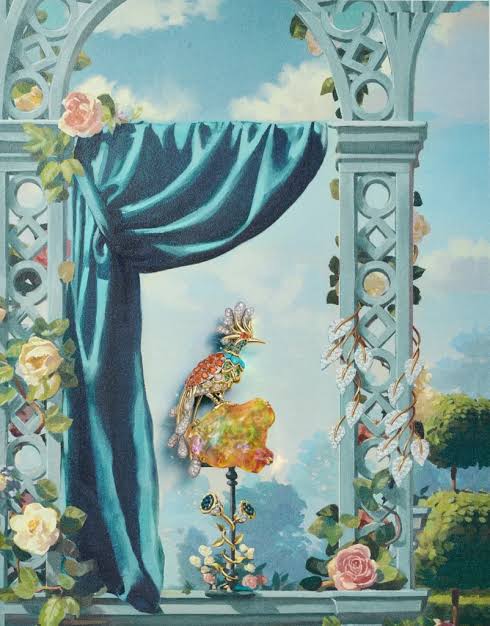
Then come the birds. Bird on a Rock, probably the most recognisable Schlumberger design of all, sits on cushion-cut Santa Maria aquamarines from Brazil. Custom-cut chrysoprase beads surround them in green, and one transformable necklace pairs two animated birds with an aquamarine of more than 22 carats. Paradise Bird is the most playful story in the collection: a run of brooches, each with an imagined bird perched on a single striking stone, whether Mexican fire opal, Brazilian rubellite, Ethiopian blue chalcedony or Madagascan spessartine. The feathers are set in pointillist clusters of matching gems, and some of the pairings are unexpected, like emeralds with turquoise and tsavorite. Parrot looks to the parrot brooches Schlumberger designed for the House in the 1960s. Unenhanced blue and purple sapphires sit among feathers of hand-applied paillonné enamel in dark blue, duck green and Tiffany Blue, finished with sculpted platinum and touches of yellow gold.
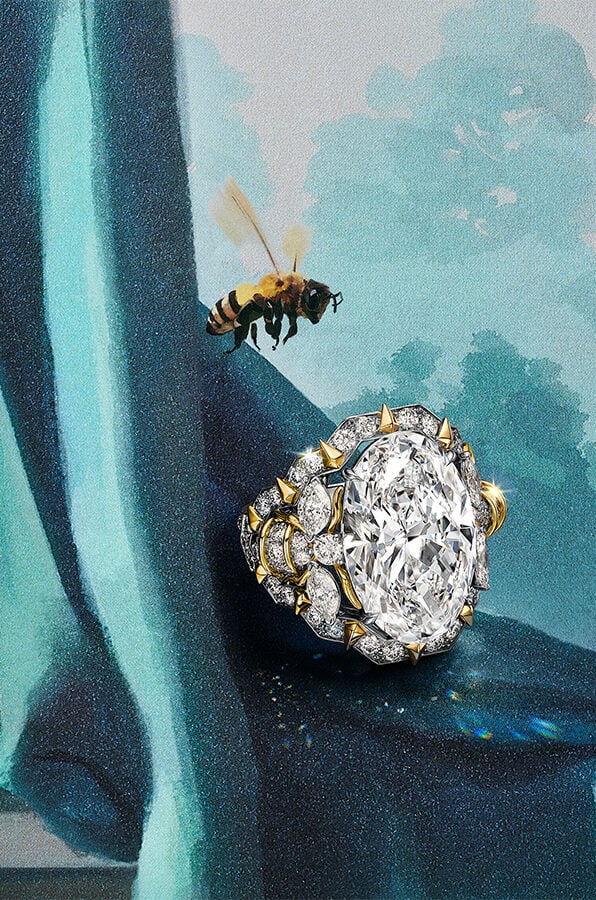
The Bee story starts from Schlumberger’s Two Bees ring and works it into honeycomb lattices, setting oval diamonds inside yellow gold hexagons. Its centrepiece is a ring holding a D-colour, internally flawless Type IIa oval diamond of more than 10 carats, with small figural bees hidden around it.
The rest of the garden is in flower. Jasmine revisits a Schlumberger design from 1961–1962 through braided platinum and a trellis motif around a cushion-cut diamond of more than 18 carats, and a second suite uses kunzite, one of the House’s legacy gemstones. Marguerite reworks the daisy twice, once with unenhanced pink sapphires and once with emerald-cut diamonds that use negative space to break the flower apart. Bloom catches a flower just before it opens, in pink and purple sapphires, and it is the only story crafted entirely in 18k yellow gold. In Twin Bud, articulated platinum vines twist across the skin, holding Zambian emeralds in one suite and gold-tipped, pear-shaped diamonds in the other. Palm closes the spring launch with twisting leaves that open to show unenhanced oval rubies from Mozambique, matched for hue and fluorescence, and a parallel suite of diamonds that catch the light like sun through fronds.
It’s a lot of garden to take in, and there are still two chapters to come.


