
News


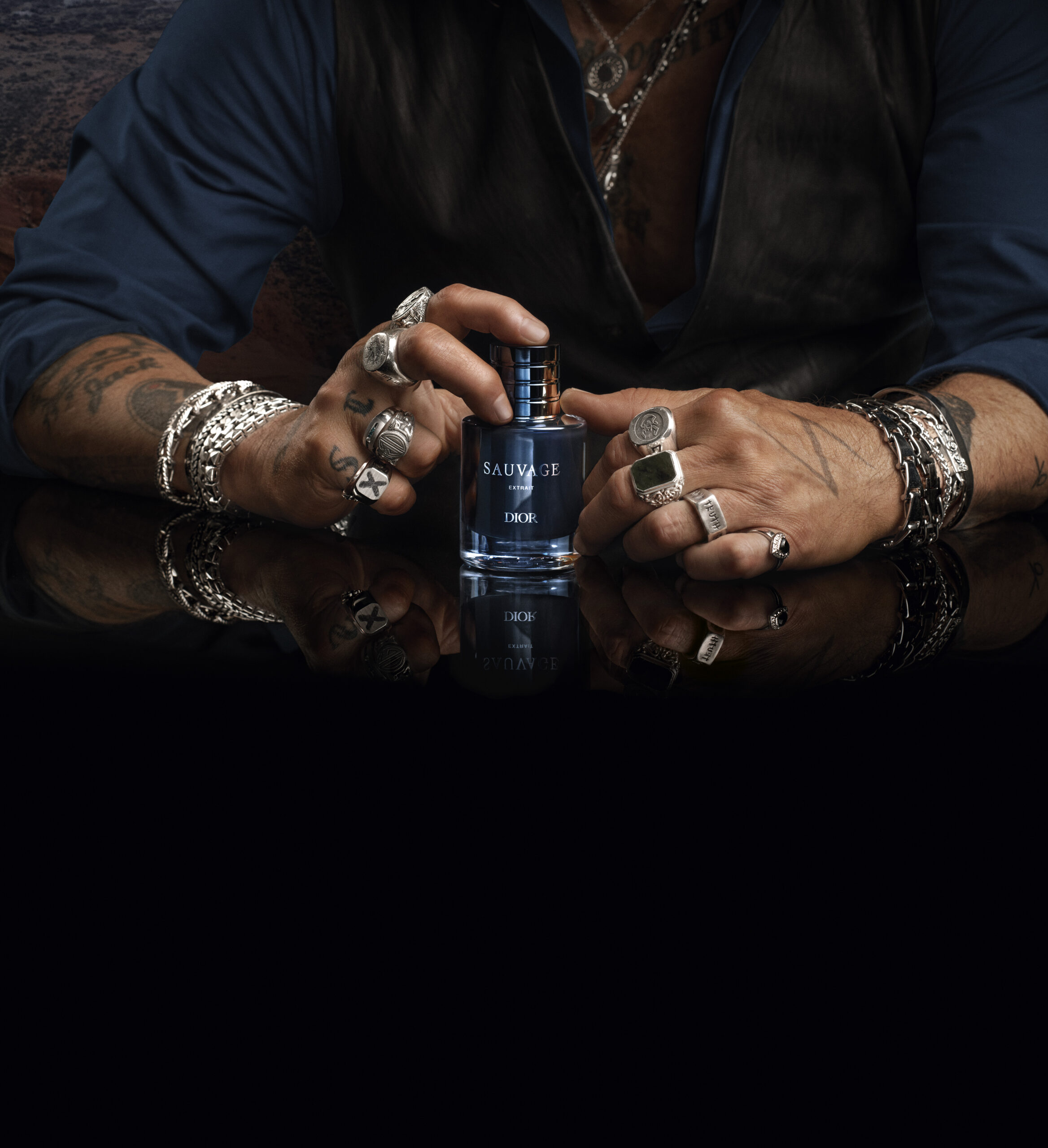
Dior has just released Sauvage Extrait, the most concentrated and intense expression of its record-breaking fragrance franchise to date, and Perfume Creation Director Francis Kurkdjian says it was never about topping a bestseller list.
“I don’t think about the success of the [franchise]. That’s not what I focus on when I create a perfume,” Kurkdjian explained. “What I first focus on is to find a relevant story that can add a new dimension to the existing perfume.” He’s blunt about the alternative: “If you start thinking about commercial success, you end up doing crap. If you start thinking that you need to build up a number one best-selling perfume, usually you fail.”
For Sauvage Extrait, that story is woodier, deeper, and darker than anything the line has explored before. It is a deliberate move away from the sweetness of past editions toward what he calls a “chiaroscuro” structure, a contrast of shadow and luminous wood. Even working within a storied franchise, Kurkdjian insists the brief stayed simple: “My rule at Dior, my limit, is: ‘Does it smell good or not?'”
What Is an Extrait?
An Extrait de Parfum is perfumery’s original and most luxurious format, dating back to the early 19th century. With the highest concentration of raw materials of any fragrance category, it delivers exceptional depth, richness, and skin longevity. It is the purest, most intense expression a perfumer can create. As Kurkdjian puts it, an Extrait is “quite simply the ultimate expression of a fragrance — its quintessence and its culmination.”
Building the Blend
To achieve Sauvage Extrait’s signature depth, Kurkdjian layered multiple woods, vetiver, cedarwood, patchouli, sandalwood, “not just with one wood, but with a bunch of woods,” as he put it, each contributing a different weight and brightness. The goal was balance, “not too dark, not too bright, not too clean, not too heavy or dirty.” Central to that architecture is oud, appearing in the Sauvage line for the first time, sourced from a specific fair-trade origin in Vietnam. Kurkdjian was careful it read as an integral part of Sauvage’s DNA rather than a conventional Middle Eastern oud profile; a decision he felt only made sense once the franchise and its audience were “mature enough to step into the oud category.”
Getting the balance right took time. The team explored eight different creative directions before narrowing in on one, running roughly 200 formula iterations along the way. The juice then rests through a six-week maceration process that Kurkdjian likens to a group of strangers slowly finding their chemistry: It takes time to have that kind of chemistry where, all of a sudden, everybody gets along.” He describes the raw material’s behavior as “totally irrational, something that is not based on experience, but something that you have to watch and follow up.”
Pushing to the Limit
Extrait concentrations demand a different kind of precision. “The necessity of increasing the concentration came at the very end,” Kurkdjian said, comparing the final push to the last stretch of a marathon, a moment in creation beyond anything technical skill alone can account for, “something that belongs to you, but is something that is above yourself.”
On the creative process overall, Kurkdjian resists the idea of struggle: “To me, creation is not about struggling. It’s more about being empowered and knowing what you do.”
The result, according to the brand, is an extraordinary fragrance, sensual, intimate, and long-lasting, designed to leave what the brand describes as an olfactory tattoo on the skin.
Sauvage Extrait is available now.


